Bank of America Struck with $1.2 Billion Penalty Over Systemic Lapses in Money-Laundering Oversight
Federal regulators crack down on institutional compliance failures, revealing how structural deficits in transaction monitoring and legacy infrastructure allowed billions in suspicious capital flows to bypass automated defenses.
Executive Takeaways
- Massive Regulatory Penalty: Bank of America faces a cumulative $1.2 billion enforcement action from federal and state oversight bodies following prolonged deficiencies in anti-money laundering (AML) controls.
- Systemic Oversight Failures: Investigations exposed that critical enterprise risk management frameworks routinely waved through high-risk international and domestic transactions without adequate manual review or verification.
- Capital Allocation and Compliance Overhaul: The bank is forced into an aggressive capital expenditure cycle to modernize legacy cloud compute architecture, bolster automated transaction screening, and refine risk mitigation protocols.
- Market Sentiment and Valuation Pressures: Institutional investors are recalibrating risk premiums and valuation multiples as compliance remediation costs threaten near-term return on investment (ROI) metrics.
Anatomy of a Regulatory Breach: The $1.2 Billion Fallout
In what financial regulatory analysts are calling a watershed moment for tier-one global banking supervision, Bank of America has been hit with a staggering $1.2 billion penalty. The enforcement action, coordinated across multiple regulatory agencies, underscores an aggressive posture by Washington watchdogs toward institutional compliance failures. At the heart of the investigation is a systemic breakdown in anti-money laundering (AML) oversight—a failure that allowed questionable capital movements to transit through the institution's clearinghouses virtually unhindered.
According to exhaustive disclosures unsealed by federal regulators, Bank of America’s compliance apparatus suffered from profound architectural bottlenecks. Over an extended reporting window, the bank’s automated transaction monitoring systems flagged thousands of high-velocity, anomalous fund transfers. However, due to severe staffing shortages, outdated operational workflows, and deficient infrastructure scalability, compliance officers routinely cleared these transactions as "false positives" without conducting the mandatory enhanced due diligence (EDD).
"When a systemically important financial institution fails to interrogate the provenance of monumental capital flows, it ceases to act as a gatekeeper and instead becomes a conduit for illicit finance," noted a senior financial crimes compliance attorney familiar with the enforcement action. "This $1.2 billion penalty is not merely a fine for past oversights; it is a calculated demand for total structural remediation."
The Catalyst: Legacy Infrastructure Meets Modern Threat Vectors
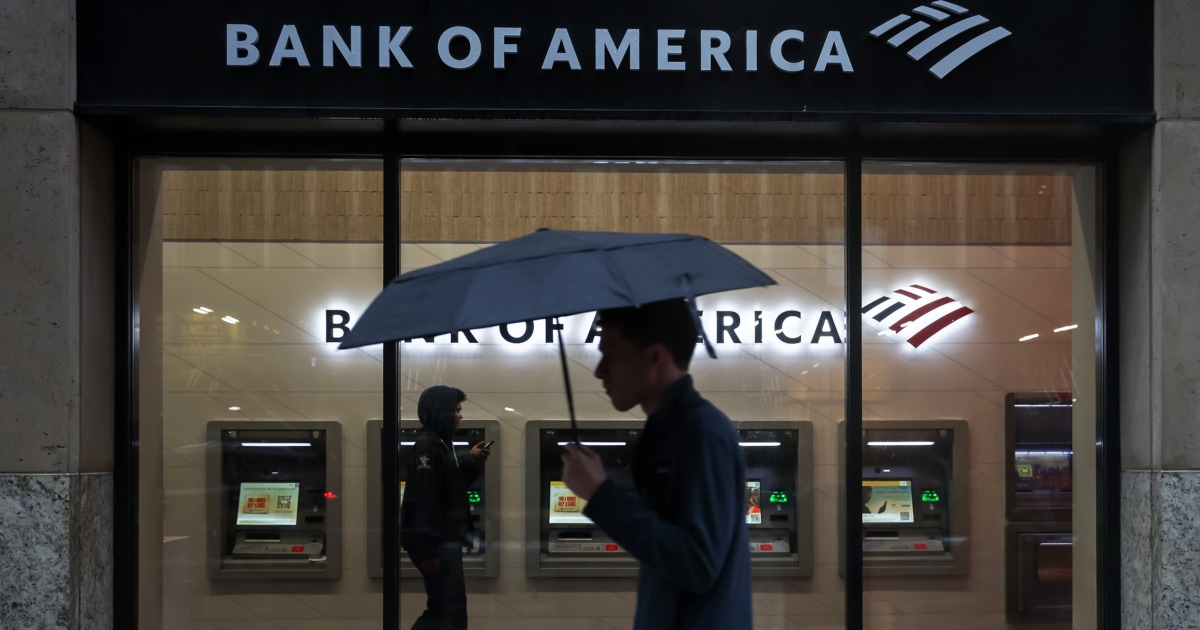
The genesis of this regulatory reckoning traces back to an iterative audit of Bank of America’s global transaction services division. Investigators discovered that as international wire volumes surged in the wake of post-pandemic economic recovery, the bank’s risk mitigation framework failed to scale proportionately. Executives prioritized customer onboarding velocity and operational efficiency over rigorous compliance checks, creating a fertile environment for regulatory arbitrage.
Legacy technological debt played a starring role in the debacle. While nimble fintech startups and peer institutions migrated toward agile, AI-driven compliance engines, Bank of America continued to rely heavily on fragmented legacy databases and rigid rule-based filters. These legacy systems lacked the contextual intelligence required to detect sophisticated, multi-jurisdictional layering schemes utilized by sophisticated criminal syndicates and sanctioned entities. Consequently, high-risk transactions originating from corruption-prone jurisdictions were frequently processed under the radar.
Verified Metrics & Enforcement Breakdown
| Metric / Parameter | Reported Figure / Status | Strategic Implications |
|---|---|---|
| Total Financial Penalty | $1.2 Billion | Direct hit to quarterly net income and capital reserve ratios. |
| Primary Infraction | Inadequate AML / KYC Oversight | Mandates comprehensive overhaul of transaction monitoring scripts. |
| Remediation Timeline | 18 to 24 Months | Intensive independent monitor oversight and executive reporting. |
| Tech Upgrade Focus | Cloud Compute & AI Analytics | Substantial long-term capital expenditure in enterprise software. |
Industry & Market Implications: Ripple Effects Across Wall Street
The sheer magnitude of the $1.2 billion penalty has sent seismic tremors across the global banking sector. Equity analysts at major Wall Street brokerages are rapidly updating their valuation multiples for Bank of America, factoring in both the immediate cash outflow and the sticky operational expenses associated with mandated regulatory remediation. While the bank maintains robust capital buffers and pristine liquidity levels capable of absorbing the financial blow without systemic distress, the enforcement action places a temporary ceiling on stock price appreciation.
Furthermore, peer institutions—including JPMorgan Chase, Citigroup, and Wells Fargo—are actively auditing their own anti-money laundering frameworks. The message from Washington is unequivocal: regulatory forbearance is over. Chief Risk Officers across the financial services landscape are accelerating capital allocation toward enterprise compliance infrastructure, anticipating stricter supervisory examinations and zero tolerance for administrative negligence.
In the technology sector, enterprise software vendors specializing in cloud-native compliance architecture, machine learning anomaly detection, and automated Know Your Customer (KYC) onboarding are witnessing an unprecedented surge in demand. Financial institutions are realizing that upgrading compliance infrastructure is no longer a back-office expense, but a fundamental pillar of enterprise risk mitigation and market liquidity preservation.
Frequently Asked Questions (People Also Ask)
Why was Bank of America fined $1.2 billion?
Federal and state regulators imposed the $1.2 billion penalty due to persistent, systemic failures in Bank of America’s anti-money laundering (AML) and Know Your Customer (KYC) oversight. Investigations revealed that the bank's monitoring systems repeatedly waved through suspicious domestic and international transactions without conducting required manual reviews or enhanced due diligence.
How will this penalty impact Bank of America’s stock and financial health?
While Bank of America possesses deep capital reserves and strong market liquidity to absorb the $1.2 billion charge without threatening its solvency, the fine creates near-term earnings pressure. Institutional investors are factoring in higher ongoing compliance operational costs, which may temporarily compress valuation multiples and return on investment (ROI) metrics.
What remedial steps must the bank take under the regulatory agreement?
The bank is required to undergo a comprehensive multi-year overhaul of its compliance infrastructure. This includes upgrading legacy databases to advanced cloud-compute architecture, implementing AI-driven transaction monitoring tools, expanding compliance staffing, and operating under the watchful eye of an independent regulatory monitor.
Are other major banks facing similar anti-money laundering investigations?
Yes. Following this landmark enforcement action, federal regulators have signaled a heightened industry-wide crackdown. Risk management executives across Wall Street are proactively reviewing their transaction screening protocols and increasing capital allocation for compliance technology to avoid similar regulatory penalties.
Future Outlook & Key Milestones to Watch
As Bank of America navigates the fallout of this historic $1.2 billion penalty, the institution's leadership faces a definitive operational crossroads. The immediate priority is executing a seamless technological and cultural transformation within the risk management division. Over the next 18 to 24 months, market analysts will closely monitor several critical milestones:
- Independent Monitor Reports: The appointment and initial findings of the court-mandated independent compliance monitor will provide early visibility into the efficacy of the bank's remediation efforts.
- Capital Expenditure Disclosures: Upcoming quarterly earnings calls will shed light on the exact financial drag imposed by cloud compute migrations and expanded compliance headcounts.
- Regulatory Posture Shift: Observers will track whether other financial regulators follow suit with parallel enforcement actions or broadened industry-wide guidelines for transaction monitoring standards.
Ultimately, this regulatory enforcement serves as a stark reminder that in the modern global financial architecture, robust compliance is not merely a defensive back-office function—it is the foundational bedrock upon which institutional reputation, market liquidity, and long-term shareholder value are secured.



![Copilot vs ChatGPT vs Gemini: 30M Seats, 1B Users [2026]](https://tech-insider.org/ca/wp-content/uploads/sites/7/2026/10/copilot-vs-chatgpt-vs-gemini-canada-2026-1-768x439.webp)