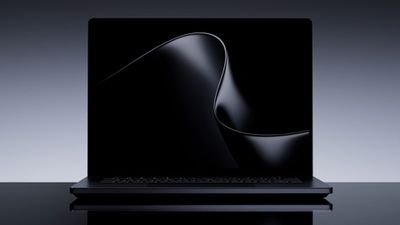
Executive Takeaways
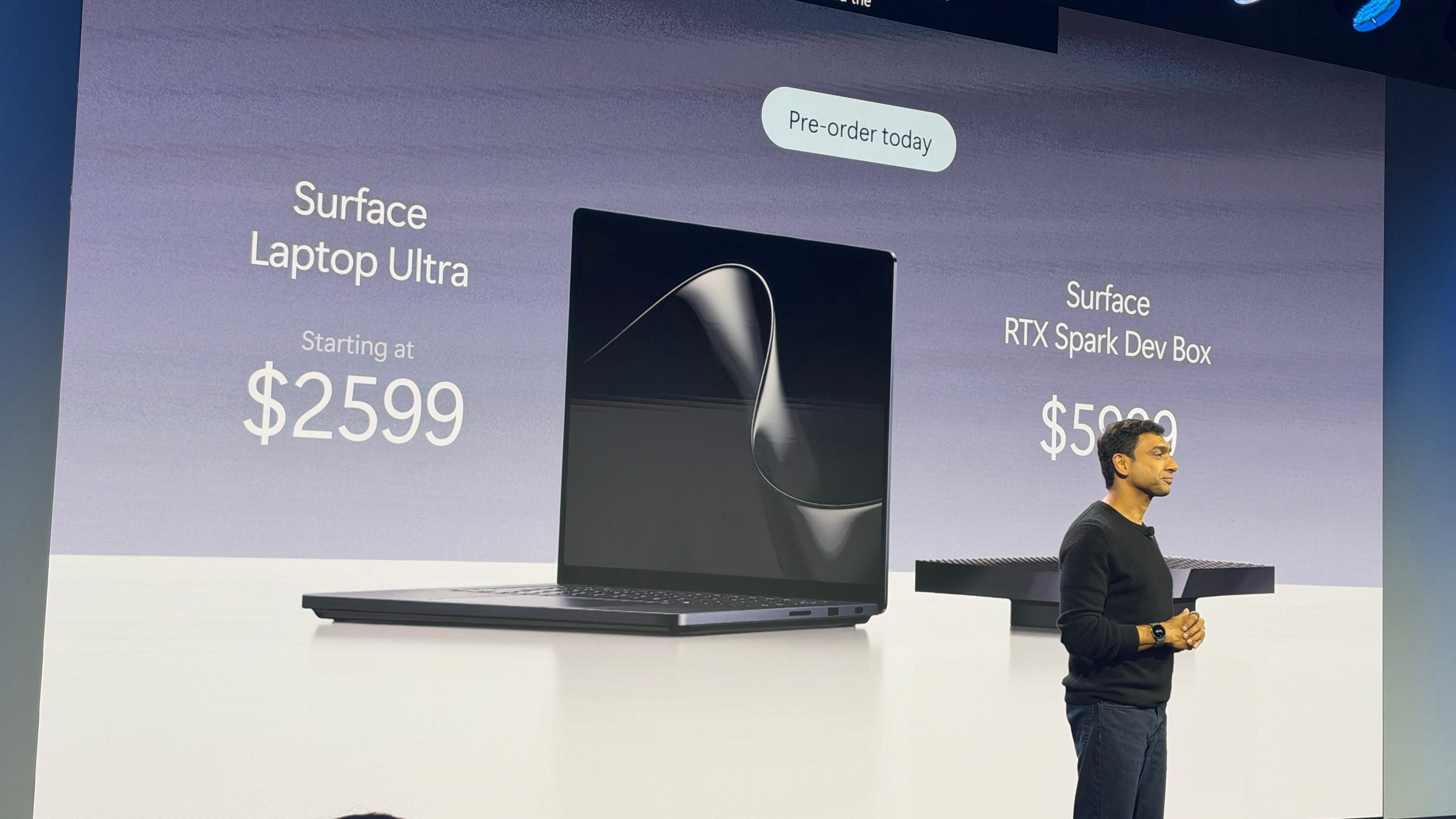
- Premium Pricing Strategy: At a starting price of $2,599, Microsoft is directly targeting the high-margin creative and developer segments historically monopolized by Apple’s MacBook Pro.
- Next-Gen Silicon Integration: Equipped with advanced custom-architected silicon and a high-performance Neural Processing Unit (NPU), the Surface Laptop Ultra is built to run local Large Language Models (LLMs) with minimal latency.
- Enterprise ROI Focus: The machine is positioned as a productivity multiplier for enterprise developers and data scientists, justifying the high upfront capital allocation through reduced cloud compute costs and localized model execution.
- Ecosystem Implications: Microsoft’s hardware push pressures traditional OEM partners (Dell, HP, Lenovo) to elevate their premium hardware offerings, potentially driving up the industry's average selling price (ASP).
The Premium Hardware Hegemony: A New Front in the Silicon Wars
For nearly a decade, Apple’s MacBook Pro has reigned as the undisputed standard-bearer for high-end mobile computing. Creative professionals, software engineers, and corporate executives have consistently gravitated toward macOS, drawn by the unmatched efficiency of Apple’s custom M-series silicon. Microsoft’s response has historically been fragmented—relying on a sprawling web of OEM partners while positioning its own Surface lineup as versatile but underpowered luxury devices. That era of defensive positioning has officially ended.
The introduction of the $2,599 Surface Laptop Ultra represents a massive shift in Microsoft’s corporate strategy. This is not merely a hardware release; it is a calculated, well-funded offensive designed to capture the high-margin premium enterprise market. By matching—and in some configurations, exceeding—Apple’s pricing structure, Microsoft is signaling to corporate procurement officers that it has engineered a device capable of delivering superior enterprise ROI. This launch occurs at a critical inflection point, where local AI processing capabilities are transitioning from speculative novelties to essential components of developer and creator workflows.
To understand the strategic imperative behind this release, one must look at the broader landscape of capital allocation. Historically, premium Windows laptops have struggled with thermal throttling, battery degradation, and uneven performance when unplugged. By redesigning its flagship system from the ground up, Microsoft is addressing these hardware bottlenecks, aiming to retain high-value users within the Windows ecosystem and, by extension, drive adoption of its high-margin Azure cloud compute architecture and Microsoft 365 Copilot subscriptions.
Decoding the Specs: The Architecture of the Surface Laptop Ultra
At the heart of the Surface Laptop Ultra’s value proposition is its highly optimized silicon architecture. Designed in collaboration with leading chipmakers, the processor features a custom microarchitecture that balances raw computing power with unprecedented thermal efficiency. This architecture allows the device to sustain peak performance workloads—such as heavy software compilation, 3D rendering, and local dataset training—without the aggressive thermal throttling that has historically plagued Windows ultrabooks.
Crucially, the Surface Laptop Ultra integrates a cutting-edge Neural Processing Unit (NPU) capable of executing over 45 Trillion Operations Per Second (TOPS). This dedicated AI engine is designed to run localized AI workloads, bypassing the latency and security risks associated with cloud-dependent processing. For enterprise clients, this architecture offers substantial risk mitigation, ensuring that proprietary corporate data remains secure on-device during local LLM execution, code synthesis, and deep data analysis.
Complementing the silicon is a chassis designed to compete directly with Apple's industrial design leadership. The Surface Laptop Ultra features an advanced dynamic refresh rate PixelSense Flow display, offering precise color accuracy critical for visual professionals. Thermals are managed via a sophisticated vapor chamber system that maximizes air intake, allowing the custom processor to run at higher Wattages for longer intervals, ensuring that performance remains constant whether the device is connected to a power supply or running on battery.
Verified Data: Premium Workstation Comparison
The following table outlines how the newly launched Surface Laptop Ultra compares to its primary market competitors in the premium enterprise segment:
| Metric / Specification | Microsoft Surface Laptop Ultra | Apple MacBook Pro 16" (M3/M4 Max) | Dell XPS 16 (Premium Tier) |
|---|---|---|---|
| Base Price | $2,599 | $2,499 - $3,499 | $2,299 |
| Silicon Architecture | Custom Intel/Qualcomm Co-Engineered | Apple Silicon (M-Series ARM) | Intel Core Ultra Series 9 |
| NPU AI Performance | 45+ TOPS (Dedicated) | 38 TOPS (Neural Engine) | 34 TOPS (Integrated) |
| Target Battery Life | Up to 22 Hours | Up to 22 Hours | Up to 16 Hours |
| Primary Value Proposition | Local GenAI Dev, Windows Enterprise Integration | Unix-based dev ecosystem, creative workflow optimization | Legacy corporate desktop replacement |
The Financial and Enterprise Calculus: ROI vs. High Capital Outlay
From an institutional finance perspective, a $2,599 entry point for a Windows-based laptop requires a rigorous Total Cost of Ownership (TCO) justification. CIOs and CTOs assessing hardware procurement models focus heavily on productivity metrics, developer onboarding speed, and support lifecycles. Historically, Windows machines had lower upfront costs but higher long-term maintenance overhead compared to macOS devices. Microsoft aims to flip this equation by delivering a device that minimizes support overhead through integrated enterprise-grade security and advanced system-on-chip stability.
The strategic play here centers around developer efficiency. For teams writing code, managing complex local virtualization environments, or building machine learning pipelines, raw processing power translates directly to saved developer hours. When factoring in the average loaded cost of an enterprise software engineer, a hardware investment of $2,599 that improves compilation and deployment speeds by even 10% pays for itself in less than a fiscal quarter. Furthermore, localized AI processing via the 45+ TOPS NPU reduces reliance on costly API calls to cloud services like OpenAI or custom Azure instances, turning a variable operating expense (OpEx) into a predictable, one-time capital expenditure (CapEx).
This premium hardware launch also has profound implications for Microsoft’s market valuation. By establishing a robust, highly desirable hardware tier, Microsoft protects its dominant enterprise operating system share. If developer workflows migrate completely to macOS, Microsoft risks losing the lucrative downstream software ecosystems, including enterprise administration tools, custom corporate software, and cloud orchestration layers. The Surface Laptop Ultra acts as a moat, keeping key technical decision-makers firmly rooted in the Windows/Azure ecosystem.
Industry & Market Implications: Who Wins and Who Loses?
The introduction of the Surface Laptop Ultra alters the dynamics of the global PC supply chain and the competitive posture of key players in the hardware space:
- Apple: While Apple’s market position in the creative vertical is deeply entrenched, Microsoft’s aggressive push into local AI execution creates a legitimate point of differentiation. Apple will likely feel pressured to accelerate its own on-device AI integration and expand memory bandwidth configurations at lower price points to prevent enterprise migration.
- OEM Partners (Dell, HP, Lenovo): This is a double-edged sword. On one hand, Microsoft is setting a high benchmark, validating the viability of premium, multi-thousand-dollar Windows laptops. On the other hand, Microsoft is competing directly with its own licensing customers for the highest-margin enterprise tier. OEMs must quickly iterate to match Microsoft's build quality and silicon optimization, or risk losing their most profitable corporate accounts.
- Intel, AMD, and Qualcomm: The push for unified, high-TOPS NPUs signals a long-term transition in semiconductor demand. Chipmakers that fail to deliver high-efficiency silicon matching these demanding performance envelopes risk being phased out of premium reference designs, shifting market share toward providers of highly integrated ARM and hybrid x86 architectures.
People Also Ask (FAQ)
Why is the Microsoft Surface Laptop Ultra priced at $2,599?
The $2,599 price point reflects Microsoft's commitment to high-performance, premium hardware materials, and custom-co-engineered silicon. It targets high-value enterprise users, developers, and creative professionals who require massive localized computational power, excellent thermal management, and robust, enterprise-grade hardware longevity. This price is designed to compete directly with high-tier Apple MacBook Pro configurations, reflecting a comparable build quality, performance, and long-term utility.
What makes the Surface Laptop Ultra's NPU different from standard laptop processors?
Unlike traditional CPUs or GPUs, the dedicated Neural Processing Unit (NPU) in the Surface Laptop Ultra is custom-built to process complex machine learning models, neural networks, and generative AI features locally on the device. Delivering over 45 TOPS (Trillion Operations Per Second), it handles AI tasks—such as code completion, image synthesis, and language processing—with extremely low power consumption, keeping the system cool and preserving battery life while ensuring data privacy.
Can the Surface Laptop Ultra run legacy x86 Windows applications without performance loss?
Yes. Microsoft has invested heavily in an advanced, high-performance translation layer within Windows 11. This technology allows the Surface Laptop Ultra to run traditional x86 and x64 applications seamlessly on its optimized silicon architecture. For enterprise environments, this ensures that proprietary legacy software, complex database clients, and specialized developer tooling operate at near-native speeds without requiring extensive code rewriting.
How does this launch impact Microsoft's corporate valuation and hardware margins?
Historically, low-tier hardware has thin margins, but the premium $2,500+ device segment boasts significantly healthier margin profiles, often exceeding 35%. By expanding its presence in this high-end segment, Microsoft can improve its hardware division's profitability. More importantly, it secures high-value enterprise users who act as a pipeline for Microsoft’s highly profitable SaaS and cloud products, such as Azure, Office 365, and Copilot, supporting long-term valuation multiples.
Future Outlook: The AI-First Enterprise Workspace
As the Surface Laptop Ultra rolls out to corporate enterprise customers and retail channels, the broader tech sector will be monitoring key metrics to evaluate its success. Initial indicators to watch include enterprise adoption velocity, corporate procurement feedback, and real-world battery efficiency under sustained professional workloads. Over the next twelve to eighteen months, we expect to see a cascade of optimized software releases from major developers, specifically written to leverage the massive localized NPU performance that Microsoft has engineered into this platform.
Ultimately, the Surface Laptop Ultra is not just a bid for hardware market share; it is a foundational pillar of Microsoft's vision for an AI-first computing environment. By placing immense local processing power in the hands of enterprise creators, data scientists, and developers, Microsoft is preparing for a future where cloud and edge computing exist in perfect, low-latency harmony. Whether this premium, high-margin machine can successfully erode Apple’s market dominance remains to be seen, but one thing is certain: the battle for the high-end workstation has never been more intense, or more vital to the future of enterprise productivity.


:max_bytes(150000):strip_icc()/GettyImages-2295150353-20570f3ab41c46c2a6a7c08cf9a9786c.jpg)