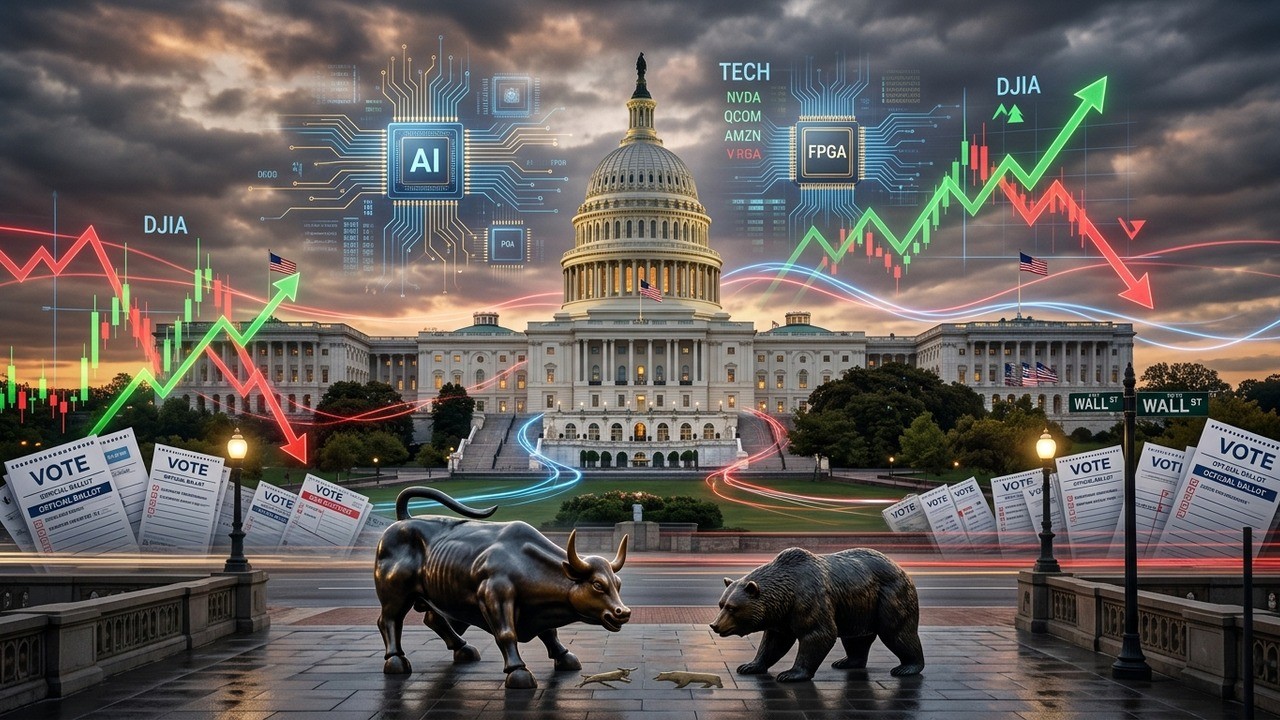
Executive Takeaways
- Fiscal & Regulatory Shift: Midterm election cycles fundamentally alter capital allocation pathways, directly impacting valuation multiples across regulated and high-growth sectors.
- Sector Divergence: Defense and healthcare face immediate budgetary re-allocations, while artificial intelligence and cryptocurrency confront pivotal shifts in federal oversight and compliance mandates.
- Portfolio Risk Mitigation: Institutional investors are aggressively recalibrating enterprise ROI models and infrastructure scalability forecasts ahead of shifting legislative majorities.
As capital markets brace for the political realignment of the upcoming midterm elections, institutional investors, hedge fund managers, and corporate boards are executing intensive risk mitigation strategies. At the intersection of Washington policy and Wall Street valuation lies a complex web of regulatory compliance, federal appropriations, and technological innovation. Four sectors—defense, healthcare, cryptocurrency, and artificial intelligence—stand directly in the crosshairs of shifting legislative majorities.
For executive leadership teams, the upcoming cycle is not merely a political contest; it is a fundamental stress test of enterprise resilience, market liquidity, and long-term capital deployment. Understanding how Capitol Hill dynamics will dictate cash flows, R&D tax incentives, and antitrust enforcement is no longer optional—it is the primary determinant of portfolio outperformance.
The Macroeconomic Catalyst: Why Midterms Matter for Wall Street
Test Our Free AI & Tech Utilities Suite
Calculate LLM API token costs, analyze article dwell-time, or simulate tech DCA returns.
Historical market data demonstrates that midterm election years often introduce heightened market volatility followed by substantial relief rallies once political outcomes are crystallized. Unlike presidential cycles, midterms frequently result in divided government, which historically caps sweeping legislative changes but heightens regulatory scrutiny via congressional oversight committees.
Institutional portfolio managers are currently evaluating how shifts in committee chairmanships will impact federal spending bills. Enterprise ROI across government-dependent sectors hinges entirely on appropriations passed by the House and Senate. As lobbying expenditures surge in Washington, market participants must dissect how potential shifts in fiscal policy will alter cloud compute architecture investments, pharmaceutical pricing caps, digital asset regulatory frameworks, and national security budgets.
Deep-Dive Sector Analysis

1. Defense: Procurement Pipelines and Geopolitical Risk Premiums
The defense sector remains uniquely tethered to federal budgetary cycles. A shift in congressional control can radically accelerate or stall multi-billion-dollar procurement programs. Prime contractors and defense-tech startups focusing on advanced manufacturing, hypersonic missiles, and resilient satellite networks are closely monitoring authorization bills.
Investors must look beyond top-line revenue to examine backlog durability and operating margins. If defense spending prioritized by the executive branch encounters friction from a newly empowered legislative opposition, capital allocation may pivot toward asymmetric warfare capabilities, cybersecurity infrastructure, and unmanned autonomous systems. Risk mitigation in this space requires evaluating balance sheet leverage and supply chain redundancy against potential sequestration threats.
2. Healthcare: Margin Compression and Regulatory Oversight
Healthcare and biotechnology equities are perennial targets during election cycles. Debates surrounding drug pricing legislation, Medicare Advantage reimbursement rates, and the expansion or restriction of public health exchanges directly impact corporate earnings.
Pharmaceutical giants and biotech innovators are pricing in regulatory compliance costs as a core component of their financial modeling. A divided government typically limits radical structural overhauls, yet administrative agencies retain significant leeway to alter reimbursement formulas. Consequently, valuation multiples for clinical-stage biotech firms rely heavily on predictable FDA pathways and the preservation of intellectual property protections against legislative challenges.
3. Cryptocurrency: The Battle for Market Structure and Liquidity
The digital asset ecosystem faces a pivotal moment. Clear legislative frameworks regarding market structure—specifically defining the jurisdiction of the Securities and Exchange Commission (SEC) versus the Commodity Futures Trading Commission (CFTC)—hang in the balance.
Institutional adoption of decentralized finance (DeFi) and tokenized real-world assets (RWAs) depends on regulatory clarity. A crypto-forward legislative push could unlock massive institutional capital inflows, driving market liquidity and elevating enterprise valuations across blockchain infrastructure providers. Conversely, continued regulatory ambiguity risks driving capital offshore, compressing valuations for US-centric exchanges and fintech innovators.
4. Artificial Intelligence: Compute Infrastructure and Antitrust Enforcement
Artificial intelligence represents the most capital-intensive secular growth trend in modern market history. Hyperscalers and semiconductor manufacturers are pouring billions into cloud compute architecture, data center expansion, and advanced silicon fabrication.
The midterm election outcomes will directly influence federal antitrust scrutiny and export controls on high-end AI chips. Regulatory headwinds targeting monopolistic behavior among mega-cap tech firms could slow merger-and-acquisition activity, while energy policy decisions will dictate whether power grids can support the staggering electrical demands of next-generation training clusters. Investors must weigh the immense revenue potential of enterprise AI adoption against the rising threat of regulatory bottlenecks.
Verified Data & Metrics Breakdown
| Sector | Key Catalysts | Primary Risk Factor | Valuation Impact |
|---|---|---|---|
| Defense | Appropriations bills, NATO commitments, tech modernization | Budget impasses, procurement delays | Stable cash flows; multiple expansion tied to innovation |
| Healthcare | Drug price negotiations, patent cliffs, M&A activity | Price caps, adverse regulatory rulings | Defensive stability offset by margin compression |
| Crypto | Market structure bills, ETF inflows, stablecoin rules | Enforcement-heavy regulatory posture | High volatility; asymmetric upside on clarity |
| Artificial Intelligence | Data center energy access, enterprise software adoption | Antitrust scrutiny, semiconductor export bans | Premium multiples driven by infrastructure demand |
Frequently Asked Questions (People Also Ask)
How do midterm elections historically impact overall stock market performance?
Historically, the S&P 500 experiences heightened volatility leading up to midterm elections due to policy uncertainty. However, once the election results are finalized and the political landscape becomes clear, markets tend to experience a strong relief rally, often outperforming non-midterm years as the legislative gridlock removes the threat of sudden, radical policy shifts.
Which sectors are most insulated from political shifts during election cycles?
Defensive sectors such as consumer staples, utilities, and established telecommunications tend to exhibit lower beta during political transitions. Their steady dividend yields and inelastic demand insulate them from federal budget cuts and sudden regulatory overhauls that typically target high-growth tech or heavily subsidized industries.
What specific crypto legislation are institutional investors watching?
Institutional investors are primarily monitoring bills designed to establish a clear statutory boundary between commodities and securities in the digital asset space. Legislation clarifying stablecoin issuance reserves and providing a compliant registration pathway for centralized trading platforms is viewed as the catalyst for mainstream institutional capital deployment.
How do AI infrastructure investments intersect with federal energy and regulatory policy?
The exponential rise of generative AI requires unprecedented levels of electrical power and high-performance computing clusters. Federal policies regarding grid modernization, environmental permitting for data centers, and international trade restrictions on advanced semiconductors directly dictate the infrastructure scalability and capital expenditure timelines of major technology enterprises.
Future Outlook and Strategic Milestones
As the midterm election cycle accelerates, institutional investors are shifting from passive observation to active positioning. The interplay between macroeconomic indicators—such as interest rate trajectories and inflation prints—and political outcomes will dictate market leadership through the end of the decade.
Chief investment officers are advised to monitor key legislative milestones, including congressional committee hearings on digital assets, federal budget negotiations, and judicial rulings on corporate antitrust challenges. By maintaining disciplined risk mitigation frameworks, focusing on robust enterprise ROI, and selectively allocating capital toward high-conviction structural growth themes in defense, healthcare, crypto, and AI, sophisticated market participants can navigate the coming political volatility and capture generational investment returns.