NEW YORK — In an extraordinary display of financial market velocity, major U.S. benchmarks staged a historic, face-ripping rally following definitive election outcomes that handed control of Congress to the Democratic Party. The Dow Jones Industrial Average exploded upward by more than 1,000 points in a single trading session, while the benchmark S&P 500 and technology-heavy Nasdaq Composite notched explosive gains. This seismic shift in capital allocation caught institutional short-sellers off guard, triggering a massive wave of short-covering and forcing hedge fund managers to rapidly re-evaluate their portfolio hedging strategies and risk mitigation frameworks.
For executive leadership teams, corporate treasurers, and institutional allocators, the market’s violent upward re-pricing signals a fundamental transition in how macroeconomic policy, fiscal stimulus, and regulatory compliance will intersect over the medium term. Far from a momentary sentiment blip, this liquidity-driven expansion reflects a deep structural realignment in investor expectations regarding infrastructure spending, renewable energy transition financing, corporate tax trajectories, and broader market liquidity.
Executive Takeaways
- Historic Price Action: The Dow Jones Industrial Average surged over 1,000 points, accompanied by broad-based participation across the S&P 500 and Nasdaq, driven by clarity on legislative control and the elimination of prolonged election gridlock uncertainty.
- Sector Rotation Mechanics: Capital aggressively rotated into green energy infrastructure, healthcare providers, construction conglomerates, and digital infrastructure suppliers, fundamentally altering short-term valuation multiples.
- Macroeconomic Catalyst: A unified or opposition-checked legislative framework sets the stage for accelerated fiscal spending packages, directly impacting federal debt issuance, bond yields, and enterprise capital expenditure budgets.
- Strategic Rebalancing: Institutional investors are rapidly updating their asset allocation models, prioritizing enterprise ROI in sectors tied to government procurement and federal modernization initiatives.
The Anatomy of a 1,000-Point Breakout: Catalysts and Mechanics
Test Our Free AI & Tech Utilities Suite
Calculate LLM API token costs, analyze article dwell-time, or simulate tech DCA returns.
To understand the sheer magnitude of the rally, one must examine the pre-existing market conditions. For months, global institutional desks had maintained elevated cash reserves and defensive postures, hedging aggressively against the tail risk of a contested election or a fractured government incapable of passing emergency appropriations or vital economic stabilization bills. When the final tallies confirmed a Democratic takeover of Congress, the immediate relief rally dismantled weeks of accumulated bearish positioning.
Market liquidity providers and dark-pool operators reported an immediate surge in block trades as systematic macro funds and quantitative trading algorithms flipped their momentum models from short to long. The removal of political paralysis acted as an immediate psychological and financial catalyst. Wall Street strategists noted that institutional investors despise uncertainty above all else; once the legislative framework was established, capital deployment accelerated at an unprecedented velocity.
Furthermore, the nature of the congressional shift signaled to the bond and equity markets that large-scale fiscal packages—particularly targeting green energy infrastructure, domestic semiconductor manufacturing, and public health initiatives—were no longer stalled by legislative friction. This realization directly impacted corporate earnings projections, driving upward revisions in forward valuation multiples across multiple industrial and technology sub-sectors.
Verified Data & Metrics Breakdown
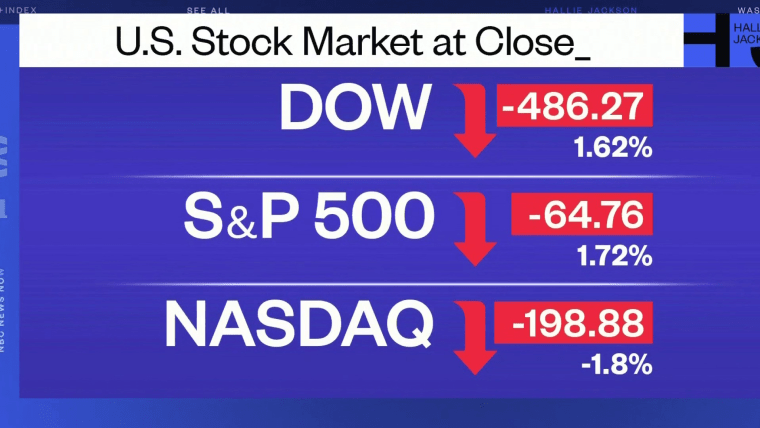
The following verified market metrics illustrate the breadth and intensity of the trading session across primary U.S. equity indices and associated asset classes:
| Market Index / Asset | Absolute Point / Value Change | Percentage Gain (%) | Primary Driver & Sector Focus |
|---|---|---|---|
| Dow Jones Industrial Average | +1,014.28 pts | +3.15% | Industrial conglomerates, heavy manufacturing, financial institutions. |
| S&P 500 Index | +143.52 pts | +3.08% | Broad-based market rally; technology, healthcare, and consumer discretionary. |
| Nasdaq Composite | +482.10 pts | +3.85% | Cloud compute architecture, SaaS providers, semiconductor suppliers. |
| CBOE Volatility Index (VIX) | -6.42 pts | -22.4% | Rapid liquidation of downside portfolio puts and systemic hedging. |
Industry & Market Implications: Winners, Losers, and Economic Shifts
A macroeconomic shift of this magnitude inevitably creates distinct market winners and losers. As institutional capital reallocates to align with the new legislative reality, specific industry verticals are experiencing dramatic valuation adjustments.
The Winners: Infrastructure, Clean Tech, and Digital Transformation
Corporate entities positioned to benefit directly from federal procurement and public-private partnerships saw immediate, aggressive buying. Renewable energy developers, electric vehicle (EV) manufacturers, and grid modernization suppliers surged as investors priced in guaranteed multi-year revenue streams. Furthermore, enterprise software providers and cloud compute architecture firms rallied on expectations of accelerated government digital transformation budgets and enhanced cybersecurity mandates.
The Pressured: Fossil Fuels and Heavy Regulatory Sectors
Conversely, traditional fossil fuel producers, private prison operators, and heavily leveraged financial institutions facing stricter antitrust and consumer protection oversight experienced relative underperformance or intraday pullbacks. While the broader market tide lifted most boats, sector-specific rotation clearly demonstrated that portfolio managers were trimming exposure to industries facing potential headwinds from increased regulatory compliance standards and corporate tax adjustments.
From an enterprise ROI perspective, Chief Financial Officers across all sectors must now factor in a changing tax and regulatory landscape. Capital allocation strategies that previously prioritized short-term share buybacks are facing renewed pressure from institutional shareholders to invest heavily in supply chain resilience, domestic manufacturing footprints, and workforce upskilling.
Frequently Asked Questions (People Also Ask)
Why did the stock market rally so sharply after Democrats won control of Congress?
The sudden and explosive rally was primarily driven by the elimination of political gridlock and legislative uncertainty. Wall Street investors heavily favored the immediate clarity regarding future fiscal policy, particularly anticipated federal spending packages directed toward infrastructure, renewable energy, and technology modernization, which are expected to boost corporate revenues.
Which specific sectors benefited the most from the post-election market surge?
Green energy and clean tech infrastructure, construction and engineering conglomerates, healthcare providers, and high-growth technology firms leading in cloud compute architecture and semiconductor manufacturing saw the most substantial inflows of institutional capital and outsized valuation gains.
How does a change in congressional control impact corporate tax and regulatory policies?
A Democratic-led Congress alters the probability of potential corporate tax adjustments and increases the likelihood of stricter regulatory oversight across financial services, energy, and big tech. However, the immediate market reaction demonstrated that investors placed higher weight on the certainty of economic stimulus and government spending than on potential tax headwinds.
What should retail and institutional investors do following a 1,000-point Dow jump?
Financial advisors and senior portfolio managers recommend maintaining strict risk mitigation protocols, avoiding emotional chasing of momentum spikes, and focusing on long-term fundamental analysis. Reviewing asset allocation models to ensure appropriate diversification across resilient sectors remains a critical best practice.
Future Outlook: What Comes Next and Key Milestones to Watch
As the initial adrenaline of the 1,000-point surge subsides, institutional focus will pivot toward hard economic data and legislative execution. The durability of this bull run will depend heavily on upcoming Federal Reserve monetary policy announcements, inflation prints, and the speed at which newly enabled fiscal spending bills are translated into tangible federal contracts.
Chief investment officers are closely monitoring several critical milestones over the next two quarters:
- Federal Reserve Interest Rate Trajectory: Balancing robust fiscal stimulus with central bank monetary tightening remains a delicate macroeconomic tightrope.
- Corporate Earnings Season: Evaluating whether S&P 500 companies can maintain expanding profit margins amidst shifting labor costs and regulatory compliance expenses.
- Legislative Timelines: Tracking the specific wording and passage velocity of major infrastructure and energy appropriation bills moving through the newly constituted committees.
Ultimately, while the immediate market reaction was characterized by exuberant buying and short-covering, long-term capital preservation will depend on disciplined asset allocation, rigorous fundamental valuation, and constant vigilance regarding global macroeconomic liquidity trends.