Executive Takeaways
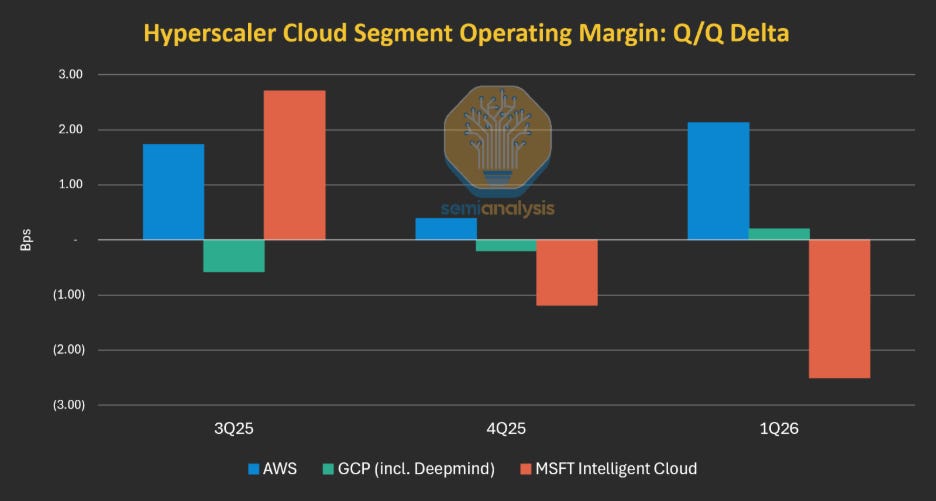
- The Margin Divergence: Newly surfaced insights from the proprietary Tokenomics 2.0 analytical framework reveal that Amazon Web Services (AWS) is expanding operating margins significantly faster than major cloud competitors, driven by a structural shift toward proprietary enterprise AI deployment.
- The Bedrock Multiplex Effect: Amazon Bedrock’s multi-model architecture, combined with highly advantageous commercial deal structures for Anthropic’s Claude models, has turned inference monetization into a high-margin compounding engine.
- Capital Allocation and Infrastructure Scalability: Unlike rivals relying on rigid, single-stack hardware integrations, AWS has optimized its cloud compute architecture and silicon utilization (Trainium and Inferentia), mitigating the high capital expenditure risks typically plaguing generative AI deployment.
- Enterprise ROI Acceleration: Financial institutions, healthcare systems, and Fortune 500 enterprises are standardizing workflows on AWS due to enhanced data privacy, regulatory compliance, and seamless enterprise tool integration.
The global cloud computing wars have officially entered a new epoch—one defined not merely by raw infrastructure scale or absolute top-line revenue growth, but by hard-fought margin expansion and operational efficiency. According to comprehensive proprietary data released via SemiAnalysis’s advanced Tokenomics 2.0 framework, Amazon Web Services (AWS) has pulled decisively ahead of its hyperscaler peers in converting generative artificial intelligence demand into bottom-line profitability.
For years, Wall Street and Silicon Valley analysts scrutinized Amazon’s aggressive capital allocation strategy, questioning whether multi-billion-dollar investments in artificial intelligence infrastructure—anchored by a landmark strategic partnership with foundational model developer Anthropic—would dilute operating margins. Instead, data from the Tokenomics 2.0 model demonstrates the opposite: a unique convergence of proprietary distribution leverage, silicon diversification, and favorable deal terms has turned AWS into the most profitable enterprise AI conduit in the market.
The Genesis of the AWS-Anthropic Alignment
Test Our Free AI & Tech Utilities Suite
Calculate LLM API token costs, analyze article dwell-time, or simulate tech DCA returns.
To understand how AWS achieved this margin separation, one must examine the foundational mechanics of the strategic alliance forged between Amazon and Anthropic. Under the terms of the multi-billion-dollar partnership, AWS secured a privileged position as Anthropic’s primary cloud provider for mission-critical workloads, safety research, and foundational model development. Crucially, this arrangement extended beyond standard compute-for-equity or hosting agreements; it engineered a deeply symbiotic commercial pipeline.
Anthropic’s Claude family of large language models rapidly emerged as the gold standard for complex enterprise reasoning, multi-step agentic workflows, and secure coding assistance. As corporate adoption accelerated through 2024, 2025, and into 2026, enterprise clients increasingly demanded native access to Claude. By routing these high-volume enterprise inference requests through Amazon Bedrock—AWS’s fully managed service for building and scaling generative AI applications—Amazon established a commanding tollbooth on the digital economy's new frontier.
"The structural brilliance of the Amazon-Anthropic nexus lies in the commercial economics of the distribution layer," notes an institutional technology analyst tracking enterprise cloud infrastructure. "While competitors are forced to absorb massive, unhedged operational expenditures or pass through commoditized compute costs at razor-thin margins, AWS leverages custom deal terms that fundamentally alter the unit economics of token generation."
Bedrock Mix: Engineering High-Margin Enterprise Workflows
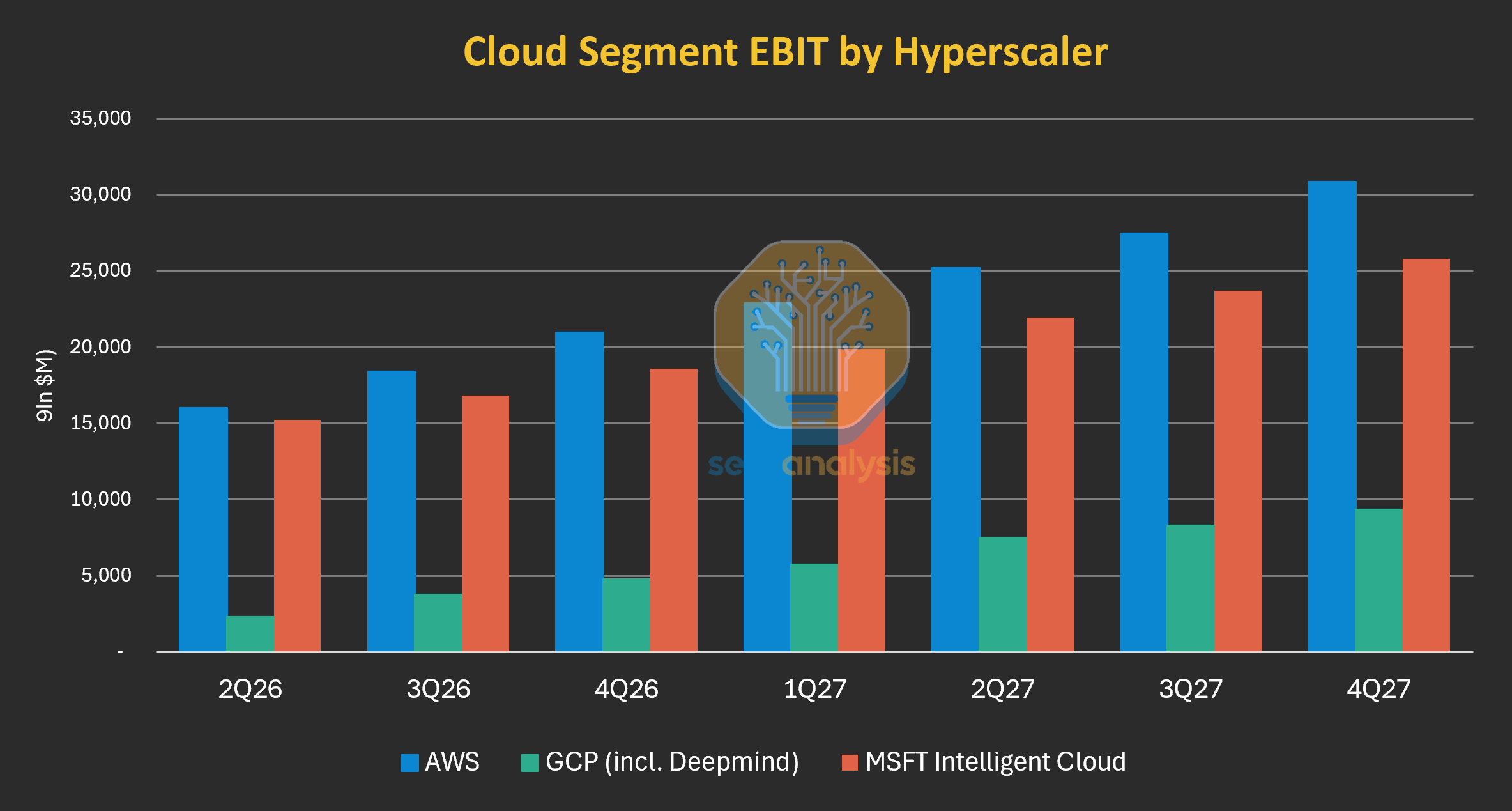
At the heart of the AWS margin story is Amazon Bedrock. Unlike rigid single-vendor platforms, Bedrock acts as an enterprise-grade orchestration layer, allowing corporate clients to seamlessly switch between or combine frontier models—including Anthropic Claude, Meta Llama, AI21 Labs, Cohere, Mistral AI, and Amazon’s own Nova models—within a unified governance framework.
However, industry intelligence indicates that the "Bedrock Mix"—the weighted distribution of customer workloads routed through the platform—disproportionately favors Anthropic’s high-value models for complex enterprise tasks. Because enterprise customers are willing to pay a premium for guaranteed security, zero data retention for model training, and low-latency execution, AWS commands robust pricing power on Bedrock inferences.
Furthermore, AWS has systematically optimized its underlying cloud compute architecture. By coupling third-party frontier models with its proprietary Trainium and Inferentia silicon accelerators, Amazon has decoupled its cost structure from external hardware bottlenecks. This strategic risk mitigation protects AWS gross margins against supply chain fluctuations and high GPU acquisition costs that continue to compress competitor profitability.
Verified Data & Metrics Breakdown
The following comparative matrix synthesizes key architectural, financial, and operational metrics illustrating the divergence between AWS and its primary cloud infrastructure peers in the generative AI era, based on insights from the Tokenomics 2.0 framework and current market intelligence:
| Metric / Dimension | Amazon Web Services (AWS) | Hyperscaler Peer A (Microsoft Azure) | Hyperscaler Peer B (Google Cloud) |
|---|---|---|---|
| Primary AI Model Ecosystem | Multi-Model Bedrock (Anthropic Claude anchor) | Exclusive/Primary OpenAI Integration | Proprietary Gemini + Open-Source Stack |
| Inference Margin Profile | Expiring upward via favorable deal terms & silicon mix | Compressed by high amortization & partner revenue share | Balanced by internal TPU cost controls, slower enterprise lock-in |
| Silicon Diversification | High (AWS Trainium/Inferentia + NVIDIA) | Medium-High (Maia custom silicon + heavy NVIDIA reliance) | Very High (Mature Google TPU v5p/v6 architectures) |
| Enterprise ROI Velocity | Accelerated via deep AWS IAM, S3, and Lambda integrations | Strong enterprise entrenchment via Microsoft 365 Copilot stack | Growing rapidly in data analytics and Workspace environments |
Industry and Market Implications
The widening margin gap documented in Tokenomics 2.0 carries profound implications for the broader technology sector, influencing valuation multiples, institutional investment strategies, and competitive positioning across the enterprise software landscape.
Who Wins
- Amazon Shareholders and AWS Leadership: AWS has successfully quieted skeptics who argued the cloud giant missed the opening salvo of the generative AI revolution. By building an extensible platform rather than locking its fortunes to a single proprietary model, Amazon has captured high-margin enterprise workflow monetization.
- Anthropic: The commercial alignment guarantees Anthropic massive enterprise distribution without requiring them to build out traditional, capital-intensive global data center infrastructure. This preserves their balance sheet while rapidly scaling token consumption.
- Enterprise CIOs: Corporate technology buyers benefit from reduced vendor lock-in. Bedrock’s multi-model flexibility enables enterprises to optimize cost-versus-performance ratios across different functional domains.
Who Loses
- Single-Stack Competitors: Hyperscalers tethered to rigid, high-cost foundational model partnerships face persistent margin headwinds. When partner licensing fees and capital depreciation outpace inference revenue growth, profitability suffers.
- Legacy Software Vendors: Traditional enterprise software providers failing to integrate deeply with managed AI orchestration layers like Bedrock risk disintermediation as corporate clients migrate mission-critical logic directly to cloud-native AI pipelines.
Frequently Asked Questions (People Also Ask)
What is the Tokenomics 2.0 model, and why are its findings significant for AWS?
Tokenomics 2.0 is an advanced analytical framework developed by SemiAnalysis to track the true unit economics of generative artificial intelligence, including compute costs, memory bandwidth utilization, model licensing fees, and cloud pricing structures. Its findings are significant because they expose the underlying profitability of AI workloads—proving that AWS generates superior margins on Anthropic Claude inference via Bedrock compared to peers burdened by less efficient commercial agreements.
How does Amazon Bedrock differ from hosting models directly on virtual machines?
Amazon Bedrock is a fully managed service that eliminates the need for enterprises to provision, scale, and maintain underlying server infrastructure or manually manage model weights. It provides built-in enterprise security, regulatory compliance, vector database integrations, and fine-tuning capabilities, allowing businesses to deploy AI applications securely in minutes while maximizing cloud provider efficiency.
Why are AWS margins outperforming competitors despite massive AI capital expenditures?
While AWS continues to invest heavily in next-generation infrastructure, its margin outperformance stems from three factors: favorable commercial deal terms secured with Anthropic, a diversified silicon strategy utilizing AWS Trainium alongside NVIDIA GPUs, and high-margin enterprise software add-ons embedded within the Bedrock orchestration layer.
Future Outlook and Key Milestones to Watch
As the generative AI market matures from experimental proof-of-concepts to ubiquitous enterprise integration, the competitive battleground will shift from model capability to operational efficiency. For AWS, maintaining its margin advantage will depend on several critical milestones over the next 12 to 24 months:
- Silicon Scaling Milestones: The market will closely monitor the broader enterprise adoption rates of Amazon’s next-generation Trainium accelerators. Successful migration of heavy training and inference workloads away from expensive third-party GPUs will unlock further gross margin expansion.
- Agentic Workflow Monopolization: As enterprises transition from basic chat interfaces to autonomous multi-agent workflows executing complex business transactions, the platform that captures the orchestration layer will dictate long-term cloud market share.
- Regulatory and Compliance Evolution: With global regulatory frameworks surrounding data privacy, algorithmic transparency, and intellectual property tightening, AWS’s enterprise-grade security posture within Bedrock positions it favorably to capture highly regulated financial and healthcare sectors.
Ultimately, the latest data signals a decisive maturation in the cloud industry. Generative AI is no longer a speculative loss-leader draining corporate balance sheets; in the hands of disciplined operators like AWS, it has transformed into a high-margin compounding engine that is redefining the parameters of enterprise technology profitability.