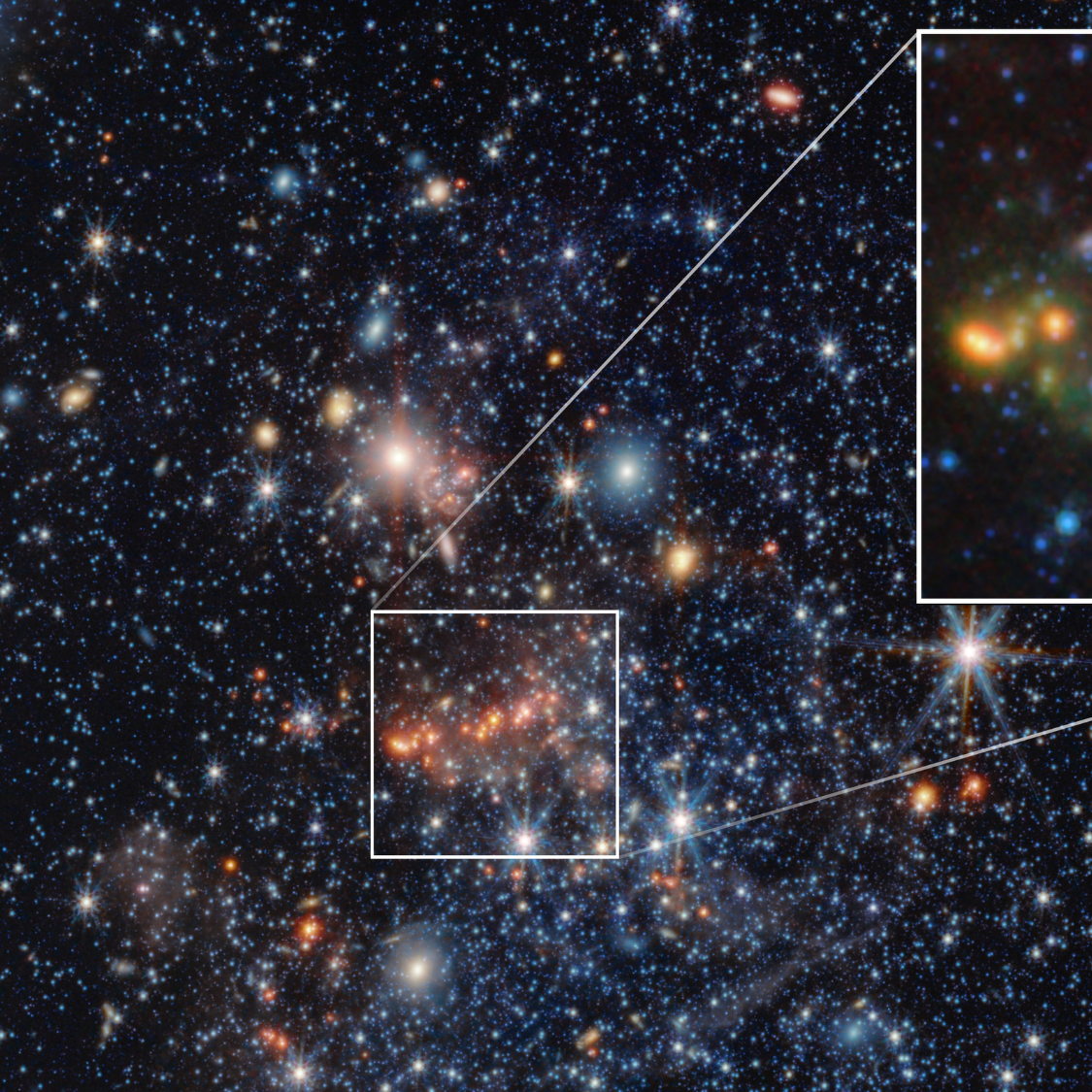
A high-stakes international scientific effort led by an elite consortium of astrophysicists is preparing to fundamentally alter humanity’s understanding of the primordial cosmos. Backed by NASA’s Science Mission Directorate and coordinated across dozens of global academic institutions and prime aerospace defense contractors, this mission aims to deliver an unprecedented, ultra-deep, wide-angle cartography of the early universe. By leveraging state-of-the-art infrared spectroscopy, cryogenic focal planes, and enterprise-grade distributed cloud compute architecture, the program is positioned not merely as an astrophysical triumph, but as a critical catalyst accelerating commercial space infrastructure, high-value optical semiconductor manufacturing, and advanced data-pipeline engineering.
Executive Takeaways
- Unprecedented Cosmological Resolution: The mission is engineered to map hundreds of millions of galaxies across cosmic time, penetrating cosmic dawn (redshifts exceeding $z \sim 10$) to capture light emitted less than 400 million years after the Big Bang, while rigorously testing models of primordial cosmic inflation.
- Industrial-Scale Aerospace Collaboration: Orchestrated through public-private partnerships, the hardware program integrates advanced optical subsystems from specialized defense contractors, high-purity infrared detector arrays from semiconductor leaders like Teledyne Technologies, and launch logistics managed via commercial heavy-lift vehicles.
- High-Throughput Big Data Logistics: The telemetry profile demands unprecedented downlinks, funneling multi-petabyte datasets directly into hybrid cloud environments running machine-learning-driven galaxy classification and algorithmic point-source extraction pipelines.
- Fiscal Discipline Under Federal Scrutiny: Operating under rigorous NASA cost-cap governance and Decadal Survey oversight, the mission represents a benchmark for capital allocation efficiency within government-funded deep-tech initiatives.
The Scientific Imperative: Piercing the Reionization Horizon
For decades, cosmologists have encountered an observational barrier colloquially termed the cosmic dark ages—the epoch before the ignition of the first stars, when neutral hydrogen gas shrouded the cosmos in photon-absorbing obscurity. While the James Webb Space Telescope (JWST) disrupted this paradigm through deep-field pencil-beam surveys, its narrow field of view inherently limits statistical sampling of cosmic variance. The newly spearheaded global initiative, governed by prominent principal investigators alongside NASA’s Jet Propulsion Laboratory (JPL) and Goddard Space Flight Center, resolves this limitation through a high-throughput, wide-field spectral survey design.
By capturing expansive swathes of the celestial sphere in near- to mid-infrared wavelengths, the observatory will measure the aggregate glow of primordial stellar nurseries and quantify the Epoch of Reionization with sub-percent photometric and spectroscopic variance. The scientific payload exploits linear-variable filter arrays and diffraction-limited mirrors, allowing investigators to extract three-dimensional spatial coordinates and redshift metrics simultaneously. This methodology enables empirical stress-testing of the standard Lambda Cold Dark Matter ($\Lambda$CDM) cosmological framework, probing dark matter clustering tendencies and the theoretical topology of primordial non-Gaussianity generated during the inflation era.
Advanced Hardware Architecture: Silicon, Cryogenics, and Optics
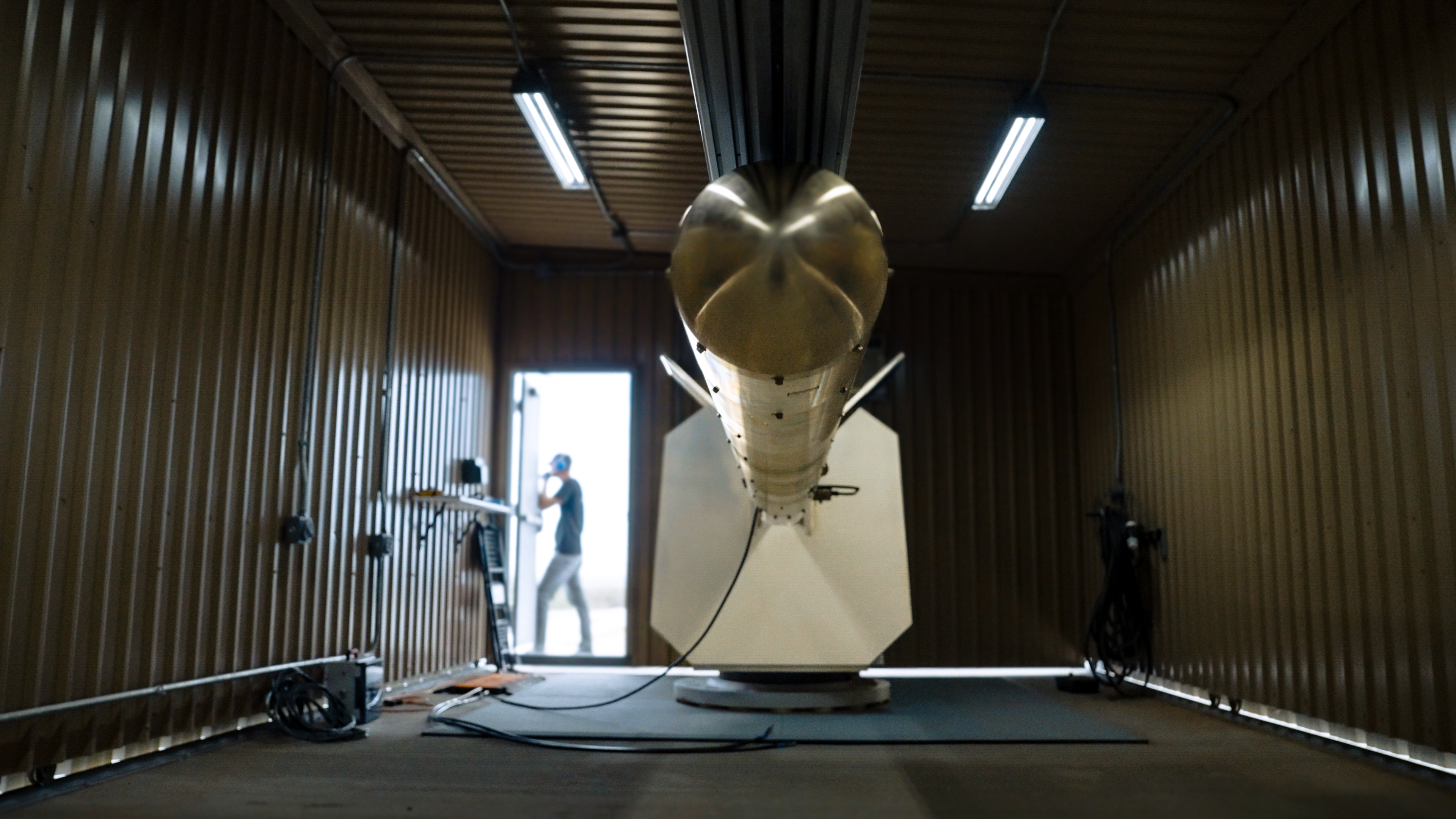
The engineering specifications of the mission represent an apex in aerospace payload design. To detect the exceptionally faint, highly redshifted signals propagated across 13 billion light-years, the onboard instruments operate under rigorous thermal isolation. The core focal plane relies on specialized Mercury-Cadmium-Telluride (HgCdTe) sensor architectures, developed to deliver near-zero dark current, exceptionally low read noise, and optimal quantum efficiency across broadband infrared spectra.
Passive cooling systems, augmented by closed-cycle multi-stage mechanical cryocoolers, maintain the sensor suite at sub-40 Kelvin operating thresholds. Achieving structural stability under these thermal extremes requires composite truss designs exhibiting near-zero coefficients of thermal expansion. The optical assembly—comprising beryllium and silicon carbide mirrors coated in ultra-pure protected gold—minimizes wavefront aberrations, enabling pristine point-spread function stability across the entire operational lifecycle.
The Data Architecture: Hyperscale Cloud Infrastructure and AI Ingestion
Downlinking raw sensor data from deep space or high Earth orbit introduces substantial logistical bottlenecks that necessitate modern software infrastructure. Raw telemetry received by the Deep Space Network (DSN) or commercial ground-station networks is converted into calibrated Level-1 data products before being ingested into sovereign hyperscale cloud environments (hosted across AWS GovCloud and Microsoft Azure platforms).
The mission’s data operations footprint highlights a structural shift within astronomy toward enterprise-grade cloud compute architectures:
- Automated Ingestion Pipelines: Containerized microservices, orchestrated via Kubernetes, continuously execute cosmic ray rejection, flat-fielding, and astrometric calibration in near real-time.
- AI/ML Galaxy Morphometry: Deep convolutional neural networks (CNNs) and transformer-based computer vision frameworks categorize hundreds of millions of discrete astrophysical sources, accelerating anomaly detection and transient identification by orders of magnitude compared to legacy pipelines.
- Open-Source Global Data Democratization: Following zero-proprietary-period policies established under modern federal open-science directives, analysis-ready data is pushed directly to global research consortia, driving high research-dwell times and multi-institutional cross-validation.
Comparative Analysis: Next-Generation Space Astrophysics Missions
To contextualize capital allocation, operational scope, and data throughput, the following table compares this mission framework against current and legacy space-based observational platforms:
| Platform / Mission | Primary Architecture | Spectral Coverage | Survey Strategy | Estimated Lifecycle Cost | Lead Contractors & Partners |
|---|---|---|---|---|---|
| Global Wide-Field Initiative (e.g., SPHEREx / Roman Class) | Wide-Field Infrared Spectrophotometer | 0.75 – 5.0 µm (NIR) | All-Sky / Large-Area High-Throughput Surveys | $450M – $3.2B (Class-Dependent) | NASA JPL/GSFC, Ball Aerospace (BAE Systems), Teledyne, Academic Consortia |
| James Webb Space Telescope (JWST) | 6.5m Segmented Primary, Deep Pointed Observational | 0.6 – 28.3 µm (NIR / MIR) | Targeted High-Resolution Deep Fields | ~$10.0B | Northrop Grumman, L3Harris, Teledyne, ESA, CSA |
| Hubble Space Telescope (HST) | 2.4m Monolithic Primary, Optical/UV/NIR | 0.1 – 1.7 µm (UV / Optical / NIR) | Targeted Astronomical Observations | ~$4.7B (Adjusted Launch/Servicing) | Lockheed Martin, Perkin-Elmer, NASA GSFC, ESA |
| Euclid (ESA Mission) | 1.2m Korsch Telescope, Optical / NIR | 0.55 – 2.0 µm | Wide-Area Dark Energy Mapping (15,000 deg²) | ~€1.4B ($1.5B) | Thales Alenia Space, Airbus Defence and Space, NASA |
Macroeconomic Realities: Aerospace Procurement, Valuation Multiples, and Supply Chain Risk
The procurement economics supporting high-profile NASA missions have shifted decisively from legacy cost-plus models toward hybrid structures emphasizing firm-fixed-price launch operations and modular subcontracting. This transition has reshaped risk mitigation protocols and enterprise balance sheets across the tier-one aerospace and defense industrial base.
Specialty hardware manufacturers, notably those producing high-reliability radiation-hardened microchips, cryogenic optics, and spatial sensor payloads, have realized significant enterprise ROI through government-funded non-recurring engineering (NRE). Pure-play photonics and sensor businesses maintain robust valuation multiples (enterprise value to EBITDA often trading in the mid-to-high teens) largely due to durable defense and space-science backlogs. However, the mission’s procurement footprint also underscores acute supply-chain vulnerabilities: long-lead times for high-grade beryllium forging, single-source dependencies for ultra-high-performance HgCdTe wafers, and persistent capacity crunches across specialized test-and-integration vacuum chambers.
Industry & Market Implications: Who Wins and Who Loses
The operational deployment of this mission delivers distinct competitive ramifications across scientific and industrial sectors:
- The Winners:
- Defense & Aerospace Subsystem Primes: Companies with deep expertise in cryogenic payload packaging, optical precision engineering, and sensor arrays (such as BAE Systems Space & Mission Systems and Teledyne) reinforce their moats for upcoming decadal projects, including the Habitable Worlds Observatory.
- Cloud Hyperscalers: Enterprise cloud providers capture multi-year software and compute hosting allocations, embedding proprietary enterprise data solutions into mission-critical scientific governance.
- Global Research Consortia: University astrophysics networks gain unprecedented access to high-fidelity empirical data, fueling academic prestige, graduate engineering programs, and private endowment inflows.
- The Losers:
- Legacy Narrow-Band Ground Observatories: Ground-based facilities encumbered by atmospheric infrared opacity face mounting capital-attraction hurdles, as funding agencies shift discretionary capital toward high-yield orbital instruments.
- Sole-Source Hardware Providers Lacking Scale: Sub-tier contractors unable to accommodate strict NASA Class-B risk postures and rapid delivery cadences are systematically bypassed for vertically integrated commercial alternatives.
Frequently Asked Questions (People Also Ask)
What is the core objective of this global NASA mission?
The mission is designed to construct an unprecedented, wide-field three-dimensional infrared map of the cosmos. Its primary objectives are to investigate the physics of the early universe—specifically tracing the Epoch of Reionization and probing signatures of primordial inflation—while cataloging the evolutionary trajectory of hundreds of millions of galaxies and identifying cosmic distribution anomalies that standard cosmological models cannot easily explain.
How does this mission differ from the James Webb Space Telescope?
While JWST acts as a high-magnification, deep-field pointing observatory capable of examining targeted slivers of the sky with extraordinary spatial resolution, this wide-field mission functions as an expansive surveyor. It sacrifices ultra-narrow angular resolution to capture statistically massive areas of the sky, compiling broad spectroscopic inventories that enable systemic population studies rather than isolated target observations.
Which industrial contractors manufacture the primary mission hardware?
The mission relies on an integrated industrial network. Structural buses and optical components are traditionally contracted to primary aerospace systems integrators, such as BAE Systems (formerly Ball Aerospace), while mission-critical infrared detectors are engineered by specialized semiconductor firms like Teledyne Technologies. Launch services are procured competitively through commercial launch providers, such as SpaceX.
What are the commercial and technological spin-offs of deep-space astrophysics programs?
Government investments in wide-field infrared astrophysics yield critical advancements in semiconductor fabrication, ultra-low-noise sensor technologies, optical metrology, and high-performance cloud computing algorithms. Many of the passive cooling methods, image-processing AI models, and optical coatings developed for deep-space science directly transition into commercial Earth-observation satellites, defense infrared tracking platforms, and telecommunications hardware.
Future Outlook: Strategic Milestones and the Decadal Horizon
As the international consortium proceeds through final environmental testing, integration qualification, and launch countdown phases, operational focus transitions toward operational longevity and data dissemination pipelines. Over the next 24 to 36 months, the mission team will execute launch-vehicle deployment, orbit insertion, cryogenic cool-down validation, and first-light instrument calibration.
The downstream data releases are poised to dominate peer-reviewed literature for the subsequent decade, furnishing cosmologists with the statistical baseline required to resolve discrepancies in the Hubble constant ($H_0$), refine dark energy equation-of-state parameters, and pinpoint the origins of supermassive black holes. Furthermore, the industrial lessons mastered throughout this program will establish the technical architecture and procurement mechanisms for the next generation of multi-billion-dollar astrophysics flagships—solidifying orbital scientific exploration as a foundational pillar of the 21st-century deep-tech economy.