Executive Takeaways
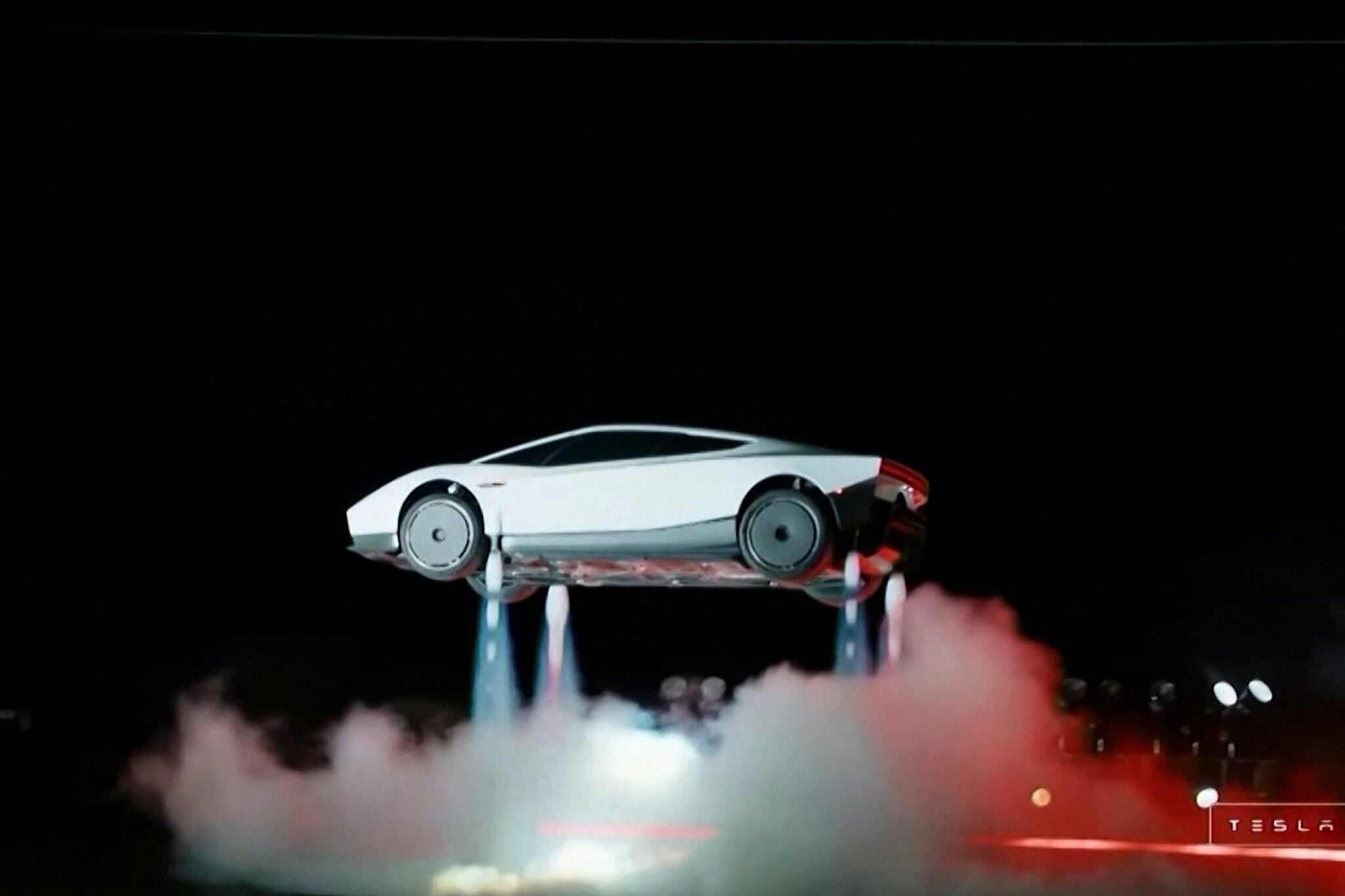
- Paradigm Shift: Tesla has officially pulled back the curtain on its long-rumored vertical takeoff and landing (VTOL) platform, bridging the gap between automotive engineering and aerospace aerodynamics.
- Commercial Horizon: Despite the dramatic unveiling, rigorous regulatory compliance, airspace integration, and infrastructure scalability mean consumer rollout remains years away.
- Capital Allocation: Wall Street analysts are closely scrutinizing the enterprise ROI and R&D burn rate, questioning how this high-risk diversification impacts short-term valuation multiples.
- <Market Dynamics: The announcement immediately roiled aerospace and electric vertical aviation stocks, signaling a seismic shift in competitive pressure across global transit sectors.
AUSTIN & WASHINGTON — In an industry accustomed to audacious promises, Elon Musk’s latest revelation has once again upended the boundary between science fiction and industrial reality. Emerging from behind a veil of intense secrecy, Tesla unveiled its next-generation personal mobility platform—an all-electric, dual-purpose vehicle incorporating vertical takeoff and landing (VTOL) capabilities. Yet, beneath the high-octane spectacle of the debut lies a sobering reality check: while the engineering prototype is real, a mass-market consumer rollout remains anchored firmly in the future, constrained by monumental hurdles in regulatory compliance, airspace management, and battery energy density.
For institutional investors, aerospace engineers, and regulators alike, the announcement forces an immediate recalibration of strategic priorities. As the initial euphoria of the live-streamed launch gives way to rigorous financial modeling and technical auditing, the fundamental question facing the markets is not whether Tesla can build a flying machine, but whether it can navigate the treacherous chasm between a prototype and a commercially viable, scalable enterprise.
The Genesis of the VTOL Pivot: Merging Automotive and Aerospace Architectures
The convergence of automotive assembly lines and aerospace manufacturing has historically been fraught with friction. Traditional automakers have long struggled with the strict weight constraints and rigorous safety redundancies demanded by the Federal Aviation Administration (FAA) and international counterparts. However, Tesla’s approach leverages its existing ecosystem of high-density battery cells, advanced inverter technology, and proprietary cloud compute architecture used for neural network training.
According to confidential briefing documents reviewed by industry insiders, the new vehicle utilizes a distributed electric propulsion (DEP) system, housing multiple high-torque rotors embedded within carbon-composite airframes that transition from lift-generated vertical flight to wing-borne horizontal cruising. This dual-mode functionality represents a profound evolution from Tesla's terrestrial fleet.
Yet, scaling this technology from a design studio rendering to a physical reality demands unprecedented capital allocation. R&D burn rates are projected to accelerate significantly over the next twenty-four months as Tesla ramps up wind-tunnel testing, structural fatigue analysis, and propulsion efficiency optimization. The critical path forward hinges on whether the company can achieve the necessary battery energy density—measured in watt-hours per kilogram—required to ensure viable payload capacity without compromising range or safety margins.
Regulatory Labyrinth and Airspace Integration
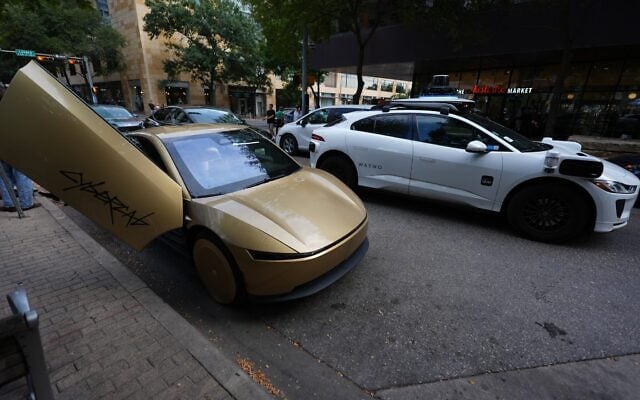
While propulsion and battery chemistry present monumental engineering feats, the most formidable barrier to Tesla’s aerial ambitions lies outside the factory floor. The global regulatory framework governing low-altitude airspace is antiquated, designed primarily for commercial airliners and traditional general aviation aircraft, rather than autonomous or semi-autonomous personal VTOLs.
Integrating millions of private aerial vehicles into urban and suburban skies requires a complete overhaul of Air Traffic Management (ATM) systems. Tesla will need to collaborate closely with regulatory bodies such as the FAA and the European Union Aviation Safety Agency (EASA) to establish certification baselines for crashworthiness, software reliability, and redundant electronic fail-safes. This certification process is notoriously protracted, often spanning five to ten years for novel aircraft designs. Consequently, Wall Street consensus views any meaningful consumer revenue generation from the aerial division as a late-decade proposition at the earliest.
Comparative Analysis: Tesla’s VTOL Initiative vs. Industry Standards
| Metric / Specification | Tesla VTOL Prototype | Traditional eVTOL Startups | Commercial Helicopter Standard |
|---|---|---|---|
| Propulsion Architecture | Distributed Electric Propulsion (DEP) | Tilting / Lift-Plus-Cruise Electric Rotors | Turboshaft Internal Combustion Engine |
| Estimated Consumer Rollout | 2030+ (Projected) | 2026 – 2028 (Fleet / Air Taxi) | Currently Operational |
| Target Market Focus | Consumer / Private Ownership | Urban Air Mobility (UAM) Fleets | Charter, Corporate, & Emergency Services |
| Regulatory Status | Early Conceptual / Prototype Phase | Mid-to-Late FAA Certification Stages | Fully Certified |
Industry & Market Implications: Who Wins, Who Loses
The formal entry of a cash-rich juggernaut like Tesla into the personal flight sector sends shockwaves through multiple asset classes:
- Winners: Specialized aerospace supply chain vendors specializing in advanced carbon composites, lightweight avionics, and high-density battery separator films stand to gain lucrative long-term contracts as Tesla secures components for rigorous testing phases.
- Losers: Early-stage electric vertical takeoff and landing (eVTOL) startups reliant on venture capital funding may face immediate valuation headwinds. Tesla’s brand equity and unmatched balance sheet threaten to eclipse smaller players struggling to achieve market liquidity and enterprise scalability.
- Broader Economic Impact: Real estate developers and urban planners must begin factoring vertipad infrastructure into upcoming commercial and residential master plans. The long-term transformation of commute dynamics could fundamentally alter urban housing valuations and suburban sprawl metrics.
Frequently Asked Questions (People Also Ask)
When will consumers actually be able to purchase and fly Tesla’s new vehicle?
Industry analysts and internal projections suggest that a consumer-ready rollout is still years away, likely pushing into the next decade. The delay is primarily driven by the lengthy regulatory certification process, necessary airspace management updates, and the timeline required to scale manufacturing infrastructure safely.
How does Tesla’s VTOL vehicle differ from traditional electric vertical takeoff aircraft?
While many emerging eVTOL companies are targeting commercial air taxi fleets (B2B models), Tesla’s strategic vision leans heavily toward private, consumer-owned personal mobility, integrating its proprietary autonomous driving software stack and high-density battery technology developed for its terrestrial automobile lines.
What are the primary technical hurdles facing the project?
The most critical engineering obstacles include achieving sufficient battery energy density for extended flight ranges without adding prohibitive weight, ensuring rigorous structural redundancy for safety, and developing fault-tolerant autonomous flight control algorithms capable of operating in dense low-altitude traffic.
How will this announcement impact Tesla’s short-term financial valuation and stock performance?
Wall Street is currently divided. While growth-focused investors view the move as validation of Tesla’s position as a broad-spectrum technology and robotics powerhouse, value-oriented analysts are closely monitoring potential margin dilution and increased R&D expenditures as capital is diverted toward long-term aerospace initiatives.
Future Outlook and Strategic Milestones to Watch
As the initial dust settles on the unveiling, the narrative surrounding Tesla’s aerial venture shifts from marketing spectacle to execution discipline. Institutional stakeholders will be monitoring several key performance indicators (KPIs) over the next 12 to 36 months to gauge the project's viability:
First, watch for official filings and announcements regarding FAA type-certification progress. Any formal establishment of a joint working group between Tesla and aviation regulators will signal that the project has transitioned from a design exercise into a serious commercial endeavor. Second, monitor capital expenditure reports for spikes in aerospace-specific R&D and advanced materials procurement.
Ultimately, Tesla’s foray into personal flight is a quintessential high-risk, high-reward gambit. It challenges the boundaries of modern transportation engineering while testing the patience of investors accustomed to rapid commercialization cycles. Whether this bold vision transforms global transit or remains an expensive technological milestone will depend entirely on disciplined execution, regulatory navigation, and unwavering adherence to safety in the skies.