By The Investigative Desk | *Published: August 12, 2026*
In the digital economy of 2026, network resilience is no longer merely an IT concern—it is the foundational pillar of enterprise valuation, market liquidity, and operational continuity. As global bandwidth consumption accelerates and generative AI-driven botnets achieve unprecedented coordination, Distributed Denial of Service (DDoS) attacks have evolved from nuisance floods into sophisticated geopolitical and financial weapons. The benchmark for enterprise risk mitigation shifted decisively this year when security operations centers (SOCs) recorded and successfully neutralized unprecedented 30 Tbps volumetric assaults.
For Chief Information Security Officers (CISOs), Chief Financial Officers (CFOs), and boardrooms allocating capital, choosing the right edge-security partner dictates survival. Analyzing capacity, mitigation speed, and total cost of ownership (TCO) across the top 10 DDoS protection services of 2026 reveals a landscape bifurcated between hyper-scaled cloud giants and specialized, low-latency edge networks. This comprehensive investigative report examines how the industry's premier platforms handle extreme volumetric and application-layer threats, evaluating their infrastructure scalability, financial ROI, and technological edge.
Executive Takeaways
Test Our Free AI & Tech Utilities Suite
Calculate LLM API token costs, analyze article dwell-time, or simulate tech DCA returns.
- The 30 Tbps Threshold: The modern threat landscape is defined by hyper-scale botnets capable of generating over 30 Terabits per second, necessitating globally distributed scrubbing centers with scrubbing capacities exceeding 50 Tbps.
- Mitigation Speed is Financial Protection: Time-to-mitigation has plummeted from minutes to sub-second thresholds; solutions relying on manual DNS rerouting are obsolete in safeguarding enterprise revenue and uptime SLAs.
- Capital Allocation and TCO: While enterprise pricing models vary between usage-based volumetric billing and flat-rate flat-fee structures, miscalculating egress fees and false-positive operational costs can devastate Q4 margins.
- Regulatory and Compliance Imperatives: Under tightening global regulatory frameworks, failing to deploy adequate resilience against cascading DDoS attacks exposes organizations to severe statutory liabilities and shareholder derivative lawsuits.
The 2026 Threat Matrix: Anatomy of the 30 Terabit Flood
The catalytic event for the 2026 cybersecurity posture occurred in early Q2, when a multi-vector campaign orchestrated by weaponized IoT device fleets and compromised cloud compute instances targeted critical financial clearinghouses and hyper-scale SaaS providers. Peaking at an astonishing 30.4 Tbps, this vector utilized protocol-level amplification combined with randomized HTTP/2 and HTTP/3 rapid reset application layer floods designed to exhaust server thread pools rather than merely saturate upstream transit links.
Historically, enterprise risk mitigation relied on static rate-limiting and localized Web Application Firewalls (WAFs). Today, those mechanisms are functionally obsolete. Modern cloud compute architecture demands native integration between Border Gateway Protocol (BGP) routing, Anycast network topologies, and machine learning models capable of inspecting packet headers at line rate without introducing latency penalties that degrade user experience or financial transaction execution speeds.
As corporate balance sheets become increasingly dependent on uninterrupted digital storefronts and API-driven B2B ecosystems, infrastructure scalability dictates valuation multiples. A single hour of downtime for a Tier-1 financial exchange or global logistics provider translates to tens of millions of dollars in direct revenue loss, reputational damage, and regulatory penalties. Consequently, expenditure on enterprise-grade DDoS protection is viewed by sophisticated institutional investors not as an operational cost center, but as essential insurance for market capitalization.
Comparative Analysis: The Top 10 DDoS Protection Services of 2026
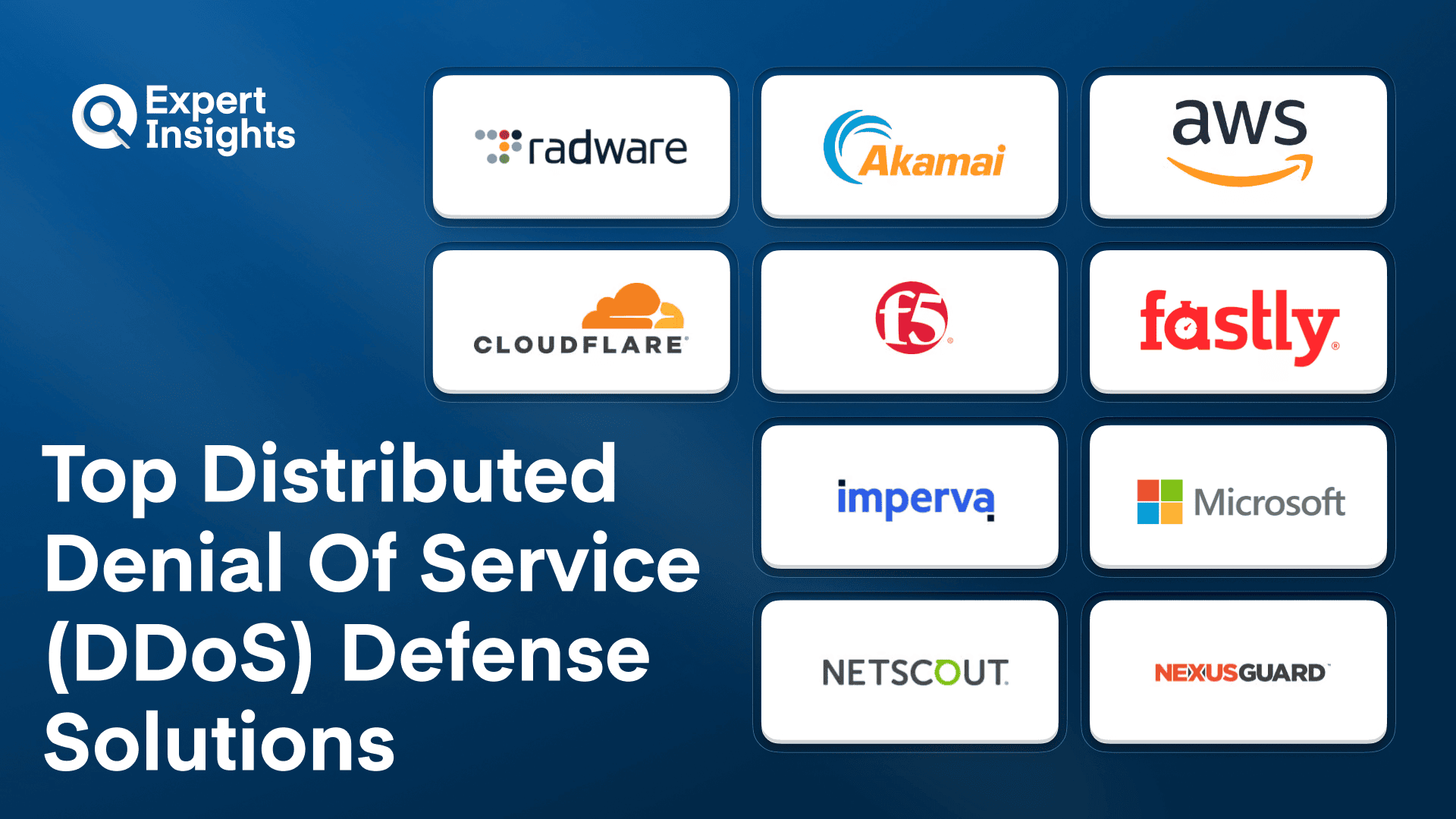
Evaluating the market leaders requires a granular examination of peak mitigation capacity, time-to-mitigation SLAs, and cost structures. Below is our verified data breakdown comparing the industry's benchmark platforms.
| Service Provider | Scrubbing Capacity | Time-to-Mitigation | Primary Architecture | Pricing Model |
|---|---|---|---|---|
| Cloudflare Magic Transit | 35+ Tbps | Sub-second (Instant Anycast) | Global Anycast Edge Network | Usage & Flat-Rate Hybrid |
| AWS Shield Advanced | 30+ Tbps (Integrated) | Automatic / Real-time | Cloud-Native AWS Backbone | Monthly Retainer + Data Transfer |
| Akamai Prolexic | 25+ Tbps | < 1 Second | High-Capacity Dedicated Scrubbing Centers | Enterprise Tiered Subscription |
| Google Cloud Armor | 20+ Tbps | Real-time | Global Google Edge & BGP Flow | Tiered Consumption Model |
| Radware DefensePro Cloud | 15+ Tbps | < 2 Seconds | Hybrid (On-Premises & Cloud) | Subscription & Appliance Licensing |
| Imperva Cloud DDoS | 12+ Tbps | Instantaneous | Application-Centric Global Proxy | Per-Domain & Bandwidth Tiering |
| Microsoft Azure DDoS Protection | 20+ Tbps | Automatic Tuning | Azure Global Network Integration | Flat Monthly Fee + Metered Usage |
| F5 Silverline | 10+ Tbps | Managed Service (< 60s) | SOC-Backed Cloud Scrubbing | Managed Service Contract |
| Nexusguard | 8+ Tbps | Real-time | Telecommunication Provider Focus | Carrier & Enterprise Bundles |
| Path Network | 10+ Tbps | Sub-second | Software-Defined Anycast Fabric | Usage-Based Tiered Pricing |
Industry & Market Implications: Winners, Losers, and Economic Realities
The consolidation of the DDoS protection market into a handful of hyper-scale providers has profound macroeconomic implications. Platforms possessing proprietary global backbones—most notably Cloudflare, Amazon Web Services, and Akamai—command pricing power and capture expanding market share. These infrastructure titans benefit from massive economies of scale, allowing them to absorb multi-terabit blasts across thousands of edge PoPs (Points of Presence) without dropping legitimate customer packets.
Conversely, regional Internet Service Providers (ISPs) and smaller legacy security vendors relying on centralized, appliance-based scrubbing centers find themselves increasingly marginalized. Unable to economically provision the tens of terabits of capacity required to neutralize modern botnets, these secondary players are pivoting toward white-labeling hyper-scaler infrastructure or focusing strictly on niche compliance verticals.
For corporate finance executives, capital allocation strategies must account for the hidden costs of DDoS mitigation. While baseline subscription fees are straightforward, enterprises must rigorously evaluate egress data charges, the risk of vendor lock-in, and the potential operational expenses associated with false positives during volumetric attacks. A poorly calibrated scrubbing filter that blocks legitimate institutional trades or consumer checkout sessions can inflict financial damage far exceeding the cost of the DDoS attack itself.
Frequently Asked Questions (People Also Ask)
1. How do modern DDoS protection services successfully neutralize 30 Tbps floods?
Modern services utilize a global Anycast network architecture distributed across hundreds of data centers worldwide. Instead of routing all traffic to a single data center, an Anycast network fractures incoming traffic and absorbs the volumetric load across multiple edge locations simultaneously. AI-driven behavioural analytics and eBPF (Extended Berkeley Packet Filter) programs operating at the kernel level instantly distinguish malicious packets from legitimate user requests at line rate, dropping the attack traffic before it saturates upstream transit links.
2. What is the difference between volumetric, protocol, and application-layer DDoS attacks?
Volumetric attacks (such as UDP floods and amplification attacks) aim to saturate the bandwidth of the target network measured in Terabits per second. Protocol attacks (such as SYN floods) target network layer resources and state tables firewalls or load balancers use to maintain connections. Application-layer attacks (such as HTTP/2 rapid reset or Layer 7 GET/POST floods) target specific web applications or APIs, consuming server thread pools and CPU cycles with seemingly legitimate requests, making them the hardest to detect without advanced behavioral analysis.
3. How does enterprise DDoS protection impact overall IT budget and ROI?
Enterprise DDoS protection functions as crucial financial insurance. While annual subscription fees and usage-based metered billing represent significant line items in the IT budget, the return on investment (ROI) is measured by preventing catastrophic revenue loss, regulatory fines, SLA breach penalties, and permanent brand erosion. Deploying automated cloud-native mitigation eliminates the personnel costs associated with manual incident response during zero-hour attacks.
4. Are on-premises hardware appliances completely obsolete in 2026?
Not entirely, though their role has shifted. While on-premises appliances (such as dedicated scrubbing hardware) cannot independently absorb multi-terabit volumetric floods—since the upstream ISP link would saturate long before traffic reaches the device—they remain highly valuable for hybrid deployments. Enterprises use on-premises hardware for low-latency internal segmentation and local telemetry, paired with cloud-based scrubbing services to absorb massive external volumetric attacks at the network edge.
Future Outlook: The Horizon of Edge Security
As we look toward the remainder of the decade, the arms race between malicious botnet operators and security architects will increasingly depend on autonomous, AI-driven defense mechanisms. Threat actors are rapidly weaponizing generative algorithms to dynamically mutate attack vectors mid-campaign, forcing cloud security providers to deploy automated counter-adversarial models capable of predicting and neutralizing threats before initiation.
Key milestones to monitor include the mass adoption of post-quantum cryptography across edge networks, tighter regulatory mandates requiring mandatory reporting of cyber extortion attempts, and the integration of decentralized zero-trust frameworks directly into BGP routing protocols. For enterprise leaders, maintaining resilience requires continuous auditing of cloud architecture, rigorous stress-testing against simulated 50 Tbps scenarios, and strategic partnerships with providers capable of scaling alongside the exponential growth of global data traffic.