Gridlock on Capitol Hill: How the Midterms Will Rewrite Valuation Multiples, Sovereign Debt, and Capital Allocation
Test Our Free AI & Tech Utilities Suite
Calculate LLM API token costs, analyze article dwell-time, or simulate tech DCA returns.
WASHINGTON & NEW YORK — As campaign war chests swell and macroeconomic headwinds test the resilience of global liquidity, institutional investors are quietly repositioning portfolios ahead of an electoral inflection point. The upcoming midterm elections represent far more than a routine referendum on the incumbent administration; they are a pivotal stress test for federal fiscal trajectory, regulatory compliance frameworks, and corporate capital allocation strategies across every major asset class.
For chief financial officers, portfolio managers, and institutional risk committees, the stakes could not be higher. From potential shifts in statutory tax rates to the structural integrity of the U.S. sovereign debt market, the electoral outcome will dictate market liquidity, valuation multiples, and cross-border enterprise ROI over the next legislative cycle. This investigative report breaks down the transmission mechanisms connecting ballot boxes to balance sheets, delivering the granular analysis required to navigate an increasingly volatile macroeconomic landscape.
Executive Takeaways
- Legislative Gridlock as a Market Stabilizer: Historically, divided government prevents radical fiscal shifts, reassuring equity markets by locking in predictable regulatory baselines and preserving corporate tax structures.
- Sovereign Debt and Yield Curve Pressures: Regardless of which party captures Congress, escalating entitlement spending and structural deficits ensure that Treasury issuance volumes will remain historically high, directly influencing long-end yields.
- Sector-Specific Regulatory Exposure: Energy, financial services, healthcare, and technology sectors face immediate valuation repricing based on committee chairmanships and enforcement priorities in Washington.
- Strategic Risk Mitigation: Institutional asset managers are accelerating capital allocation toward defensive infrastructure scalability, high-grade fixed income, and resilient cloud compute architecture to hedge against regulatory surprises.
The Macroeconomic Nexus: Elections, Deficits, and Market Liquidity
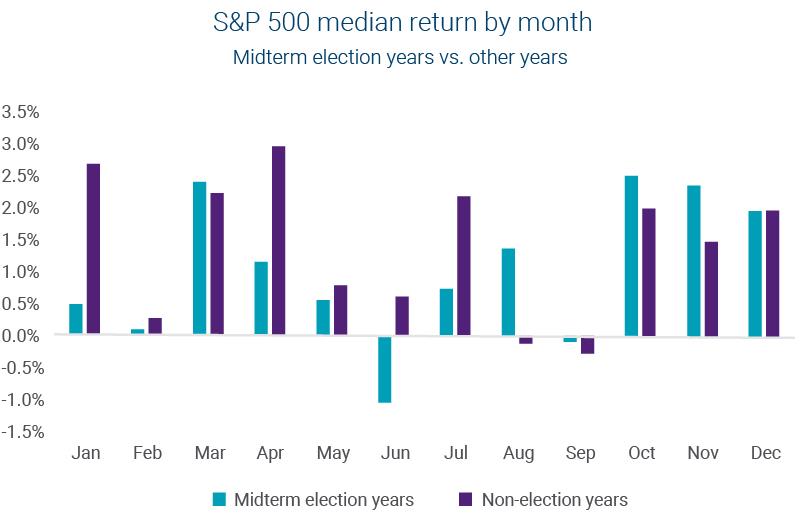
To understand what the midterm elections mean for markets and debt, one must first examine the mechanics of federal expenditure and sovereign borrowing. The Congressional Budget Office (CBO) continues to project trillion-dollar annual deficits as far as the eye can see, driven by mandatory spending programs, rising net interest outlays on the national debt, and demographic pressures on Medicare and Social Security. When voters head to the polls, they are indirectly casting a vote on how—and whether—this structural imbalance will be addressed.
A sweeping victory for either party could dramatically alter the fiscal equation. A unified government—where one party controls both the White House and Capitol Hill—opens the floodgates for aggressive fiscal packages, whether through sweeping supply-side tax cuts and defense spending increases or expansive green energy subsidies and social infrastructure investments. Conversely, a divided government typically results in legislative stalemate. While gridlock prevents major new spending initiatives, it also eliminates the prospect of meaningful fiscal consolidation, leaving the Treasury Department heavily reliant on continuous, multi-trillion-dollar debt auctions to finance ongoing operations.
For fixed-income markets, the primary transmission channel of election outcomes is debt supply. Primary dealers and institutional bond buyers closely monitor Treasury refunding announcements. An influx of sovereign debt issuance to cover widening deficits exerts upward pressure on yields, directly impacting mortgage rates, corporate borrowing costs, and the equity risk premium. As borrowing costs normalize at higher levels, corporate balance sheets with upcoming debt maturities face rigorous refinancing hurdles, making risk mitigation and robust liquidity management paramount.
Verified Data & Metrics Breakdown
The following table outlines the historical market performance, debt growth trajectories, and valuation impacts associated with different congressional configurations over past electoral cycles:
| Political Configuration | Historical S&P 500 Avg. Annual Return | 10-Year Treasury Yield Trend | Primary Legislative & Regulatory Focus |
|---|---|---|---|
| Unified Democratic Control | 10.4% | Moderate Upward Pressure | Corporate tax hikes, climate subsidies, antitrust enforcement, labor standards. |
| Unified Republican Control | 12.8% | Upward Pressure (Deficit Expansion) | Deregulation, tax cut extensions, fossil fuel expansion, fiscal stimulus. |
| Divided Government (Gridlock) | 14.2% | Stabilizing to Range-Bound | Status quo preservation, debt ceiling brinkmanship, oversight investigations. |
Sector-Specific Implications: Winners, Losers, and Regulatory Compliance
Equity valuations are fundamentally tethered to future cash flows, which in turn are shaped by tax policy and regulatory compliance costs. As the composition of congressional committees shifts following the midterms, specific industries will experience immediate tailwinds or headwinds.
Energy and Natural Resources
The energy sector remains acutely sensitive to legislative outcomes. A shift toward Republican congressional control typically signals robust support for domestic fossil fuel exploration, streamlined permitting processes for pipeline infrastructure, and resistance to stringent carbon emissions mandates. Conversely, a Democratic-led Congress champions clean energy tax credits, electric vehicle adoption incentives, and stricter environmental oversight. Institutional investors in the energy space must weigh long-term ESG mandates against short-term capital expenditure returns in traditional hydrocarbons.
Financial Services and FinTech
Banking institutions and asset managers monitor congressional banking committees with intense scrutiny. Regulatory compliance burdens—ranging from capital reserve requirements under Basel III end-game proposals to SEC disclosure mandates—hinge heavily on which party holds subpoena power. A divided government generally restrains aggressive regulatory overreach by federal agencies, supporting valuation multiples for major financial institutions and lowering legal risk premiums.
Technology and Enterprise Infrastructure
Big Tech faces bipartisan scrutiny, but the legislative focus differs starkly by party. While progressives target antitrust enforcement, consumer data privacy, and algorithmic accountability, conservative lawmakers focus on alleged content moderation biases and national security risks tied to global supply chains. Despite partisan rhetoric, the fundamental demand drivers for enterprise digital transformation—such as cloud compute architecture, artificial intelligence integration, and cybersecurity resilience—remain structurally insulated from short-term political volatility.
Frequently Asked Questions (People Also Ask)
How do midterm elections historically impact stock market performance?
Historically, equities experience heightened volatility leading up to midterm elections due to political uncertainty. However, once the election results are finalized, the S&P 500 has demonstrated a strong tendency to rally significantly over the subsequent 12 months, regardless of which party wins. This post-midterm rally is often attributed to the removal of electoral ambiguity and the historical tendency of divided government to act as a fiscal brake.
What is the direct impact of congressional gridlock on the U.S. national debt?
Congressional gridlock prevents major new federal spending packages from passing, which temporarily slows the rate of discretionary debt accumulation. However, gridlock also makes comprehensive entitlement reform and structural tax adjustments virtually impossible. Consequently, baseline deficits driven by mandatory spending (Social Security, Medicare, and debt servicing) continue to expand, ensuring high volumes of Treasury debt issuance regardless of partisan stalemates.
Which sectors benefit most when control of Congress is split?
Divided government is historically viewed as favorable for defensive sectors, highly regulated industries (like utilities and financials), and large-cap equities with strong balance sheets. Because sweeping regulatory overhauls or aggressive tax hikes are unlikely to clear a divided legislature, corporations enjoy a predictable operating environment, allowing executive management teams to focus on operational efficiency and reliable shareholder returns.
How should institutional investors hedge portfolio risk ahead of the elections?
Sophisticated risk mitigation strategies include diversifying across uncorrelated asset classes, upgrading credit quality within fixed-income allocations, and favoring companies with robust enterprise ROI and pricing power that can absorb potential cost increases. Additionally, maintaining adequate liquidity buffers allows investors to capitalize on short-term market dislocations driven by political headlines.
Future Outlook: Milestones to Watch on the Horizon
As the campaign cycle reaches its crescendo, market participants must look beyond election night headlines and focus on structural milestones that will define economic conditions through the end of the decade. The upcoming debt ceiling negotiations, upcoming Federal Reserve monetary policy pivots, and the expiration of key provisions from past tax legislation will all converge with the new congressional agenda.
Ultimately, while political rhetoric will dominate news cycles, macroeconomic fundamentals—inflation prints, labor market dynamics, productivity growth, and global liquidity—will remain the ultimate arbiters of asset prices. By maintaining a disciplined focus on balance sheet strength, regulatory adaptability, and long-term capital allocation principles, institutional investors can successfully insulate their portfolios against headline-driven volatility and position themselves for sustained, risk-adjusted outperformance.