Executive Takeaways
- Unprecedented Remediation: Recent zero-day vulnerabilities in Kiteworks and Citrix forced extreme enterprise containment strategies, including instructing global clients to completely power down secure data-protection platforms.
- Capital & Valuation Impact: Infrastructure downtime directly impacts enterprise ROI, market liquidity, and institutional investor confidence, forcing firms to reevaluate software supply chain risk mitigation.
- The Patching Paradox: Rapidly deployed patches often introduce secondary system instabilities, proving that traditional vulnerability management frameworks are inadequate against sophisticated, state-sponsored zero-day exploits.
- vStrategic Shift Required: Enterprise risk mitigation now demands an architectural pivot toward Zero Trust environments, immutable backups, and automated isolation protocols over reactive patching cycles.
The modern digital enterprise relies on an illusion of perpetual uptime. When critical vulnerabilities strike core infrastructure platforms, the margin between operational resilience and catastrophic data exfiltration narrows to a razor’s edge. Recent high-profile security incidents involving enterprise file transfer and secure delivery platforms—most notably Kiteworks and Citrix—have laid bare the systemic fragilities defining modern cybersecurity response frameworks. When security teams are forced to instruct enterprise clients to completely power down their primary data-protection platforms, it signals more than a routine patch-management failure; it highlights a fundamental structural crisis in how the global economy handles zero-day exploits.
For Chief Information Security Officers (CISOs), risk officers, and institutional investors, the Kiteworks and Citrix crises serve as a harsh stress test of enterprise resilience. As threat actors weaponize unknown vulnerabilities with unprecedented velocity, the traditional playbook of assessing risk, testing patches, and rolling out updates over days or weeks has collapsed. This investigative report examines the anatomy of these zero-day incidents, analyzes the severe operational and financial ramifications for global organizations, and outlines the structural adjustments required to protect enterprise infrastructure in an era of persistent cyber warfare.
The Anatomy of Modern Zero-Day Vulnerabilities
Test Our Free AI & Tech Utilities Suite
Calculate LLM API token costs, analyze article dwell-time, or simulate tech DCA returns.
To understand the panic surrounding the Kiteworks and Citrix incidents, one must examine the unique architecture of enterprise file transfer and remote access gateways. These platforms occupy a paradoxical position within corporate networks: they are designed to interface directly with the untrusted public internet while simultaneously holding the organization’s most sensitive crown jewels—intellectual property, mergers and acquisitions data, personally identifiable information (PII), and regulatory filings.
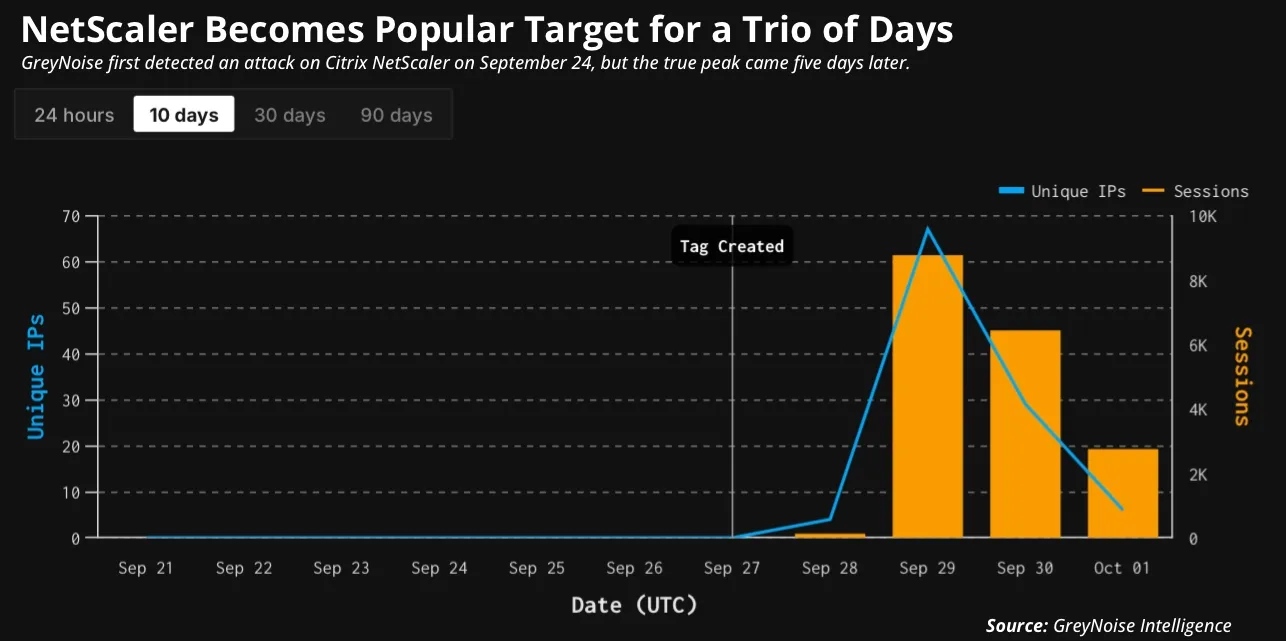
When a zero-day vulnerability emerges in these gateway systems, threat actors often exploit the gap between vulnerability discovery and patch deployment—the zero-day window. In the cases of Kiteworks and Citrix, attackers leveraged sophisticated remote code execution (RCE) vectors to bypass authentication barriers, establishing persistent backdoors before vendors could issue advisory notices. The scale of the intrusion forced software vendors into an uncomfortable position: standard software updates were insufficient, prompting emergency directives that included halting services and, in extreme cases, powering down hardware nodes entirely.
This "power-down" mandate represents an existential threat to business continuity. For multinational corporations, financial institutions, and healthcare providers, shutting down secure file transfer and gateway infrastructure halts the flow of global commerce. Supply chains stall, board communications freeze, and regulatory reporting deadlines are jeopardized. The economic friction caused by emergency mitigation often rivals the financial damage of the cyberattack itself.
The Operational and Financial Fallout
The downstream consequences of zero-day responses ripple far beyond IT departments, directly impacting corporate balance sheets and market valuations. When enterprise clients are forced to disconnect mission-critical platforms, the immediate result is severe operational disruption.
| Incident Dimension | Kiteworks / Citrix Incidents | Traditional Zero-Day Response |
|---|---|---|
| Primary Remediation Action | Emergency platform shutdowns & offline isolation | Rolling patch deployment & targeted reboots |
| Average Downtime Window | 24 to 96+ hours of operational blackout | 2 to 6 hours during maintenance windows |
| Financial Impact Vector | Halted transactions, incident response retainers, stock volatility | Standard patching labor costs & minor productivity dip |
| Regulatory Exposure | High risk of SEC disclosure triggers & compliance penalties | Low-to-moderate if patched within SLA windows |
From a capital allocation perspective, these incidents expose the hidden costs of tech stack consolidation. Organizations that rely on a single vendor for secure managed file transfer (MFT) or virtual desktop infrastructure (VDI) discover that systemic vulnerabilities create a single point of failure. When that single point collapses, enterprise ROI plummets as productivity grinds to a halt and executive leadership pivots from revenue generation to crisis management.
Furthermore, institutional investors and credit rating agencies are increasingly scrutinizing how companies handle cyber risk mitigation. In an era where regulatory compliance mandates rapid incident disclosure—such as the Securities and Exchange Commission’s (SEC) stringent cybersecurity reporting rules—prolonged system shutdowns and potential data exfiltration events can trigger immediate share price volatility and long-term valuation multiples compression.
Industry & Market Implications: Winners and Losers
The fallout from the Kiteworks and Citrix security events is reshaping the enterprise software market, creating distinct shifts in market liquidity, vendor evaluation, and insurance underwriting.
- The Winners—Cloud-Native Zero Trust Architecture Providers: Companies offering decentralized, micro-segmented, and Zero Trust-based data transfer solutions are experiencing a surge in enterprise demand. By eliminating reliance on monolithic perimeter gateways, these firms offer structural resilience against localized zero-day exploits.
- The Losers—Legacy Perimeter Vendors: Traditional appliance-based vendors facing repeated zero-day scrutiny are seeing customer churn accelerate. Enterprise buyers are demanding greater architectural transparency, open-source auditing, and rigorous third-party penetration testing before renewing multi-year software licensing agreements.
- Cyber Insurance Underwriters: Insurance markets are tightening terms, raising premiums, and introducing explicit exclusions for systemic zero-day disruptions unless insured entities can prove adherence to rigorous micro-segmentation and rapid isolation protocols.
Frequently Asked Questions (People Also Ask)
What is a zero-day vulnerability, and why are incidents involving Kiteworks and Citrix so disruptive?
A zero-day vulnerability is a software security flaw unknown to the vendor and the public, meaning zero days have passed to create a defense. Incidents involving platforms like Kiteworks and Citrix are uniquely disruptive because these systems sit at the perimeter of corporate networks, managing high-value, encrypted data flows. When compromised, attackers gain deep entry points, forcing drastic emergency measures like complete platform shutdowns.
Why did companies have to power down their data-protection platforms instead of just applying a software patch?
In sophisticated zero-day attacks, threat actors often establish deep persistence and backdoors within the system architecture before a patch is released. Simply applying a patch does not guarantee the removal of established malware or unauthorized access credentials. Powering down the platform completely stops active data exfiltration and gives security teams the isolation needed to conduct forensic investigations.
How do zero-day responses impact corporate valuation and regulatory compliance?
Prolonged operational downtime halts business transactions and damages customer trust, directly impacting quarterly earnings and valuation multiples. Additionally, regulatory frameworks—including SEC cybersecurity disclosure rules and GDPR—require timely reporting of material security incidents, making efficient crisis management and transparent communication critical for avoiding severe financial penalties.
What structural changes should enterprises implement to mitigate future zero-day risks?
Organizations must move beyond reactive patching by adopting Zero Trust architecture, network micro-segmentation, immutable backup strategies, and automated containment playbooks. Reducing reliance on single-vendor perimeter gateways and diversifying critical infrastructure helps ensure that a single zero-day exploit does not result in enterprise-wide paralysis.
Future Outlook: Navigating the Next Wave of Infrastructure Risk
As cyber threat actors leverage artificial intelligence and automated reconnaissance to discover and exploit zero-day vulnerabilities faster than ever before, the incidents at Kiteworks and Citrix will be viewed historically as turning points in enterprise defense strategy. The era of trusting perimeter security appliances blindly is over.
Looking ahead over the next 12 to 36 months, enterprise resilience will depend on several critical milestones:
- Adoption of Automated Isolation: Security orchestration, automation, and response (SOAR) platforms will evolve to automatically isolate compromised edge devices in milliseconds rather than hours.
- Regulatory Harmonization: Global regulatory bodies will likely standardize zero-day reporting thresholds, putting further pressure on software vendors to accelerate vulnerability disclosure and patch verification.
- Architectural Redundancy: Enterprises will abandon monolithic gateway models in favor of decentralized, ephemeral compute architectures that minimize the blast radius of any single zero-day event.
Ultimately, the challenge of zero-day response cannot be solved by software patches alone. It requires a fundamental alignment between corporate governance, capital allocation for advanced risk mitigation, and architectural resilience. Organizations that adapt to this reality will protect their valuations and maintain operational continuity; those that cling to legacy paradigms will find themselves indefinitely vulnerable to the next inevitable zero-day storm.