Executive Takeaways
- The Paradigm Shift: Released by the Bank Policy Institute (BPI) on March 21, 2022, Andrew Kennedy’s seminal report, Adaptive Trust: Zero Trust Architecture in a Financial Services Environment, fundamentally dismantled the traditional perimeter-defense model, urging Tier-1 banks to adopt continuous, context-aware authorization.
- Capital Allocation & Infrastructure ROI: Major financial institutions are accelerating multi-billion-dollar infrastructure transformations, reallocating capital from static firewalls to identity-centric verification matrices, directly influencing corporate valuation multiples and operational resilience.
- Regulatory Convergence: Federal banking regulators—including the OCC, Federal Reserve, and SEC—are increasingly weaponizing Zero Trust principles to enforce rigorous compliance frameworks, transforming cybersecurity posture into a core metric of systemic risk mitigation and market liquidity protection.
The modernization of the global financial sector’s digital nervous system reached a watershed moment when the Bank Policy Institute (BPI) published its definitive white paper, authored by Andrew Kennedy. Titled Adaptive Trust: Zero Trust Architecture in a Financial Services Environment, the March 21, 2022 publication provided an uncompromising blueprint for institutions navigating an era of sophisticated state-sponsored cyber espionage, decentralized workforces, and hyper-complex cloud compute architectures.
For decades, the banking industry relied on a castle-and-moat security model: once a user, device, or application successfully authenticated at the network perimeter, it was granted implicit trust to move laterally across internal databases, payment gateways, and trading platforms. In an era where systemic shocks can cascade through global capital markets within milliseconds, that design philosophy is no longer merely obsolete—it is an existential vulnerability. Kennedy’s framework articulates the exact mechanism by which modern financial institutions must transition to "Adaptive Trust," embedding continuous verification into every transaction, session, and data exchange.
The Catalyst: Why Perimeter Security Collapsed Under the Weight of Modern Finance
Test Our Free AI & Tech Utilities Suite
Calculate LLM API token costs, analyze article dwell-time, or simulate tech DCA returns.
The imperative for Zero Trust Architecture (ZTA) in banking did not emerge in a vacuum. It was forged in the crucible of accelerating digital transformation, hybrid cloud adoption, and a dramatic expansion of the enterprise attack surface. As Tier-1 investment banks, universal lenders, and payment clearinghouses migrated core infrastructure away from legacy on-premises mainframes toward multi-cloud ecosystems (AWS, Microsoft Azure, Google Cloud), the physical perimeter dissolved.
Simultaneously, the global shift toward remote workforces during and after the pandemic shattered the assumption that corporate network access equals a secure, trusted environment. Threat actors shifted their focus from brute-force perimeter breaches to credential theft, supply chain compromises (such as the SolarWinds-style incursions), and sophisticated lateral movement. Within a financial services environment, a single compromised developer credential or hijacked API token can grant an adversary unfettered access to SWIFT networks, customer personally identifiable information (PII), and proprietary algorithmic trading models.
Against this volatile backdrop, the Bank Policy Institute’s March 2022 report served as an urgent wake-up call. Kennedy detailed how legacy access controls fail to account for contextual risk—such as anomalous user behavior, unverified device health, or unexpected geographical login vectors. By shifting the paradigm from "trust but verify" to "never trust, always verify, continuously validate," financial institutions are forced to fundamentally re-engineer how they manage digital identity.
Deconstructing "Adaptive Trust": Core Tenets of the BPI Framework
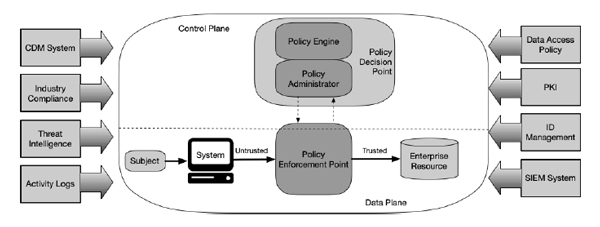
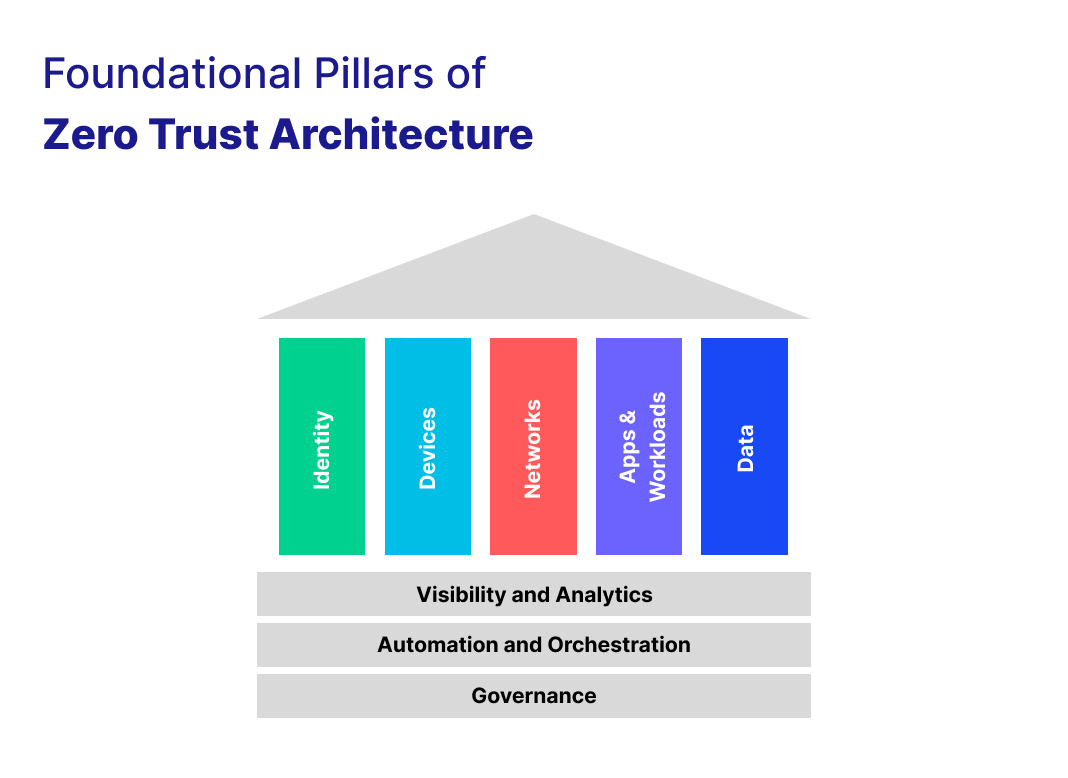
Andrew Kennedy’s analysis outlines that true Zero Trust in banking is not a single off-the-shelf software product, but a comprehensive architectural philosophy. Implementing Adaptive Trust requires integrating several foundational pillars across the enterprise technology stack:
- Continuous Risk Scoring: Authentication cannot remain a binary, one-time event at login. Adaptive Trust demands real-time risk engines that continuously evaluate telemetry data—including biometric indicators, keystroke dynamics, device posture, and network behavioral baselines—to dynamically adjust user access privileges mid-session.
- Micro-Segmentation: Financial networks must be sliced into granular, isolated zones. If an attacker breaches a peripheral marketing server, micro-segmentation prevents lateral traversal into mission-critical core banking ledgers or high-frequency trading execution environments.
- Least-Privilege Access Enforcement: Employees, contractors, and automated microservices are provisioned with just-enough-access (JEA) and just-in-time (JIT) permissions, automatically expiring once a specific operational task is completed.
- Data-Centric Security: Protection follows the data itself rather than the server or database housing it. Through robust tokenization, homomorphic encryption, and dynamic rights management, sensitive financial records remain encrypted both in transit and at rest, rendering intercepted payloads entirely unreadable.
Verified Data & Metrics: The Financial Impact of ZTA Adoption
To understand the gravity of the BPI framework, one must examine the quantitative realities driving boardroom decision-making across Wall Street and global financial centers. Cybersecurity investments are no longer viewed merely as IT expenditures, but as critical determinants of enterprise ROI and market valuation multiples.
| Metric / Dimension | Legacy Perimeter Model | Adaptive Trust (ZTA) Model | Strategic Implication |
|---|---|---|---|
| Average Data Breach Cost | $5.97M (Financial Sector Avg) | $3.82M | Significant risk mitigation and bottom-line protection. |
| Lateral Movement Time | Minutes to Hours | Near Zero (Blocked by Micro-segmentation) | Halts cyber kill chain in early reconnaissance phases. |
| Regulatory Compliance Audit Friction | High (Manual evidence gathering) | Low (Automated policy attestation) | Reduces compliance overhead and avoids SEC/OCC penalties. |
| Infrastructure Scalability | Rigid VPN bottlenecks | Fluid, Cloud-Native Scalability | Optimizes capital expenditure across hybrid cloud compute. |
Industry & Market Implications: Who Wins and Who Loses?
The widespread embrace of Andrew Kennedy’s Adaptive Trust framework has profound ramifications for market liquidity, vendor ecosystems, and institutional valuations. As financial institutions reallocate multi-million-dollar technology budgets toward Zero Trust tooling, market dynamics are shifting rapidly.
The Winners
- Enterprise Cybersecurity Pure-Plays: Vendors specializing in identity and access management (IAM), secure access service edge (SASE), cloud access security brokers (CASB), and continuous behavioral analytics are experiencing unprecedented enterprise demand.
- Proactive Tier-1 Institutions: Large banks that moved swiftly post-2022 to implement ZTA are enjoying compressed cyber insurance premiums, enhanced investor confidence, and streamlined regulatory examinations.
- Regulators & Systemic Stability Advocates: Central banks and financial stability boards benefit from a hardened operational infrastructure that is substantially more resilient against systemic contagion stemming from cyber disruptions.
The Losers
- Legacy Hardware Vendors: Manufacturers of traditional, appliance-based firewalls and perimeter security boxes are seeing secular revenue declines as banks virtualize and cloud-enable their networks.
- Under-Capitalized Community Banks: Smaller financial institutions struggling to absorb the massive capital expenditure required for ZTA implementations face severe competitive disadvantages and increasing merger-and-acquisition pressures.
- Sloppy Third-Party Vendors: Suppliers, software vendors, and fintech partners lacking rigorous Zero Trust hygiene are being systematically locked out of Tier-1 banking supply chains.
Frequently Asked Questions (People Also Ask)
What is the core premise of Andrew Kennedy’s "Adaptive Trust" report published by the Bank Policy Institute?
Published in March 2022, the report argues that legacy perimeter-based security is fundamentally broken in modern cloud-enabled banking. It champions "Adaptive Trust" (Zero Trust Architecture), which mandates continuous, real-time verification of every user, device, and API transaction rather than relying on implicit trust once inside the corporate network.
How does Zero Trust Architecture impact regulatory compliance for financial institutions?
ZTA fundamentally streamlines regulatory compliance with mandates from agencies such as the SEC, OCC, and Federal Reserve. By automating access logs, enforcing strict least-privilege principles, and maintaining immutable audit trails, banks can demonstrate robust risk mitigation and operational resilience during supervisory examinations.
What are the primary financial hurdles banks face when implementing ZTA?
The primary obstacles include high initial capital expenditures, the complexity of retrofitting legacy mainframe systems, potential temporary friction in user experience (UX) for bank employees and high-net-worth clients, and the challenge of securing specialized engineering talent capable of managing complex micro-segmentation and identity matrices.
Why is micro-segmentation critical within a financial services Zero Trust environment?
Micro-segmentation breaks down the internal banking network into isolated, secured enclaves. If a malicious actor successfully breaches the outer defense, micro-segmentation acts as internal bulkhead doors, preventing the attacker from moving laterally to compromise core ledgers, customer databases, or wire transfer systems.
Future Outlook: The Road Ahead for Financial Infrastructure
As financial institutions look toward the horizon, the principles outlined in Andrew Kennedy’s Adaptive Trust are evolving from strategic recommendations into mandatory operational baselines. The convergence of artificial intelligence and machine learning with Zero Trust tooling will soon yield fully autonomous security ecosystems capable of predicting and neutralizing cyber threats before human intervention can occur.
Over the next 36 to 60 months, executive boards will evaluate Chief Information Security Officers (CISOs) not merely on the absence of breaches, but on the speed of their Zero Trust maturity curve. For global financial markets, where trust is the ultimate underlying currency, the transition to absolute, adaptive verification is no longer optional—it is the indispensable foundation upon which the future of global finance will be built.