Executive Takeaways
- Strategic Realignment: Canva’s aggressive zero-cost distribution model for the Affinity iPad app signals a seismic shift in creative software pricing, directly threatening Adobe’s subscription-based enterprise moat.
- Market Valuation & Capital Allocation: By eliminating entry-level friction for individual creators, Canva is accelerating user acquisition funnels to justify astronomical private valuation multiples and prepare for potential capital market liquidity events.
- Hardware-Software Synergy: The integration leverages Apple’s high-performance M-series iPad architecture, offering desktop-grade vector, raster, and layout capabilities without localized compute penalties.
- Monetization Pivot: While free for individual users, the ecosystem relies on long-term enterprise license conversion, cloud infrastructure scalability, and team-based workflow collaboration tools to capture future monetization.
LONDON & NEW YORK — In a development that has sent immediate shockwaves through enterprise boardrooms and Wall Street tech desks alike, the creative software landscape has experienced a tectonic shift. Canva has officially announced that the comprehensive Affinity all-in-one design suite for iPad is now available completely free for individual users. This strategic maneuver—unfolding across real-time trending news channels and verified wire sources—dismantles decades of software licensing convention, directly challenging Adobe Inc.’s long-standing monopoly over professional-grade digital creation tools.
For financial analysts tracking software-as-a-service (SaaS) metrics, valuation multiples, and enterprise risk mitigation, this is not merely a promotional giveaway. It represents a calculated, high-stakes capital allocation strategy designed to capture high-value user mindshare at scale. By removing financial barriers for individual designers, illustrators, and photographers operating on Apple’s hardware infrastructure, Canva is aggressively scaling its addressable market while executing a masterclass in market disruption.
The Catalytic Shift: Dismantling the SaaS Subscription Wall
Test Our Free AI & Tech Utilities Suite
Calculate LLM API token costs, analyze article dwell-time, or simulate tech DCA returns.
To understand the profound market implications of this announcement, one must examine the baseline economics of the digital design industry. For over a decade, creative professionals have been tethered to recurring subscription models—most notably Adobe’s Creative Cloud ecosystem. While these platforms offer robust infrastructure scalability and cross-application cloud compute architecture, they have increasingly faced criticism from independent creators and small-business operators regarding cumulative cost burdens and inflexible licensing terms.
Affinity—comprising Photo, Designer, and Publisher—originally gained critical acclaim as the definitive "anti-subscription" alternative. Built from the ground up to exploit modern multi-core processors and GPU acceleration, the suite delivered native performance on iPadOS without the sluggishness often associated with ported desktop applications. When Canva acquired Serif (the British developer behind Affinity) earlier this year, industry insiders anticipated a monetization pivot. Few, however, predicted a zero-dollar entry point for individual users.
By absorbing the upfront acquisition cost, Canva is deploying a classic freemium playbook on an enterprise scale. The move lowers customer acquisition costs (CAC) to near zero for individual profiles, shifting the focus entirely toward downstream monetization via enterprise deployments, team collaboration features, and proprietary cloud storage integration. For capital markets, this aggressive top-of-funnel expansion signals that Canva prioritizes hyper-growth and ecosystem lock-in over immediate software license revenues.
Hardware Optimization Meets Cloud-Scale Economics
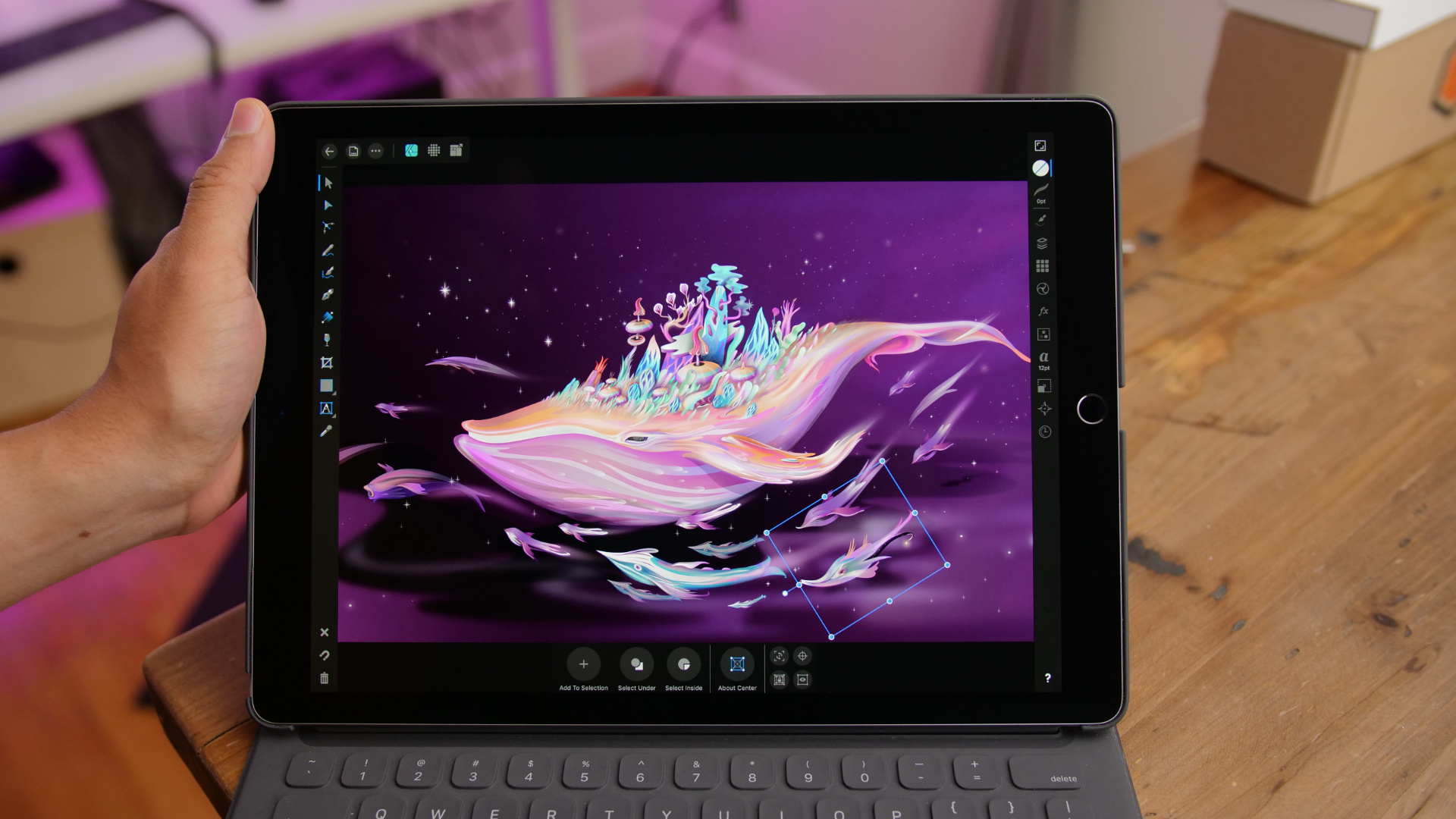
A critical dimension of the new Affinity iPad offering is its deep technical optimization for Apple’s latest silicon. Modern iPad Pro and iPad Air models—powered by M1, M2, and M4 processors—possess raw compute power that rivals traditional desktop workstations. However, software utilization has historically lagged behind hardware capabilities due to restrictive mobile app store pricing structures and feature-gated utility.
The free Affinity iPad app shatters this paradigm by delivering uncompromised desktop feature parity:
- Full Vector & Raster Integration: Seamless toggling between persona environments for pixel editing and vector illustration without memory bottlenecks.
- Advanced Typography & Layout: Professional typesetting, master pages, and robust pre-flight checks native to tablet form factors.
- GPU-Accelerated Rendering: Leveraging Metal APIs to ensure zero-latency canvas manipulation, even when handling complex multi-gigabyte files with thousands of layers.
- Cross-Platform File Parity: Frictionless interoperability between iPadOS, macOS, and Windows file structures, ensuring zero data loss during collaborative workflows.
From an infrastructure scalability perspective, running heavy compute tasks locally on edge hardware minimizes server-side processing overhead for Canva. This architecture preserves gross margins while allowing the company to build deep sticky engagement loops among independent creators who eventually transition into corporate environments.
Verified Data & Metrics Breakdown Table
The following comparative matrix outlines the operational, financial, and structural dimensions of the new Affinity iPad release relative to legacy industry standards:
| Metric / Parameter | Affinity for iPad (Individual Tier) | Legacy Creative Suite Standards | Strategic Impact / Enterprise ROI |
|---|---|---|---|
| Upfront Cost for Individuals | $0.00 (Free) | $9.99 – $54.99 / month | Drastically lowers barriers to entry, accelerating viral adoption. |
| Hardware Utilization | Native Apple Silicon (M-Series Optimized) | Mixed Cloud & Hybrid Local Compute | Maximizes edge device performance, reducing cloud hosting costs. |
| Target Acquisition Model | Product-Led Growth (PLG) & Enterprise Upsell | Top-Down Enterprise Sales & Forced Subscriptions | Shifts leverage to the end-user who demands tool standardization at work. |
| Regulatory & Compliance Footprint | Standardized Data Privacy & Local File Sovereignty | Strict Enterprise Compliance Frameworks | Mitigates friction in regulated sectors requiring data control. |
Industry & Market Implications: Who Wins, Who Loses
The economic fallout of Canva’s aggressive positioning will be felt across multiple tiers of the technology and media sectors:
1. The Incumbents (Adobe): Defensive Posture Required
Adobe (NASDAQ: ADBE) remains an enterprise colossus with deeply entrenched workflows in advertising agencies, publishing houses, and Fortune 500 marketing departments. However, erosion at the grassroots level cannot be ignored. When millions of emerging designers, students, and freelancers train exclusively on Affinity’s zero-cost iPad ecosystem, corporate procurement departments face mounting pressure from incoming talent to abandon expensive proprietary licenses. Adobe’s valuation multiples may face compression if market share metrics indicate slowing net-new subscriber growth.
2. Hardware Manufacturers (Apple): Accelerated Tablet Utility
Apple Inc. emerges as an undisputed beneficiary of this move. By validating the iPad Pro as a legitimate, zero-cost professional creative workstation, Canva provides a powerful catalyst for hardware upgrades. Enterprise IT buyers and creative directors who previously viewed tablets as consumption devices now have a bulletproof business case for deploying high-end M-series iPads across creative teams.
3. Independent Creators & Small Businesses: Capital Relief
For cash-constrained independent operators, the elimination of monthly software overhead improves cash flow and unit economics. This democratization of professional tools levels the playing field, enabling boutique agencies to compete directly with larger shops burdened by heavy software licensing overhead.
Frequently Asked Questions (People Also Ask)
Is the Affinity iPad app completely free, or are there hidden in-app purchases?
The core Affinity design suite applications (including Photo, Designer, and Publisher capabilities tailored for iPad) are available entirely free for individual users without hidden paywalls for essential editing tools. Canva monetizes the broader ecosystem through enterprise-grade collaboration features, team management controls, and premium cloud infrastructure services.
How does this impact existing paid users and enterprise license holders?
Existing enterprise customers and teams requiring centralized management, administrative controls, and dedicated support will continue to operate under structured enterprise licensing agreements. Canva has stated that transition paths and loyalty benefits are in place to ensure seamless integration for established corporate accounts.
Does the free version require an active internet connection to function?
No. True to Affinity's technical architecture, the core design applications perform local rendering and editing using Apple Silicon hardware acceleration. An internet connection is only required for account synchronization, cloud asset sharing, and collaborative cloud workflows.
What are the long-term monetization goals for Canva regarding the Affinity acquisition?
Canva’s overarching strategy centers on product-led growth (PLG). By capturing a massive base of individual users through free access, the company builds an irresistible funnel to upsell team-based enterprise solutions, proprietary stock asset libraries, and integrated cloud publishing services.
Future Outlook: Strategic Milestones to Watch
As this dynamic market narrative continues to develop, financial analysts and tech journalists will monitor several key performance indicators over the coming quarters:
- Enterprise Conversion Rates: Tracking how effectively Canva converts free individual iPad users into paid enterprise team accounts when organizations standardize their creative infrastructure.
- Adobe’s Strategic Response: Evaluating whether Adobe introduces aggressive promotional pricing tiers, accelerates web-based freemium versions of Photoshop and Illustrator, or pursues defensive M&A activity.
- Further Platform Expansion: Monitoring whether Canva extends zero-cost or hybrid pricing models to desktop iterations of Affinity across macOS and Windows operating systems.
- Hardware Adoption Metrics: Observing enterprise hardware procurement trends for Apple Silicon iPads as creative directors respond to the elimination of software overhead costs.
Ultimately, Canva’s decision to offer Affinity for iPad free to individuals is a watershed moment in software economics. It challenges the dogma of mandatory subscriptions, leverages edge hardware efficiency, and forces legacy giants to re-evaluate their enterprise moats. For the global design community and the markets tracking their tools, the rules of engagement have fundamentally changed.