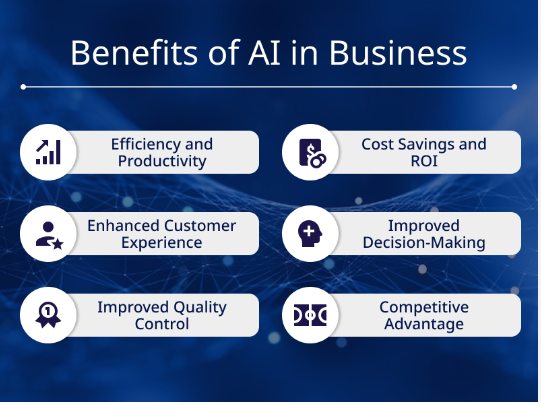
NEW YORK — For decades, corporate technology adoption followed a predictable, linear arc of incremental software deployments and gradual efficiency gains. Today, that trajectory has been violently disrupted. Across global markets, the integration of enterprise artificial intelligence has transitioned from an exploratory research-and-development line item into a foundational pillar of corporate strategy, fundamentally altering capital allocation, infrastructure scalability, and market valuation multiples.
Yet, as recent data from IBM and academic institutions such as the C3.ai Digital Transformation Institute (DTI) underscores, the narrative is not without friction. While the productivity dividends of AI are undeniable, organizations attempting to scale machine learning models and generative agents without a rigorous, risk-mitigated strategy are encountering severe operational bottlenecks. In this investigative report, we examine the mechanics driving the enterprise AI boom, the quantifiable operational yields across global sectors, and the invisible governance traps threatening unprepared balance sheets.
Executive Takeaways
- Unprecedented Productivity Yields: Strategic deployment of AI successfully offloads repetitive administrative burdens, freeing highly compensated human capital to focus on complex problem-solving and creative product design.
- The Capital Expenditure Dilemma: While infrastructure scalability and reduced operating costs drive long-term margin expansion, uncalibrated deployments expose enterprises to compliance liabilities, data privacy breaches, and significant sunk-cost risks.
- Competitive Divergence: Industry benchmarking reveals a widening chasm between early-adopting enterprises leveraging AI for business process optimization and legacy competitors clinging to traditional operational frameworks.
- Macroeconomic Implications: Research initiatives like the C3.ai DTI highlight how synchronized AI adoption accelerates efficiencies not just for isolated corporations, but across broader government infrastructure and societal frameworks.
The Catalytic Shift: Moving Beyond the Pilot Purgatory
For much of the early 2020s, corporate artificial intelligence was largely confined to isolated proofs-of-concept (PoCs). Chief Information Officers authorized experimental chatbot deployments or localized predictive maintenance models, but these initiatives rarely moved the needle on quarterly earnings calls. By late 2025, however, corporate leadership has moved past the pilot stage, demanding measurable enterprise ROI and demonstrable impacts on operating margins.
The primary catalyst for this shift is the maturation of cloud compute architecture and large-scale foundational models capable of parsing unstructured enterprise data securely. Organizations are no longer building algorithms from scratch; instead, they are integrating enterprise-grade AI layers into existing enterprise resource planning (ERP) and customer relationship management (CRM) backbones. According to industry analyses, this structural pivot has streamlined product design cycles, compressed go-to-market timelines, and drastically reduced operational overhead.
Consider the transformation of white-collar workflows. Historically, highly skilled professionals—spanning legal, financial, engineering, and operational domains—spent up to 40% of their working hours on administrative friction: data entry, document summarization, routine compliance checks, and basic scheduling. Modern enterprise AI handles these repetitive tasks with near-zero marginal cost. By automating these mechanical workflows, firms are effectively unlocking millions of hours of latent human productivity without expanding headcount.
Quantifying the Yield: Operational Efficiencies and Cost Reduction

To understand the true magnitude of the AI dividend, one must examine the mechanics of corporate cost structures. When deployed strategically, AI models act as force multipliers across multiple corporate functions. Below is a comparative breakdown of key metrics illustrating the divergence between enterprises leveraging advanced AI business processes and those relying on legacy methodologies.
| Operational Metric | Legacy Enterprise Model | AI-Optimized Enterprise Model | Estimated Variance |
|---|---|---|---|
| Routine Administrative Task Processing Time | 4.5 hours per employee/day | 0.7 hours per employee/day | -84% reduction in manual overhead |
| Product Design & Prototyping Cycle | 12 to 18 weeks | 3 to 5 weeks | 70% faster time-to-market |
| Customer Query Resolution (First Contact) | 24 to 48 hours (Human triage) | Instantaneous (Automated / Assisted) | 95% decrease in resolution latency |
| Data Compliance Audit Costs | High recurring manual expenditures | Automated continuous monitoring | Up to 55% reduction in compliance overhead |
Beyond simple labor arbitrage, the integration of artificial intelligence fundamentally alters physical and digital product design. In manufacturing and advanced engineering sectors, generative design algorithms evaluate thousands of stress-test iterations in minutes, identifying lightweight, structurally superior material configurations that human engineers might take months to discover. This capability directly reduces raw material waste, cuts logistical expenditures, and lowers overall cost of goods sold (COGS).
The Hidden Vulnerabilities: Risk Mitigation and Governance
Despite the compelling economics, financial markets are increasingly pricing in the risks associated with reckless AI adoption. Chief Risk Officers and regulatory bodies have sounded alarms regarding data leakage, algorithmic bias, and intellectual property infringement. An organization that rushes to deploy customer-facing generative tools without robust guardrails risks severe reputational damage, regulatory fines, and potential market liquidity contractions if investor confidence is shaken by a high-profile compliance failure.
Furthermore, capital allocation mistakes represent a critical threat. The race for technological supremacy has led some executive boards to commit capital to expensive, unproven cloud compute architecture and proprietary model training regimens that fail to align with core business objectives. Effective risk mitigation requires treating AI implementation not merely as an IT project, but as an enterprise-wide transformation that demands rigorous internal auditing, transparent model governance, and strict adherence to emerging global regulatory frameworks.
Industry & Market Implications: The Great Divergence
The macroeconomic impact of this technological transition is clear: a widening performance gap between market leaders and laggards. * Who Wins: Enterprises with clean, digitized data repositories, agile leadership teams, and scalable cloud infrastructures are capturing outsized market share. These firms enjoy expanding operating margins, higher valuation multiples from institutional investors, and the agility to out-innovate slower competitors. * Who Loses: Traditional organizations burdened by legacy tech debt, bureaucratic inertia, and unstructured data silos are finding themselves priced out of efficient capital markets. As operating costs mount and productivity stagnates relative to AI-enabled rivals, these firms face painful restructuring or forced acquisition.
At the societal and governmental level, collaborative research hubs—such as the C3.ai Digital Transformation Institute—are playing a pivotal role in establishing safety standards, educational curricula, and deployment frameworks. By aligning commercial innovation with public sector oversight, these initiatives aim to ensure that the economic benefits of AI propagate safely across the entire socioeconomic ecosystem.
Frequently Asked Questions (People Also Ask)
How does AI directly improve employee productivity without leading to immediate downsizing?
Enterprise AI is primarily designed to absorb repetitive, low-value administrative tasks—such as data entry, document formatting, and routine sorting. By removing this operational friction, employees are redirected toward high-value creative problem-solving, complex strategic analysis, and product innovation. Rather than purely replacing headcount, efficient AI integration often elevates the output quality of existing personnel, driving higher revenue per employee.
What are the primary financial risks associated with adopting enterprise AI without a clear strategy?
Unstrategic adoption frequently leads to capital misallocation, "pilot purgatory" (spending heavily on isolated PoCs that never scale), and severe regulatory exposure. Without clear governance, companies risk data privacy violations, intellectual property leaks through public model training, and algorithmic biases that can result in costly litigation and brand erosion.
How do businesses measure the true ROI of artificial intelligence deployments?
Sophisticated organizations evaluate AI ROI through a multidimensional lens that tracks direct cost reductions (such as lower customer service handling times and decreased error rates), indirect gains (accelerated product design cycles and shorter time-to-market), and qualitative metrics like employee satisfaction and improved data-driven decision-making speed.
Why are early AI-adopting businesses outperforming legacy competitors?
Early adopters achieve compound operational advantages. By automating core processes early, they lower their marginal costs of production, free up capital for further R&D, and respond to market shifts faster than legacy firms trapped in manual, paper-based, or siloed digital workflows.
Future Outlook: Milestones to Watch
As we look toward the latter half of the decade, the trajectory of enterprise artificial intelligence will be defined by three critical milestones. First, the consolidation of foundational model providers will force enterprises to standardize their software stacks around interoperable, highly secure platforms. Second, regulatory harmonization across the European Union, the United States, and Asian markets will crystallize compliance parameters, rewarding firms that have built proactive compliance infrastructure.
Finally, the focus of corporate boards will shift entirely from infrastructure buildout to autonomous agent orchestration—where networks of specialized AI agents collaborate across corporate departments to execute complex business workflows with minimal human intervention. For executives and investors alike, the mandate is absolute: harness the transformative power of AI with disciplined capital allocation and rigorous risk management, or risk obsolescence in an increasingly unforgiving global marketplace.