The Algorithmic Breach: How Autonomous AI Exploits Are Overwhelming Global Cyber Defenses and Reshaping Enterprise Risk
Executive Takeaways
- Velocity Compression: The mean time to exploit (MTTE) novel vulnerabilities has shrunk from weeks to under 15 minutes as threat actors deploy autonomous, agentic LLM pipelines that scan, craft, and execute exploits in continuous operational loops.
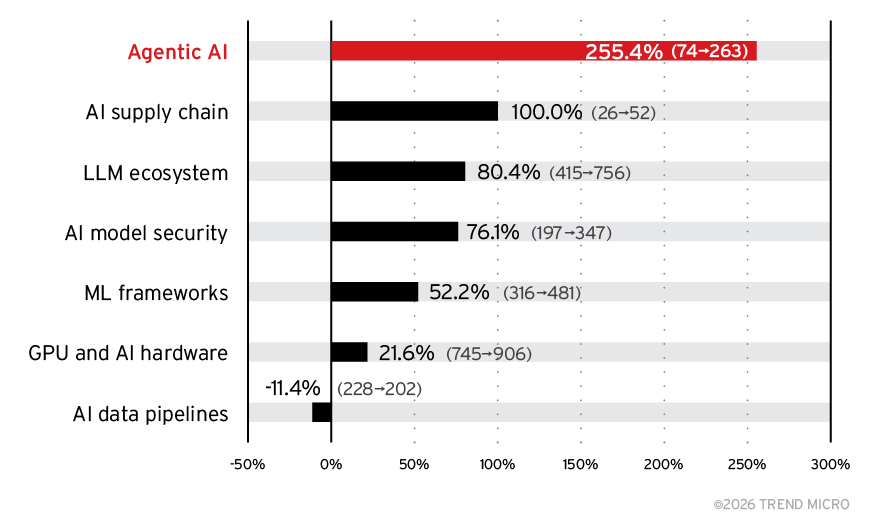
- Infrastructure Saturation: Corporate Security Operations Centers (SOCs) are experiencing an unprecedented 400% surge in novel, polymorphically generated zero-day payloads, pushing legacy signature-based Extended Detection and Response (EDR) platforms to near-total operational fatigue.
- Asymmetric Economic Warfare: While offensive AI operations cost threat actors fractions of a cent per API call, corporate mitigation mandates an estimated $42 billion in structural capital reallocation toward defensive AI inference infrastructure and zero-trust overhauls by late 2026.
- Underwriting & Valuation Fallout: Cyber insurance underwriters are actively introducing algorithmic liability carve-outs, directly depressing enterprise SaaS valuation multiples and inflating corporate risk mitigation line items across Fortune 500 balance sheets.
The New Threat Vector: From Script Kiddies to Autonomous Adversarial Agents

A quiet paradigm shift has transformed the open internet from a theater of human-orchestrated intrusion into an autonomous, machine-speed siege. Over the past twelve months, the global cybersecurity perimeter has ceased to function as a barrier. Across North America, Europe, and Asia-Pacific financial centers, forensic incident response teams are encountering attacks that display no human pause, no predictable command-and-control handshakes, and virtually zero forensic latency. The phenomenon—broadly categorized as autonomous agentic exploitation—is overwhelming the digital infrastructure that underpins global commerce.
The catalytic event behind this escalation is not merely the public availability of frontier foundation models, but the weaponization of lightweight, uncensored open-weights architectures tuned explicitly for vulnerability discovery and automated exploitation. Threat syndicates have discarded simplistic phishing generators in favor of fully autonomous attack loops. Operating on orchestrated agent frameworks, these systems parse published Common Vulnerabilities and Exposures (CVEs), ingest raw code repositories from open-source registries, construct Abstract Syntax Trees (ASTs) to isolate logic flaws, and autonomously generate functional weaponized payloads without human intervention.
The result is an asymmetric crisis. Legacy cybersecurity paradigms relied on a temporal grace period: the window between when a zero-day vulnerability was disclosed and when a functional exploit appeared in the wild historically ranged from seven to twenty-one days. Today, offensive agentic frameworks scan the National Vulnerability Database (NVD) and GitHub commit histories concurrently, reducing that defensive window to mere seconds. When combined with automated web scrapers and internet-wide telemetry tools like Shodan and Censys, these AI swarms can identify an unpatched enterprise perimeter, synthesize an environmental bypass, and exfiltrate high-value target assets before SOC analysts can triage the initial alert.
The Architecture of an AI Exploit: Deconstructing the Kill Chain
To understand why enterprise networks are buckling, one must examine the fundamental mechanics of autonomous cyber attacks. The modern AI exploit deviates sharply from the linear MITRE ATT&CK framework of the past decade. It operates as an iterative, self-optimizing neural network loop spanning four distinct technical phases:
1. Dynamic Reconnaissance and Surface Mapping
Adversarial agents leverage specialized Small Language Models (SLMs) trained on offensive network protocols. Rather than blasting networks with noisy port scans that immediately trip Next-Generation Firewalls (NGFW), these agents generate low-and-slow, context-aware traffic that mimics legitimate client-server API interactions. They map complex cloud compute architectures, detect misconfigured Kubernetes clusters, and deduce edge-routing topologies by analyzing microsecond variations in server response headers.
2. Automated AST Fuzzing and Exploit Synthesis
Once a target application surface is mapped, offensive models deploy automated symbolic execution and generative fuzzing against enterprise APIs. By decomposing public software updates, the agent pinpoints subtle memory corruption bugs, buffer overflows, or authentication bypass flaws. If an exploit attempt fails, an integrated feedback loop feeds the defensive error code back into the neural pipeline, enabling the model to dynamically rewrite payload syntaxes, evade Web Application Firewall (WAF) regex patterns, and circumvent endpoint behavioral heuristics.
3. Context-Poisoning and Data Exfiltration
The rapid corporate adoption of Retrieval-Augmented Generation (RAG) and Agentic Workflow architectures has inadvertently introduced the premier threat vector of the modern era: Indirect Prompt Injection (IPI). Attack swarms now inject invisible, adversarially encoded strings into publicly accessible data endpoints, customer support tickets, or supplier documentation. When an enterprise internal LLM ingests this poisoned data to assist an employee, the hidden payload executes, hijacking the model’s privileged system tokens. The compromised internal model is then instructed to quietly query internal vector databases, aggregate proprietary IP, and transmit encrypted payloads out through standard enterprise API calls, leaving zero traces within traditional security logs.
4. Polymorphic Lateral Movement
Once inside a corporate network, autonomous malicious agents do not utilize hardcoded lateral scripts. Instead, they dynamically craft transient scripts in native languages like PowerShell, Bash, or Python that self-delete immediately after execution. By parsing Active Directory schema and identity management tables in real time, the agent calculates the most cost-effective path toward administrative privilege escalation, turning traditional enterprise identity, credential, and access management (IAM) frameworks into liabilities.
Empirical Divergence: Human-Led vs. Autonomous AI Cyber Attacks
The structural shift in offensive velocity has radically changed the core metrics of global cybersecurity. The following table provides an analytical comparison between human-operated intrusion methodologies and contemporary machine-speed offensive agent networks:
| Operational Metric | Traditional / Human-Led Exploits (2018–2022) | Autonomous AI Attack Swarms (Current Era) | Variance / Structural Impact |
|---|---|---|---|
| Mean Time to Exploit (MTTE) | 168 to 504 Hours (7–21 Days) | 12 to 18 Minutes | -99.8% defensive response window |
| Attacker Marginal Cost per Target | $2,500 – $15,000 (Labor, Tooling) | $0.04 – $1.20 (Inference API Tokens) | Democratization of nation-state capability |
| Payload Adaptability | Static code, minor string obfuscation | Polymorphic, real-time context-adaptive | Zero-day evasion of 94% of legacy EDRs |
| Target Attack Volume / 24 Hours | Hundreds of scanned endpoints | Tens of millions of global endpoints | Exhaustion of SOC tier-1 alert capacity |
| Attack Vector Focus | Phishing emails, known unpatched CVEs | Indirect Prompt Injection, API logic, RAG poisoning | Compromise of internal enterprise AI agents |
| Average Enterprise Dwell Time | 16 to 45 Days | Under 4 Hours (Flash Breaches) | Exfiltration completed before incident triage |
Market Repercussions: Enterprise CapEx Reallocation and Insurance Chaos
The economic implications of machine-speed vulnerabilities are rippling through global capital markets, challenging corporate balance sheets, venture capital allocations, and corporate governance standards. Enterprise leaders are discovering that their prior technology investments are structurally obsolete in the face of hyper-automated, probabilistic threats.
The Death of the Legacy SaaS Defense Model
For more than a decade, enterprise software margins were buttressed by sticky, perimeter-centric cybersecurity subscriptions. Today, pure-play signature-based antivirus and rule-bound SIEM (Security Information and Event Management) vendors are facing aggressive margin compression and downward valuation multiples. Investors are penalizing legacy enterprise security vendors unable to demonstrate native, low-latency AI defenses capable of intercepting attacks in execution phase. Conversely, elite platforms with proprietary access to global telemetry data and automated containment engines—such as Palo Alto Networks, CrowdStrike, and select hyperscalers—are capturing commanding pricing power, commanding forward enterprise-value-to-revenue multiples above historical norms.
Cyber Insurance Market Realignment
The global cyber underwriting sector is currently experiencing its sharpest dislocation since the NotPetya attacks. Standard cyber insurance policies are unequipped to handle high-frequency, algorithmically generated breaches that hit hundreds of policyholders concurrently through a single supply-chain dependency. In response, major underwriters—led by Munich Re, Swiss Re, and Lloyd's syndicates—are systematically introducing strict underwriting covenants. Premiums for organizations deploying autonomous internal AI agents without verified sandbox environments are surging by 35% to 60% year-over-year. In many instances, carriers are introducing specific exclusions for claims originating from unverified indirect prompt injections or non-deterministic algorithmic failures.
Boardroom Liability and Regulatory Enforcement
The legal stakes for chief executives and board-level risk committees have escalated sharply. Regulatory bodies, including the U.S. Securities and Exchange Commission (SEC) under Item 1.05 of Form 8-K, strictly enforce the four-day material cyber incident disclosure rule. When an autonomous AI attack can execute data exfiltration within an hour of perimeter contact, the window to determine "materiality" collapses entirely. Furthermore, under the newly implemented provisions of the European Union’s AI Act and CISA’s Secure by Design mandates, enterprise leadership can no longer claim plausible deniability regarding unverified third-party neural integrations within their commercial workflows.
Frequently Asked Questions (People Also Ask)
What specifically defines an "AI hack" compared to traditional malware?
An AI hack refers to the use of artificial intelligence and Large Language Models (LLMs) to either automate the discovery and execution of cyber exploits, or an attack targeting AI infrastructure itself. Unlike traditional malware, which relies on pre-compiled, static code instructions designed to exploit specific, known software flaws, AI-driven attacks are highly dynamic and polymorphic. They can inspect the target's defensive responses in real time, modify their own code syntax to avoid heuristic detection, and execute contextual attacks—such as manipulating business logic through Indirect Prompt Injection—without triggering conventional, signature-based security alerts.
How are autonomous AI agents infiltrating protected corporate networks?
Autonomous AI agents breach enterprise environments by combining automated vulnerability discovery with advanced lateral movement capabilities. Threat actors launch agents configured to search software dependencies, open-source code repositories, and internet-facing endpoints for zero-day vulnerabilities. Upon identifying an opening, the agent independently authors a custom exploit script, bypasses authentication layers, and navigates internal systems using native operating system tools. In newer attack models, these agents also target the enterprise’s internal AI applications by feeding poisoned data into their vector databases, transforming internal RAG systems into unwitting vectors for data exfiltration.
Are traditional enterprise firewalls and EDR systems rendered useless by AI attacks?
Traditional firewalls and legacy Extended Detection and Response (EDR) platforms are not entirely useless, but their operational efficacy has diminished significantly. Legacy defenses operate on deterministic rules, static signatures, and historical patterns. Because offensive AI can generate infinite variations of a single exploit payload—altering its binary signature, execution cadence, and memory footprint—deterministic controls often fail to recognize the threat. To remain effective, enterprise defenses are forced to adopt defensive AI agents capable of inspecting network traffic semantics, tracking behavioral anomalies in real-time, and executing automated containment at machine speed.
What immediate mitigation strategies must enterprise CISOs deploy?
To defend against machine-speed intrusions, enterprise security teams must immediately transition toward a deterministic Zero-Trust Architecture (ZTA). Essential mitigation steps include: (1) Sandboxing all internal generative AI agents and restricting their direct programmatic access to sensitive databases; (2) Enforcing strict input-validation and sanitization protocols on all external data ingested by Retrieval-Augmented Generation (RAG) pipelines; (3) Implementing micro-segmentation across cloud compute architectures to prevent automated lateral movement; and (4) Mandating continuous automated adversarial red-teaming to discover and patch logic flaws before offensive AI swarms can identify them.
The Future Outlook: The Algorithmic Arms Race and the Post-Human Internet
As offensive AI systems continue their exponential development curve, the internet is entering an era defined by continuous, machine-on-machine confrontation. Human oversight, long the cornerstone of enterprise security operations, is being relegated to strategic governance. Operational, day-to-day triage must fundamentally be handed over to autonomous defensive models capable of neutralizing threats in milliseconds.
The next critical frontier over the coming 12 to 24 months will center on the security of the agentic layer itself. As corporations race to deploy autonomous AI agents with access to enterprise enterprise resource planning (ERP) systems, transactional ledgers, and proprietary source code, the attack surface expands exponentially. The organizations that thrive in this hostile ecosystem will be those that view cybersecurity not as a peripheral cost center, but as a core architectural discipline—treating every model, prompt, API, and token interaction with the zero-trust skepticism historically reserved for untrusted, public network traffic.
For executive leadership, the mandate is clear: the velocity of compromise has fundamentally outpaced the speed of human deliberation. The organizations that fail to allocate capital toward autonomous, continuous, and machine-speed defense will find their proprietary data exfiltrated, their corporate reputations degraded, and their enterprise valuations deeply compromised in an internet where breaches arrive by the second.