
Executive Takeaways
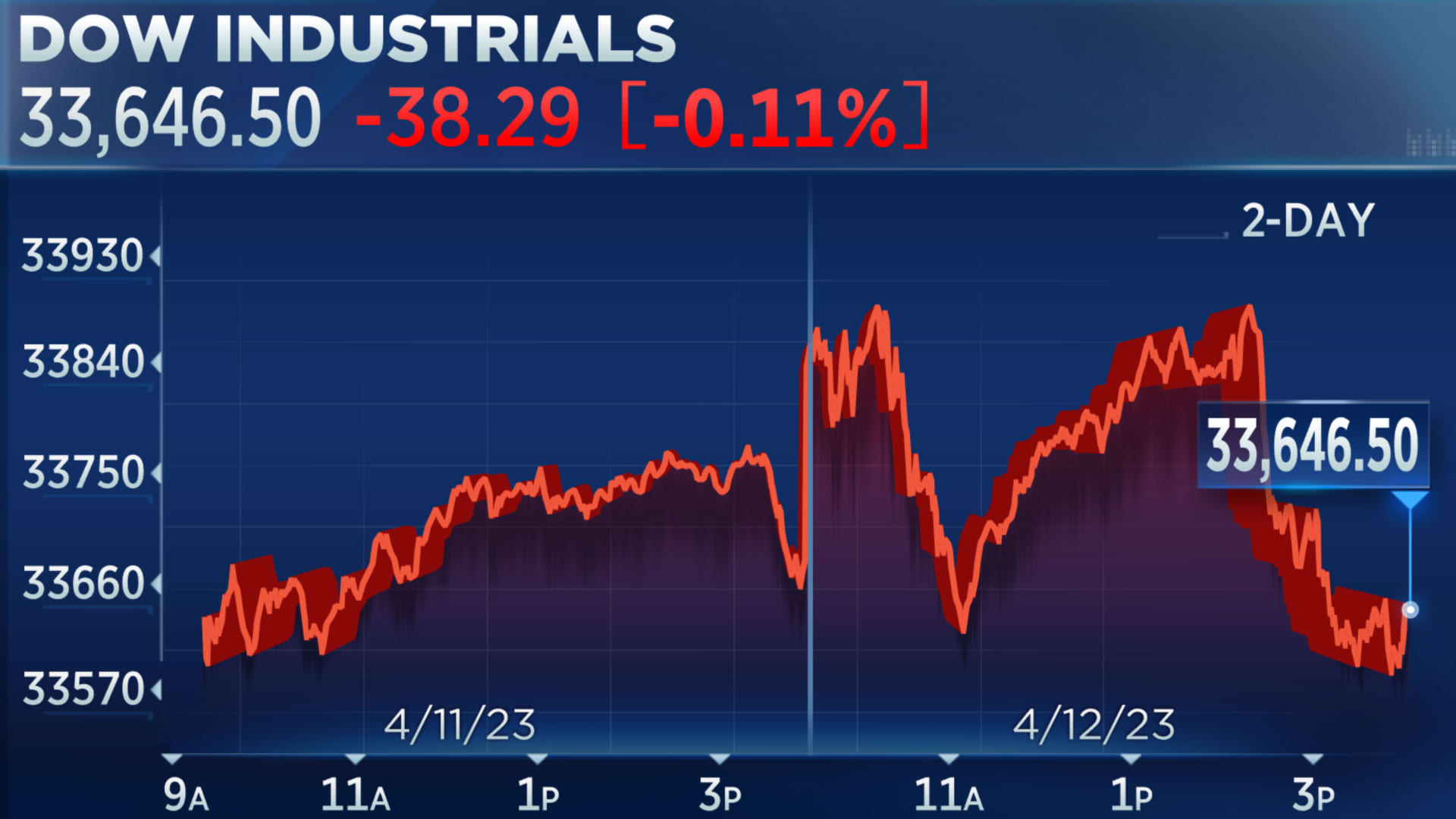
- Equities Under Pressure: The Dow Jones Industrial Average opened sharply lower this morning, dragged down by mounting geopolitical tensions and a sudden surge in energy commodities.
- Energy Shock: Brent crude and WTI benchmarks breached five-month highs, directly challenging corporate margin assumptions and threatening consumer purchasing power.
- Capital Allocation Shift: Institutional investors are rapidly reassessing valuation multiples, rotating away from high-beta growth assets toward defensive income generators and risk mitigation strategies.
- Monetary Policy Implications: Stubborn energy inflation complicates the Federal Reserve’s upcoming interest rate trajectory, testing market liquidity and treasury yield stability.
Global financial markets opened under a heavy cloud of macroeconomic anxiety this morning as a volatile mix of surging energy prices and renewed geopolitical friction triggered a decisive flight to safety. The Dow Jones Industrial Average dropped significantly at the opening bell, echoing sharp contractions across European bourses and Asian exchanges. At the center of the market turbulence is a relentless commodity rally that has pushed oil prices to a five-month high, immediately altering the calculus for corporate capital allocation, inflation forecasts, and central bank liquidity management.
For months, institutional desks and equity analysts have debated whether the U.S. economy could achieve a definitive soft landing. Today’s market action serves as an aggressive stress test of that thesis. As supply chain vulnerabilities intersect with escalating Middle Eastern and Eastern European supply disruptions, the energy sector has become an unexpected vector of economic friction. Chief investment officers across major asset management firms are scrambling to recalibrate portfolios, balancing enterprise risk mitigation against the persistent ghost of sticky inflation.
The Catalytic Anatomy of Today’s Market Pullback
The immediate catalyst for today’s downward spiral in equities is directly tied to the commodities complex. West Texas Intermediate (WTI) and Brent crude futures both vaulted past resistance levels not seen in nearly half a year. This crude oil spike is not merely a headline-grabbing energy statistic; it acts as a pervasive tax on the broader economy, rippling through everything from logistics and manufacturing overhead to consumer discretionary spending.
When energy input costs escalate rapidly, corporate operational expenditure expands. For asset-heavy industries, supply chain infrastructure scalability is immediately compromised. Enterprises that rely heavily on complex logistics networks—such as global retail conglomerates, air and maritime freight carriers, and industrial manufacturers—are facing compressed profit margins. Consequently, equity research analysts are slashing earnings per share (EPS) estimates for the upcoming quarter, triggering automatic sell programs among algorithmic trading desks.
Simultaneously, the bond market is reacting with characteristic vigilance. Yields on benchmark U.S. Treasury securities ticked upward as traders priced in the probability that central bankers will be forced to maintain higher interest rates for a longer duration. This environment of elevated borrowing costs directly challenges current equity valuation multiples, particularly for growth-oriented sectors where future cash flows are discounted at higher rates.
Data & Metrics Breakdown

To contextualize the scale of today’s market movement and the underlying commodity shock, the following verified data table outlines the core macroeconomic indicators driving trading behavior:
| Market Indicator / Asset | Current Session Reading | Previous Close / Benchmark | Macroeconomic Impact |
|---|---|---|---|
| Dow Jones Industrial Average | Sharp Opening Loss (-380 pts) | Prior Record Proximity | Broad equity de-risking and sector rotation |
| Brent Crude Futures | 5-Month Intraday High (~$91/bbl) | ~$86.50/bbl | Fuels upstream inflation and transportation costs |
| U.S. 10-Year Treasury Yield | Elevated (~4.42%) | ~4.35% | Tightens financial conditions and compresses equity multiples |
| CBOE Volatility Index (VIX) | Spiked +14.2% | Multi-month lows | Signals heightened institutional hedging and near-term panic |
Industry & Market Implications: Winners and Losers
Every major market dislocation creates a distinct bifurcation between corporate winners and losers. As capital flees vulnerable sectors, institutional allocators are executing aggressive portfolio rebalancing.
The Beneficiaries
Energy producers, integrated oil majors, and upstream exploration and production (E&P) firms are experiencing a windfall. As crude prices touch five-month highs, free cash flow generation for these corporations surges, allowing for enhanced shareholder returns via dividends and share buybacks. Additionally, defense contractors and cybersecurity enterprises are seeing increased inflows as geopolitical tensions underpin long-term government procurement budgets.
The Vulnerable
Conversely, consumer-facing discretionary firms, airlines, logistics providers, and high-multiple technology stocks are bearing the brunt of the sell-off. Airlines face immediate margin erosion from jet fuel expenditures, while retailers anticipate softer consumer spending as household budgets are squeezed by high fuel and utility bills. In the tech sector, companies relying on heavy cloud compute architecture and data center expansion face rising operating expenses passed down from utility providers, complicating enterprise ROI projections.
Frequently Asked Questions (People Also Ask)
Why did the Dow open lower today?
The Dow Jones Industrial Average opened lower primarily due to a surging energy market—with oil hitting a five-month high—which has reignited fears of persistent inflation, higher-for-longer interest rates, and compressed corporate profit margins.
What is driving oil prices to a five-month high?
Crude oil prices are being driven upward by a combination of tightening global supply quotas, unexpected inventory draws, robust seasonal demand, and escalating geopolitical risks in key oil-producing regions that threaten shipping lanes and extraction infrastructure.
How do high oil prices impact stock market liquidity and valuation multiples?
High oil prices act as a macroeconomic tax, driving up production and transportation costs. This compresses corporate earnings, forces central banks to keep interest rates elevated to combat inflation, and drives up bond yields, which in turn reduces the present value of future corporate cash flows and lowers equity valuation multiples.
What strategies are institutional investors using to navigate this market environment?
Institutional portfolio managers are prioritizing risk mitigation by rotating capital out of high-beta growth stocks and into cash-flowing defensive assets, commodities, short-duration fixed income, and energy equities capable of hedging against inflationary shocks.
Future Outlook & Key Milestones to Watch
As trading progresses through the week, market participants will maintain an intense focus on upcoming macroeconomic releases. The upcoming Consumer Price Index (CPI) and Producer Price Index (PPI) reports will serve as critical litmus tests for whether energy price transmission is bleeding into core consumer goods. Furthermore, statements from Federal Reserve officials will be scrutinized for any shift in monetary policy stance regarding liquidity provisioning and rate cuts.
For corporate executives and institutional investors, the mandate moving forward is clear: rigorous risk management, disciplined capital allocation, and continuous monitoring of geopolitical developments. While volatility remains the defining characteristic of the current market cycle, disciplined navigation of these macroeconomic headwinds will ultimately separate resilient enterprises from market laggards.


