The £5 Billion Bottleneck Breaks: UK Clears Path for 20,000 Homes as Water Taskforce Unblocks Stalled Megaprojects
LONDON — In one of the most consequential regulatory breakthroughs for the British property sector this decade, the government’s dedicated Water Delivery Taskforce has officially dismantled a long-standing environmental impasse, unlocking planning permissions for precisely 18,771 stalled homes across East Anglia, Lincolnshire, and surrounding high-growth corridors.
The intervention resolves a multi-year standoff between regional planning bodies, water utilities, and the Environment Agency, which had effectively frozen billions of pounds in residential construction capital under rigid "water neutrality" and supply-deficit mandates. For institutional developers, regional housebuilders, and local authorities, the breakthrough marks a strategic pivot from administrative paralysis toward pragmatically engineered infrastructure solutions.
Executive Summary: The Core Takeaways
- Direct Capacity Unlocked: 18,771 pipeline homes that were trapped in planning backlogs across East Anglia and Lincolnshire are cleared for active development.
- Targeted Intervention: The cross-departmental Water Delivery Taskforce established strategic mitigation schemes, fast-tracked local distribution reinforcements, and brokered bespoke water-offset agreements.
- Capital Injection: The unfreezing of these plots is projected to catalyze over £4.8 billion in gross development value (GDV) and support tens of thousands of regional supply-chain jobs.
- Blueprint for National Reform: Whitehall insiders signal that this intervention model will now be scaled across southern and eastern England, where another estimated 100,000 homes remain delayed by environmental and utility constraints.
The Anatomy of the Bottleneck: Why the Taps Ran Dry on Planning
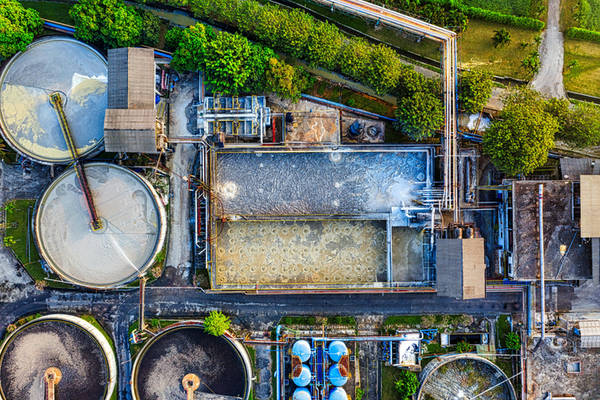
Over the past four years, the UK housing crisis ran headfirst into an ecological and infrastructural wall. In Eastern England—statistically the driest region in the country—chalk streams, low aquifer levels, and aging distribution networks forced regulators to intervene. Under strict environmental directives, local authorities were barred from granting planning consent unless developers could conclusively prove that new schemes would result in "water neutrality"—a benchmark near impossible to achieve for large-scale suburban master plans without major civic intervention.
The resulting logjam immobilized tier-one builders and regional developers alike. Sites with outline planning permissions were mothballed indefinitely, creating artificial housing shortages in employment hubs across Cambridge, Norwich, and urban centers across Lincolnshire.
The breakthrough announced by GOV.UK comes after six months of intense behind-the-scenes negotiation led by the Water Delivery Taskforce. Rather than waiting for decades-long reservoir construction projects to materialize, the taskforce orchestrated a three-pronged compromise:
- Retrofitting Offsets: Establishing council-backed funds, financed by developer levies, to aggressively retrofit thousands of existing social housing units with ultra-efficient fixtures, thereby creating an immediate net-negative water footprint.
- Accelerated Network Links: Forcing utility operators, primarily Anglian Water, to compress delivery schedules on regional pipe transfers, shifting water from surplus catchments directly into strained development clusters.
- Dynamic Abstraction Licensing: Granting temporary, seasonal abstraction adjustments monitored by real-time digital hydrological data, assuring the Environment Agency of ecological preservation while allowing immediate foundation laying.
Regional Impact: Breakdown of Unlocked Housing Units
The unlock provides immediate relief to several of the country’s most economically critical, land-constrained districts. The table below outlines the primary distribution of homes liberated under the new regulatory framework:
| Regional Cluster / Corridor | Units Cleared | Primary Bottleneck Resolved | Lead Utility Partner |
|---|---|---|---|
| Greater Lincolnshire | 7,420 | Aquifer depletion limits; trunk-main interconnection | Anglian Water / Severn Trent |
| Norfolk & Suffolk Catchments | 6,150 | Nutrient & water neutrality mandates on protected basins | Anglian Water |
| Cambridgeshire Fringes | 5,201 | Chalk stream abstraction caps threatening commercial science clusters | Cambridge Water / Anglian Water |
| Total Homes Liberated | 18,771 | Comprehensive Strategic Offsetting & Infrastructure Acceleration | Consortium |
Market Reaction: Relief in the Boardrooms, Eyes on the Ground
Equity markets responded with measured optimism. UK housebuilders with significant exposure to eastern land parcels saw institutional interest tick upward, with analysts noting that the taskforce has established a repeatable template for bypassing environmental gridlock without dismantling primary ecological laws.
"For years, housing supply in the UK has been treated in Whitehall as a standalone planning problem, ignoring the basic physics of utility networks," said an institutional infrastructure analyst in the City of London. "This intervention by the Water Delivery Taskforce proves that when government treats water networks as critical economic infrastructure rather than an administrative afterthought, capital can finally deploy."
However, industry bodies warn that the actual rate of building will now depend on supply-chain bandwidth. With 18,771 homes suddenly cleared, local authorities face a deluge of reserved-matters applications, while regional contractors must urgently source ground-engineering teams, bricklayers, and localized utility connections.
The Road Ahead: Scaling the White Paper
Ministers have confirmed that this tranche is merely phase one of a broader strategic framework designed to unlock stalled sites nationwide. Similar water supply constraints currently constrain strategic growth hubs along the South Coast, the Gatwick Diamond, and portions of the North West.
The priority will now shift to monitoring compliance. The Environment Agency has reserved the right to pause abstractions if drought metrics breach critical thresholds, placing immense pressure on regional water companies to deliver on promised infrastructure upgrades without slippage. For now, however, the heavy machinery in East Anglia and Lincolnshire is preparing to roll again.
Frequently Asked Questions (FAQ)
1. How did the Water Delivery Taskforce resolve the issue without building new reservoirs?
The taskforce utilized strategic bridging solutions rather than waiting for major long-term infrastructure. This included mandating commercial and social housing retrofitting to lower existing baseline consumption, accelerating the installation of regional interconnecting pipelines to import surplus water from neighboring zones, and applying dynamic, sensor-based environmental monitoring that allows controlled abstraction during non-peak ecological conditions.
2. When will construction begin on these 18,771 homes?
With planning conditions substantively cleared by the taskforce’s framework, developers holding stalled outline permissions are expected to file final reserved-matters documentation immediately. Groundworks on early-phase sites in Lincolnshire and Norfolk are projected to commence within the next three to six months, with initial completions anticipated by mid-2027.