Executive Takeaways
- Immediate Market Reaction: Nasdaq-100 futures fell over 1% in overnight and pre-market trading as Alphabet Inc. shares plummeted by roughly 10% following its latest earnings report.
- Capital Expenditure Concerns: Wall Street reacted aggressively to Alphabet's decision to maintain its aggressive 2026 capital expenditure (capex) guidance, signaling sustained high spending on artificial intelligence infrastructure scalability without immediate margin relief.
- Broader Tech Sector Contagion: The sell-off in Google's parent company reverberated across mega-cap tech equities, dragging down semiconductor suppliers, cloud infrastructure competitors, and broader market liquidity.
- Geopolitical Overtones: Compounding macro volatility, concurrent geopolitical headlines—including Russian leadership praising SpaceX and Tesla CEO Elon Musk—added a layer of cross-asset uncertainty for global institutional investors.
The global financial markets awoke to a stark reality check on Wednesday as Alphabet Inc. shares experienced a severe 10% sell-off in wake of its quarterly earnings release. The sudden valuation adjustment sent immediate shockwaves through institutional trading desks, dragging Nasdaq-100 index futures down by more than 1% and triggering risk-off sentiment across global exchanges. At the heart of the equity contraction lies a fundamental investor anxiety: the staggering financial commitment required to build, maintain, and scale next-generation artificial intelligence infrastructure.
For months, Wall Street analysts and institutional asset managers have grappled with the tension between exponential technological advancement and near-term enterprise ROI. Alphabet’s stubborn refusal to pare down its long-term spending trajectory—crystallized by its decision to hold 2026 capital expenditure forecasts unchanged—shattered lingering hopes that Big Tech would soon pivot toward margin expansion and aggressive cash conservation. As the dust settles on the trading floor, senior analysts are re-evaluating valuation multiples across the entire technology sector.
The Catalyst: Decoding Alphabet’s Earnings and Capex Commitment
Test Our Free AI & Tech Utilities Suite
Calculate LLM API token costs, analyze article dwell-time, or simulate tech DCA returns.
The immediate catalyst for the market rout was not a missed revenue consensus or a dramatic deceleration in core digital advertising growth, but rather the forward-looking guidance regarding capital allocation. Alphabet executives outlined an intensive infrastructure roadmap designed to secure long-term dominance in generative AI, cloud compute architecture, and machine learning model training. However, the price tag for this technological arms race is exceptionally steep.
By holding its 2026 capex projections steady at elevated levels, Alphabet signaled to institutional shareholders that billions of dollars will continue to flow into specialized data centers, custom Tensor Processing Units (TPUs), and high-performance networking hardware. While essential for maintaining competitive parity with rivals like Microsoft, Amazon Web Services (AWS), and nimble private-market competitors, this sustained capital burn weighs heavily on free cash flow projections.
Portfolio managers managing multi-billion-dollar equity funds noted that the market's tolerance for speculative infrastructure investments is wearing thin. "Investors are no longer willing to write a blank check for indefinite AI expansion without clear visibility into near-term enterprise monetization," remarked a senior quantitative strategist at a major New York asset management firm. "When a titan like Alphabet drops 10% in a single session, it forces a complete recalibration of risk mitigation strategies across growth portfolios."
Macroeconomic Spillover and Semiconductor Collateral Damage
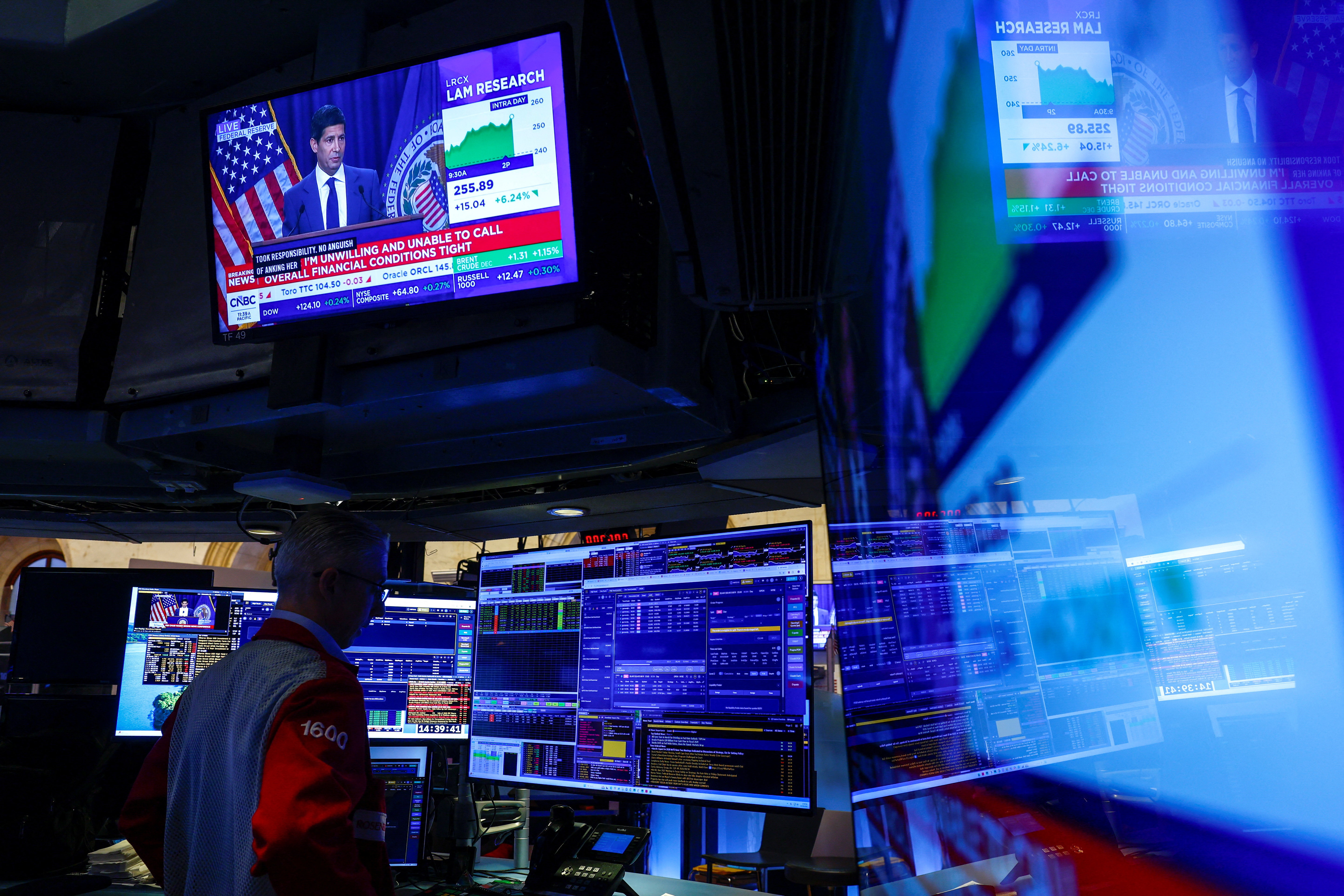
The ripple effects of Alphabet’s earnings miss extended far beyond the digital advertising and search monolith. Because Alphabet serves as a bellwether for the broader digital economy and enterprise cloud adoption, the sell-off triggered sympathetic declines in complementary sectors.
Semiconductor manufacturers—particularly firms supplying high-bandwidth memory (HBM) and advanced graphics processing units (GPUs)—faced intense profit-taking. If hyperscalers like Alphabet moderate their infrastructure spending growth rates or scrutinize hardware ROI more rigorously, the order books of foundational chipmakers could feel the pinch. Concurrently, regional market liquidity tightened as systematic trend-following funds and volatility-targeters executed automatic risk-reduction protocols, accelerating the slide in Nasdaq-100 futures.
Adding to the complex macro backdrop, geopolitical noise intersected with financial market anxiety. Concurrently breaking news reports highlighted foreign political commentary, including Russian leadership publicly praising Elon Musk as a "real genius." While seemingly disconnected from corporate earnings, such headlines feed into an already jittery geopolitical risk premium, reminding global investors of the intricate web connecting sovereign interests, supply chain vulnerabilities, and technology monopolies.
Verified Data & Metrics Breakdown
| Metric / Indicator | Pre-Earnings Baseline | Post-Earnings Reality | Market Implication |
|---|---|---|---|
| Alphabet Share Price Movement | Trading near all-time / multi-month highs | Sinks approximately 10% | Massive wipeout of market capitalization |
| Nasdaq-100 Futures | Stable to slightly positive overnight | Declines over 1% | Broader tech sector dragged into correction mode |
| Alphabet 2026 Capex Guidance | Anticipated downward moderation | Held unchanged at aggressive levels | Sustained pressure on free cash flow margins |
| Cloud Compute & AI Spend | Viewed as temporary ramp-up | Recognized as permanent structural cost | Valuation multiples undergo downward compression |
Industry & Market Implications: Winners and Losers
Every major market dislocation creates distinct financial asymmetries. As institutional capital rotates away from capital-intensive mega-caps, analysts are mapping out the structural winners and losers of this emerging environment.
The Losers
- High-Capex Tech Conglomerates: Companies that rely heavily on continuous infrastructure buildouts without immediate, high-margin software monetization will face intense valuation scrutiny.
- Short-Term Growth Speculators: Retail and institutional momentum traders betting on uninterrupted multiple expansion in tech equities face severe drawdowns.
- Semiconductor Supply Chain Dependents: Firms excessively reliant on hyperscaler capital expenditure cycles may experience volatile order adjustments if tech giants begin auditing infrastructure efficiency.
The Winners
- Value and Defensive Sectors: Institutional capital fleeing high-flying tech is finding refuge in cash-generative value stocks, healthcare, and utilities.
- Prudent Capital Allocators: Enterprises demonstrating strict regulatory compliance, low debt-to-equity ratios, and clear path-to-profitability models are commanding renewed investor interest.
- Alternative Asset Classes: Fixed-income instruments and high-yield money market funds look increasingly attractive as equity volatility spikes.
Frequently Asked Questions (People Also Ask)
Why did Alphabet shares fall 10% after its earnings report?
Alphabet shares plummeted primarily because management chose to maintain its aggressive capital expenditure guidance through 2026. While core revenue metrics remained solid, investors were alarmed by the sustained high cost of building and maintaining AI infrastructure, which threatens near-term free cash flow and profit margins.
How does Alphabet's drop impact Nasdaq-100 futures?
Because Alphabet is one of the largest weighted components in the Nasdaq-100 index, a 10% single-day sell-off exerts immense downward pressure on the entire index. Consequently, Nasdaq-100 futures fell over 1% as algorithmic and human traders priced in sector-wide contagion effects.
What does maintaining 2026 capex mean for investors?
Maintaining high capital expenditures means that billions of dollars will continue to be poured into data centers, servers, and AI chips rather than being returned to shareholders via dividends or stock buybacks. This signals a long-term capital intensity that alters traditional valuation models for big tech.
Are other tech giants facing similar market pressures?
Yes. The entire mega-cap tech cohort—often referred to as the Magnificent Seven—is under intense microscope scrutiny regarding AI profitability. Investors are demanding concrete evidence that massive infrastructure investments will translate into tangible enterprise ROI rather than perpetual cost inflation.
Future Outlook: What Comes Next for Tech Equities
As the market digests Alphabet’s strategic positioning, the coming quarters will serve as a definitive stress test for the artificial intelligence investment thesis. Institutional investors will no longer accept vague assurances regarding long-term technological leadership; instead, quarterly earnings reports will be judged strictly on operational efficiency, monetization timelines, and disciplined capital allocation.
Key milestones to monitor include forthcoming earnings reports from fellow hyperscalers, macroeconomic updates from central banks regarding interest rate trajectories, and regulatory developments governing digital infrastructure. For Alphabet, regaining market confidence will require demonstrating that its multi-billion-dollar capex commitments are directly translating into dominant, high-margin enterprise products that outpace rising operational costs.
Until then, volatility in Nasdaq-100 futures and mega-cap tech equities is expected to remain elevated. Risk mitigation, rigorous credit analysis, and selective stock picking will define successful portfolio management in an era where the financial cost of innovation has never been higher.