Executive Takeaways
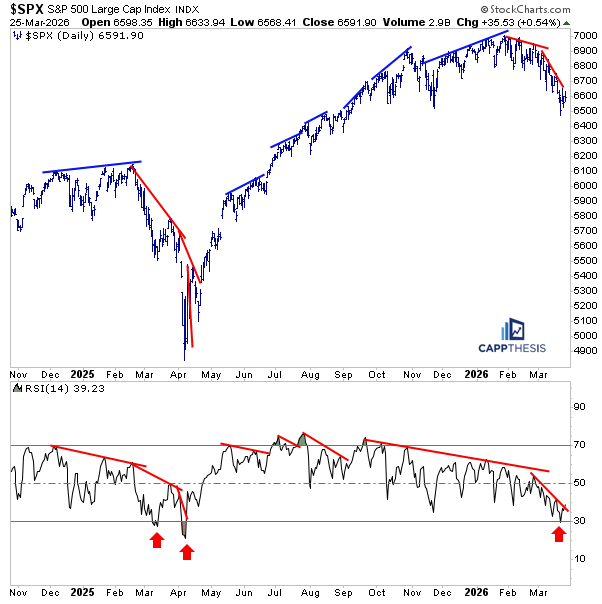
- Market Equilibrium: The S&P 500 hovered near flatlines as strong initial Q3 banking reports clashed directly with a severe, valuation-driven correction in high-beta semiconductor equities.
- Semiconductor Slump: Leading chip designers and foundry operators faced aggressive profit-taking, driven by tightening export controls, cyclical enterprise ROI concerns, and moderating hyperscaler capital expenditure growth.
- Financial Sector Resilience: Major tier-1 financial institutions reported robust net interest margins and resilient credit quality, providing a temporary market floor against broader technology sector volatility.
- Portfolio Strategy: Institutional asset allocators are executing aggressive risk mitigation and capital reallocation strategies, rotating out of richly priced growth assets into cash equivalents and defensive value sectors.
NEW YORK — In an environment characterized by jittery risk sentiment and compressed valuation multiples, the broader U.S. equity market struggled to find decisive momentum. The benchmark S&P 500 index traded essentially unchanged in midday sessions as institutional traders digested a complex deluge of third-quarter corporate earnings from money-center banks, even as a sharp, broad-based liquidation event swept through high-flying semiconductor stocks.
The intraday friction underscores a delicate transitional phase for global financial markets. While traditional banking giants offered a reassuring baseline of balance sheet health and stable credit metrics, structural anxiety regarding peak artificial intelligence (AI) infrastructure scalability and cyclical demand softness in legacy silicon markets triggered an aggressive flight from tech-heavy beta. As chief investment officers recalibrate their macroeconomic models ahead of upcoming Federal Reserve monetary policy pivots, the interplay between financial sector cash flows and hardware valuations has emerged as the definitive battleground for market direction.
The Catalytic Divergence: Banking Solvency vs. Semiconductor Correction
The divergence defining the current trading session centers on two distinct pillars of the modern corporate economy: traditional financial intermediation and advanced hardware manufacturing. Major financial institutions stepped into the earnings calendar under intense scrutiny regarding consumer delinquency rates, commercial real estate (CRE) exposure, and net interest income (NII) trajectories. Contrary to bearish prognostications, major lenders posted better-than-expected provisions for credit losses, signaling that consumer spending resilience remains intact despite persistent inflationary pressures.
However, this macro-level stabilization within the financial services sector failed to inspire broader market enthusiasm, primarily due to simultaneous downward revisions across the semiconductor complex. Leading chipmakers—spanning integrated device manufacturers (IDMs), fabless designers, and advanced packaging suppliers—faced heavy selling pressure. Analysts point to a combination of tightening regulatory compliance regarding international technology exports, stretched valuation multiples, and lingering questions regarding the monetization timeline for enterprise-grade AI infrastructure deployment.
Capital allocation strategies among corporate technology buyers are shifting. While cloud service providers continue to prioritize massive capital expenditure outlays for advanced graphics processing units (GPUs) and specialized accelerators, enterprise clients are demanding clearer evidence of operational efficiencies and immediate enterprise ROI before committing to next-generation hardware upgrades. This scrutiny has introduced a layer of cyclical uncertainty into supply chains that had previously priced in unmitigated, exponential demand growth.
Verified Market Metrics & Index Performance Breakdown
| Market Index / Sector | Intraday Trajectory | Primary Catalysts & Drivers | Risk Assessment |
|---|---|---|---|
| S&P 500 (SPX) | Unchanged / Flat | Offsetting gains in financials vs. losses in tech | Moderate / Range-bound |
| Philadelphia Semiconductor (SOX) | Sharp Decline (-2.8%) | Export controls, valuation resets, capex scrutiny | High / Volatile |
| Financial Select Sector (XLF) | Modest Gain (+0.9%) | Resilient credit metrics, stable NII guidance | Low / Defensive |
| Nasdaq Composite (IXIC) | Downward Drift (-0.6%) | Mega-cap tech profit-taking, yield pressures | Elevated |
Industry & Market Implications
The current market bifurcation has profound implications for institutional portfolio management. On one side of the ledger, value-oriented investors and dividend-seeking funds are finding renewed confidence in the banking sector. The ability of major financial institutions to preserve net interest margins in a volatile interest rate environment demonstrates robust balance sheet management and effective risk mitigation protocols. These firms are acting as a ballast, preventing a broader systemic correction in major equity benchmarks.
Conversely, the sell-off in chip stocks highlights the precarious nature of momentum-driven equities. As market liquidity conditions tighten and the cost of capital remains elevated, investors are less forgiving of minor growth decelerations in high-valuation sectors. Cloud architecture providers and enterprise software vendors must now prove that heavy capital investments in artificial intelligence and next-generation compute infrastructure are translating directly into top-line revenue acceleration and margin expansion.
Furthermore, broader macroeconomic indicators—including upcoming retail sales figures, labor market prints, and Federal Reserve commentary—will dictate whether this tech sector retracement is a localized correction or the precursor to a more generalized asset re-pricing cycle. Wealth managers are actively advising clients to maintain diversified exposure, hedging equity risk through targeted allocations in fixed income and cash instruments yielding attractive risk-free returns.
Frequently Asked Questions (People Also Ask)
Why is the S&P 500 flat despite major earnings releases?
The S&P 500 has remained largely unchanged because strong, stabilizing earnings reports from the financial sector have successfully offset aggressive profit-taking and steep declines in high-weight semiconductor and technology equities. This push-and-pull dynamic keeps the benchmark index range-bound as traders weigh positive credit metrics against cooling growth expectations in hardware.
What factors are driving the recent sell-off in chip and semiconductor stocks?
The pullback in semiconductor equities is driven by a combination of stretched valuation multiples, tightening international trade and export compliance regulations, and heightened scrutiny over enterprise capital expenditure ROI. Investors are increasingly questioning whether the explosive pace of AI-related infrastructure spending can maintain its trajectory without immediate, measurable monetization across corporate end-users.
How are major financial institutions performing during the current earnings season?
Major banks and financial institutions have generally reported resilient third-quarter results, outperforming consensus estimates regarding net interest margins and credit loss provisions. Despite lingering concerns over commercial real estate exposure, consumer loan defaults remain contained, providing a much-needed defensive anchor for the broader equity market.
What should institutional investors and traders watch for next?
Market participants should closely monitor upcoming macroeconomic data releases—specifically inflation prints, labor market reports, and central bank commentary regarding future interest rate trajectories. Additionally, forward-looking guidance from major enterprise software and cloud computing giants will be critical in determining whether technology valuations stabilize or face further downward pressure.
Future Outlook & Strategic Positioning
Looking ahead, the trajectory of the S&P 500 will depend heavily on the upcoming wave of corporate earnings and macroeconomic data points. As the Q3 reporting season broadens beyond the financial sector into industrial, healthcare, and consumer discretionary names, institutional investors will be listening intently for management commentary regarding pricing power, wage inflation, and forward guidance.
In the near term, volatility is expected to remain elevated. Portfolio managers are employing disciplined risk mitigation techniques, favoring companies with strong balance sheets, high free cash flow generation, and defensible market positions over speculative growth plays. While the long-term structural thesis for advanced computing and artificial intelligence remains intact, the market is currently undergoing a healthy, albeit painful, valuation reset—separating foundational technological adoption from cyclical exuberance.