Executive Takeaways
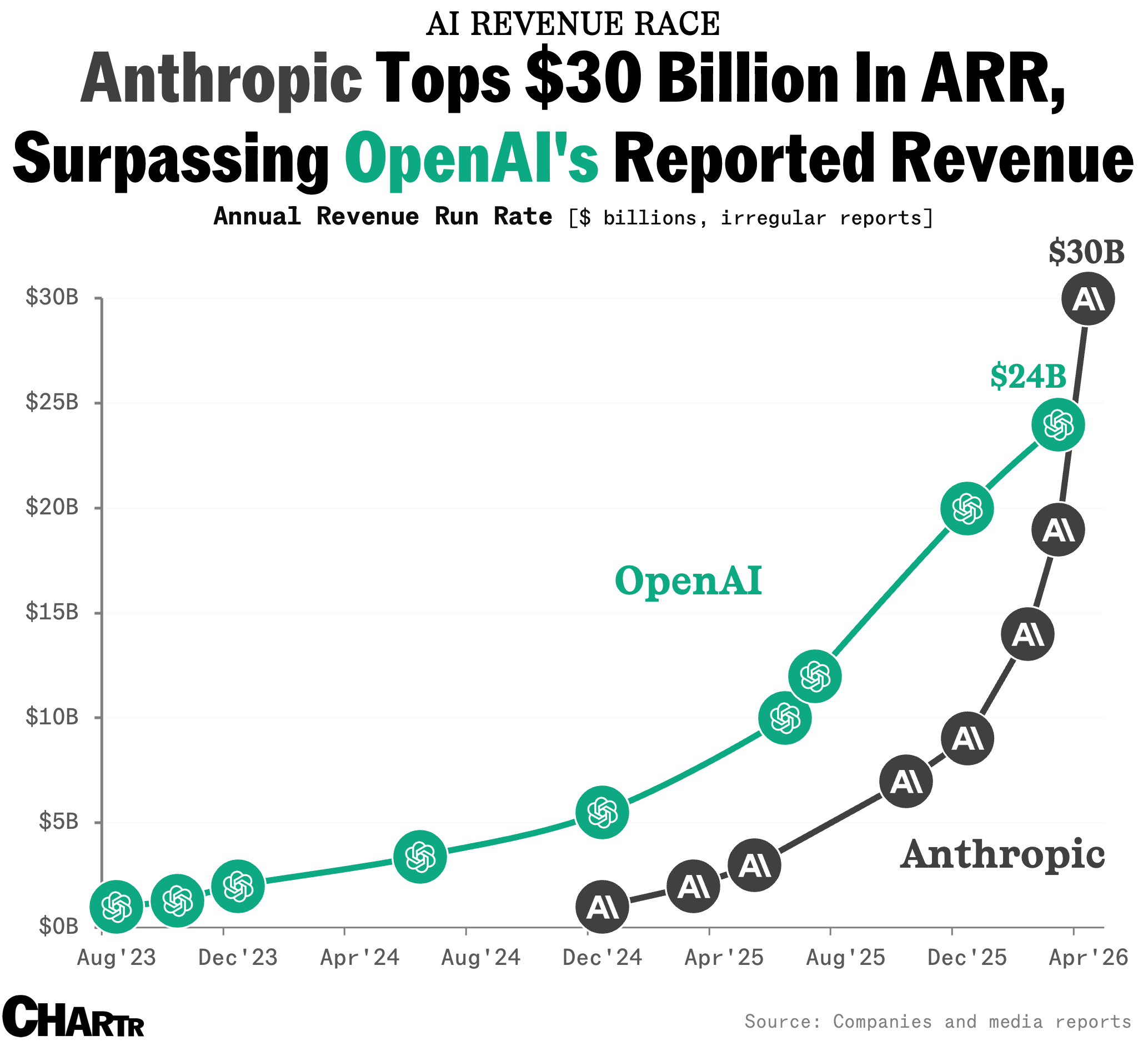
- Top-Line Trajectory Normalizes: Anthropic’s explosive monthly annualized recurring revenue (ARR) expansion has begun to decelerate as enterprise client acquisition costs rise and market saturation for foundational chat interfaces takes hold.
- Capital-Intensive Infrastructure Pressures: Securing next-generation GPUs and maintaining massive cloud compute architectures are straining cash flows, driving the company toward complex, debt-heavy compute financing structures.
- IPO Readiness Under Scrutiny: Wall Street bankers and venture underwriters are closely evaluating the company's valuation multiples, margin sustainability, and regulatory compliance ahead of a prospective public market debut.
- Strategic Pivots Required: To justify a premium valuation, Anthropic must accelerate high-margin enterprise software deployment, prove clear enterprise ROI, and successfully navigate intense regulatory scrutiny regarding data privacy and IP licensing.
The race for generative artificial intelligence supremacy is entering a perilous, capital-intensive phase. Anthropic, long heralded as a safety-first standard-bearer in the foundational model landscape, is confronting a formidable convergence of economic headwinds. Recent market intelligence reveals that while enterprise demand for its Claude model ecosystem remains robust, Anthropic’s hyper-growth revenue curve is showing initial signs of compression. Simultaneously, the staggering cost of procuring advanced silicon and building out next-generation training clusters has introduced severe compute financing risks.
As institutional investors, sovereign wealth funds, and tier-1 venture syndicates weigh participation in an upcoming initial public offering (IPO), the underlying financial mechanics of the generative AI boom are facing unprecedented scrutiny. This investigative report dissects the macroeconomic, technical, and operational realities shaping Anthropic's trajectory, examining how capital allocation strategies and infrastructure scalability will dictate the company's long-term market viability.
The Deceleration of ARR Expansion and Enterprise Realities
Test Our Free AI & Tech Utilities Suite
Calculate LLM API token costs, analyze article dwell-time, or simulate tech DCA returns.
For the past thirty-six months, generative AI laboratories enjoyed an unprecedented era of frictionless top-line expansion. Early adopters across Silicon Valley, Wall Street, and Fortune 500 boardrooms rushed to integrate large language models (LLMs) into their workflows, treating token consumption as an operational necessity rather than a strictly budgeted expense. For Anthropic, this dynamic fueled a meteoric rise in annualized recurring revenue, pushing the firm into the upper echelons of enterprise SaaS growth.
However, recent financial disclosures and supply-chain intelligence indicate that Anthropic’s revenue growth is encountering the laws of large numbers and market maturation. Enterprise procurement committees are increasingly demanding demonstrable enterprise ROI before expanding multi-million-dollar software deployments. Consequently, sales cycles have lengthened, and customer acquisition costs (CAC) have climbed. Enterprises are no longer satisfied with general-purpose conversational capabilities; they require deterministic, domain-specific execution, robust regulatory compliance, and bulletproof data privacy guarantees.
This shift has forced Anthropic to pivot its go-to-market strategy away from broad consumer-facing tiers toward deeply integrated, high-value enterprise partnerships. While these deals yield sticky, long-term contracts, they require extensive custom engineering, dedicated support resources, and rigorous security audits—factors that temporarily compress operating margins and moderate the velocity of top-line growth.
The Compute Financing Squeeze: Capital Allocation and Infrastructure Scalability
The most acute friction point facing Anthropic is not software development, but silicon. Training and serving frontier models like Claude 3.5 Sonnet and future iterations demand unprecedented access to specialized graphics processing units (GPUs) and tensor core processors. Building out these hyper-scale cloud compute architectures requires billions of dollars in upfront capital expenditure.
To fund this hardware acquisition race, Anthropic has had to engineer complex financial arrangements, combining equity injections from hyperscaler cloud partners with debt facilities tied to hardware procurement. These compute financing structures introduce substantial balance-sheet risk. Unlike traditional software companies characterized by near-zero marginal costs, AI infrastructure providers operate with heavy capital intensity. Depreciation schedules for high-performance computing (HPC) hardware are aggressive, and technological obsolescence occurs at a dizzying pace.
Market liquidity conditions and shifting interest rate environments further complicate these capital requirements. If venture capital markets cool or public market valuation multiples compress, servicing these hardware-backed financing vehicles could severely restrict operational flexibility. The company’s ability to optimize cloud compute architecture efficiency, negotiate favorable silicon supply agreements, and secure non-dilutive capital will be the ultimate determinant of its runway.
Analysing the Financial and Operational Metrics
To contextualize Anthropic’s current market standing, industry analysts track several critical vectors comparing historical performance against forward-looking projections.
| Metric / Indicator | 2023 Baseline | Current Status (2024-2025) | Strategic Implication |
|---|---|---|---|
| Annualized Run-Rate (ARR) | Sub-$200 Million | Approaching $1 Billion+ Scale | Growth rate moderating; scale demands structural margin discipline. |
| Compute Capital Expenditure | Moderate (Cloud-Leased) | Multi-Billion Hardware Commitments | Increased balance-sheet leverage and fixed cost exposure. |
| Gross Margin Profile | Volatile / High Inference Cost | Improving via Algorithmic Efficiency | Essential for satisfying public market profitability metrics. |
| IPO Timeline Readiness | Speculative / Early-Stage Prep | Active Underwriter Consultations | Governance, compliance, and financial transparency taking priority. |
Industry & Market Implications: Winners, Losers, and Economic Ripples
The maturation of Anthropic's business model and the tightening of compute financing carry profound consequences for the broader technology ecosystem.
The Hyperscalers and Silicon Giants Win: Cloud providers (such as Amazon Web Services and Google Cloud) and semiconductor manufacturers (such as NVIDIA) occupy an enviable bottleneck position. Regardless of whether individual model developers like Anthropic experience margin compression or revenue slowdowns, the foundational demand for cloud infrastructure and specialized compute guarantees steady revenue streams for hardware and infrastructure providers.
Boutique AI Labs Face Consolidation: Smaller foundational model developers lacking deep-pocketed strategic backers or massive credit facilities will struggle to survive the compute financing squeeze. This environment accelerates industry consolidation, potentially leaving the market dominated by a handful of heavily capitalized giants.
Public Market Investors Exercise Caution: The era of uncritical tech valuations is over. Institutional asset managers evaluating an Anthropic IPO are demanding rigorous GAAP profitability paths, transparent unit economics, and clear risk mitigation strategies regarding intellectual property litigation and regulatory intervention.
Frequently Asked Questions (People Also Ask)
Why is Anthropic's revenue growth experiencing a slowdown?
While absolute revenue continues to scale upward, the hyper-exponential growth rate has moderated due to market maturation, longer enterprise sales cycles, and heightened competition in the generative AI sector. Enterprises are demanding strict, measurable ROI before committing to larger deployment budgets, shifting the market dynamics from rapid prototyping to deliberate, cost-conscious procurement.
What are compute financing risks in the context of AI startups?
Compute financing risks refer to the immense capital requirements needed to purchase and operate advanced hardware, specifically GPUs. Because training and running frontier AI models require continuous, heavy capital expenditures, companies often rely on complex debt facilities, vendor financing, or cloud partnerships. If market conditions tighten or model monetization stalls, servicing these heavy infrastructure costs can severely strain liquidity.
How does this capital intensity impact Anthropic’s prospective IPO?
Public market investors evaluate tech IPOs based on predictable recurring revenue, gross margin stability, and a clear trajectory toward operating profitability. The massive capital outlay required for compute infrastructure places pressure on profit margins. Consequently, underwriters are pushing Anthropic to demonstrate enhanced financial discipline, optimized inference efficiencies, and sustainable unit economics before setting a definitive public debut date.
What role do cloud hyperscalers play in Anthropic's financial structure?
Strategic cloud partners (such as Amazon and Google) provide crucial capital infusions, proprietary cloud credits, and hardware access. While these partnerships alleviate immediate cash burn, they also create intertwined commercial dependencies, contractual obligations, and governance dynamics that underwriters analyze closely during pre-IPO audits.
Future Outlook and Key Milestones to Watch
As Anthropic navigates the delicate transition from private startup darling to publicly accountable enterprise, the coming quarters will prove definitive. The company's leadership must successfully balance aggressive research and development in next-generation reasoning models with strict financial prudence.
Key milestones to monitor include:
- Inference Optimization Breakthroughs: Further reductions in token generation costs through algorithmic efficiency, which will directly improve gross margin expansion.
- Strategic Debt and Equity Structuring: How the company manages its compute financing obligations without overly diluting equity or introducing unsustainable debt service burdens.
- Regulatory and Compliance Navigations: Developments surrounding copyright litigation, data scraping regulations, and global AI governance frameworks that could impact operational models.
- Underwriter Filings and Valuation Multiples: Formal SEC registration statements and preliminary prospectus filings that will reveal the true health of the balance sheet ahead of the anticipated public offering.
Ultimately, Anthropic possesses world-class technical talent and exceptional enterprise mindshare. However, surviving the rigorous scrutiny of public markets will require proving that generative AI can transcend its high-cost foundational phase to become a sustainably profitable, highly scalable commercial engine.