Executive Takeaways
- Strategic Pivot: Following years of stagnating consumer adoption, hardware fatigue, and compressed margins, both Apple and Amazon have committed significant capital expenditure to reinvent the stagnant smart display category.
- Enterprise & Ambient Computing: The next-generation hardware shifts focus away from fragmented voice assistants toward localized AI processing, enterprise ROI, and ambient smart-home infrastructure orchestration.
- Capital Allocation & Valuation: For Amazon, this represents a crucial risk mitigation strategy to revive its hardware division; for Apple, it bridges the missing ecosystem gap between iOS mobility and spatial computing.
- Ecosystem Lock-In: By leveraging advanced computer vision, proprietary silicon (such as Apple’s M-series/A-series chips and Amazon's upgraded AZ neural processors), these devices aim to command premium pricing tiers that defy historical commoditization.
For the better part of a decade, Wall Street and Silicon Valley analysts wrote the obituary for the consumer smart display. What began as a high-growth frontier for voice-activated commerce and kitchen-counter weather stations quickly devolved into a commoditized race to the bottom. Margins evaporated, device utility plateaued as smartphone capabilities expanded, and consumers grew increasingly fatigued by persistent privacy concerns and intrusive user interfaces driven by ad-supported monetization models. The category, many argued, was functionally dead.
That consensus was upended following a synchronized strategic pivot by two of the world's most influential market makers: Apple Inc. and Amazon.com, Inc. By deploying aggressive capital allocation, integrating edge-based generative artificial intelligence, and recalibrating enterprise-to-consumer infrastructure, both technology monoliths are betting billions that the smart display can be reinvented. The core question animating boardrooms from Cupertino to Seattle is no longer whether the form factor can survive, but whether this high-stakes hardware renaissance can successfully establish a new paradigm for ambient computing.
The Anatomy of a Hardware Collapse: Why the First Wave Stalled
Test Our Free AI & Tech Utilities Suite
Calculate LLM API token costs, analyze article dwell-time, or simulate tech DCA returns.
To understand the magnitude of Apple and Amazon’s current maneuvers, one must first dissect the structural failures of the initial smart display boom. Between 2018 and 2022, manufacturers flooded the market with low-cost displays designed primarily as conduits for retail transactions and media streaming. However, these devices suffered from severe foundational limitations that crippled long-term enterprise ROI and consumer retention:
- Monetization Friction: Unlike smartphones or personal computers, smart displays lacked a robust app ecosystem capable of sustaining recurring revenue models, leaving hardware manufacturers vulnerable to margin compression.
- Algorithmic Limitations: Early voice assistants hit a cognitive ceiling. They struggled with complex, multi-intent queries, leading to high user frustration and plummeting daily active usage (DAU) metrics.
- Privacy & Security Deficits: Always-on microphones and cameras installed in private spaces such as kitchens and bedrooms triggered regulatory compliance scrutiny and severe consumer hesitancy, capping market liquidity.
- Ecosystem Fragmentation: Lack of standardized communication protocols across disparate Internet of Things (IoT) devices turned smart homes into troubleshooting nightmares rather than seamless environments.
By late 2023, shipment volumes had contracted significantly, leading hardware divisions to scale back engineering budgets. Yet, behind closed doors, executive leadership recognized that abandoning the ambient screen meant forfeiting control over the most lucrative real estate in the modern connected ecosystem: the physical wall space of the home and office.
Verified Data Matrix: The Evolution of Smart Display Strategy
| Strategic Metric | Legacy Era (2018–2022) | Current Renaissance (2024–Future) |
|---|---|---|
| Primary Value Proposition | Voice search, weather, basic streaming | Ambient AI orchestration, spatial control, robotics |
| Processing Architecture | Cloud-dependent lightweight SoCs | Edge-native neural engines (NPUs), localized LLMs |
| Monetization Model | Hardware sales, targeted commerce upsell | Subscription software, premium ecosystem lock-in |
| Target Market Segment | Mass-market consumer households | High-end residential, smart offices, enterprise |
Amazon’s Operational Pivot: Reinventing Echo Through Generative AI
Amazon’s renewed push into the category is anchored by a calculated imperative: protecting its dominant position in smart-home infrastructure while restoring profitability to its consumer hardware group. For years, the Echo device lineup operated as a loss-leader strategy designed to funnel transactions into Amazon’s core retail engine. However, macroeconomic pressures and soaring cloud compute architecture costs forced a strategic reckoning.
According to industry insiders familiar with the matter, Amazon’s next-generation smart displays are being redesigned from the silicon up to incorporate advanced large language models (LLMs). Rather than relying on rigid, pre-programmed voice commands, these new units utilize localized neural processing units (NPUs) to interpret conversational nuance, context, and intent in real time.
This operational overhaul addresses past critiques regarding cloud latency and data privacy. By processing sensitive audio and visual data locally on the device—minimizing round-trips to AWS data centers—Amazon is mitigating regulatory compliance risks under evolving global data protection frameworks. Furthermore, by positioning these displays as sophisticated command centers for enterprise-grade home security, energy management, and automated logistics tracking, Amazon aims to justify higher hardware valuation multiples, shifting away from the race-to-the-bottom pricing model that defined the original Echo Show rollout.
Apple’s Wall-Mounted Ambition: Bridging iOS and Spatial Computing
While Amazon defends its entrenched smart-home footprint, Apple is executing a classic Cupertino playbook: entering an established, struggling market late with a premium, highly differentiated product designed to capture disproportionate profit shares.
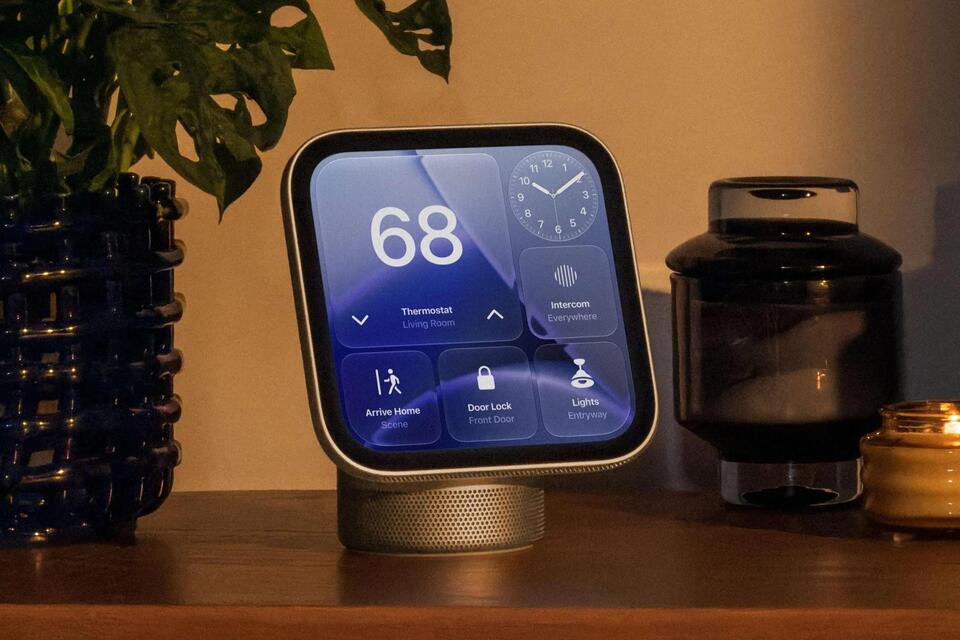
Financial analysts tracking Apple’s supply chain note that the company is actively developing a wall-mounted home command device—reportedly operating on a lightweight variant of tvOS and powered by proprietary Apple silicon. This device serves a vital structural purpose within Apple's capital allocation framework: it acts as the missing nexus between mobile computing (iPhone), wearable tech (Apple Watch, Vision Pro), and stationary home infrastructure (HomePod, Apple TV).
By integrating advanced computer vision and facial recognition, Apple’s rumored device will dynamically adapt its user interface based on who is standing in front of it. If a family member approaches, the screen surfaces personal calendars, localized home automation preferences, and messages. If an unrecognized visitor appears, it shifts to security monitoring protocols. This level of granular contextual awareness leverages Apple’s unmatched vertical integration, combining hardware, operating system design, and on-device machine learning in a manner that competitors utilizing fragmented Android ecosystems struggle to replicate.
Industry & Market Implications: Who Wins, Who Loses?
The rejuvenation of the smart display category carries profound ripple effects across global supply chains, technology valuations, and competitive dynamics:
- Silicon Manufacturers: Semiconductor leaders specializing in low-power, high-efficiency edge AI chips—such as Qualcomm, MediaTek, and specialized silicon design teams within Apple and Amazon—stand to capture surging enterprise demand as devices require heavier localized compute power.
- Smart Home Protocol Providers: The maturation of the Matter connectivity standard aligns perfectly with this hardware revival, ensuring interoperability and reducing the friction that previously choked consumer adoption.
- Legacy Hardware Competitors: Independent third-party manufacturers relying on commoditized, basic Android tablets configured as smart frames face severe margin erosion, as consumers migrate toward high-end, AI-native ecosystems controlled by Apple and Amazon.
- Enterprise & Commercial Real Estate: Beyond residential use, commercial real estate developers are eyeing these sophisticated displays as centralized hubs for smart-office resource booking, climate control, and enterprise communication, opening lucrative new B2B revenue streams.
Frequently Asked Questions (People Also Ask)
Why did the original smart display market fail to sustain consumer interest?
The first generation of smart displays suffered from limited voice-assistant intelligence, heavy reliance on cloud processing that caused latency, privacy concerns regarding always-on cameras, and a lack of compelling monetization or recurring utility beyond basic media playback and weather updates.
How are Apple and Amazon making these new smart displays different?
Both companies are integrating advanced edge-based generative artificial intelligence and localized neural processing units (NPUs). This allows devices to understand complex conversational context locally, execute computer vision tasks securely on-device, and function as sophisticated command centers for modern smart-home and enterprise automation ecosystems.
Will these new devices rely on subscription pricing models?
While upfront hardware sales remain vital, industry analysts indicate that both companies are engineering these devices to integrate deeper with recurring high-margin services—such as advanced home security monitoring, premium cloud storage, and AI-driven automation subscriptions—to secure long-term revenue streams.
What role does edge computing play in this hardware revival?
Edge computing is central to the turnaround. By processing heavy AI workloads directly on the device rather than transmitting sensitive audio and video feeds to remote cloud servers, tech giants can drastically improve response speeds while simultaneously alleviating consumer privacy concerns and regulatory compliance hurdles.
Future Outlook: Milestones to Watch
As Apple and Amazon prepare to roll out their next-generation smart display lineups, market observers should monitor several critical milestones to gauge the long-term viability and financial impact of this hardware renaissance:
- Developer Ecosystem Adoption: The speed at which third-party developers build native applications tailored for ambient, screen-based AI interfaces will determine whether these devices break free from legacy software limitations.
- Pricing and Margin Strategy: Whether Apple adopts its traditional premium pricing model without meeting consumer resistance, and how Amazon structures its hardware-to-subscription subsidy models, will dictate category profitability.
- Enterprise B2B Expansion: Measurable adoption rates within commercial real estate, corporate boardrooms, and hospitality sectors will signal whether the form factor successfully transcends the residential market.
- Regulatory & Privacy Audits: How global data protection authorities scrutinize on-device computer vision and localized generative AI processing will shape hardware deployment timelines across international jurisdictions.
Ultimately, Apple and Amazon have recognized that controlling the physical display surface within the home is non-negotiable in the unfolding era of ambient AI. Whether this strategic gamble succeeds in permanently resurrecting the smart display will depend entirely on their ability to deliver genuine, friction-free utility that justifies premium capital allocation in an increasingly discerning consumer market.