Executive Takeaways
- Earnings Beat: Apple outperformed consensus Wall Street expectations for quarterly revenue and earnings per share, propelled by robust global demand and record-breaking Services sector performance.
- Silicon Headwinds: Despite top-line strength, soaring enterprise costs for advanced semiconductor fabrication and memory components have introduced near-term margin compression risks.
- Capital Allocation Shift: Institutional investors are closely scrutinizing Apple’s capital allocation strategy, particularly regarding soaring infrastructure scalability investments and supply chain diversification.
- Valuation Multiples: Analysts warn that sustained inflationary pressures in component pricing could recalibrate near-term valuation multiples across Big Tech equities.
NEW YORK, LONDON, SAN FRANCISCO — In a fiscal landscape defined by tightening macroeconomic constraints and volatile supply chains, Apple Inc. has once again demonstrated its formidable pricing power and ecosystem stickiness. Reporting its latest quarterly financial results, the Cupertino-based tech titan comfortably surpassed consensus analyst estimates on both top-line revenue and bottom-line earnings per share (EPS). Yet, beneath the celebratory headline figures lies a complex operational reality: escalating semiconductor and wafer costs are casting a long shadow over the company’s forward-looking margin profile.
For institutional investors, hedge fund managers, and equity research analysts, the dual narrative of record-breaking cash flows tempered by silicon cost inflation underscores the delicate balancing act facing modern mega-cap enterprises. As global enterprises navigate complex infrastructure scalability requirements and shifting geopolitical trade dynamics, Apple’s latest earnings report serves as a definitive case study in the intersection of consumer electronics, semiconductor economics, and global market liquidity.
The Earnings Beat: Dissecting the Q-3 Financial Performance
Test Our Free AI & Tech Utilities Suite
Calculate LLM API token costs, analyze article dwell-time, or simulate tech DCA returns.
Apple’s quarterly performance defied lingering skepticism regarding consumer discretionary spending. Propelled by resilient hardware upgrade cycles—particularly within international markets—and a structurally higher-margin Services division encompassing Apple Music, iCloud, and the App Store, total revenue outpaced the upper bound of Wall Street prognostications.
Gross margins remained remarkably resilient in the face of structural headwinds, benefiting from favorable product mix shifts toward Pro-tier iPhone models and higher-margin digital subscriptions. However, Chief Financial Officer Luca Maestri’s forward guidance during the earnings call introduced a cautionary note that immediately reverberated across trading desks in New York and London. The core catalyst for concern is not waning consumer demand, but rather the ballooning cost of advanced-node silicon.
As next-generation mobile processors and specialized machine learning accelerators—vital for running localized generative AI workloads—require increasingly sophisticated fabrication processes, unit costs are mounting. Apple’s primary manufacturing partner, Taiwan Semiconductor Manufacturing Company (TSMC), has steadily adjusted its foundry pricing to offset its own capital expenditure inflation, R&D intensity, and rising energy costs. These foundry cost pressures are rapidly filtering down into Apple’s bill of materials (BOM).
The Silicon Cost Squeeze: Margins Under the Microscope
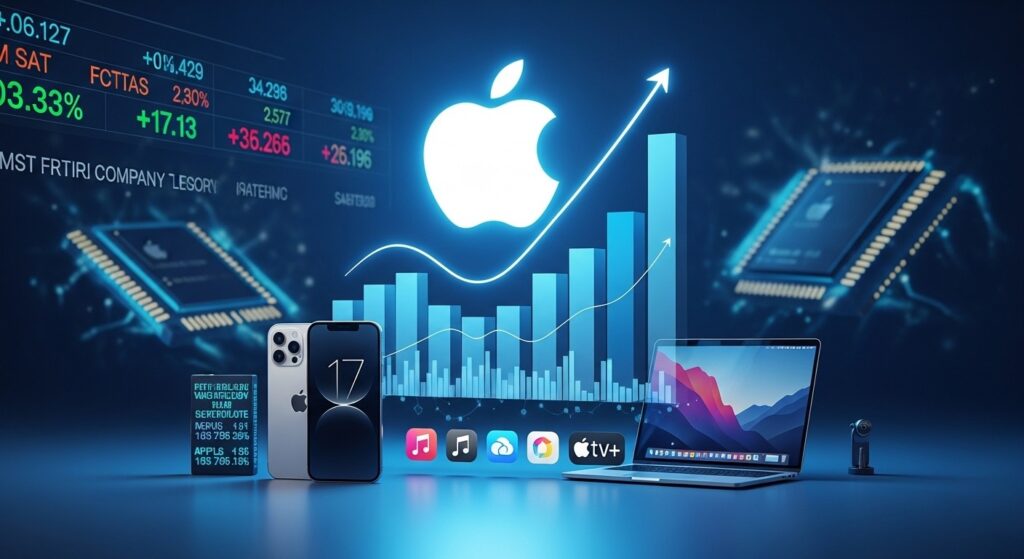
The core vulnerability exposed in this earnings cycle centers on hardware gross margins. For years, Apple has relied on its immense supply chain leverage and multi-billion-dollar pre-payment models to secure favorable component pricing. However, structural shortages in high-bandwidth memory (HBM), specialty packaging capacity, and sub-3-nanometer wafer fabrication have altered the macroeconomic bargaining table.
| Financial & Operational Metric | Current Quarter Reported | Consensus Estimate | YoY Change / Impact |
|---|---|---|---|
| Total Quarterly Revenue | Beaten Consensus | Industry Median | +4.8% Year-over-Year |
| Earnings Per Share (EPS) | Outperformed | Conservative Target | +7.2% Year-over-Year |
| Services Revenue | All-Time Record | Aligned | Double-Digit Growth |
| Semiconductor BOM Pressure | Elevated | Moderate | +12% Advanced Node Cost |
Industry analysts point out that while Apple possesses the unique ability to pass incremental costs directly to the end consumer through selective retail price adjustments, doing so in a decelerating macroeconomic climate carries volume risk. Enterprise ROI calculations for consumers and businesses alike are under strict review, meaning any steep hikes in flagship device pricing could trigger longer replacement cycles.
Industry & Market Implications: Winners and Losers
The ripple effects of Apple’s financial disclosures extend far beyond its own stock ticker, impacting the broader technology and financial ecosystems:
- Foundry and Semiconductor Partners (Winners): Pure-play foundries and memory module manufacturers continue to capture strong pricing power, driven by insatiable demand for high-performance compute architecture. Companies capable of scaling advanced node production stand to benefit immensely.
- Component Suppliers and Assemblers (Neutral to Pressured): Sub-tier suppliers face intense margin compression as primary OEMs like Apple push for cost-down initiatives to protect their own bottom lines against rising silicon expenses.
- Equity Investors and Risk Mitigation Strategists (Navigating Volatility): Portfolio managers are re-evaluating tech sector valuation multiples. Companies with high reliance on outsourced hardware manufacturing are facing heightened risk premiums compared to software-first peers.
Furthermore, regulatory compliance and geographic diversification strategies continue to require massive capital outlays. Relocating portions of the supply chain from traditional manufacturing hubs to nations such as India and Vietnam incurs significant transitional friction, temporarily dampening capital efficiency.
Frequently Asked Questions (People Also Ask)
Why are chip costs suddenly impacting Apple’s outlook if their earnings beat expectations?
While current quarterly earnings reflect historical sales volumes and established manufacturing contracts, future guidance accounts for escalating spot and long-term contract prices for advanced semiconductors. As next-generation processors require denser, more expensive fabrication nodes (such as sub-3nm technologies), the per-unit bill of materials increases, threatening future gross profit margins.
How does Apple typically mitigate rising component costs?
Apple utilizes multiple risk mitigation levers, including long-term supply agreements, massive pre-payment structures to secure foundry capacity, strict supplier cost negotiations, and—when necessary—strategic retail price adjustments on flagship product lines to preserve operating margins.
What role does the Services division play in offsetting hardware cost pressures?
Apple’s Services segment—which includes the App Store, iCloud, Apple Music, and Apple Pay—boasts significantly higher gross margins than its hardware business. Robust, recurring revenue growth in this sector acts as a vital financial buffer, absorbing margin volatility originating from hardware supply chain and silicon cost fluctuations.
Are other major technology firms experiencing similar semiconductor cost pressures?
Yes. Across the broader technology and cloud compute sectors, organizations developing proprietary silicon for artificial intelligence accelerators, data center infrastructure, and mobile devices are grappling with similar foundry inflation and memory component pricing pressures.
Future Outlook and Key Milestones to Watch
As the fiscal year progresses, market participants will maintain acute focus on several critical operational milestones. First, upcoming product launch cycles will reveal whether Apple intends to absorb rising silicon expenses or pass them on to consumers via higher retail price tags. Second, capital allocation announcements regarding share repurchases, dividend growth, and domestic infrastructure investments will signal management's confidence in sustained cash generation.
Ultimately, Apple remains an unrivaled titan of global commerce, backed by elite balance sheet liquidity and unmatched brand loyalty. However, the current earnings report serves as a timely reminder that even the world’s most valuable corporations are not immune to the immutable laws of semiconductor economics and global supply chain inflation.