Executive Takeaways
- Escalating Cyber Sophistication: State-sponsored APTs (Advanced Persistent Threats) and decentralized syndicates are deploying AI-driven social engineering and zero-day exploits, forcing exchanges to overhaul their cloud compute architecture and enterprise risk mitigation.
- Binance’s Regulatory Pivot: As the world’s largest digital asset exchange, Binance is aggressively scaling compliance infrastructure and cross-border security protocols to safeguard massive market liquidity and institutional capital allocation.
- The Self-Custody Dilemma: While institutional investors favor multi-party computation (MPC) and cold storage solutions, retail participants face a critical trade-off between operational convenience and asset safety.
- Capital Allocation Shift: Cybersecurity budgets across Web3 infrastructure firms are seeing exponential valuation multiples, transitioning from auxiliary overhead to core balance-sheet defense.
LONDON, NEW YORK, SINGAPORE — The modern digital asset economy stands at a perilous historical crossroads. As cryptocurrency integrates deeper into traditional financial architecture, crossing paths with institutional capital allocation, sovereign wealth funds, and corporate treasuries, the threat landscape has undergone a radical transformation. No longer dominated by amateur hackers exploiting primitive smart contract flaws, the digital currency ecosystem is now under siege by sophisticated, well-funded cyber syndicates capable of executing complex, multi-million-dollar breaches with impunity.
At the center of this storm is Binance, the dominant global cryptocurrency exchange. Processing billions of dollars in daily transactions, Binance represents the ultimate high-value target for international cybercrime rings. Recent real-time trending developments regarding exchange security, sophisticated wallet hacks, and asset protection have triggered alarm bells across boardrooms from Wall Street to Canary Wharf. This investigative report dissects the anatomy of modern crypto cybercrime, examines how industry leaders are fortifying their infrastructure, and outlines actionable strategies for securing digital wealth against advancing criminal methodologies.
The Evolving Threat Matrix: From Code Exploits to Social Engineering
Test Our Free AI & Tech Utilities Suite
Calculate LLM API token costs, analyze article dwell-time, or simulate tech DCA returns.
To understand the current crisis, one must analyze the technological evolution of crypto cybercrime. In the early days of decentralized finance (DeFi), exploits were largely confined to logic errors in automated market maker (AMM) smart contracts—reentrancy bugs, flash loan manipulations, and oracle manipulation attacks. Today, the vector of attack has expanded exponentially.
Cyber criminals have shifted focus toward advanced persistent threats (APTs), supply chain compromises, and highly targeted social engineering campaigns aimed at high-net-worth individuals and exchange employees. North Korean state-sponsored hacking groups, such as the Lazarus Group, have industrialized crypto theft, laundering stolen funds through sophisticated cross-chain mixers and decentralized privacy protocols.
For centralized exchanges like Binance, maintaining fortress-level security requires continuous adaptation. The exchange's Chief Information Security Officer (CISO) and risk management teams operate in a perpetual state of asymmetric warfare. While attackers need to find only a single vulnerability in an expansive cloud compute architecture or API gateway, security teams must successfully defend every square inch of their digital perimeter 24/7/365.
Recent industry data highlights a sobering reality: despite billions invested in regulatory compliance and threat intelligence, the total volume of funds compromised across the broader cryptocurrency landscape remains unacceptably high. Hackers are leveraging artificial intelligence to generate hyper-realistic deepfake audio and video for executive impersonation, bypassing traditional know-your-customer (KYC) verification checkpoints and gaining unauthorized access to privileged administrative accounts.
Binance’s Defense Strategy: Infrastructure Scalability Meets Risk Mitigation
As regulatory scrutiny intensifies globally, Binance has been forced to fundamentally restructure its operational ethos. Historically characterized by a decentralized, borderless corporate structure, the platform has pivoted toward aggressive regulatory compliance, establishing localized entities, partnering with international law enforcement agencies, and implementing rigorous anti-money laundering (AML) controls.
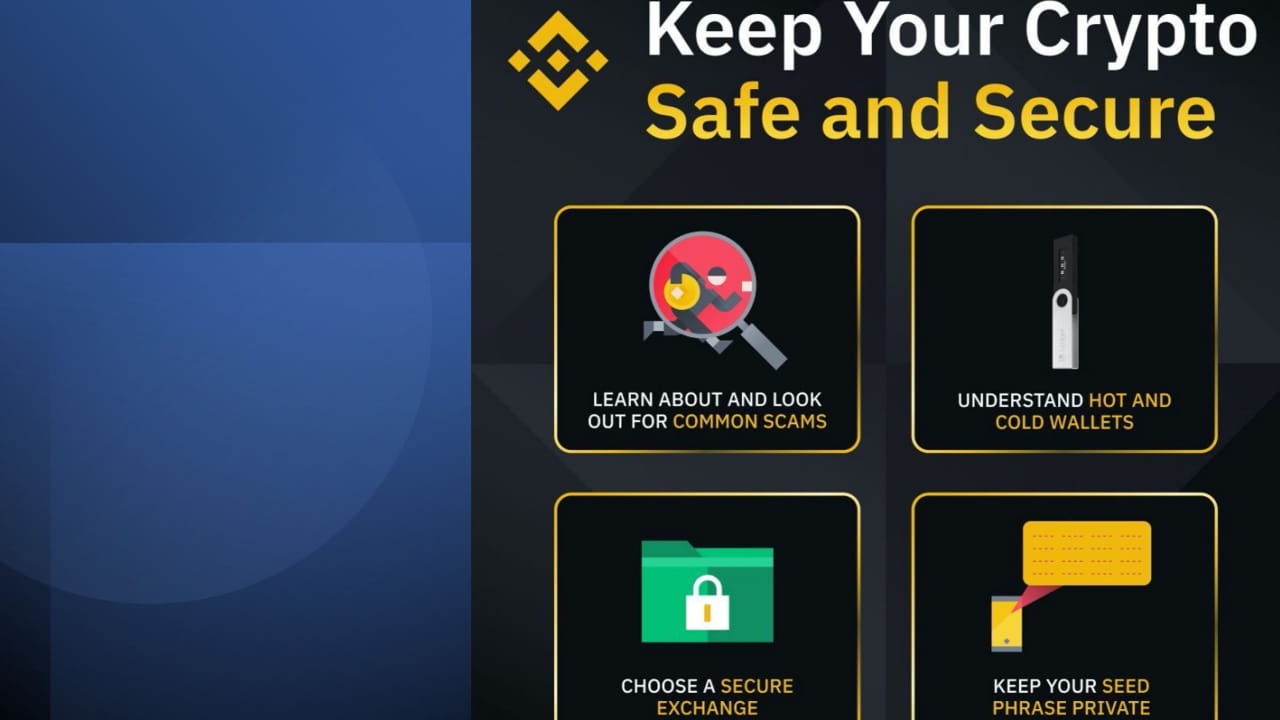
From an operational standpoint, safeguarding over one hundred million registered users requires unprecedented infrastructure scalability. Binance utilizes a multi-tiered security model that separates hot wallets—used for immediate platform liquidity—from cold storage facilities, which are geographically distributed and air-gapped from the public internet.
Furthermore, the exchange employs advanced machine learning algorithms to monitor transactional velocity, anomalous IP geolocations, and suspicious withdrawal patterns in real time. When a high-risk withdrawal is flagged, automated circuit breakers freeze the transaction pending secondary biometric or hardware-token authentication. This proactive risk mitigation approach has successfully intercepted hundreds of millions of dollars in attempted illicit transfers over the past fiscal cycle.
| Security Mechanism | Primary Function | Implementation Tier | Impact on Enterprise ROI |
|---|---|---|---|
| Multi-Party Computation (MPC) | Eliminates single points of failure by fragmenting private keys across independent nodes. | Institutional Custody & Exchanges | High; dramatically reduces catastrophic theft liability. |
| Air-Gapped Cold Storage | Physically isolates reserve assets from online networks and remote access vectors. | Core Asset Reserves | Essential; foundational baseline for regulatory approval. |
| AI-Driven Behavioral Analytics | Detects zero-day anomalies and halts unauthorized withdrawals in real-time. | API Gateways & User Portals | Moderate-High; prevents costly user compensation claims. |
| Hardware Security Keys (FIDO2) | Mandates physical cryptographic tokens, neutralizing phishing and credential stuffing. | Retail & Enterprise Accounts | High; eliminates account takeover vectors. |
Industry & Market Implications: Who Wins and Who Loses
The escalating arms race between crypto exchanges and cyber criminals is reshaping the macroeconomic contours of the digital asset industry. The economic fallout of security breaches extends far beyond immediate token losses; it directly impacts valuation multiples, market liquidity, and investor sentiment.
The Winners: Institutional Custodians and Cybersecurity Vendors. Companies specializing in institutional-grade digital asset custody—such as Fireblocks, BitGo, and Anchorage Digital—are experiencing unprecedented capital inflows. Traditional financial institutions refuse to enter the asset class without bank-grade security guarantees. Furthermore, enterprise cybersecurity firms providing cloud infrastructure audits and zero-trust architecture are commanding premium valuation multiples as Web3 native startups prioritize defense over rapid, uncalculated expansion.
The Losers: Non-Compliant Exchanges and Careless Retail Participants. Centralized exchanges that fail to meet rigorous international regulatory standards and cybersecurity audits face swift obsolescence. Regulatory bodies are increasingly willing to revoke licenses, impose crippling financial penalties, or force operational shutdowns for platforms with lax security controls. Simultaneously, retail investors who neglect basic operational security—relying on SMS two-factor authentication or reusing passwords across vulnerable websites—remain prime targets for localized phishing campaigns.
People Also Ask (FAQ)
1. Are funds kept on Binance safe from advanced cyber attacks?
While no centralized exchange can claim absolute immunity from sophisticated nation-state actors, Binance employs industry-leading security protocols, including air-gapped cold storage, advanced machine learning fraud detection, and the Secure Asset Fund for Users (SAFU)—an emergency insurance fund designed to protect user assets in the event of an unforeseen security breach.
2. What is the difference between hot wallets and cold wallets in terms of security?
A hot wallet is connected to the internet, making it convenient for frequent trading and high market liquidity, but exposing it to potential remote cyber exploits. A cold wallet (or hardware wallet) is offline, physically isolating private keys from internet-connected networks and rendering them virtually immune to remote hacking attempts.
3. How can retail crypto investors protect their coins from advanced phishing and hacks?
Retail investors should immediately discontinue using SMS-based two-factor authentication (2FA), which is vulnerable to SIM-swapping attacks. Instead, users should utilize hardware security keys (such as YubiKey) or authenticator apps, store long-term holdings in self-custodial hardware wallets, and exercise extreme caution regarding unsolicited communication and unofficial application downloads.
4. What role does Multi-Party Computation (MPC) play in modern crypto security?
Multi-Party Computation (MPC) is an advanced cryptographic technique that splits a private key into multiple independent fragments distributed across different computers or custodians. This ensures that no single entity ever holds the complete private key, effectively eliminating single points of failure and neutralizing internal insider threats or targeted server breaches.
Future Outlook: Key Milestones to Watch
As we look toward the horizon, the intersection of cybersecurity, artificial intelligence, and digital assets will define the next phase of market maturity. Several critical milestones will shape the trajectory of asset safety over the next 24 to 36 months:
- Mainstream Adoption of Account Abstraction: Ethereum’s ERC-4337 and similar account abstraction standards will revolutionize wallet security by introducing social recovery, programmable spending limits, and automated transaction batching, significantly reducing human error.
- Regulatory Harmonization: Global regulatory bodies, including the European Union under the Markets in Crypto-Assets (MiCA) framework, are establishing mandatory cybersecurity baselines for all operating digital asset service providers.
- Quantum Computing Horizons: As quantum computing advances, cryptographic protocols securing current blockchain ledgers will face existential threats. Industry leaders are already researching post-quantum cryptography to future-proof decentralized networks against quantum decryption.
Ultimately, the long-term viability of cryptocurrency as a global asset class depends on the industry's collective ability to out-engineer adversaries. For Binance and its competitors, absolute vigilance, unyielding regulatory alignment, and continuous technological innovation are no longer optional—they are the existential price of admission.