
Executive Takeaways
- Monetary Policy Decision: The Federal Open Market Committee (FOMC) voted to hold the federal funds rate steady, reflecting a rare 10-2 dissenting split that highlights internal friction over inflation trajectories and capital allocation risks.
- Equity Market Divergence: Traditional blue-chip benchmarks outperformed, with the Dow Jones Industrial Average and S&P 500 climbing, while the technology-heavy Nasdaq Composite wavered under pressure from shifting valuation multiples and enterprise ROI reassessments.
- Yield Curve and Liquidity Dynamics: Fixed-income adjustments and ongoing market liquidity shifts are forcing corporate treasurers to recalibrate short-term debt refinancing strategies and risk mitigation frameworks.
- Strategic Capital Implications: Investors are aggressively rotating out of high-beta growth equities into defensive value sectors and industrial infrastructure assets as terminal rate expectations reset.
NEW YORK — In a defining session for global capital markets, Wall Street digested a complex monetary policy decision delivered by the Federal Reserve, setting off a sharp divergence across major equity benchmarks. While the Dow Jones Industrial Average and the S&P 500 marched higher on renewed confidence in resilient corporate earnings and defensive positioning, the technology-heavy Nasdaq Composite wavered and lagged throughout the trading day. The catalyst: an official FOMC announcement confirming that interest rates would be held steady, accompanied by a surprisingly contentious 10-2 policy vote that exposed deep ideological divisions within the central bank regarding inflation persistence and macroeconomic resilience.
For institutional asset managers, private equity executives, and corporate treasurers, the Fed’s action—and the rare internal dissents—signal a pivotal juncture. As market liquidity adjusts to a "higher-for-longer" interest rate paradigm, corporate strategy is shifting rapidly from aggressive top-line growth to disciplined capital allocation, structural cost optimization, and rigorous balance sheet fortification.
The FOMC Policy Decision: Anatomy of a 10-2 Split
Test Our Free AI & Tech Utilities Suite
Calculate LLM API token costs, analyze article dwell-time, or simulate tech DCA returns.
The Federal Open Market Committee’s decision to keep the benchmark borrowing rate unchanged was widely anticipated by primary dealers, yet the underlying voting mechanics sent shockwaves through the financial press and bond pits. A 10-2 division is a striking manifestation of diverging economic philosophies within the central bank. Two voting members dissented in favor of an immediate adjustment, pointing to softening labor market indicators and early signs of cooling consumer discretionary spending as justification for a proactive easing cycle.
Conversely, the ten voting members supporting a pause emphasized that underlying inflation remains uncomfortably above the central bank’s annualized 2% target. This friction underscores the profound complexity facing monetary policymakers as they attempt to engineer a soft landing. For enterprise leaders, this policy stalemate complicates financial modeling, particularly regarding capital expenditure (CapEx) budgets, debt refinancing schedules, and corporate borrowing costs.
Market participants immediately turned their attention to the post-meeting press conference for forward guidance on the terminal rate and potential balance sheet normalization. The central bank's reluctance to signal imminent easing has forced institutional investors to re-price risk assets, triggering immediate sector rotation.
Market Divergence: Dow and S&P 500 Climb While Nasdaq Wavers
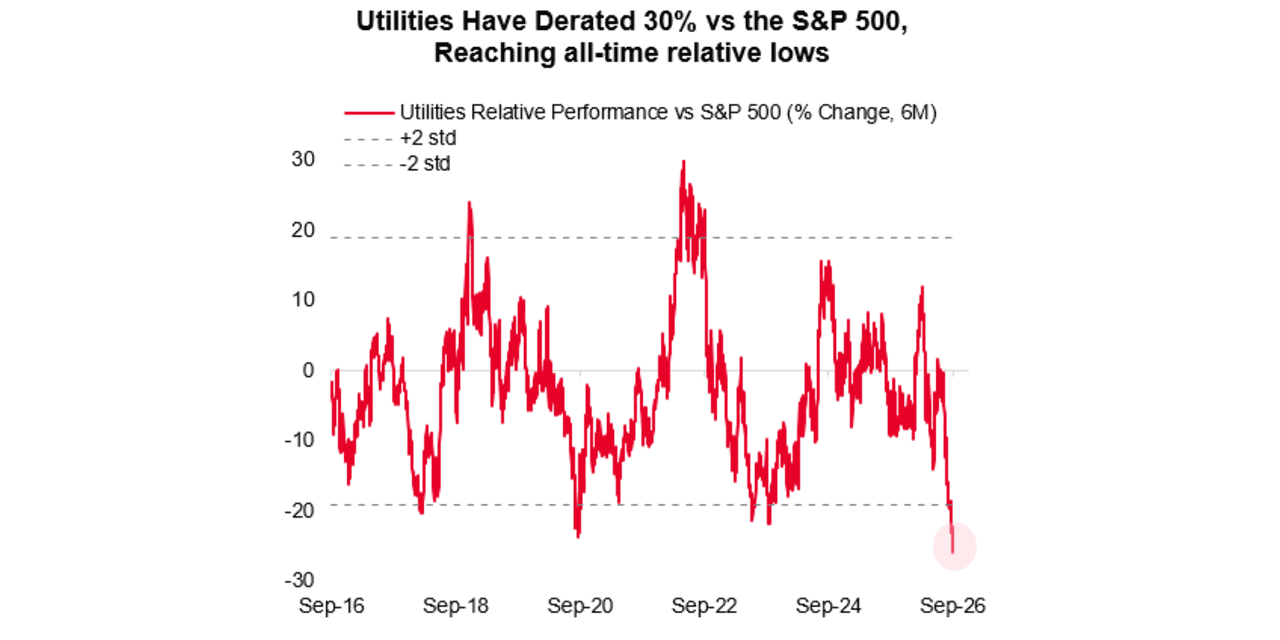
The intraday trading action laid bare a stark bifurcated market structure:
This divergence highlights a broader macroeconomic narrative: investors are prioritizing operational efficiency and immediate enterprise ROI over speculative, long-term growth stories. Companies heavily reliant on venture capital financing or aggressive debt-fueled infrastructure scalability are facing stricter underwriting standards from institutional lenders.
| Market Index / Metric | Session Performance | Primary Driver | Investor Sentiment |
|---|---|---|---|
| Dow Jones Industrial Average | Climbed / Positive | Defensive rotation, solid industrial earnings, cash generation | Bullish / Value-focused |
| S&P 500 | Climbed / Moderate Gain | Broad-based buying across financials, energy, and healthcare | Cautiously Optimistic |
| Nasdaq Composite | Wavered / Mixed | Valuation compression, tech sector profit-taking | Defensive / Hesitant |
| FOMC Vote Breakdown | 10 to 2 Decision | Internal debate over sticky inflation vs. labor market cooling | Hawkish Hold / Divided |
Industry & Market Implications: Who Wins, Who Loses
The Fed’s steadfast stance on monetary policy is rapidly reshaping the competitive landscape across key global industries. Understanding these shifts is vital for institutional risk mitigation and portfolio rebalancing.
Winners: Financials, Industrials, and Cash-Rich Balance Sheets
Traditional banking institutions and diversified financial firms continue to extract net interest margin (NIM) benefits from elevated benchmark rates, provided credit quality remains stable. Furthermore, capital-intensive industrial and manufacturing enterprises with robust balance sheets are well-positioned to fund infrastructure scalability organically without tapping expensive debt markets. Companies offering tangible enterprise software and automation tools that deliver immediate cost-cutting ROI are also outperforming.
Losers: Highly Leveraged Tech, Venture-Backed Startups, and Commercial Real Estate
Conversely, sectors dependent on continuous external financing face severe headwinds. Early-stage technology startups and growth-stage companies accustomed to cheap, abundant venture capital are enduring severe valuation corrections. In the commercial real estate (CRE) sector, refinancing walls are looming as older, low-rate debt matures and must be replaced at significantly higher prevailing interest rates, pressuring asset valuations and forcing debt restructuring.
Frequently Asked Questions (People Also Ask)
Frequently Asked Questions
Q: Why did the Nasdaq lag while the Dow and S&P 500 climbed following the Fed's decision?
A: The Nasdaq is heavily weighted toward high-growth technology companies whose valuations rely heavily on projected future cash flows. When the Federal Reserve maintains higher interest rates, those future cash flows are discounted at a higher rate, compressing valuation multiples. Meanwhile, the Dow and S&P 500 feature a greater concentration of value stocks, financials, and industrials that benefit from stable cash generation in high-rate environments.
Q: What is the significance of the 10-2 FOMC voting split?
A: A 10-2 vote is unusually contentious for the Federal Open Market Committee, which typically strives for broad consensus. The two dissenting votes signal growing internal disagreement among policymakers over whether current monetary policy is overly restrictive, reflecting mounting tension between combating persistent inflation and protecting the labor market from a potential slowdown.
Q: How does a steady rate decision impact corporate capital allocation and debt refinancing?
A: Holding rates steady means corporate borrowers must continue to navigate elevated borrowing costs. Chief Financial Officers are prioritizing internal cash flow generation, delaying aggressive capital expenditures, and carefully structuring debt refinancing to mitigate interest expense shocks on their balance sheets.
Q: What should institutional investors watch for in upcoming economic releases?
A: Key indicators include upcoming Consumer Price Index (CPI) and Personal Consumption Expenditures (PCE) inflation prints, monthly non-farm payroll reports, and corporate earnings guidance. These metrics will dictate whether the Fed pivots toward rate cuts or maintains its restrictive stance through subsequent policy meetings.
Future Outlook: Strategic Milestones and Risk Management
As the market absorbs the immediate fallout of the FOMC's 10-2 decision, strategic focus shifts toward upcoming macroeconomic data releases and corporate earnings guidance. The persistence of sticky inflation metrics, combined with early warning signs in specific employment sub-sectors, ensures that monetary policy will remain the dominant driver of asset prices.
For institutional investors and corporate executives, success in this environment requires rigorous risk mitigation, disciplined capital allocation, and an acute awareness of shifting market liquidity. As valuation dispersion widens between high-growth technology and cash-generative value equities, portfolio agility and selective stock-picking will define outperformance in the quarters ahead.


