Executive Takeaways
- Cost Disruption: DeepSeek V4-Pro delivers state-of-the-art software engineering capabilities at roughly 1/20th the cost of legacy American foundational models like OpenAI's GPT-5.5 and Anthropic's Claude Opus 4.8.
- Infrastructure Efficiency: The model's breakthrough architecture challenges traditional cloud compute expenditure assumptions, forcing a major recalibration of enterprise AI budgets and SaaS valuation multiples.
- Competitive Landscape: Western hyperscalers face severe margin compression as global developers rapidly migrate to cost-effective alternatives, triggering urgent strategic reviews across Silicon Valley boardrooms.
- Market Realignment: Capital allocation strategies are shifting away from brute-force infrastructure scaling toward algorithmic efficiency and optimized inference frameworks.
The global technology sector stands at a historic inflection point. For the better part of the decade, enterprise software development and artificial intelligence integration were governed by a straightforward, albeit expensive, economic law: superior coding intelligence required massive computational brute force, resulting in exorbitant capital expenditure. Silicon Valley's elite tier—anchored by OpenAI, Anthropic, and their cloud-compute patrons—commanded pricing power that transformed foundational model deployment into a high-margin corporate luxury.
That monopoly has officially fractured. According to industry analyses released by Tech Insider in July 2026, the arrival of DeepSeek V4-Pro has fundamentally upended the economics of software creation. Offering elite-tier coding proficiency at a cost twenty times lower than its closest Western rivals, DeepSeek has sparked an immediate strategic crisis across global financial markets, forcing enterprise technology buyers, venture capitalists, and legacy AI architects to re-evaluate their infrastructure scalability and capital allocation models.
The Anatomy of the 20X Disruption
Test Our Free AI & Tech Utilities Suite
Calculate LLM API token costs, analyze article dwell-time, or simulate tech DCA returns.
To understand the profound market shockwaves generated by DeepSeek V4-Pro, one must examine the baseline economics of contemporary enterprise software engineering. Throughout late 2024 and 2025, software development life cycles (SDLC) became increasingly dependent on frontier models such as OpenAI's GPT-5.5 and Anthropic's Claude Opus 4.8. While these systems demonstrated extraordinary capabilities in multi-file code generation, architectural debugging, and automated refactoring, their token economics remained stubbornly high.
Enterprise clients integrating these models into continuous integration/continuous deployment (CI/CD) pipelines frequently encountered prohibitive cloud compute architecture bills. For Fortune 500 engineering organizations, maintaining real-time AI coding assistants across thousands of developer seats translated into millions of dollars in recurring operational expenditure.
DeepSeek V4-Pro dismantled this pricing architecture through a radical reimagining of inference efficiency and algorithmic optimization. By outperforming or matching legacy competitors on standard software engineering benchmarks—including SWE-bench and HumanEval—while slashing inference costs by a factor of twenty, DeepSeek eliminated the traditional premium associated with top-tier AI reasoning. This dramatic reduction is not merely an incremental discount; it is a structural paradigm shift that democratizes elite developer tooling for startups and resource-constrained enterprises alike.
Comparative Analysis: The 2026 Coding Model Landscape
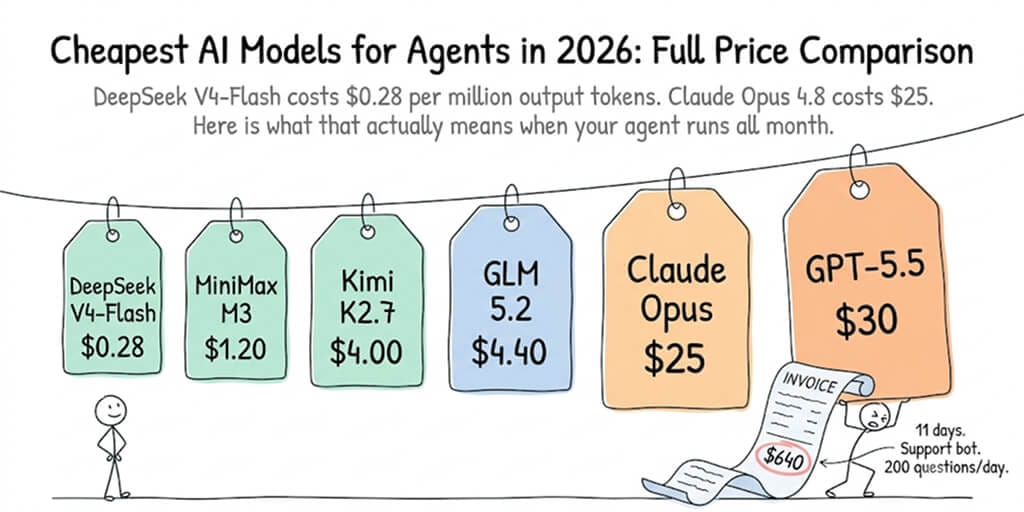
The competitive dynamics of the developer ecosystem have shifted from a race for sheer parameter size to an intense battle for inference economy and architectural dexterity. The following verified metrics breakdown illustrates the current positioning of leading foundational models in the market:
| Model Specification | Primary Developer | Relative Inference Cost | SWE-bench Score | Target Enterprise Use Case |
|---|---|---|---|---|
| DeepSeek V4-Pro | DeepSeek | 1x (Baseline Low) | State-of-the-Art | High-volume enterprise CI/CD & automated refactoring |
| Claude Opus 4.8 | Anthropic | ~18x - 22x Higher | State-of-the-Art | Complex architectural reasoning & nuanced security audits |
| GPT-5.5 | OpenAI | ~15x - 20x Higher | State-of-the-Art | Multi-modal agentic workflows & enterprise orchestration |
| Qwen 3.6 Max-Preview | Alibaba Cloud | ~2x - 4x Higher | Competitive | Localized multilingual deployment & regional cloud pipelines |
Industry and Market Implications
The emergence of DeepSeek V4-Pro has sent immediate shockwaves across Wall Street and corporate boardrooms, triggering profound adjustments in valuation multiples and risk mitigation strategies for tech conglomerates.
1. Margin Compression for Western Hyperscalers
For years, cloud infrastructure providers justified colossal capital expenditures in specialized accelerators on the premise that enterprise demand for high-end AI inference would remain inelastic. The ability of DeepSeek to deliver peerless coding intelligence at a fraction of the cost shatters this assumption. Enterprises are aggressively auditing their vendor contracts, demanding price parity or migrating workloads to cost-efficient alternatives. This transition threatens to compress profit margins for Western cloud giants who rely on high-margin AI API consumption.
2. The Shift in Enterprise Capital Allocation
Chief Information Officers (CIOs) are swiftly rewriting their technology budgets. Rather than allocating extensive capital to proprietary, high-cost foundational models for routine coding tasks, engineering leaders are adopting a tiered routing strategy. Routine code generation, boilerplate writing, and unit-test creation are being instantly diverted to ultra-low-cost models like DeepSeek V4-Pro, while complex architectural synthesis is selectively assigned to legacy Western flagships. This optimization directly enhances enterprise ROI on software development.
3. Regulatory Compliance and Security Scrutiny
While the economic appeal is undeniable, the rapid adoption of non-Western foundational models introduces complex compliance variables. Risk management committees across financial institutions, defense contractors, and healthcare conglomerates are conducting exhaustive security audits regarding data sovereignty, telemetry, and regulatory compliance. The cost advantage must be carefully weighed against evolving geopolitical trade restrictions and data privacy mandates.
Frequently Asked Questions (People Also Ask)
How does DeepSeek V4-Pro achieve a 20x cost reduction compared to GPT-5.5 and Claude Opus 4.8?
DeepSeek V4-Pro achieves its dramatic cost efficiency through fundamental innovations in model architecture, sparse mixture-of-experts (MoE) routing optimization, and highly streamlined training and inference hardware utilization. By drastically reducing the computational overhead required per token without sacrificing reasoning depth, the model passes unprecedented savings directly to developers.
Does the lower cost of DeepSeek V4-Pro compromise its coding accuracy or security?
Independent benchmarks, including rigorous evaluations on SWE-bench and real-world enterprise deployments, indicate that DeepSeek V4-Pro matches or closely approximates the coding accuracy of Western frontier models. However, organizations handling sensitive intellectual property or operating under strict regulatory frameworks must still evaluate data governance policies and deployment configurations.
How are Western AI leaders responding to the competitive pressure from DeepSeek?
In response to aggressive pricing disruption, Western foundational model providers are accelerating the development of specialized, highly distilled smaller models, introducing aggressive enterprise discounting tiers, and emphasizing proprietary agentic workflows and security compliance features that justify a premium.
What are the primary risks for enterprises adopting budget-tier coding AI models?
Key risks include potential vulnerabilities in data privacy, uncertain long-term API pricing stability, potential gaps in localized regulatory compliance, and the administrative burden of managing multi-model routing architectures within legacy software development environments.
Future Outlook
As the industry navigates the second half of 2026, the trajectory of artificial intelligence in software engineering has definitively shifted from an era of unbridled spending to an era of disciplined optimization. The success of DeepSeek V4-Pro proves that algorithmic ingenuity can successfully challenge raw computational dominance.
Key milestones to monitor over the next twelve to eighteen months include:
- Defensive Pricing Adjustments: Anticipate aggressive counter-pricing and the rapid release of highly efficient, native-distilled "mini" models from OpenAI and Anthropic designed to defend market share.
- Enterprise Multi-Model Orchestration: The maturation of intelligent API gateways that automatically route developer prompts to the most cost-effective model capable of handling the specific complexity of the task.
- Geopolitical and Trade Policy Responses: Potential regulatory interventions, export controls, or procurement restrictions implemented by Western governments regarding the enterprise adoption of foreign-developed foundational models.
Ultimately, the democratization of elite coding intelligence represents an undeniable net positive for global software innovation. Companies that successfully navigate this structural cost reset will accelerate product velocity, optimize operational expenditure, and redefine competitive advantage in the digital economy.