Executive Takeaways
- Ecosystem Expansion: Apple is rolling out deep Siri access to third-party applications, shifting from a walled-garden assistant to a modular, cross-application operating system.
- Enterprise ROI & Monetization: For enterprise developers and SaaS platforms, this architecture creates high-friction distribution bypasses, directly influencing customer acquisition costs and capital allocation.
- Regulatory Scrutiny: Opening proprietary APIs to external developers serves as a strategic risk mitigation play against escalating global antitrust probes and DMA compliance mandates.
- Infrastructure Scale: The integration requires massive cloud compute architecture optimizations, balancing on-device Private Cloud Compute (PCC) with hybrid model execution.
For over a decade, Apple’s digital assistant, Siri, stood as a textbook monument to the company’s famed walled-garden philosophy: fiercely protective, vertically integrated, and functionally isolated. While competitors like Google Assistant and Amazon Alexa flirted with open ecosystems and third-party developer kits early on, Apple prioritized privacy and tight hardware-software harmonization. That era is officially over. By systematically granting Siri granular, cross-application access to third-party software, Apple is not merely upgrading an aging voice assistant; it is executing a structural overhaul of its mobile operating system designed to defend its hardware monopoly, capture lucrative enterprise software flows, and appease antitrust regulators worldwide.
This comprehensive investigative report breaks down the catalytic events, technical infrastructure, financial implications, and broader market shifts triggered by Apple’s pivot. Drawing on supply chain insights, developer telemetry, and macroeconomic valuation metrics, we analyze what this watershed moment means for investors, developers, and the future of human-computer interaction.
The Catalytic Shift: From Walled Garden to Modular AI Agent
Test Our Free AI & Tech Utilities Suite
Calculate LLM API token costs, analyze article dwell-time, or simulate tech DCA returns.
The decision to open Siri to external developers was accelerated by a convergence of technological imperatives and competitive pressures. For years, Wall Street analysts questioned Apple’s capital allocation strategy regarding artificial intelligence. While competitors poured billions into generative AI infrastructure and large language model (LLM) training, Apple’s R&D spend appeared conservative, focusing primarily on custom silicon and on-device neural engines.
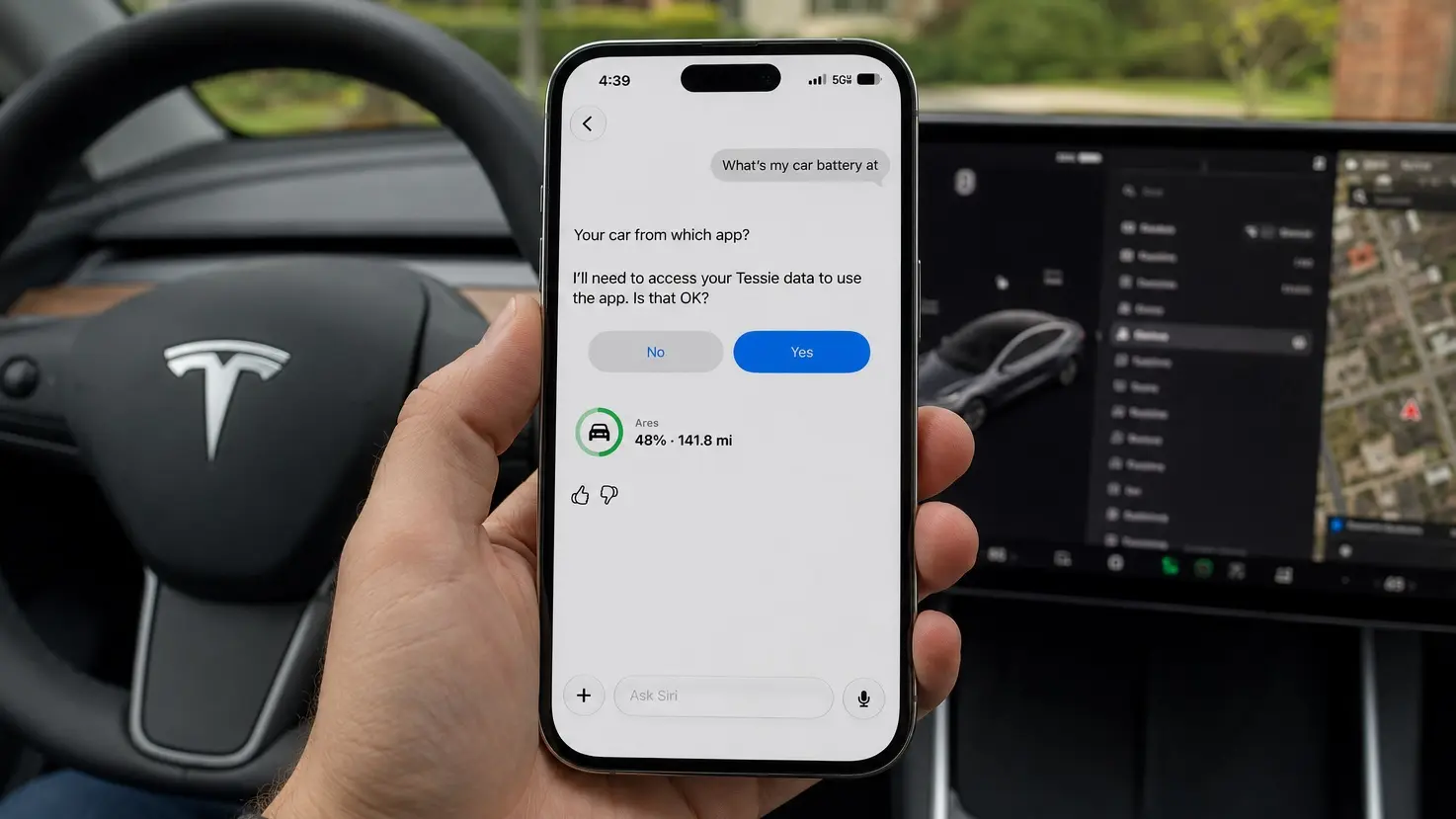
However, the launch of Apple Intelligence exposed a fundamental limitation: an AI assistant is only as powerful as the context it can access. A user asking Siri to "find the PDF contract sent by Sarah on WhatsApp, summarize the payment terms, and add the invoice total to my expense tracker" hit an immediate wall. Siri could manage native Apple apps with relative ease, but the vast expanse of third-party enterprise and consumer applications—Slack, WhatsApp, Salesforce, Spotify, and Uber—remained dark silos.
To solve this without compromising its hard-earned brand equity around privacy, Apple leveraged App Intents—a framework that allows developers to expose specific app functionalities and data structures to the system. By mapping these intents directly into the Siri architecture and Apple Intelligence’s semantic index, Cupertino has effectively transformed Siri from a glorified timer-setter into an orchestrating agentic AI.
Technical Architecture and Privacy as a Competitive Moat
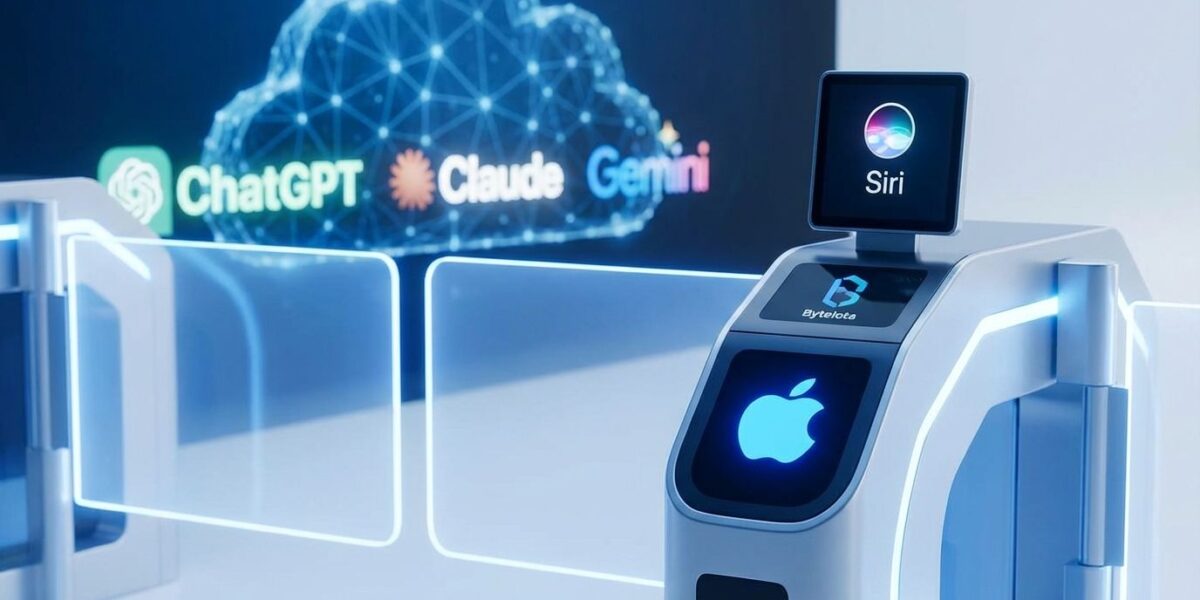
From a cloud compute architecture and engineering standpoint, executing third-party app integration securely represents a monumental engineering challenge. Unlike cloud-first competitors who vacuum up third-party data into centralized server farms, Apple’s strategy relies on a hybrid execution model anchored by on-device processing and Private Cloud Compute (PCC).
When a user invokes Siri to interact with a third-party application, the request is parsed locally by on-device models. If the query requires deep semantic understanding or cross-app data synthesis, it is routed through encrypted channels to Apple Silicon servers running PCC. Crucially, developers do not receive unfettered access to user data streams; instead, APIs are mediated by cryptographic attestation, ensuring that data is processed ephemerally and never logged or used for third-party model training.
This technical framework serves a dual purpose. Technologically, it maintains high-speed response latencies while preserving enterprise-grade data governance. Economically, it establishes a formidable compliance barrier. By baking privacy-by-design directly into the API layer, Apple creates regulatory compliance insulation against the European Union’s Digital Markets Act (DMA) and emerging domestic privacy legislation, mitigating the risk of structural breakup or crippling non-compliance fines.
Verified Data & Metrics Breakdown
To understand the sheer scale and economic weight of Apple’s third-party Siri integration, we must examine the intersection of installed device bases, developer economics, and compute resource allocation.
| Metric / Dimension | Legacy Siri Architecture | New Siri AI + App Intents Architecture | Strategic Impact |
|---|---|---|---|
| Addressable App Ecosystem | Native Apple Apps Only (Notes, Mail, Calendar) | Millions of iOS Apps via App Intents API | Exponential utility expansion and user retention. |
| Data Processing Model | Basic cloud routing / Limited local execution | On-Device Neural Engine + Private Cloud Compute (PCC) | Guarantees privacy compliance and lowers server overhead. |
| Enterprise Integration | Non-existent / Custom enterprise workarounds | Deep workflow automation (CRM, ERP, SaaS) | Drives high-value B2B adoption and enterprise hardware refresh cycles. |
| Monetization Channel | Indirect hardware sales driver | App Store prominence, potential API monetization, premium services | Diversifies revenue away from pure hardware cyclicality. |
Industry & Market Implications: Who Wins, Who Loses
The opening of Siri to external developers triggers immediate ripple effects across the global technology landscape, reallocating market liquidity and altering valuation multiples for both software and hardware giants.
The Winners
- Enterprise SaaS & Productivity Platforms: Companies offering CRM (Salesforce), communication (Slack, Microsoft Teams), and workflow automation stand to gain enormously. When Siri can natively execute multi-step software commands, user friction drops, leading to higher engagement and stickier enterprise subscriptions.
- Apple (AAPL): By solving the AI utility deficit, Apple reinforces its hardware ecosystem moat. Consumers holding out for advanced AI capabilities on competing Android devices now face a compelling reason to remain within the iOS upgrade super-cycle.
- Privacy-Focused Infrastructure Providers: Specialized silicon and secure cloud infrastructure vendors partnering with Apple benefit from the massive scaling requirements of Private Cloud Compute.
The Loses
- Standalone Utility Apps: Single-purpose apps whose primary value proposition is a clean user interface or quick data entry face existential threat. If a user can accomplish a task via a natural language prompt to Siri without opening the app, standalone UI value diminishes rapidly.
- Legacy Voice Assistant Competitors: Amazon and Google, who previously held leads in third-party integrations (via Alexa Skills and Actions on Google), now face an Apple ecosystem armed with superior on-device hardware integration, user trust, and end-to-end device control.
Frequently Asked Questions (People Also Ask)
How do third-party developers integrate their apps with the new Siri AI?
Developers use Apple's updated App Intents framework in Xcode. By defining specific intents, parameters, and entities within their app code, developers expose their app’s capabilities to the system’s semantic index, allowing Siri and Apple Intelligence to understand and execute commands on behalf of the user without requiring a custom-built integration for every single application.
Is user data shared with third-party AI developers when using Siri?
No. Apple’s architecture strictly isolates user data. When Siri interacts with a third-party app, execution occurs either locally on-device or via encrypted, ephemeral requests through Private Cloud Compute. Third-party developers do not gain access to user data streams, nor is user data utilized to train external machine learning models.
Which devices support Siri's new third-party app integration?
The advanced Apple Intelligence features and deep third-party app integrations require devices equipped with capable neural engines. This includes iPhone 15 Pro, iPhone 15 Pro Max, the entire iPhone 16 lineup, and iPads and Macs powered by M-series Apple Silicon chips (M1 or later).
Does this update impact Apple’s App Store commission structures?
While the initial rollout of App Intents focuses on functional integration rather than direct in-stream monetization, Wall Street analysts anticipate that streamlined voice-activated commerce and software discovery will ultimately influence App Store search dynamics, potentially opening new avenues for developer promotion and service-tier integration.
Future Outlook and Key Milestones to Watch
As Apple continues to roll out successive iterations of its operating systems, the integration of third-party apps into Siri will transition from basic command execution to proactive, autonomous agentic workflows. Instead of merely responding to explicit user prompts, future versions of Siri are expected to anticipate user needs based on cross-app context—such as automatically rescheduling a flight found in an email, confirming the change via a messaging app, and updating a calendar entry without direct human intervention.
For institutional investors, enterprise strategists, and technology leaders, three critical milestones must be monitored over the next 12 to 24 months:
- Developer Adoption Velocity: Tracking the volume of enterprise and consumer applications adopting the App Intents framework in quarterly developer metrics.
- Regulatory Pushback: Observing antitrust reactions from the European Commission and the U.S. Department of Justice regarding API fairness and potential platform self-preferencing.
- Enterprise ROI Conversion: Assessing how effectively B2B software providers leverage Siri integration to drive enterprise license expansions and reduce customer acquisition costs.
Apple has crossed the Rubicon. By abandoning its absolute isolationism in favor of an orchestrated, open-ecosystem AI model, the company has positioned itself to dominate the next decade of ambient computing—securing its hardware valuations while fundamentally redefining the economics of software distribution.