Executive Takeaways
- Strategic Expansion: Apple is scaling its Fitness+ ecosystem beyond the living room and into traditional brick-and-mortar commercial gyms with the launch of the Gym Strength program.
- Personalized Compute: The new program leverages advanced on-device machine learning and core biometric feedback loops to dynamically construct real-time, bespoke weightlifting regimens.
- Market & Capital Impact: This move directly challenges incumbent digital fitness applications and legacy gym chains, accelerating Apple’s high-margin Services revenue growth and optimizing hardware ecosystem lock-in.
- Enterprise & Health Integration: By deepening integration with HealthKit and institutional healthcare providers, Apple is laying the infrastructure groundwork for enterprise wellness ROI and risk mitigation models.
Cupertino is making its most aggressive structural push yet into the multi-billion-dollar commercial fitness sector. In an announcement that reverberated across digital health markets and sent shockwaves through legacy fitness conglomerates, Apple has officially pulled back the curtain on the Fitness+ Gym Strength program. Designed from the ground up to transition users from guided at-home mat routines to heavy, barbell-and-machine-based weightroom training, this new offering introduces hyper-personalized workout plans driven by sophisticated algorithmic personalization.
For financial analysts tracking Apple’s capital allocation strategy, this rollout is far more than a routine software feature update. It represents a calculated assault on high-frequency user engagement loops, designed to solidify valuation multiples through high-margin Services expansion while fortifying the moat around Apple’s hardware architecture—specifically the Apple Watch and iPhone. As regulatory compliance frameworks tighten around consumer health data and consumer discretionary spending faces macroeconomic headwinds, Apple is betting that granular health utility and advanced cloud-compute-backed personalization will cement its dominance in the global wellness economy.
The Catalytic Shift: Moving from Living Room to Iron Paradise
Test Our Free AI & Tech Utilities Suite
Calculate LLM API token costs, analyze article dwell-time, or simulate tech DCA returns.
When Apple initially launched Fitness+ during the height of the global pandemic in late 2020, the product’s core value proposition was clear: democratize studio-style workouts for users confined to their homes. Armed with a yoga mat, a set of dumbbells, and an Apple Watch, millions of subscribers tapped into guided cycling, HIIT, and yoga sessions. However, structural market limitations quickly materialized as pandemic restrictions eased and global populations returned to commercial fitness facilities.
The traditional gym floor—populated by heavy squat racks, cable crossover machines, plate-loaded leg presses, and specialized selectorized equipment—presented an engineering and content hurdle that standard video-on-demand architectures could not easily clear. Users required not just generic motivation, but precise load calculations, progressive overload tracking, equipment substitution logic, and real-time form optimization tailored to the exact machinery available in their local facility.
Apple’s engineering and product teams spent the better part of the last twenty-four months developing the underlying infrastructure to solve this friction point. The Gym Strength program utilizes a proprietary heuristic engine that cross-references a user’s historical workout telemetry, biometric recovery metrics via the Apple Watch, and explicit user goals (such as hypertrophy, muscular endurance, or functional strength). The result is a dynamic, evolving workout routine that updates weekly, mitigating plateaus and driving continuous physiological adaptation.
Deconstructing the Technology: Machine Learning Meets Biomechanical Feedback
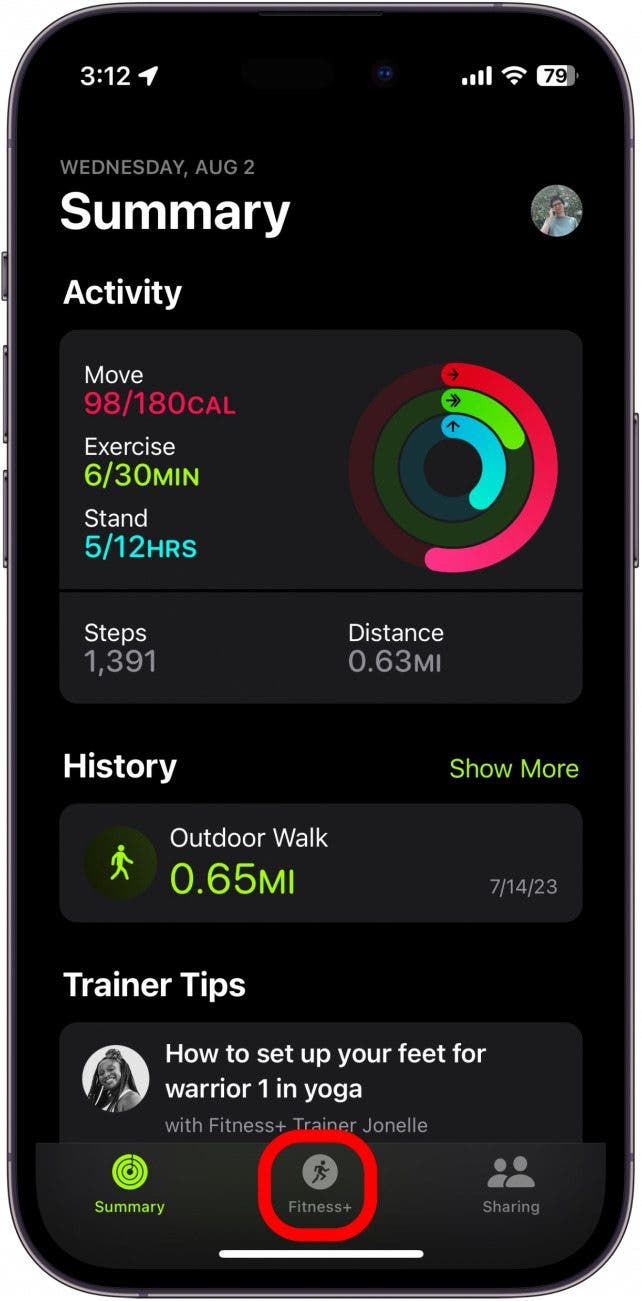
Beneath the consumer-facing interface lies a complex cloud compute architecture designed to handle massive data throughput while maintaining strict user privacy standards through on-device processing and end-to-end encryption. The system ingests telemetry from Apple Watch sensors—measuring heart rate variability (HRV), active calories, and active cadence—to estimate neuromuscular fatigue levels before a user even steps foot into the gym.
If a user’s physiological indicators suggest suboptimal recovery, the Gym Strength algorithm automatically scales back volume, modifies target rep ranges, or substitutes heavy compound lifts with safer, hypertrophy-focused machine variations. Conversely, if recovery metrics and progressive overload tracking indicate peak readiness, the system issues automated recommendations for weight progression.
Furthermore, the software addresses one of the most common friction points in commercial gym environments: equipment congestion. If a user’s assigned bench press or cable station is occupied, an integrated interface allows instantaneous swaps. The algorithm recalculates the remaining workout in real-time, preserving the integrity of the muscle group split without interrupting the user's workflow.
Verified Data & Metrics Breakdown
To contextualize the scale and economic positioning of Apple’s latest ecosystem expansion, consider the following comparative breakdown of market metrics, infrastructure specifications, and financial targets:
| Metric / Parameter | Legacy Digital Fitness Apps | Apple Fitness+ Gym Strength | Strategic Economic Impact |
|---|---|---|---|
| Primary Environment | At-Home / Bodyweight / Dumbbells | Commercial Gyms & Heavy Equipment | Expands Total Addressable Market (TAM) into core fitness demographics. |
| Personalization Engine | Static PDF plans or basic rule-based trees | Real-time ML driven by HealthKit telemetry | Drives high user retention and reduces churn rates. |
| Hardware Integration | Fragmented / Third-party Bluetooth straps | Native Apple Watch & iPhone ecosystem sync | Deepens hardware ecosystem lock-in and drives Watch shipments. |
| Monetization Model | Independent monthly subscriptions ($15–$30/mo) | Apple One bundle integration & standalone ($9.99/mo) | Maximizes high-margin recurring Services revenue. |
Industry & Market Implications: Who Wins, Who Loses
The introduction of a deeply integrated, institutional-grade strength training program via Apple Fitness+ sends immediate shockwaves across the health and wellness vertical, altering competitive dynamics across several sectors:
- Winners — Apple Shareholders & Services Segment: This launch acts as a direct catalyst for Apple's high-margin Services revenue. By increasing the perceived value of the Apple One subscription bundle, Cupertino reduces churn and drives incremental lifetime value (LTV) across its billion-plus active device installed base.
- Winners — Enterprise Health & Corporate Wellness: Self-insured employers looking for verifiable employee health metrics and risk mitigation tools now have a streamlined pathway. By integrating corporate wellness programs with Apple HealthKit data, enterprises can quantify wellness ROI more accurately than ever before.
- Losers — Standalone Digital Workout Applications: Smaller, single-purpose boutique fitness apps that rely on generic strength-training templates face an existential threat. Competing against Apple’s native hardware integration, seamless audio-visual production, and aggressive bundle pricing leaves boutique developers with narrowing market shares.
- Neutral / Complex — Commercial Gym Chains: While major club operators initially feared tech giants would pull members into home gyms, Apple’s pivot actually validates the commercial gym floor. Gym operators may benefit from an influx of tech-literate consumers who now possess the structured guidance needed to confidently utilize complex free-weight zones.
Frequently Asked Questions (People Also Ask)
How does Apple Fitness+ Gym Strength build personalized workout routines?
The program utilizes advanced machine learning algorithms that analyze a user’s historical workout data, real-time biometric recovery metrics from the Apple Watch (such as heart rate variability and sleep tracking), and user-selected fitness goals. The system dynamically constructs weekly regimens, adjusts weight loads, and modifies exercises based on equipment availability in real-time.
Do I need specialized equipment to use the Gym Strength program?
While the program is optimized for commercial gym environments containing barbells, dumbbells, cable machines, and selectorized weight stacks, the system includes built-in equipment substitution logic. If specific apparatuses are unavailable, the algorithm instantly recalibrates the exercise selection to match available alternatives.
How is Apple safeguarding sensitive health and workout data?
In alignment with Apple’s core privacy pillars, health and biometric data processed by Fitness+ and HealthKit is encrypted both in transit and on-device. Personal workout telemetry and recovery metrics are not shared with third-party advertisers, ensuring strict regulatory compliance across global data protection frameworks.
How does this integrate with existing Apple subscriptions?
The Gym Strength program is fully included within the standard Apple Fitness+ subscription tier ($9.99 per month or $79.99 annually) as well as the comprehensive Apple One Premier bundle, requiring no additional software purchases or hidden microtransactions.
Future Outlook & Strategic Milestones
As Apple continues to expand its footprint in preventive healthcare and fitness technology, industry observers should monitor several critical milestones over the next 12 to 24 months. First, watch for deeper API integrations with third-party commercial gym equipment manufacturers (such as Life Fitness, Technogym, and Hammer Strength) to enable direct telemetry syncing between gym machines and the Apple Watch.
Second, evaluate how insurance providers incorporate Apple HealthKit verified workouts into premium adjustments, potentially transforming consumer health insurance markets through empirically verifiable physical activity data. Finally, track regulatory developments surrounding consumer health data governance in the European Union and North America, as compliance mandates will dictate how rapidly Apple can scale its clinical-grade health ambitions.
Ultimately, the Fitness+ Gym Strength program is not merely an incremental software update for fitness enthusiasts; it is a masterclass in ecosystem leverage. By bridging the gap between hardware telemetry, cloud compute, and real-world physical spaces, Apple is systematically transforming how humanity interacts with personal health and physical conditioning.