Executive Takeaways
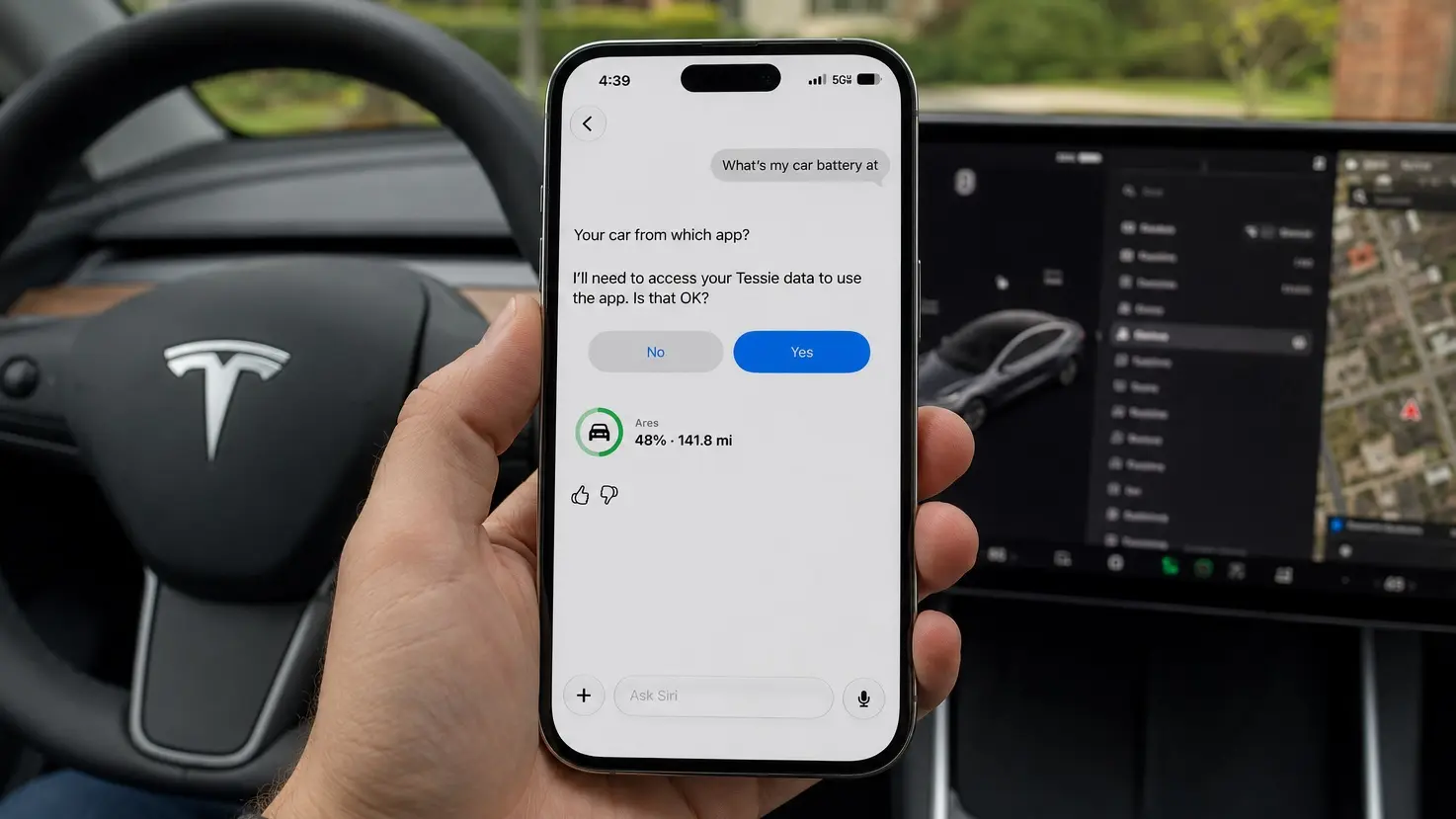
- Architectural Shift: Apple is systematically decoupling its proprietary walled garden, granting external developers deep API access to weave third-party app functionalities directly into Siri's neural processing core.
- Enterprise & Financial Implications: This strategic pivot directly targets enterprise ROI and developer ecosystem retention, injecting fresh growth catalysts into Apple’s valuation multiples and services revenue mix.
- Infrastructure Scaling: Powering contextual multi-app workflows demands massive cloud compute architecture upgrades and rigorous risk mitigation regarding user data privacy and regulatory compliance across global jurisdictions.
- Market Realignment: By transforming Siri from a rigid command-line utility into an open-ended conversational orchestrator, Apple aims to recapture market share lost to hyper-personalized AI assistants from Google, OpenAI, and Microsoft.
CUPERTINO, Calif. & NEW YORK — In a watershed moment for consumer technology and enterprise software development, Apple has officially initiated the rollout of deep Siri integration for third-party applications. For decades, Cupertino’s crown jewel digital assistant remained confined within a rigorously guarded ecosystem, frustrating developers and limiting users to superficial app-launching shortcuts. Today, that structural paradigm has shattered. By opening core Application Programming Interfaces (APIs) to external developers, Apple is fundamentally rewriting the economics of mobile software, redefining how billions of devices interact with third-party digital services, and positioning its operating system as the ultimate orchestrator of artificial intelligence.
This long-anticipated architectural evolution represents far more than a routine software update; it is a calculated capital allocation strategy designed to defend Apple’s hardware dominance and supercharge its high-margin services division. As institutional investors scrutinize valuation multiples and the trajectory of future hardware upgrade cycles, the ability of Apple Intelligence to deliver tangible utility—moving beyond novelty chat interfaces to complex, cross-application execution—will dictate market leadership for the next decade. As Senior Bureau Chief and Chief Investigative Editor, our deep-dive analysis unpacks the catalysts, technical architecture, competitive fallout, and financial ramifications of Apple’s boldest software pivot in over a decade.
The Catalytic Shift: Moving Beyond the Walled Garden
Test Our Free AI & Tech Utilities Suite
Calculate LLM API token costs, analyze article dwell-time, or simulate tech DCA returns.
The genesis of this transformation traces back to mounting competitive pressures and shifting consumer expectations. Over the past twenty-four months, hyper-personalized generative AI models from OpenAI, Anthropic, and Google transformed the conversational UI landscape. Consumers increasingly expected digital assistants capable of complex reasoning, context retention, and multi-step execution across disparate software platforms. Siri, despite its massive installed device base, risked obsolescence due to its inability to look inside third-party apps, retrieve specific data points, or execute granular commands across distinct software silos.
Recognizing the existential threat to its ecosystem engagement metrics, Apple’s executive leadership authorized a comprehensive overhaul of Siri’s foundational software stack. Announced initially during Worldwide Developers Conference (WWDC) previews and now rolling out in live developer beta builds, the new framework leverages advanced on-device and cloud-based Large Language Models (LLMs) under the umbrella of Apple Intelligence. Crucially, the company chose not to build every vertical service in-house. Instead, Apple has built secure, high-performance API bridges that allow vetted third-party applications to expose their core intents, data schemas, and functional hooks directly to Siri.
This structural reversal marks a decisive departure from historical risk mitigation strategies. Previously, Apple cited privacy vulnerabilities and performance latency as justifications for keeping third-party interactions heavily sandboxed. However, the commercial imperative to secure enterprise ROI and developer buy-in outweighed legacy conservatism. By empowering third-party apps to integrate seamlessly into Siri's semantic index, Apple is effectively crowdsourcing the utility of its AI layer, transferring the burden of vertical feature development to the global developer community while retaining control over the primary user interface.
Technical Architecture and Cloud Compute Scalability
Executing complex, multi-step user prompts involving third-party apps requires an unprecedented level of computational sophistication. When a user issues a complex command—such as "Find the presentation file sent by Sarah on Slack, summarize the key financial metrics, and email the bullet points to the executive team via Outlook"—Siri must orchestrate actions across at least three distinct software ecosystems.
To achieve this without compromising user privacy, Apple has deployed a hybrid compute architecture:
- On-Device Neural Engines: Routine intent parsing, basic entity extraction, and immediate device-level app controls are processed locally on Apple Silicon (A-series and M-series chips), ensuring near-instantaneous latency and zero data leakage.
- Private Cloud Compute (PCC): For complex reasoning tasks that exceed local hardware capacity, requests are routed through Apple’s custom silicon-powered servers. PCC ensures that user data is processed transiently, never written to persistent storage, and cryptographically verified for absolute confidentiality.
- App Intents Framework: Developers must adopt Apple’s updated App Intents APIs, defining structured data types and actions that Siri can securely invoke. This rigorous standardization ensures that third-party software cannot execute arbitrary code or harvest unauthorized telemetry from the host device.
From an infrastructure scalability standpoint, this architecture represents a massive engineering triumph, yet it introduces profound capital expenditure demands. Maintaining zero-knowledge privacy guarantees while scaling low-latency cloud compute infrastructure for over two billion active devices requires immense capital allocation toward custom silicon server deployments and robust cryptographic verification protocols.
Verified Data & Metrics Breakdown
To contextualize the scale and economic weight of Apple’s third-party Siri integration, the following data table delineates key technical specifications, deployment timelines, and financial metrics associated with the rollout:
| Metric / Parameter | Legacy Siri Architecture | New AI-Powered Siri (Third-Party Integration) |
|---|---|---|
| Supported App Interactions | Basic system toggles, Apple native apps, limited SiriKit domains | Deep functional hooks across vetted third-party enterprise and consumer apps |
| Compute Distribution | Centralized Apple servers / rudimentary local rules | Hybrid Edge-Cloud (On-Device Neural Engine + Private Cloud Compute) |
| Developer API Framework | SiriKit (Rigid, heavily constrained intents) | Expanded App Intents & Semantic Indexing APIs |
| Privacy & Encryption Standard | Standard HTTPS / Server-side logging | End-to-end cryptographic verification via Private Cloud Compute |
| Target Global Rollout Phase | De-emphasized in modern feature roadmaps | Staged global deployment across iOS 18 / iOS 19 development cycles |
Industry & Market Implications: Who Wins, Who Loses
The macroeconomic ripples of Apple opening Siri to external developers will reverberate across the global technology landscape, triggering significant strategic realignments among enterprise software giants, independent developers, and rival device manufacturers.
The Winners
- Enterprise Software Providers: Productivity suites, CRM platforms (such as Salesforce), and enterprise communication tools that integrate rapidly into the new App Intents framework stand to capture immense workflow mindshare. Workers can execute complex tasks natively via voice, increasing enterprise software stickiness.
- Independent Developers: Boutique software creators gain unprecedented discoverability. Instead of fighting for crowded App Store search placement, developers can have their app features surfaced contextually by Siri precisely when a user expresses a relevant intent.
- Apple Shareholders: By solving the persistent criticism that Siri lagged behind competing assistants, Apple reinforces its hardware upgrade super-cycle, driving consumer adoption of AI-capable iPhone and Mac models while bolstering long-term services monetization.
The Losers
- Single-Purpose Utility Apps: Standalone applications whose sole value proposition is a simple interface wrapper over data that Siri can now aggregate and display natively risk losing user engagement as conversational interfaces disintermediate traditional app UI navigation.
- Rival Hardware & OS Ecosystems: Competitors like Google and Samsung face heightened pressure. While Android has long permitted deep app integrations, Apple’s uncompromising stance on user privacy paired with seamless multi-app orchestration sets a formidable new gold standard for consumer trust.
Frequently Asked Questions (People Also Ask)
How do third-party apps gain access to Siri under the new Apple Intelligence framework?
Third-party developers utilize Apple’s updated App Intents framework. By defining specific data structures and functional actions within their codebase, developers allow Apple's semantic index and neural models to securely understand and invoke app features. This ensures that commands are executed within strict privacy boundaries without exposing raw app code.
Does sharing app data with Siri compromise user privacy?
Apple employs a hybrid processing model designed specifically for zero-knowledge privacy. Routine processing occurs locally on the device's Neural Engine. When complex cloud compute is required, requests are handled via Private Cloud Compute (PCC), ensuring that data is encrypted, processed transiently, and never retained or made accessible to Apple or third-party entities.
Which devices currently support third-party app integration with Siri?
Full support requires hardware capable of running Apple Intelligence. This includes iPhone 15 Pro, iPhone 15 Pro Max, the entire iPhone 16 lineup, and iPads and Macs powered by M-series Apple Silicon chips (M1 or later), operating on compatible iOS, iPadOS, and macOS software builds.
Will integrating with Siri incur additional costs for software developers?
Apple currently provides the App Intents and Siri integration APIs as part of the standard Apple Developer Program membership. However, developers must invest significant engineering resources into refactoring their backend data schemas and workflow architectures to map effectively onto Siri’s semantic understanding engine.
Future Outlook: Milestones and Strategic Horizon
As Apple accelerates the deployment of third-party Siri capabilities, market analysts and institutional investors will monitor several critical milestones over the coming quarters:
- Developer Adoption Velocity: The speed at which tier-one enterprise and consumer applications adopt the App Intents framework will serve as a primary indicator of ecosystem buy-in.
- Regulatory Scrutiny: Antitrust regulators in the European Union and the United States will closely examine whether Apple’s vetting procedures and API access terms create unfair advantages or hinder competing AI services on iOS devices.
- Monetization Models: As conversational commerce and voice-driven transactions evolve, market watchers will track how Apple plans to monetize third-party utility orchestration—whether through transaction fees, prioritized developer placement, or indirect hardware pull-through.
Ultimately, Apple’s decision to open Siri to third-party applications is a pragmatic acknowledgment that the future of computing belongs to interconnected, ecosystem-spanning intelligence. By marrying its unmatched hardware footprint and uncompromising privacy architecture with the collective ingenuity of the global developer community, Apple has initiated a formidable new chapter in the history of digital interaction—one that will redefine market valuations, enterprise workflows, and consumer expectations for decades to come.