Test Our Free AI & Tech Utilities Suite
Calculate LLM API token costs, analyze article dwell-time, or simulate tech DCA returns.
Executive Takeaways:
- Historic U-Turn: Apple is poised to introduce a touch-enabled MacBook Pro, marking a pivotal departure from a two-decade-long philosophical stance vehemently against touch interfaces on its flagship laptop line, a move championed by figures like Steve Jobs.
- Strategic Imperative: This shift is driven by intensifying competitive pressures from Microsoft's Surface line, evolving consumer expectations for seamless touch interaction across devices, and the maturing capabilities of Apple Silicon and advanced display technologies like OLED.
- Ecosystem Convergence: The integration of touch on macOS signifies a deeper convergence within Apple's ecosystem, potentially unlocking new developer opportunities, bolstering enterprise adoption through enhanced productivity, and solidifying Apple's position in the premium computing segment.
- Market Repercussions: The unveiling carries significant implications for supply chains, component manufacturers, and competitors, signaling a new era of innovation and competition in the high-end laptop market, with potential impacts on market liquidity and valuation multiples.
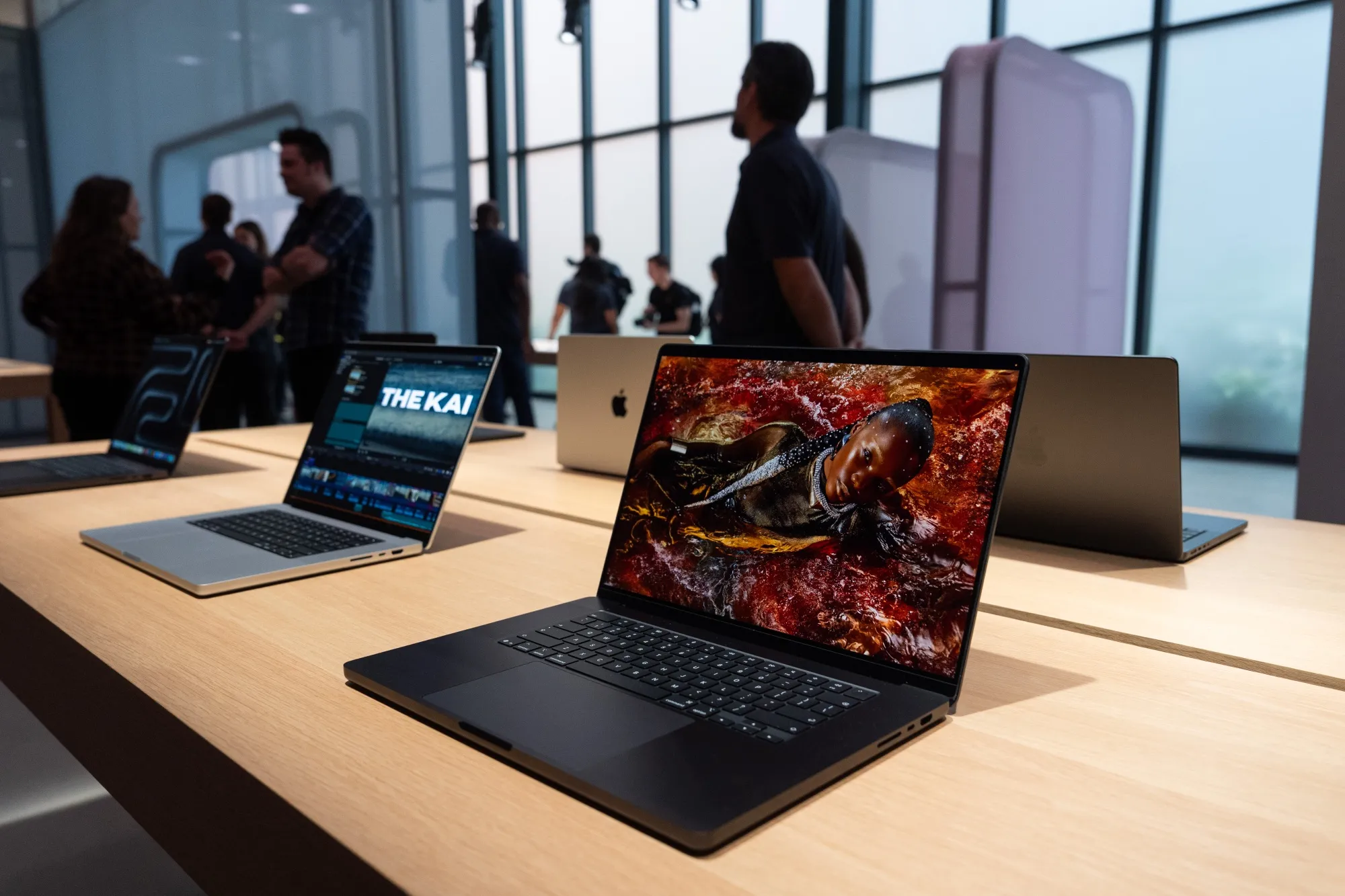
CUPERTINO, CA – In a stunning reversal that reverberates across the global technology landscape, Apple Inc. is reportedly on the precipice of unveiling a MacBook Pro featuring a touch-sensitive display, finally succumbing to market forces and technological evolution after nearly two decades of steadfast resistance. The news, broken by Bloomberg's Mark Gurman and swiftly corroborated across tech publications, represents not merely a product update but a profound ideological shift for the world's most valuable company, promising to redefine the very essence of its professional computing platform.
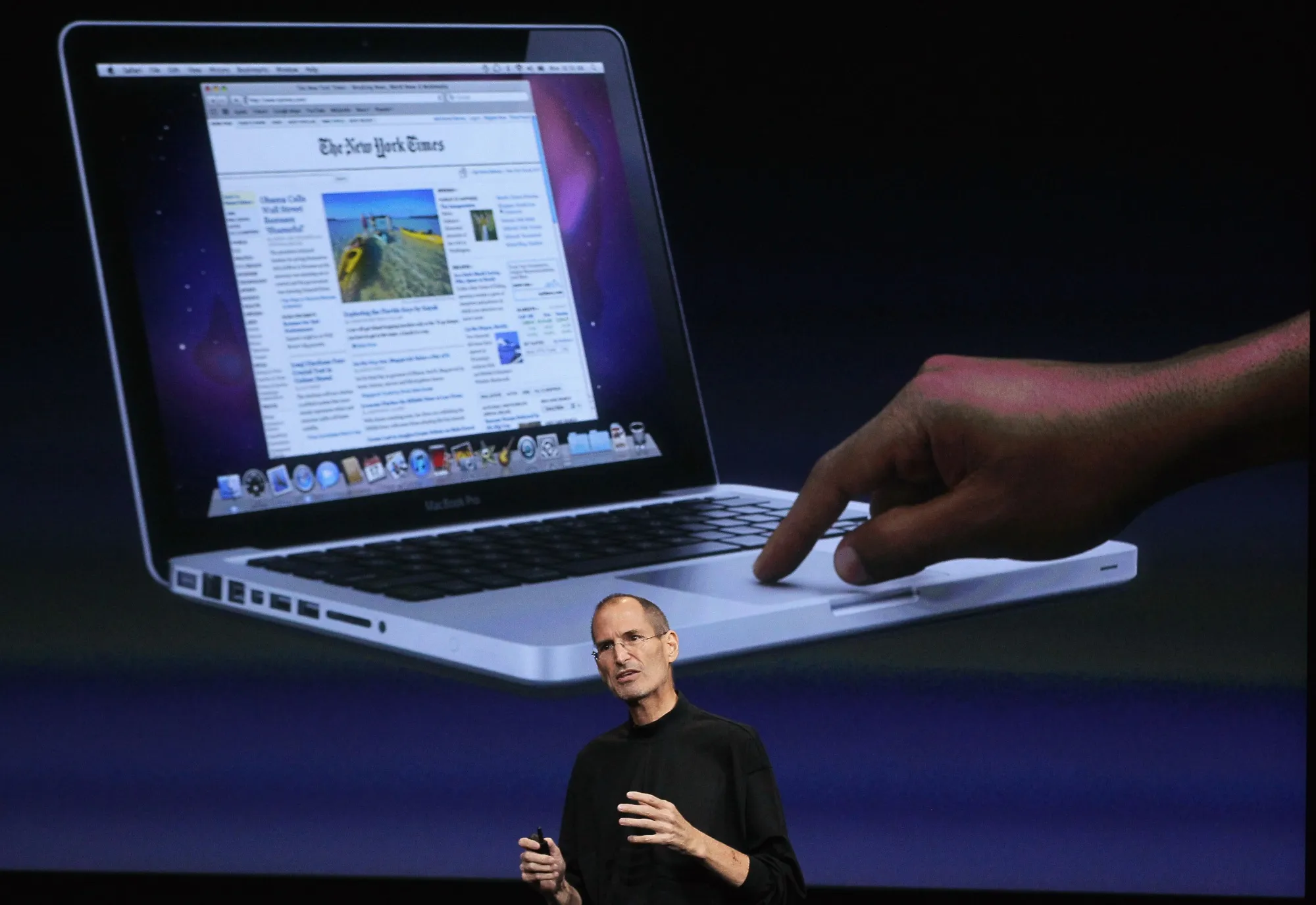
For years, the notion of a touch-enabled Mac was dismissed by Apple's leadership as ergonomically unsound and contrary to the company's meticulous user interface design principles. Steve Jobs, Apple's visionary co-founder, famously derided the idea of vertical touchscreens in 2010, stating, "Touch surfaces don't want to be vertical. It gives great demo but after a short period of time, you start to fatigue, and after an extended period of time, your arm wants to fall off." Jony Ive, Apple's long-serving Chief Design Officer, echoed similar sentiments, emphasizing the distinct interaction paradigms of macOS (mouse and trackpad) and iOS (touch). This entrenched philosophy created an almost impermeable barrier, drawing a clear line between Apple's mobile and desktop experiences.
Yet, the digital tides have proven relentless. As smartphones and tablets normalized direct screen interaction, and competitors like Microsoft successfully cultivated a robust market for touch-first laptops and 2-in-1 devices with its Surface line, Apple found itself increasingly isolated in its rigid stance. This impending announcement signals not a capitulation, but a strategic re-evaluation driven by a confluence of competitive dynamics, technological maturation, and evolving user expectations.
The Catalysts: Why Now, After Two Decades?
The journey from unwavering resistance to imminent embrace is paved with several critical catalysts:
- Competitive Pressure from Microsoft Surface: Microsoft’s Surface line, launched in 2012, demonstrated a viable and increasingly popular market for hybrid laptop-tablet experiences. Its adoption in enterprise environments, particularly for field work, creative tasks, and collaborative whiteboarding, proved that touch on a notebook could deliver tangible enterprise ROI and productivity gains. Apple, traditionally dominant in creative and professional sectors, could no longer ignore a competitor carving out significant market share in adjacent segments.
- Apple Silicon's Unified Architecture: The transition of the Mac to Apple Silicon (M-series chips) was perhaps the most significant enabler. By leveraging a common ARM-based architecture across iPhones, iPads, and Macs, Apple laid the groundwork for greater software compatibility and a more unified developer ecosystem. This architectural consistency reduces the technical friction of adapting macOS to a touch interface, allowing for a more seamless integration of touch-centric features without fundamentally compromising the desktop experience. Developers can now target a broader, more consistent Apple hardware stack, improving infrastructure scalability for their applications.
- Advanced Display Technology: The evolution of display technology, particularly the proliferation of mini-LED and OLED panels, provides the necessary canvas for a premium touch experience. These displays offer superior contrast, color accuracy, and responsiveness, making direct interaction more immersive and precise. Haptic feedback mechanisms, already refined in iPhones and Apple Watch, could further enhance the tactile experience on a Mac.
- Evolving User Expectations: A generation of users has grown up with touch as their primary interaction method with technology. For them, the absence of touch on a premium laptop, especially one costing thousands, feels like an anachronism. This expectation extends to the enterprise, where employees increasingly demand the flexibility and intuitive interaction models they experience in their personal devices.
- Ecosystem Synergy and "Continuity": Apple has relentlessly pushed its "Continuity" features, blurring the lines between its devices. Adding touch to the Mac further strengthens this synergy, allowing for more fluid workflows between an iPhone, iPad, and MacBook Pro, leveraging familiar gestures and interactions across the entire product family. This deepens customer lock-in and reinforces the value proposition of Apple's integrated ecosystem, impacting capital allocation decisions by consumers and businesses alike.
Technical Deep Dive: What to Expect
While details remain scarce ahead of any official announcement, expert analysis and industry trends suggest key features:
- Integrated Touchscreen, Not a Detachable Tablet: Unlike many 2-in-1 Windows devices, the MacBook Pro is expected to retain its traditional clamshell form factor, integrating touch directly into the main display. This maintains the core macOS desktop experience while offering an additional input method.
- macOS Adaptation, Not iOS Convergence: Crucially, this is not an attempt to turn macOS into iOS. Apple will likely introduce subtle, refined touch gestures and optimizations within macOS, enhancing existing applications and workflows rather than forcing a touch-first paradigm. Expect larger touch targets, new multi-finger gestures, and potentially redesigned UI elements to accommodate direct interaction. The core philosophy of macOS as a precision input operating system will likely remain.
- Premium Display Technology: An OLED display is a strong contender, offering the vibrant colors, true blacks, and fast response times ideal for a touch interface. This would be a significant upgrade for the MacBook Pro line, enhancing its appeal to creative professionals who prioritize visual fidelity and precision.
- Advanced Haptics: Apple's Taptic Engine technology, perfected in iPhones and trackpads, could be integrated into the display, providing tactile feedback for touch interactions, making the experience more immersive and intuitive.
- Performance & Thermal Management: Integrating a touch layer and potentially new display technology will necessitate meticulous engineering to maintain the MacBook Pro's performance, battery life, and thermal efficiency, challenges that Apple's robust hardware design teams are well-equipped to address.
| Date/Era | Key Statement/Action | Implication |
|---|---|---|
| 2007 (iPhone Launch) | Introduced revolutionary multi-touch interface for mobile. | Established Apple's touch prowess, but kept separate from Mac. |
| 2010 (Mac Pro Event) | Steve Jobs: "Touch surfaces don't want to be vertical... After a short period of time, your arm wants to fall off." | Publicly dismissed touch on laptops as ergonomically unsound. |
| 2012 (Windows 8/Surface Launch) | Microsoft introduces Windows 8 with touch, Surface RT/Pro. | Direct competitive challenge; Apple maintains mouse/trackpad for Mac. |
| 2016 (Touch Bar MacBook Pro) | Apple introduces OLED Touch Bar above keyboard. | Partial concession to touch, but not on the main display. Seen as an experimental bridge. |
| 2020 (Apple Silicon Mac Transition) | Macs shift to ARM-based Apple Silicon, unifying architecture with iOS/iPadOS. | Critical technical foundation laid for easier touch integration. |
| 2023/2024 (Gurman Reports) | Reports of touch-enabled MacBook Pro in development for 2025 release. | Confirmed strategic shift, abandoning two decades of resistance. |
Industry & Market Implications
The introduction of a touch MacBook Pro is far more than a feature add; it's a strategic maneuver with far-reaching consequences across the industry:
- Competitive Landscape Shift: For years, Microsoft's Surface line has been the benchmark for premium touch-enabled laptops. Apple's entry legitimizes the category further and intensifies competition, forcing PC manufacturers like Dell, HP, and Lenovo to innovate rapidly to differentiate their offerings. This could lead to a wave of advanced display technologies and integrated touch solutions across the entire market, impacting their capital allocation for R&D.
- Enterprise Adoption & Productivity: The enterprise market stands to gain significantly. A touch-enabled MacBook Pro can enhance workflows in design, architecture, healthcare, and education, where direct manipulation is advantageous. This could improve enterprise ROI for IT departments considering Mac deployments, particularly where cloud compute architecture integrates with on-device capabilities for professional software. The enhanced security and ecosystem management of Apple devices, combined with new input methods, offer compelling risk mitigation for corporate IT.
- Supply Chain Dynamics: The demand for high-quality, durable touch-enabled displays and associated components will surge, impacting suppliers like Samsung Display, LG Display, and various sensor manufacturers. This shift could necessitate substantial investment in new manufacturing capacities and advanced production techniques, influencing global market liquidity for these specialized components.
- Developer Ecosystem: Apple's move will energize its vast developer community. New APIs and frameworks for touch interaction in macOS will open avenues for innovative applications and updates, fostering a richer software ecosystem that seamlessly bridges desktop and touch paradigms. This expanded canvas represents significant commercial opportunities for independent software vendors (ISVs).
- Financial & Valuation Impact: Investors will closely watch sales figures and average selling prices (ASPs) for the new MacBook Pro. A successful launch could drive strong revenue growth and potentially expand Apple's addressable market, positively impacting its valuation multiples. The market's perception of Apple's adaptability and willingness to innovate, even at the cost of its long-held tenets, will be a key determinant of investor sentiment. Regulatory compliance for new hardware features will also be a consideration for global market entry.
People Also Ask (FAQ)
Q1: Why did Apple resist putting touchscreens on MacBooks for so long?
A: Apple's resistance stemmed primarily from ergonomic and philosophical considerations articulated by leaders like Steve Jobs and Jony Ive. They argued that vertical touchscreens lead to arm fatigue over extended use and that macOS was fundamentally designed for precision input via mouse and trackpad, while iOS was optimized for direct touch. This clear distinction was a core tenet of their product strategy for nearly two decades, aiming to provide distinct, optimized experiences for different device types rather than a compromised hybrid.
Q2: Will a touch-enabled MacBook Pro mean macOS will become a touch-first OS like iOS?
A: No, it's highly unlikely. The integration of touch on the MacBook Pro is expected to be additive, enhancing existing macOS workflows rather than fundamentally altering the operating system to be touch-first. Apple will likely introduce refined touch gestures and UI optimizations that complement the mouse and trackpad, ensuring that the traditional desktop computing experience remains intact and primary. This is about providing an additional, intuitive input method for specific tasks, not transforming macOS into iOS.
Q3: How will a touch MacBook Pro impact the iPad Pro line, which also targets professional users?
A: The introduction of a touch MacBook Pro could create a fascinating dynamic with the iPad Pro. While there will inevitably be some overlap, Apple's strategy usually involves clear differentiators. The MacBook Pro will retain its full desktop macOS environment, offering unparalleled power for demanding professional software, while the iPad Pro, even with its powerful Apple Silicon chips, will likely continue to emphasize its portable, tablet-first experience with touch and Apple Pencil as primary inputs. The touch MacBook Pro might appeal to users who need the full macOS power but appreciate occasional direct screen interaction, whereas the iPad Pro caters to those prioritizing extreme portability and a touch-first mobile productivity experience. It expands Apple's overall addressable market rather than cannibalizing existing product lines directly.
Q4: What specific professional workflows would benefit most from a touch-enabled MacBook Pro?
A: Several professional workflows stand to benefit significantly. Creative professionals in design, illustration, and video editing could use touch for more intuitive manipulation of on-screen elements, precise drawing with a stylus (if supported), or quicker navigation within complex interfaces. Architects and engineers might leverage it for reviewing blueprints or 3D models. Healthcare professionals could find it useful for interacting with medical imaging. Education and collaboration tools could also see enhanced usability for presentations, annotations, and interactive whiteboarding, boosting productivity and team synergy in enterprise settings.
Future Outlook
The impending touch MacBook Pro represents a significant inflection point for Apple. This strategic pivot opens the door to a new generation of Mac devices that could eventually see touch extended to other models, such as the MacBook Air or even the iMac. The company's long-term vision for its computing ecosystem now appears to be one of deeper integration and input flexibility, catering to a diverse user base accustomed to seamless interactions across all their devices.
Key milestones to watch include the specific macOS software enhancements Apple rolls out to support touch, developer adoption of new touch APIs, and, critically, sales figures and user feedback following the official launch. The success of this move will not only shape Apple's product roadmap for years to come but also influence the broader competitive strategies of every major player in the global PC market, signaling a new era where the "desktop" and "touch" paradigms are no longer mutually exclusive but elegantly integrated.