Executive Takeaways
- Broadened Earnings Base: Wall Street consensus expects 2026 to deliver robust corporate profit growth, shifting away from pure mega-cap dominance toward cyclical and mid-cap sectors.
- The Artificial Intelligence Reckoning: Enterprise ROI pressure and infrastructure scalability limits will test whether the multi-year AI capital expenditure supercycle can justify its astronomical valuation multiples.
- Macroeconomic and Legislative Headwinds: Lingering fiscal policy shifts, potential tax bill restructuring, and shifting liquidity parameters create acute volatility risks for institutional risk mitigation strategies.
- Strategic Capital Allocation: Portfolio managers are recalibrating cloud compute architecture spending and tightening credit standards to hedge against late-cycle economic compression.
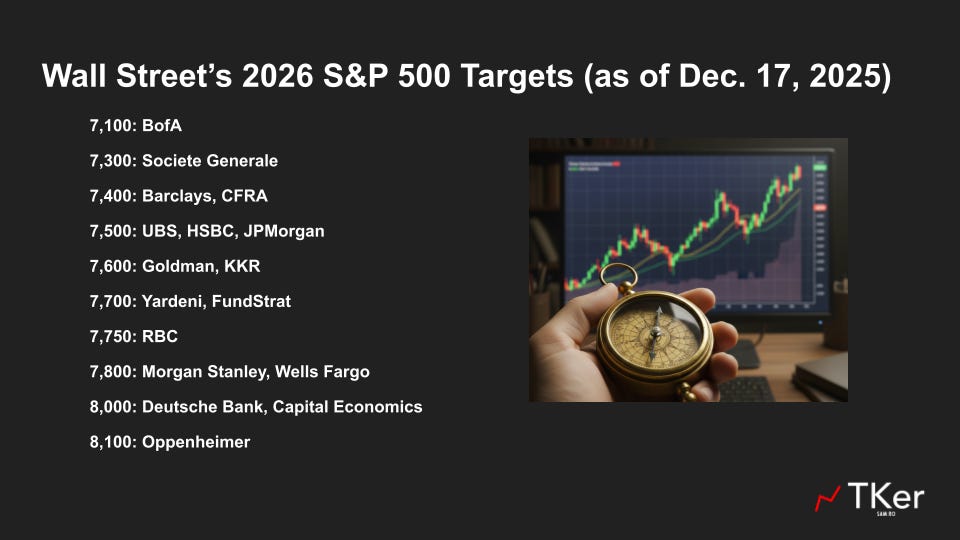
NEW YORK — As institutional trading desks close the books on another volatile trading year, Wall Street’s premier strategists are laying out their playbooks for 2026. The overarching consensus points to a fundamentally sound macroeconomic backdrop, anchored by resilient consumer balance sheets, falling interest rate corridors, and sustained corporate earnings expansion. Yet, beneath the veneer of continued market records, an undercurrent of institutional anxiety persists.
According to comprehensive briefings from top-tier investment banks and primary reporting from Investopedia, while the headline narrative for 2026 remains bullish, the structural risks are accumulating at a pace not seen since the post-pandemic monetary tightening cycle. For asset allocators, wealth managers, and corporate treasurers, navigating the next twelve months will require an unprecedented degree of risk mitigation, granular fundamental analysis, and a strict adherence to valuation discipline.
The Evolving Macroeconomic Landscape and Corporate Profitability
To understand the trajectory of equities heading into 2026, analysts must first evaluate the health of corporate profit margins. Throughout 2024 and 2025, market liquidity was heavily concentrated in a handful of mega-cap technology stalwarts. However, equity research desks project that profit growth will broaden significantly across industrial, financial, and healthcare sectors over the next fiscal cycle.
This broadening of earnings is not happening in a vacuum. Corporations have aggressively optimized their operational efficiencies, restructuring supply chains and integrating automation tools to protect net margins against sticky wage inflation. Furthermore, as central banks globally pivot toward more accommodative monetary policies, the cost of capital is expected to normalize, providing a vital tailwind for capital-intensive industries.
However, this optimistic earnings outlook is increasingly being tested by legislative uncertainties. Debates surrounding upcoming tax bill renewals, corporate tax rate adjustments, and regulatory compliance frameworks are forcing Chief Financial Officers to build conservative buffers into their forward guidance. If fiscal policy shifts abruptly, projected earnings-per-share (EPS) growth could face downward revisions, triggering a swift repricing across equity indexes.
Can the Artificial Intelligence Supercycle Sustain Its Momentum?
No variable holds more weight for the 2026 stock market than the trajectory of artificial intelligence. Over the past three years, enterprise spending on generative AI infrastructure has transformed the semiconductor, cloud computing, and power generation sectors. Hyperscalers have poured hundreds of billions of dollars into advanced cloud compute architecture, silicon procurement, and data center real estate.
As the market enters 2026, the foundational question shifts from capital deployment to tangible economic return. Wall Street is demanding hard evidence of enterprise ROI. Institutional investors are no longer satisfied with conceptual efficiency gains; they expect verifiable revenue streams and productivity multipliers derived from AI integration.
At the same time, infrastructure scalability is encountering physical and financial bottlenecks. Power grid constraints, water cooling limitations, and surging capital expenditure requirements are squeezing free cash flow margins for even the most well-capitalized tech titans. If enterprise adoption plateaus or if the monetization timeline extends further into the decade, the valuation multiples supporting the broader technology sector could face severe compression.
Verified Data & Metrics Breakdown
The following matrix outlines the core financial projections, risk vectors, and market drivers shaping the institutional consensus for the 2026 equity landscape:
| Metric / Parameter | Current Baseline (2025) | Projected Outlook (2026) | Strategic Implication |
|---|---|---|---|
| S&P 500 EPS Growth | ~9.5% YoY | 11.0% – 13.5% | Earnings breadth expanding beyond mega-caps into cyclicals. |
| AI Infrastructure CapEx | Accelerated Peak Growth | Plateauing / ROI Focus | Increased scrutiny on cash flow return and infrastructure efficiency. |
| Valuation Multiples (P/E) | Elevated (21x - 22x Forward) | Mean Reversion Risk | Vulnerability to rate shocks and earnings misses. |
| Fiscal Policy & Tax Impact | Stable Status Quo | Legislative Restructuring | Potential corporate tax headwinds requiring defensive positioning. |
Industry & Market Implications: Winners and Losers
The complex interplay between robust earnings growth and mounting structural risks creates a highly bifurcated market environment. Identifying structural winners and losers will dictate alpha generation for institutional funds throughout 2026.
The Beneficiaries: Infrastructure, Industrials, and Select Financials
As capital expenditure shifts away from purely speculative software applications toward physical infrastructure, companies specializing in grid modernization, heavy electrical equipment, industrial automation, and specialized real estate are positioned to outperform. Furthermore, commercial banking institutions with strong balance sheets and disciplined credit underwriting will benefit from stabilizing loan demand as corporate borrowers refinance debt at more favorable rates.
The Vulnerabilities: Overleveraged Tech and High-Multiple Growth
Conversely, segments of the market that rely on perpetual access to ultra-cheap capital and uninterrupted multiple expansion face heightened vulnerability. Software-as-a-Service (SaaS) providers that fail to demonstrate immediate pricing power or proprietary AI differentiation risk severe valuation contractions. Similarly, highly leveraged firms lacking robust cash reserves will struggle if credit spreads widen in response to macroeconomic shocks or unexpected regulatory hurdles.
Frequently Asked Questions (People Also Ask)
Why are Wall Street strategists expressing caution about 2026 despite forecasting solid profit growth?
While corporate earnings are projected to expand healthily, equity valuations (forward P/E ratios) are already trading at historically elevated levels. This leaves very little margin for error. When combined with mounting risks surrounding AI capital expenditure returns, potential legislative tax changes, and tighter credit parameters, the risk-reward balance becomes increasingly precarious.
Will the artificial intelligence rally continue to drive market indexes in 2026?
The AI rally is transitioning from a broad foundational phase into a selective, results-driven era. Rather than lifting all technology stocks indiscriminately, the market in 2026 will heavily reward companies that can prove tangible enterprise ROI and operational scalability, while punishing firms that exhibit excessive spending without commensurate revenue generation.
How will potential tax bill and fiscal policy changes impact equity portfolios?
Legislative adjustments regarding corporate tax rates, expensing rules for research and development, and federal spending caps can rapidly alter net income projections. Institutional risk management desks are actively modeling various fiscal scenarios to reallocate assets toward sectors with defensive earnings profiles and lower effective tax exposure.
Future Outlook and Strategic Milestones for Investors
As the financial markets advance through 2026, institutional focus will remain hyper-fixed on quarterly earnings disclosures, macroeconomic data prints, and central bank commentary. The central thesis remains clear: while the structural foundation of corporate America is solid, the era of frictionless, liquidity-driven rallies has matured.
For portfolio managers and corporate leaders, success in 2026 will depend on rigorous risk mitigation, selective capital allocation, and a relentless focus on fundamental quality. Monitoring inflection points in cloud compute architecture spending, legislative tax debates, and enterprise adoption metrics will provide the necessary early-warning signals as the market navigates the delicate balance between record profitability and growing structural risks.