Executive Takeaways
- Unprecedented Expansion: The global cybersecurity solutions market is scaling at a robust Compound Annual Growth Rate (CAGR) of 13.8%, projected to breach US$ 552.35 billion by 2031, according to recent market tracking data released via GlobeNewswire.
- Capital Inflows & Valuation Multiples: Enterprise tech spending is rapidly shifting from discretionary digital transformation to mandatory threat mitigation, driving massive capital allocation toward cloud-native security architecture and automated defense systems.
- Geographic Divergence: North America remains the dominant revenue engine, though the Asia-Pacific (APAC) region and European Union are experiencing accelerated adoption fueled by stringent regulatory frameworks and escalating state-sponsored threat vectors.
- The ROI Paradigm Shift: Chief Information Security Officers (CISOs) are moving away from fragmented point solutions, consolidating vendor ecosystems to optimize risk mitigation, infrastructure scalability, and compliance tracking.
NEW YORK — In an era defined by geopolitical cyber warfare, automated ransomware deployment, and vulnerable decentralized cloud infrastructures, digital defense has ceased to be a back-office IT concern. It has evolved into the cornerstone of corporate governance and national security. According to comprehensive market assessments distributed via GlobeNewswire, the global cybersecurity solutions market is expanding at a formidable 13.8% CAGR, hurtling toward a valuation of US$ 552.35 billion by 2031.
This explosive trajectory reflects a fundamental rewiring of enterprise risk architecture. For corporate boards, venture capitalists, and institutional asset managers, the figures underscore a permanent structural shift: cybersecurity is no longer an expense item to be trimmed during economic downturns, but an existential capital expenditure required to preserve market capitalization and shareholder value.
The Catalytic Drivers: Why the Market is Accelerating at 13.8% CAGR
The acceleration toward the half-trillion-dollar threshold is not driven by a single vector, but by a convergence of technological shifts and escalating threat landscapes. As enterprises aggressively migrate legacy workloads to hybrid and multi-cloud environments, the traditional perimeter defense model has disintegrated. Identity is the new perimeter, and securing it requires sophisticated, AI-driven automation.
Furthermore, the democratization of malicious capabilities through generative AI and cybercrime-as-a-service (CaaS) has lowered the barrier to entry for threat actors. Ransomware attacks have evolved from opportunistic malware drops into highly targeted, multi-extortion campaigns capable of crippling critical national infrastructure, healthcare providers, and global financial networks. In response, corporate leadership teams are executing aggressive capital allocation strategies to upgrade their security posture.
Regulatory compliance is another primary catalyst. Across major jurisdictions, regulatory bodies are imposing draconian penalties for data breaches and delayed disclosures. The Securities and Exchange Commission (SEC) mandates strict cybersecurity governance and incident reporting for publicly traded corporations, while the European Union’s Network and Information Security (NIS2) Directive and the Digital Operational Resilience Act (DORA) impose stringent accountability on operational resilience. Non-compliance is no longer merely a regulatory slap on the wrist; it poses an existential threat to enterprise valuations and market liquidity.
Geographic Breakdown: Dominant Regions and Regional Adoption Curves
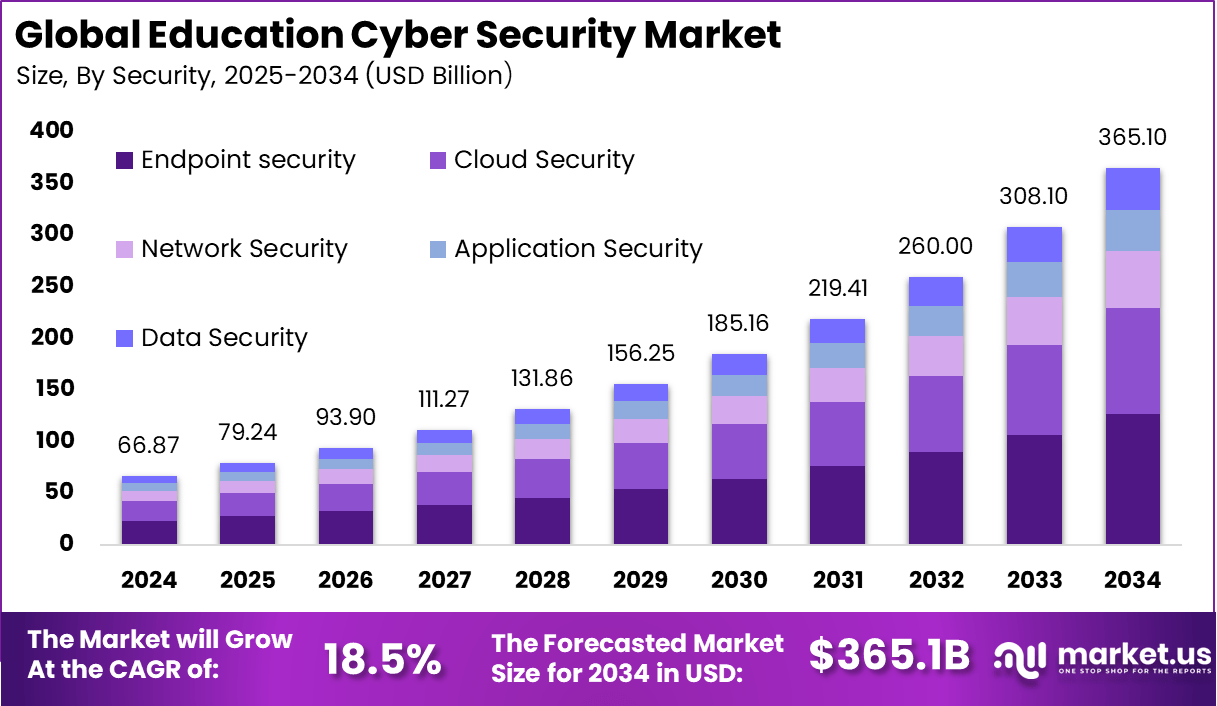
A granular examination of the cybersecurity market reveals distinct regional growth patterns, shaped by varying regulatory intensities, industrial compositions, and technological maturities.
North America: The Innovation and Spend Epicenter
North America continues to command the lion's share of global cybersecurity revenues. Anchored by the United States, the region benefits from a dense concentration of venture capital firms, pioneering cybersecurity startups, and Fortune 500 enterprises with immense IT budgets. The continuous evolution of federal cybersecurity mandates—particularly within defense contractors and critical infrastructure sectors—ensures a predictable, highly capitalized domestic market.
Europe: Regulatory Compliance as a Market Driver
In Europe, market growth is intrinsically tied to compliance. The rigorous enforcement of the General Data Protection Regulation (GDPR) set a global benchmark, and subsequent directives like NIS2 have forced European enterprises to institutionalize continuous risk assessments and supply chain security. This has created a fertile ecosystem for European cybersecurity providers specializing in data privacy, encryption, and sovereign cloud infrastructure.
Asia-Pacific (APAC): The Fastest-Growing Frontier
Driven by rapid digitization, widespread mobile adoption, and massive smart-city initiatives in nations like India, Singapore, and Japan, the APAC region represents the highest relative growth potential. However, APAC also faces acute vulnerability due to lagging legacy infrastructures meeting hyper-growth digital economies. Governments across the region are aggressively partnering with private enterprises to shore up digital borders, resulting in substantial public-sector procurement contracts.
Verified Data & Market Metrics Breakdown
To contextualize the trajectory of the cybersecurity solutions market through 2031, the following comparative matrix synthesizes macroeconomic indicators, projected valuations, and primary growth catalysts derived from recent industry data.
| Market Metric / Indicator | Baseline / Historical Context | Projected Milestone (2031) | Macroeconomic & Strategic Impact |
|---|---|---|---|
| Global Market Valuation | Fragmented mid-market (~$170B-$200B historical baseline) | US$ 552.35 Billion | Reflects a compounding 13.8% CAGR driven by non-discretionary corporate spending. |
| Primary Growth Driver | Endpoint security and basic perimeter defense | Cloud Security & AI Automation | Shifts capital toward automated threat hunting, XDR, and zero-trust architectures. |
| Dominant Geographic Region | North America (Historical market leader) | North America & APAC Surge | North America maintains market share leadership while APAC records the fastest percentage growth. |
| Enterprise Spending Priority | Siloed point solutions and reactive patching | Vendor Consolidation & Risk ROI | CISOs reduce vendor count to streamline cloud compute architecture and optimize risk mitigation. |
Industry & Market Implications: Winners, Losers, and Capital Reallocation
The maturation of the cybersecurity sector to a projected US$ 552.35 billion valuation is triggering profound structural realignments across global financial and technology markets. Understanding who captures this capital requires a hard look at evolving corporate buying behaviors.
The Winners: Platform Players and Cloud-Native Innovators
Enterprise buyers are experiencing severe "vendor fatigue." Managing dozens of disparate point solutions has created operational friction and blind spots within Security Operations Centers (SOCs). Consequently, platform consolidators—firms that offer integrated ecosystems spanning endpoint detection and response (EDR), cloud security posture management (CSPM), and identity access management (IAM)—are capturing outsized market share.
Venture capital and private equity are heavily favoring businesses with high recurring revenue, strong net retention rates, and proprietary artificial intelligence engines capable of reducing false positives. Hardware-centric security models are steadily yielding to software-as-a-service (SaaS) and managed detection and response (MDR) frameworks.
The Losers: Legacy Vendors and Single-Feature Point Solutions
Conversely, legacy security providers reliant on signature-based detection and rigid, on-premises deployment models face severe headwinds. These firms are struggling to maintain valuation multiples as enterprise clients migrate workloads to cloud environments that demand dynamic, API-driven security orchestration. Small, single-feature startups that fail to integrate into broader platform ecosystems are finding themselves squeezed out of procurement pipelines or forced into distressed M&A exits.
Frequently Asked Questions (People Also Ask)
What is driving the 13.8% CAGR growth in the cybersecurity market?
The 13.8% CAGR is propelled by several concurrent factors: the rapid expansion of hybrid cloud compute architectures, the proliferation of sophisticated automated cyber threats, stringent global regulatory frameworks (such as SEC rules and EU directives), and the mandatory shift toward zero-trust security frameworks across enterprises.
Which geographic region holds the largest market share in cybersecurity?
North America currently retains the largest share of global cybersecurity revenues, supported by heavy enterprise tech investment and rigorous compliance standards. However, the Asia-Pacific (APAC) region is experiencing the fastest growth rate due to accelerated regional digital transformation and expanding public-private defense partnerships.
How are CISOs optimizing their cybersecurity budgets in the current economic climate?
Chief Information Security Officers are prioritizing vendor consolidation. Rather than purchasing siloed point solutions, enterprises are consolidating their tech stacks onto unified, cloud-native platforms that offer comprehensive visibility, automated threat response, and measurable enterprise ROI.
What role does Artificial Intelligence play in the future of cybersecurity solutions?
AI is a double-edged sword and a primary market driver. While threat actors utilize AI to scale phishing and automated malware attacks, cybersecurity vendors are deploying advanced machine learning models for behavioral analytics, predictive threat hunting, and automated incident remediation to outpace human adversaries.
Future Outlook: Milestones to Watch Through 2031
As the global market tracks toward its projected US$ 552.35 billion valuation by 2031, several critical milestones will define the next phase of industry evolution:
- The Mandate of Autonomous SOCs: Expect the widespread adoption of AI-driven Security Operations Centers capable of neutralizing sophisticated cyber attacks with minimal human intervention, dramatically altering labor demands within the cybersecurity workforce.
- Quantum-Resistant Cryptography: As quantum computing advances, enterprises and governments will begin massive capital allocation cycles to overhaul legacy encryption algorithms, giving rise to a specialized sub-sector within data security.
- Regulatory Harmonization vs. Fragmentation: The degree to which international regulatory bodies harmonize cross-border data protection laws will significantly impact multinational enterprise compliance costs and shape global vendor expansion strategies.
Ultimately, the projected growth of the cybersecurity market reflects an inescapable modern reality: in a digitized global economy, economic stability is inextricably bound to digital resilience. For investors and corporate strategists alike, navigating this hyper-growth landscape requires discerning between cyclical hype and foundational infrastructure demand.