Executive Takeaways
- A Structural Shift in Market Support: The U.S. Treasury’s active debt buyback program represents a profound transition from passive debt issuance to active market-maker of last resort, aiming to bolster market liquidity in off-the-run securities without relying on direct Federal Reserve balance sheet expansion.
- The Stealth Yield Cap: By purchasing older, less liquid Treasury bonds and issuing highly liquid on-the-run benchmarks, the Treasury is effectively executing a targeted liquidity-support operation. This program mitigates the risk of sudden yield spikes without triggering the inflationary signals associated with traditional central bank quantitative easing (QE).
- Capital Allocation and Valuations: This operational shift has profound systemic implications, directly altering corporate capital allocation, stabilizing valuation multiples across risk assets, and reducing the liquidity premium demanded by primary dealers under stringent regulatory compliance regimes.
In mid-2024, the United States Department of the Treasury embarked on its first regular debt buyback program in over two decades. By late August 2026, as highlighted in a landmark analysis by Rebecca Patterson for the Council on Foreign Relations (CFR), this technical liquidity-management tool has evolved into a critical macroprudential buffer. This shift occurs at a time when global sovereign debt markets are exhibiting unprecedented structural fragility.
For decades, the global financial system operated under a reliable assumption: the U.S. Treasury market was the deepest, most liquid pool of capital on earth. However, a combination of ballooning federal deficits, quantitative tightening (QT) by the Federal Reserve, and stringent post-2008 capital requirements has severely constrained the capacity of primary dealers to intermediate trades. The Treasury’s buyback program is a direct response to this challenge. It represents a sophisticated fiscal intervention designed to prevent structural plumbing failures from escalating into systemic crises.
---The Anatomy of the Buyback: Mechanics, Motivation, and Market Friction
To understand the magnitude of the Treasury's buyback initiative, one must dissect the structural plumbing of the fixed-income market. Sovereign debt is broadly categorized into two classes: "on-the-run" and "off-the-run" securities. On-the-run Treasuries are the most recently issued debt of a specific maturity. They are highly liquid, heavily traded, and serve as the primary benchmarks for pricing trillions of dollars in corporate credit, mortgage-backed securities, and derivative contracts.
Conversely, off-the-run Treasuries are older issues that have been supplanted by newer benchmarks. As these securities migrate into the balance sheets of buy-and-hold institutional investors, their trading volumes decline precipitously. In times of market stress, the liquidity premium—the yield spread between highly liquid on-the-run and less liquid off-the-run securities—widens dramatically. This friction forces primary dealers to commit precious balance sheet capacity to hold illiquid paper, reducing overall market depth and elevating the risk of localized flash crashes.
The Treasury’s buyback architecture addresses this friction directly through two distinct pathways:
1. Liquidity Support Buybacks
The Treasury purchases off-the-run nominal coupons and Treasury Inflation-Protected Securities (TIPS) from primary dealers. To fund these purchases, the Treasury increases the issuance of highly liquid on-the-run bills and coupon-bearing securities. This operation effectively exchanges illiquid, hard-to-move paper for highly liquid instruments, clearing blockages in dealer inventories and lowering the systemic liquidity premium.
2. Cash Management Buybacks
Historically, the Treasury experienced highly volatile cash balances at the Federal Reserve (the Treasury General Account, or TGA), driven by uneven tax receipt inflows and debt maturity schedules. By buying back debt ahead of major maturity dates, the Treasury can smooth out its cash balances, reducing the sudden, destabilizing drains on commercial bank reserves that occur when massive tranches of debt mature and are refinanced.
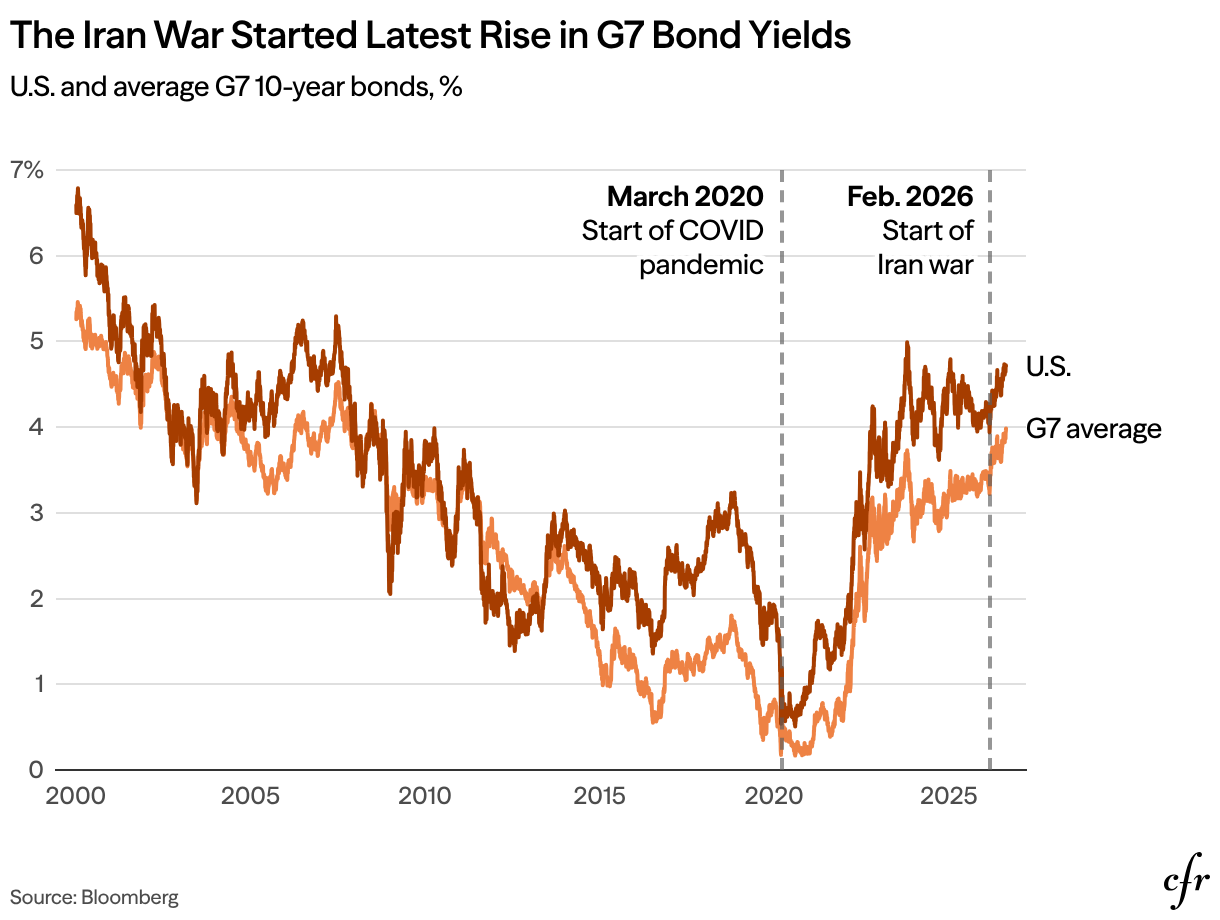
While Treasury officials characterize these operations as purely tactical liability management, macroeconomic observers view them through a different lens. As advanced economies grapple with rising government bond yields and deteriorating fiscal trajectories, these buybacks act as an essential risk mitigation tool, functioning as a non-monetary form of yield curve control.
---The Macroeconomic Catalyst: The Collision of Deficits and QT
The urgency behind this structural intervention is underscored by a shifting macroeconomic backdrop. For over a decade, central banks were the buyers of first and last resort for sovereign debt. However, the post-pandemic inflationary surge forced the Federal Reserve to embark on aggressive monetary tightening, simultaneously raising the federal funds rate and reducing its balance sheet through quantitative tightening.
This policy pivot coincided with historic, non-recessionary fiscal expansion in the United States. With the federal budget deficit projected to hover at elevated levels, the supply of new Treasury debt has surged precisely as traditional, price-insensitive buyers—such as foreign central banks and domestic commercial banks—have scaled back their purchases. This supply-demand mismatch has raised real yields and injected high volatility into the bond market.
The consequences of a malfunctioning Treasury market extend far beyond Wall Street. Because U.S. government debt serves as the risk-free rate underpinning global asset valuations, heightened volatility in Treasury yields distorts valuation multiples for public equities, raises capital costs for corporate issuers, and compromises enterprise ROI projections for long-duration capital expenditures. By step-functioning into the buyback market, the Treasury is working to restore stability to the discount rate used to price global asset classes.
---Operational Contrast: Comparing Treasury Buyback Epochs
The current buyback regime is fundamentally different from the last major buyback initiative executed at the turn of the millennium. The table below illustrates the stark contrast in macro-financial conditions between these two periods:
| Metric / Characteristic | 2000–2002 Buyback Program | 2024–2026+ Buyback Program |
|---|---|---|
| Systemic Federal Budget Surpluses | Persistent, Structural Budget Deficits | |
| Preventing maturity contraction and managing surplus cash | Enhancing market liquidity and supporting primary dealer balance sheets | |
| ~33% to 35% | Exceeding 98% (approaching historic highs) | |
| Neutral to easing cycles | Quantitative Tightening (QT) and elevated policy rates | |
| Long-duration high-coupon bonds | Off-the-run nominal coupons and TIPS across the curve | |
| Excess tax revenues | Increased issuance of short-term bills and liquid coupons |
Industry & Market Implications: Who Wins, Who Loses, and Corporate Cascades
The Treasury’s buyback program produces distinct winners and losers across the financial ecosystem, reshaping investment strategies, corporate finance decisions, and institutional asset management.
The Winners: Primary Dealers and Leveraged Arbitrageurs
The primary beneficiaries of the buyback program are the Tier-1 investment banks acting as primary dealers. Under stringent Basel III regulatory compliance and Supplementary Leverage Ratio (SLR) rules, these institutions face strict limits on the size of their balance sheets. By providing a predictable, regular exit ramp for illiquid, off-the-run securities, the Treasury frees up precious dealer balance sheet capacity. This enables these institutions to facilitate trades more efficiently, support corporate debt underwriting, and optimize their capital allocation strategies.
Furthermore, leveraged hedge funds executing the Treasury cash-futures basis trade—a strategy that exploits minor pricing discrepancies between cash bonds and futures contracts—gain a valuable liquidity backstop. The risk of getting caught in highly illiquid, off-the-run issues is mitigated, lowering the overall systemic risk of a sudden margin-call-induced liquidation wave.
The Losers: Long-Term Buy-and-Hold Taxpayers?
While the buyback program enhances market functioning, it is not without economic costs. Critics point out that buying back older, lower-yielding debt (issued during the ultra-low interest rate era) at a discount and refinancing it with newly issued, higher-yielding debt increases the government's interest expense over time. While this liability management exercise stabilizes market plumbing, it shifts a portion of the structural cost onto the taxpayer by locking in higher borrowing costs.
Broader Corporate Impacts: Valuation and Infrastructure Scalability
For corporate treasurers and Chief Financial Officers, the containment of Treasury market volatility is a stabilizing force. When Treasury yields experience erratic swings, the cost of capital becomes unpredictable. This volatility dampens appetite for long-cycle capital investments, corporate mergers and acquisitions, and cloud compute infrastructure scalability projects, where long-term enterprise ROI calculations are highly sensitive to discount rate fluctuations.
By dampening fixed-income volatility, the Treasury's program helps stabilize valuation multiples in the equity and credit markets. This environment allows corporations to price debt issuances with tighter credit spreads, secure funding for long-term investments, and pursue strategic asset allocation with greater confidence.
---People Also Ask (Frequently Asked Questions)
Is the Treasury’s buyback program a form of Quantitative Easing (QE)?
No. While both programs involve the purchase of government debt, their mechanics and objectives are fundamentally different. QE is conducted by the Federal Reserve (the central bank) to expand the monetary base, lower borrowing costs, and stimulate economic activity by injecting new bank reserves into the financial system. The Treasury’s buyback program is a cash-neutral liability management exercise. It is funded entirely by issuing new debt rather than creating money, meaning it does not increase aggregate market liquidity or expand the money supply.
Why does the Treasury need to buy back its own debt if it has a deficit?
While it may seem counterintuitive to buy back debt while running a deficit, the program’s goal is to improve the qualitative composition of outstanding debt rather than reduce its total volume. By purchasing older, illiquid off-the-run bonds and replacing them with highly liquid on-the-run benchmark bonds, the Treasury improves the overall health, trading efficiency, and liquidity of the broader government bond market.
How does this buyback program impact the average retail investor?
Retail investors rarely trade off-the-run Treasuries directly, so the immediate impact is minimal. However, the secondary effects are substantial. By reducing volatility in the risk-free benchmark asset class, the program helps stabilize mortgage rates, corporate bond yields, and retirement portfolio valuations, creating a more predictable investing environment.
How do regulatory compliance rules affect Treasury market liquidity?
Post-2008 financial reforms, such as the Basel III leverage ratios and the Volcker Rule, require primary dealers to hold higher levels of capital against their assets. Because these rules do not distinguish between safe-haven Treasuries and riskier assets when calculating certain leverage ratios, dealers find it capital-inefficient to hold large inventories of older Treasury issues. The Treasury's buyback program acts as a pressure valve, absorbing these balance-sheet-heavy, off-the-run bonds when market demand slows.
---Future Outlook: Structural Challenges and Key Milestones to Watch
As the U.S. government navigates unprecedented peace-time debt issuance, the Treasury’s buyback program is expected to remain a permanent feature of global financial plumbing. However, its long-term efficacy will be tested by several oncoming structural developments.
The key milestone to watch is the interaction between the Treasury's buyback scale and the Federal Reserve’s monetary policy trajectory. If the Fed is forced to maintain elevated interest rates to combat sticky inflation, the cost of funding these buybacks through high-yielding short-term bill issuance will rise, potentially inviting political scrutiny from lawmakers concerned with federal interest expenses.
Furthermore, market participants will closely monitor whether the Securities and Exchange Commission’s (SEC) impending central clearing mandate for Treasury cash and repo transactions—slated for phased implementation through 2026—will improve or further strain dealer capacity. If the clearing mandate temporarily dampens market liquidity, the Treasury may be forced to scale up its buyback operations, testing the limits of fiscal liability management as a tool for financial stability.
Ultimately, the Treasury’s buyback surprise is a stark reminder of a new financial reality: in an era of massive debt loads and diminished central bank intervention, fiscal authorities must increasingly step in to manage the market plumbing that keeps the global financial system afloat.