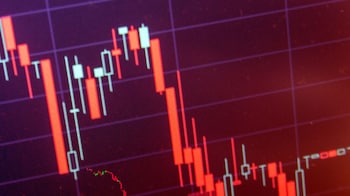
The Great Balancing Act: Are Global Stock Markets Teetering on the Brink of a Crash?
WALL STREET & LONDON — As the global economy navigates a labyrinth of stubborn inflation, fluctuating interest rates, and geopolitical instability, investors are asking a haunting question: Are global stock markets heading for a major crash? From the trading floors of Wall Street to the bustling exchanges of Europe and Asia, market sentiment has shifted from cautious optimism to palpable anxiety. A striking metaphor has captured the public imagination—a bronze bull statue balancing precariously on the bow of a small boat, tossed by unpredictable waters—mirroring the fragile equilibrium of today's financial ecosystem.
While central banks attempt the delicate task of engineering a soft landing, market veterans warn that complacency is the most dangerous asset a portfolio can hold. With valuations stretched across major tech equities and macroeconomic indicators flashing mixed signals, institutional and retail investors alike are reevaluating their risk exposure.
The Anatomy of Market Anxiety: What’s Driving the Fear?
The current unease gripping global exchanges is not born from a single catalyst, but rather a convergence of systemic pressures. Over the past several quarters, equities have surged, largely driven by artificial intelligence enthusiasm and resilient corporate earnings. However, underlying vulnerabilities have begun to fracture the facade of perpetual growth.
Economists point to persistently high borrowing costs as a primary pressure point. While central banks have begun signaling potential monetary easing, the era of cheap money is definitively over. This shift has placed immense strain not only on heavily leveraged corporations but also on everyday consumers—from Melbourne families grappling with ballooning mortgages to rural communities trying to sustain local commerce against macroeconomic headwinds.
Key Factors Fueling Market Volatility
- Interest Rate Uncertainty: Stubborn inflation prints have forced central banks to maintain higher-for-longer policy rates, increasing the cost of capital.
- Valuation Stretches: Price-to-earnings ratios in key sectors, particularly mega-cap technology, have reached historical highs, leaving little room for operational missteps.
- Geopolitical Friction: Ongoing supply chain realignments and trade tensions continue to inject unpredictable shocks into global commerce.
- Consumer Stress: Household debt levels in major economies are testing resilience as cost-of-living crises persist globally.
Market Sentiment and Expert Commentary

Financial analysts remain sharply divided over whether the current turbulence is a prelude to a catastrophic correction or merely a healthy, long-overdue consolidation phase. Public figures and market commentators have increasingly weighed in on the psychological weight of the current economic climate.
Cultural icons and financial observers alike have noted the pervasive shift in public mood. Echoing sentiments reminiscent of past market peaks, industry voices note, "My fear was that the disconnect between financial valuations and Main Street reality had simply grown too wide to sustain." This sentiment underscores a growing anxiety that Wall Street’s bullish momentum is increasingly divorced from the lived economic realities of working families.
However, staunch optimists argue that structural earnings growth and robust balance sheets among top-tier corporations will act as a shock absorber against a severe downturn. They emphasize that corrections are a normal part of the economic cycle, serving to flush out speculative excess rather than signal total systemic failure.
Global Market Indicator Snapshot
To understand the current crosswinds affecting international exchanges, consider the following comparative overview of key market health indicators:
| Market Indicator | Current Status | Historical Comparison | Potential Impact |
|---|---|---|---|
| S&P 500 P/E Ratio | Elevated (~23x) | Above 10-year average | Heightened vulnerability to earnings misses |
| Global Bond Yields | Stabilizing at mid-levels | Significantly higher than 2020-2021 lows | Competing with equities for investor capital |
| VIX (Volatility Index) | Flashing episodic spikes | Historically subdued, prone to sudden jumps | Signals underlying trader hedging and anxiety |
| Consumer Confidence | Mixed across regions | Depressed compared to pre-pandemic baselines | Restricts discretionary spending growth |
What Lies Ahead: Navigating the Precipice
As investors look toward the remainder of the fiscal year, portfolio management has shifted from aggressive growth hunting to defensive preservation. Diversification, liquidity management, and a renewed focus on cash-flow-positive assets have become the mantras of top-tier wealth managers.
Ultimately, whether the bronze bull on the boat capsizes or successfully navigates the rapids depends heavily on upcoming macroeconomic data releases, central bank dexterity, and corporate earnings resilience. For now, market participants are advised to maintain strict risk controls, keeping a watchful eye on both global liquidity trends and localized economic indicators.
Frequently Asked Questions
1. Are we officially headed for a stock market crash?
There is no consensus indicating an inevitable crash. While volatility is elevated and risks from high valuations and interest rates are real, many analysts view current conditions as a high-risk environment rather than a guaranteed precursor to a major market collapse.
2. How can everyday investors protect their portfolios right now?
Financial advisors generally recommend focusing on robust diversification, reducing exposure to highly speculative assets, maintaining an adequate emergency cash reserve, and aligning investments with long-term financial goals rather than reacting to short-term market noise.