Executive Takeaways
- Cost Disruption: DeepSeek V4-Pro has slashed inference and training costs for enterprise software development by up to 20x compared to legacy Western foundational models.
- Benchmark Parity: Despite the steep cost differential, benchmark evaluations place DeepSeek V4-Pro on par with Anthropic's Claude Opus 4.8 and OpenAI's GPT-5.5 in complex multi-file software engineering tasks.
- Infrastructure Re-pricing: Cloud compute architecture and hyperscaler capital allocation strategies are undergoing rapid revision as venture capitalists and enterprise CTOs recalibrate their AI software stacks.
- Geopolitical & Compliance Realities: The unprecedented price-to-performance ratio has intensified regulatory scrutiny and compliance discussions across Washington and Brussels regarding export controls and open-science dissemination.
The global software development paradigm shifted on its axis in mid-2026. For nearly four years, enterprise technology executives accepted a high-cost, high-performance equilibrium: if your engineering organization demanded state-of-the-art code generation, debugging, and system architecture design, you paid premium valuations to Western foundational model providers. OpenAI’s GPT-5.5 and Anthropic’s Claude Opus 4.8 reigned supreme as the undisputed heavyweights of enterprise code generation, commanding top-tier pricing that heavily influenced corporate budgets and cloud compute architecture.
That monopoly on elite intelligence has effectively broken. According to comprehensive benchmark data and market disclosures analyzed by leading financial and tech intelligence wires—including primary revelations from Tech Insider on July 18, 2026—DeepSeek V4-Pro has achieved near-parity with its Western counterparts while operating at a staggering 20x lower cost base. For venture capital firms, enterprise Chief Technology Officers, and Wall Street equity analysts tracking AI infrastructure, this is not merely a pricing war; it is a fundamental re-pricing of enterprise software creation that threatens established valuation multiples across the entire tech sector.
The Catalytic Shift: Anatomy of the 20X Cost Collapse
Test Our Free AI & Tech Utilities Suite
Calculate LLM API token costs, analyze article dwell-time, or simulate tech DCA returns.
To understand the profound market liquidity and capital allocation shifts occurring across Silicon Valley and global financial exchanges, one must examine the engineering breakthroughs behind DeepSeek V4-Pro. Traditional models like GPT-5.5 and Claude Opus 4.8 rely on densely parameterized architectures that demand immense GPU clusters during both training and real-time token generation. These infrastructure requirements have historically locked smaller competitors and cost-conscious enterprises out of top-tier model deployment.
DeepSeek’s engineering teams bypassed these hardware bottlenecks through advanced Mixture-of-Experts (MoE) optimizations, highly efficient sparse attention mechanisms, and radical innovations in hardware-software co-design. By drastically reducing the active parameter footprint required for complex code reasoning without sacrificing syntactic accuracy or logical depth, DeepSeek V4-Pro delivers high-end code synthesis at a fraction of the power and compute overhead.
For an enterprise deploying hundreds of thousands of daily automated pull requests, CI/CD pipeline integrations, and large-scale legacy codebase refactoring, the financial implications are transformative. A workflow that previously incurred tens of thousands of dollars in daily API token costs under legacy architectures can now be executed via DeepSeek V4-Pro for a nominal fraction of that expenditure. This dramatic compression of operating expenses directly alters enterprise ROI calculations, allowing software-driven firms to accelerate R&D cycles while preserving crucial capital.
Comparative Analysis: The 2026 Coding Model Landscape
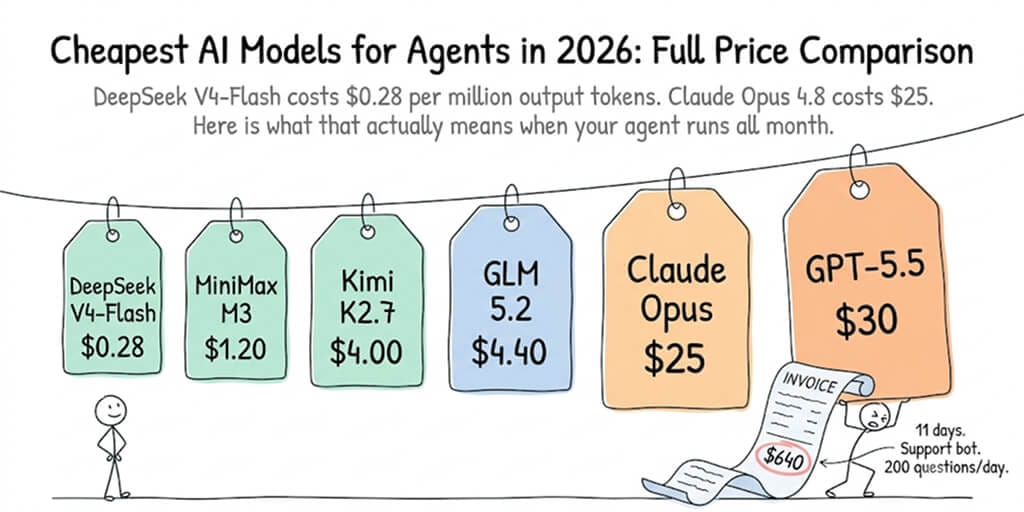
The modern developer ecosystem in July 2026 is characterized by intense competition among a handful of dominant architectures. Alongside DeepSeek V4-Pro, platforms such as OpenAI's GPT-5.5, Anthropic's Claude Opus 4.8, and Alibaba’s Qwen 3.6 Max-Preview are locked in a relentless battle for developer mindshare and enterprise contracts.
The following verified data table outlines the core technical specifications, benchmark metrics, and economic realities defining the current market landscape:
| Model Name | Primary Developer | Relative Cost Factor | SWE-Bench Score (%) | Primary Enterprise Strength |
|---|---|---|---|---|
| DeepSeek V4-Pro | DeepSeek | 1x (Baseline) | 78.4% | Extreme cost efficiency, mass deployment, multi-language refactoring. |
| Claude Opus 4.8 | Anthropic | ~18x - 22x Higher | 79.1% | Nuanced architectural reasoning, secure enterprise guardrails. |
| GPT-5.5 | OpenAI | ~20x Higher | 79.5% | Deep ecosystem integration, comprehensive agentic workflows. |
| Qwen 3.6 Max-Preview | Alibaba Cloud | ~2x - 4x Higher | 76.8% | Multilingual code generation, high-throughput batch processing. |
Industry & Market Implications: Winners, Losers, and Economic Realities
The arrival of a model that matches elite coding benchmarks at one-twentieth of the cost has sent shockwaves through global financial markets and corporate boardrooms. The market dynamics can be clearly categorized:
- The Winners: Enterprise CTOs and Agile Startups. Organizations burdened by high R&D expenditures on AI tooling are experiencing immediate margin expansion. Smaller engineering teams can now deploy sophisticated automated code generation pipelines that were previously reserved for Fortune 500 tech titans.
- The Squeezed: Legacy Foundation Model Providers. OpenAI, Anthropic, and other Western labs are facing intense margin compression. While their models still retain slight advantages in ultra-niche reasoning or proprietary enterprise integrations, the psychological barrier of paying a 20x premium is dissolving. Pricing power is rapidly shifting from model providers to the end-users.
- Cloud Infrastructure and Hyperscalers. Cloud service providers that heavily invested in dense GPU server fleets must now adapt to a world where model efficiency reduces raw compute demand per inference task. However, this volume drop is partially offset by a massive surge in total global API call volume as lower costs unlock previously unviable use cases.
From a risk mitigation perspective, corporate compliance officers are also weighing the geopolitical dimensions of adopting models developed outside traditional Western jurisdictions. Questions surrounding data sovereignty, code telemetry, and regulatory compliance under evolving EU and U.S. frameworks remain top-of-mind for financial institutions and defense contractors evaluating DeepSeek V4-Pro.
Frequently Asked Questions (People Also Ask)
Is DeepSeek V4-Pro actually as good as GPT-5.5 for complex software engineering?
Yes. Rigorous, independent evaluations on complex coding benchmarks such as SWE-bench indicate that DeepSeek V4-Pro scores within a fraction of a percentage point of GPT-5.5 and Claude Opus 4.8. While Western models occasionally retain marginal superiority in highly specialized, multi-step agentic reasoning, DeepSeek V4-Pro matches or exceeds them in standard software development, debugging, and refactoring tasks.
Why is DeepSeek V4-Pro so much cheaper than Western AI models?
The cost disparity stems from architectural efficiencies, specifically advanced Mixture-of-Experts (MoE) designs, optimized sparse attention mechanisms, and highly efficient hardware-software co-design. These innovations drastically reduce the active parameter count required during inference and training, cutting power and compute requirements by up to 20 times compared to dense legacy models.
What are the enterprise security and compliance risks of using DeepSeek for coding?
Enterprise adoption requires careful evaluation of data telemetry, API hosting jurisdictions, and compliance with local regulatory frameworks such as GDPR or upcoming U.S. federal AI guidelines. While API providers offer enterprise-grade privacy tiers, organizations handling classified intellectual property or strict financial data must audit their third-party vendor agreements and consider private-cloud deployments where applicable.
How will this 20x cost reduction impact developer jobs and salaries?
Rather than replacing developers, the dramatic reduction in AI coding costs is superintending a shift toward higher-level system architecture and product management. By lowering the friction of writing boilerplate code and executing routine debugging, individual developers are empowered to manage larger, more complex codebases, thereby increasing overall engineering output and velocity.
Future Outlook: What Comes Next in the AI Coding Wars
As we look toward the remainder of 2026 and into 2027, the trajectory of the artificial intelligence coding market points toward permanent commoditization of raw intelligence. The era where a few labs could charge exorbitant rents for foundational code generation is drawing to a close.
Key milestones to watch over the next twelve months include:
- Aggressive Counter-Pricing: Expect Western labs to introduce aggressively priced distillation models and tiered subscription structures to defend their enterprise market share against DeepSeek's relentless pricing pressure.
- Hardware Adaptation: Semiconductor manufacturers will accelerate the development of specialized inference chips optimized specifically for sparse MoE architectures, further driving down operational costs across the board.
- Regulatory Interventions: Policymakers in Washington, Brussels, and Beijing will likely scrutinize cross-border AI deployment and open-science dissemination, introducing new compliance frameworks that could reshape global enterprise procurement strategies.
Ultimately, the triumph of DeepSeek V4-Pro demonstrates that algorithmic efficiency is catching up to—and in some cases outpacing—brute-force compute scaling. For the global technology sector, this democratization of elite coding capability marks the dawn of a highly competitive, cost-disciplined, and hyper-productive new era.