Beyond Stablecoins: The Institutional Architecture Reshaping On-Chain Money and Global Capital Allocation
Test Our Free AI & Tech Utilities Suite
Calculate LLM API token costs, analyze article dwell-time, or simulate tech DCA returns.
A landmark McKinsey & Company analysis reveals a $4 trillion market evolution, shifting commercial banking, cross-border settlement, and cloud compute architecture away from retail-centric tokens toward programmable enterprise liquidity.
Executive Takeaways
- The $4 Trillion Scale Gap: Traditional retail stablecoins represent merely the tip of the iceberg, whereas the true addressable market for institutional on-chain infrastructure, tokenized commercial bank money, and programmable ledger architecture scales toward a $4 trillion macroeconomic reality.
- Asian Market Dominance: Regulatory sandboxes and progressive digital asset frameworks across Singapore, Hong Kong, and Japan are establishing Asia as the undisputed epicenter for enterprise-grade on-chain liquidity deployment.
- Infrastructure Scalability & Risk Mitigation: Chief risk officers and treasurers are demanding institutional-grade risk mitigation, zero-knowledge privacy layers, and enterprise ROI that legacy public blockchains cannot guarantee without hybrid cloud compute integration.
- Corporate Capital Allocation Shift: Multinational corporations are overhauling internal treasury management systems to leverage atomic settlement, drastically reducing trapped working capital and optimizing cross-border valuation multiples.
The Paradigm Shift: Moving Past Retail Stablecoins
For the better part of a decade, the conversation surrounding digital assets and distributed ledger technology (DLT) remained myopically tethered to retail stablecoins—pegged digital tokens primarily utilized for crypto-asset trading on decentralized exchanges. However, a comprehensive structural evaluation released by McKinsey & Company signals a tectonic shift in global finance. Titled “Beyond stablecoins: The emerging architecture of on-chain money,” the report outlines how commercial banking institutions, central banks, and Fortune 500 treasuries are rapidly transitioning from speculative crypto experimentation to robust, enterprise-grade on-chain infrastructure.
This evolution is no longer driven by retail speculation or fringe fintech startups. Instead, it is being captained by global systemically important banks (G-SIBs) and multinational corporations seeking radical enhancements in capital allocation efficiency, operational risk mitigation, and liquidity management. As legacy financial plumbing—characterized by T+1 or T+2 settlement cycles, correspondent banking friction, and fragmented messaging standards—shows structural fatigue, the financial sector is embracing programmable money as an essential upgrade to global cloud compute architecture and enterprise workflows.
Decoding the $4 Trillion Reality and the Scale Gap
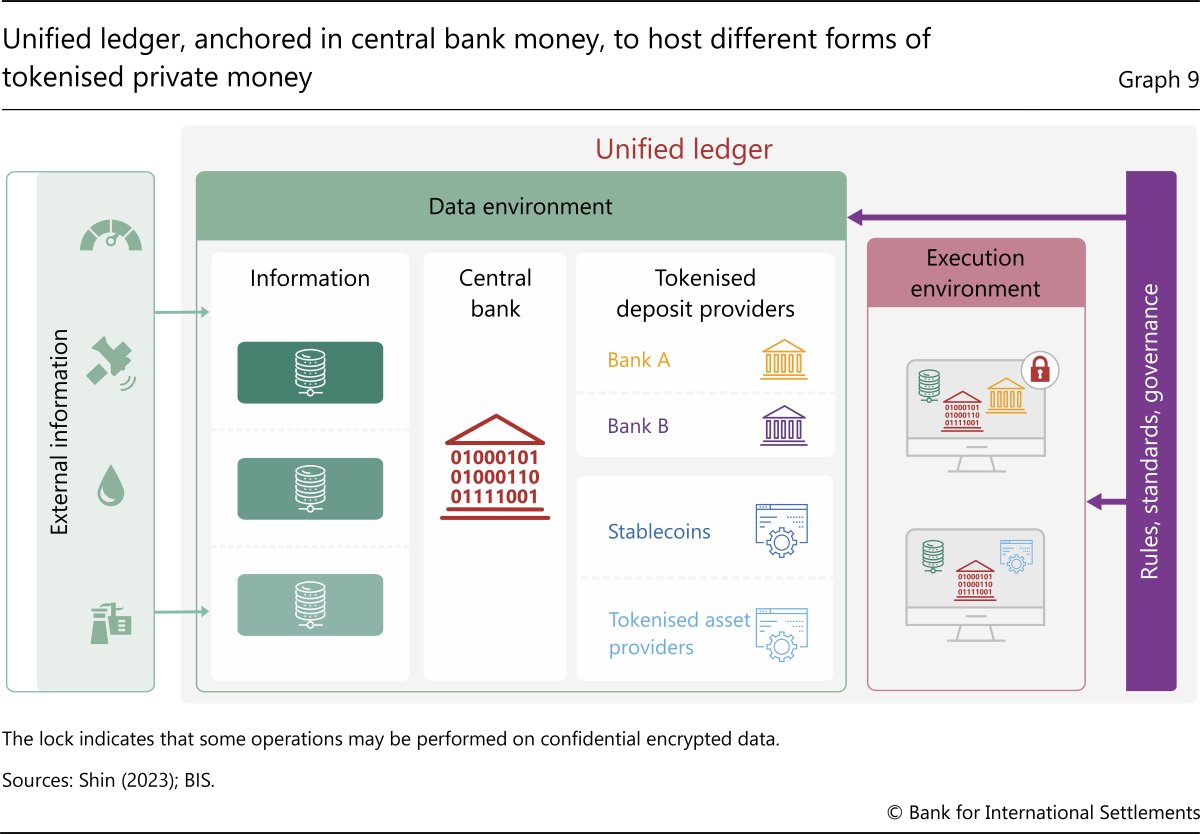
At the core of McKinsey’s findings is a stark realization: the current circulating volume of public stablecoins represents a fraction of what on-chain financial architecture will ultimately intermediate. The report identifies a staggering "scale gap" approaching the $4 trillion threshold, driven by the digitization of wholesale commercial bank money, tokenized deposits, and regulated liability networks (RLN).
Traditional financial institutions have historically struggled with the dichotomy between public, permissionless ledgers and proprietary, closed-loop systems. The emerging architecture bridges this chasm by deploying institutional-grade privacy controls, cryptographic compliance layers, and interoperable ledger frameworks. When a multinational conglomerate moves billions of dollars across multiple jurisdictions, the ability to execute atomic, instantaneous settlement via tokenized commercial bank deposits eliminates days of trapped liquidity, directly optimizing balance sheet valuation multiples and enhancing enterprise ROI.
Spotlight on Asia: The Vanguard of Regulatory and Technological Innovation
While Western financial hubs have frequently wrestled with regulatory ambiguity and fragmented enforcement actions, Asia’s leading financial centers have seized the initiative. McKinsey’s analysis highlights the pivotal role played by regulatory bodies in Singapore, Hong Kong, and Japan in establishing clear legal frameworks for digital money and tokenized assets.
Through structured regulatory sandboxes—such as the Monetary Authority of Singapore’s (MAS) Project Guardian—financial institutions are actively testing cross-border foreign exchange transactions, asset tokenization, and programmable commercial bank money in live market environments. This proactive stance has positioned Asian jurisdictions as the primary testing grounds for the next generation of financial infrastructure, attracting immense venture capital, top-tier engineering talent, and institutional liquidity that might otherwise have sought refuge in traditional Western markets.
Comparative Architecture: Legacy Systems vs. Emerging On-Chain Money
| Metric / Dimension | Legacy Financial Architecture | Emerging On-Chain Architecture |
|---|---|---|
| Settlement Speed | T+1 to T+3 business days | Instantaneous (Atomic Settlement) |
| Intermediary Friction | High (Multiple correspondent banks) | Low-to-Zero (Peer-to-Peer institutional rails) |
| Capital Efficiency | Suboptimal (Significant trapped liquidity) | Maximized (Real-time cash pooling & sweeping) |
| Compliance & Risk | Siloed, manual KYC/AML audits | Programmable compliance & zero-knowledge proofs |
Industry Implications: Who Wins and Who Loses?
As McKinsey’s report underscores, this architectural migration will redraw the competitive landscape of global banking and financial technology.
The Winners: Progressive G-SIBs that aggressively integrate tokenized commercial bank deposits into their core treasury offerings will capture lucrative enterprise market share. Cloud compute and enterprise software giants providing secure ledger integration, cryptographic validation, and modular cloud architectures will see unprecedented enterprise adoption. Furthermore, corporate treasurers who embrace programmable liquidity will unlock billions in trapped working capital.
The Losers: Traditional correspondent banking networks reliant on legacy messaging frameworks and high cross-border transaction fee structures face severe disintermediation. Financial institutions slow to adapt to regulatory-compliant on-chain infrastructure risk seeing their corporate clients migrate to agile, digitally native competitors capable of instantaneous global settlement.
Frequently Asked Questions (People Also Ask)
What is the primary difference between retail stablecoins and enterprise on-chain money?
While retail stablecoins are typically issued by private entities on public blockchains primarily for crypto trading, enterprise on-chain money encompasses tokenized commercial bank deposits, wholesale central bank digital currencies (CBDCs), and regulated liability networks designed for institutional-grade balance sheet management, enterprise compliance, and atomic cross-border settlement.
Why is Asia playing a leading role in the adoption of on-chain financial architecture?
Asian financial hubs like Singapore, Hong Kong, and Japan have implemented clear, proactive regulatory sandboxes and legal frameworks. These initiatives provide the regulatory certainty required by major financial institutions to deploy capital, test tokenized assets, and build scalable on-chain infrastructure without fear of retroactive enforcement.
How does this emerging architecture impact corporate treasury management and enterprise ROI?
By eliminating multi-day settlement delays and correspondent banking friction, programmable on-chain money allows multinational corporations to achieve real-time cash pooling and instantaneous liquidity transfers. This dramatically reduces working capital requirements, minimizes counterparty risk, and enhances overall enterprise valuation multiples.
What role do cloud compute and infrastructure providers play in on-chain money deployment?
Enterprise-grade on-chain architecture requires robust cloud compute infrastructure to handle secure node operation, cryptographic verification, and zero-knowledge privacy layers. Major cloud and IT infrastructure providers act as the backbone connecting legacy core banking systems to decentralized ledger environments.
Future Outlook: Milestones to Watch
As the financial sector digests McKinsey’s findings, executive leadership teams must monitor several critical milestones over the next 12 to 36 months. First, watch for the formal transition of wholesale CBDC pilots in Asia and Europe from sandbox environments into production-grade, multi-currency live deployment. Second, observe how major cloud compute vendors integrate specialized DLT modules into their enterprise software offerings to satisfy strict risk mitigation and compliance standards.
Ultimately, the $4 trillion scale gap identified in “Beyond stablecoins: The emerging architecture of on-chain money” is not a speculative target—it is an economic necessity. Financial institutions and corporations that successfully modernize their technological stack to harness programmable liquidity will define the next era of global commerce, while those anchored to legacy rails face irreversible obsolescence.