The global financial architecture is undergoing its most profound structural mutation since the abandonment of the gold standard. For the better part of a decade, the digital asset narrative was dominated by retail speculation, highly volatile governance tokens, and the gradual rise of fiat-pegged stablecoins like USDT and USDC. However, a structural pivot—crystallized by recent landmark analysis from McKinsey & Company and accelerated by institutional convergence—reveals that the market has decisively entered a new era: the age of native on-chain money.
Far beyond simple tokenized dollars sitting in centralized ledgers, a sophisticated, programmable, and multi-layered infrastructure is taking shape. This emerging architecture encompasses tokenized commercial bank money, central bank digital currencies (CBDCs), and automated smart-contract execution layers designed to eliminate frictional drag in cross-border settlements, trade finance, and capital allocation. As legacy financial institutions grapple with compressed margins, infrastructure scalability challenges, and demanding regulatory compliance frameworks, the race to build and dominate the on-chain rails has become an existential priority for Tier-1 investment banks, central banks, and global market utilities.
Executive Takeaways
Test Our Free AI & Tech Utilities Suite
Calculate LLM API token costs, analyze article dwell-time, or simulate tech DCA returns.
- The $4 Trillion Scale Reality: The aggregate volume of on-chain liquidity, tokenized assets, and regulated digital settlement instruments has shattered historical ceilings, moving from an experimental sandbox to a multi-trillion-dollar macroeconomic reality.
- The Asian Pivot: Jurisdictions across Asia—led by Singapore, Hong Kong, and Japan—are outpacing Western counterparts by deploying highly integrated, regulatory-compliant public-private partnership models for on-chain money.
- Institutional Capital Allocation: Chief Information Officers and corporate treasurers are actively reallocating capital toward infrastructure scalability and cloud-compute-secured distributed ledger systems to capture enterprise ROI.
- Beyond Fiat Peels: The next generation of on-chain money introduces conditional programmability, real-time atomic settlement, and automated risk mitigation that render traditional T+1 or T+2 clearing cycles obsolete.
The Catalytic Shift: Moving Past Simple Tokenization
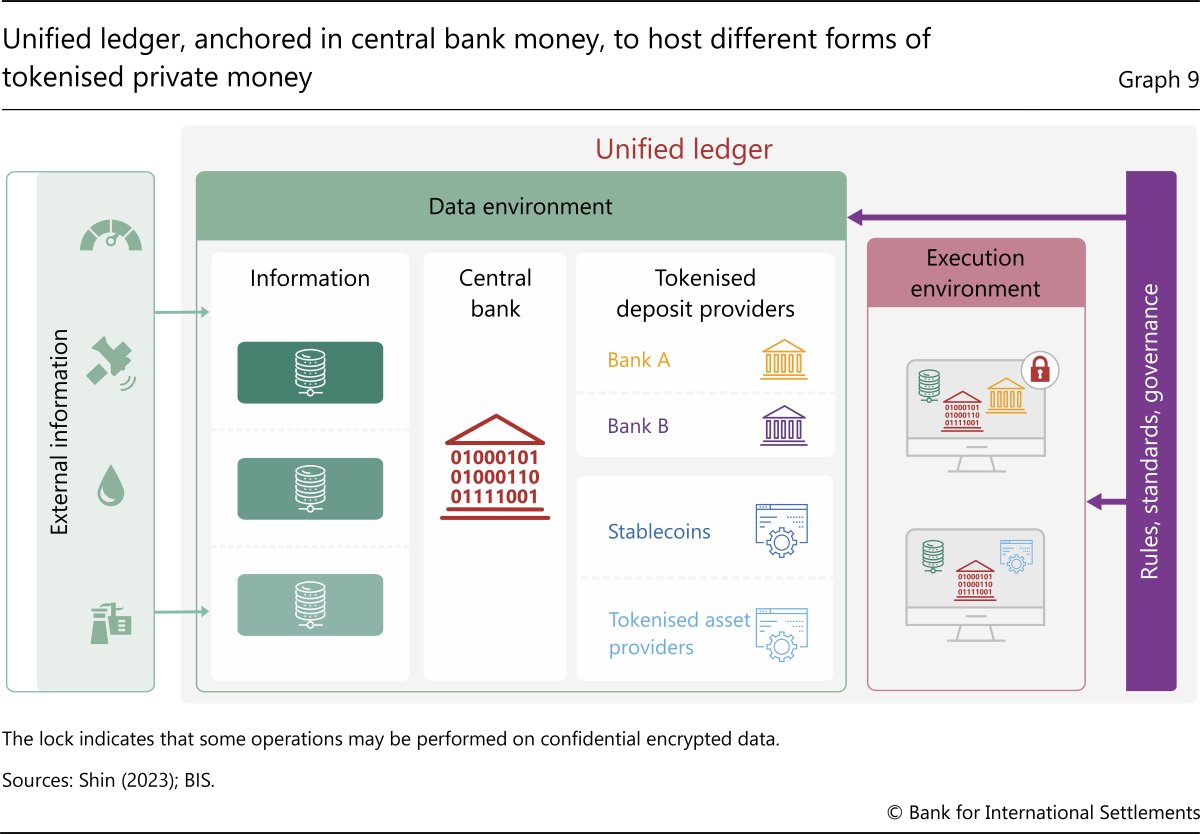
To understand the magnitude of the current transition, market participants must distinguish between first-generation digital assets and the emerging on-chain architecture. Early digital currency adoption focused primarily on replicating physical cash in digital wrappers. While stablecoins achieved remarkable product-market fit by offering instantaneous settlement and a stable store of value within crypto-native ecosystems, they operated largely in parallel to the traditional banking system, shadowed by persistent questions regarding reserve transparency, regulatory compliance, and systemic risk.
The McKinsey & Company findings outline a stark evolution: the market is demanding integrated, composable, and institutional-grade monetary networks. This evolution is driven by the realization that corporate treasury management, capital markets, and international trade finance require more than just a digital dollar; they require programmable liquidity. When money is natively embedded within a distributed ledger alongside tokenized debt instruments, equities, and real-world assets (RWAs), the mechanics of valuation multiples, capital velocity, and risk management are fundamentally transformed.
Consider the inefficiencies of legacy settlement systems. Correspondent banking networks involve multiple intermediaries, disparate messaging standards (such as legacy SWIFT implementations), and prolonged reconciliation windows. These friction points introduce counterparty risk and lock up trillions of dollars in non-productive capital buffers. The emerging on-chain architecture replaces these legacy pipelines with atomic settlement—where the exchange of assets and funds occurs simultaneously and conditionally via smart contracts, reducing settlement risk to absolute zero.
The Spotlight on Asia: Regulatory Pragmatism and Market Liquidity
While Western regulatory environments have frequently been characterized by fragmentation, enforcement-heavy postures, and jurisdictional turf wars, Asia has emerged as the undisputed epicentre of institutional on-chain financial engineering. Financial hubs including Singapore, Hong Kong, and Tokyo are executing deliberate, policy-backed strategies that combine regulatory clarity with high-performance technological infrastructure.
Through initiatives like the Monetary Authority of Singapore’s (MAS) Project Guardian, regional regulators are actively collaborating with global financial institutions to test asset tokenization and institutional DeFi applications in controlled, live environments. By establishing clear legal perimeters for tokenized commercial bank money and regulated stablecoins, these jurisdictions are attracting massive foreign direct investment and fostering deep market liquidity.
This pragmatic regulatory approach has positioned Asian financial centers as exporters of financial technology standards. Domestic institutions are not merely observing the transformation; they are deploying production-grade systems that integrate legacy core banking platforms with enterprise-grade public and private permissioned ledgers. The resulting ecosystem offers superior operational resilience, lower transaction costs, and enhanced auditability—metrics that resonate deeply with institutional boardrooms.
Verified Data & Metrics Breakdown
The following matrix outlines the core quantitative indicators, structural dimensions, and comparative metrics defining the transition into the emerging on-chain monetary architecture.
| Metric / Dimension | Legacy Financial Architecture | Emerging On-Chain Architecture | Economic & Strategic Impact |
|---|---|---|---|
| Settlement Velocity | T+1 to T+3 business days | Instantaneous (Atomic / Near Real-Time) | Eliminates intraday credit risk and frees up trapped working capital. |
| Intermediary Layer | Clearinghouses, correspondent banks, custodians | Cryptographically secured smart contracts | Dramatically compresses transaction costs and operating expenses. |
| Market Liquidity Pool | Siloed by geography, asset class, and operating hours | 24/7/365 global composable liquidity pools | Maximizes capital efficiency and drives tighter asset spreads. |
| Compliance & Auditing | Ex-post manual reconciliation, sampling audits | Real-time programmatic compliance & zero-knowledge proofs | Provides cryptographic assurance and absolute risk mitigation. |
| Aggregate Ecosystem Scale | Trillions in fragmented, legacy book-entry ledgers | Approaching $4 Trillion in on-chain assets and instruments | Establishes a critical mass for enterprise ROI and institutional adoption. |
Industry & Market Implications: Winners and Losers
As capital allocation shifts toward this new paradigm, distinct economic beneficiaries and casualties are emerging across the financial services ecosystem.
The Winners
- Forward-Thinking Financial Institutions: Tier-1 banks and asset managers that have invested early in tokenization engines and digital custody solutions are successfully capturing high-net-worth clients and institutional mandates.
- Cloud & Distributed Infrastructure Providers: Enterprise blockchain developers, secure cloud compute architecture firms, and oracle networks are seeing unprecedented demand for high-throughput, fault-tolerant infrastructure.
- Corporate Treasuries: Multinationals utilizing programmable on-chain cash management systems are achieving superior yield generation and frictionless global cash sweeping.
The Losers
- Legacy Intermediaries: Traditional payment processors, slow-moving correspondent banks, and manual clearing entities face severe revenue compression as atomic settlement bypasses their core value proposition.
- Regulators Lagging in Innovation: Jurisdictions that maintain ambiguous or overly punitive regulatory frameworks risk capital flight as financial institutions migrate operations to progressive Asian and Middle Eastern hubs.
Frequently Asked Questions (People Also Ask)
What distinguishes "on-chain money" from traditional stablecoins?
While retail stablecoins are typically pegged fiat tokens designed primarily for crypto-exchange trading, the emerging architecture of on-chain money includes tokenized commercial bank deposits, central bank digital currencies (CBDCs), and programmable wholesale settlement instruments. These tools are natively integrated with regulated financial systems, featuring embedded compliance, conditional execution via smart contracts, and institutional-grade governance.
How does the $4 trillion scale reality impact global capital markets?
Reaching this valuation milestone signals that on-chain liquidity has moved past the proof-of-concept phase. It provides the necessary market depth for institutional asset managers, pension funds, and corporate treasurers to execute multi-million-dollar transactions without incurring severe slippage, thereby validating distributed ledgers as legitimate, enterprise-grade financial utilities.
Why is Asia leading the adoption of institutional tokenization?
Asian financial hubs like Singapore, Hong Kong, and Japan have benefited from proactive, innovation-friendly regulatory bodies that actively partner with private-sector financial institutions. By establishing clear legal frameworks for digital assets and encouraging public-private sandbox testing, these regions have successfully fostered high-trust, high-liquidity environments that outpace Western regulatory fragmentation.
What are the primary risk mitigation benefits of programmable on-chain money?
Programmable money utilizes smart contracts to automate compliance, enforce regulatory parameters (such as KYC/AML checks at the token level), and execute atomic settlements. This drastically reduces counterparty risk, eliminates manual reconciliation errors, and ensures that funds can only move when predefined, cryptographically verified conditions are met.
Future Outlook: Milestones and Strategic Imperatives
The trajectory toward a fully realized on-chain monetary architecture is no longer a question of "if," but "when" and "how." Over the next 24 to 36 months, industry observers and strategic planners must monitor several critical inflection points:
First, the interoperability between private permissioned enterprise ledgers and public permissionless networks will determine the ultimate liquidity depth of the market. Cross-chain messaging protocols and standardized application programming interfaces (APIs) must mature to prevent the balkanization of digital liquidity.
Second, regulatory harmonization across G20 economies will dictate the speed of institutional capital deployment. As central banks finalize their frameworks for wholesale CBDCs and commercial bank tokenization, clarity on capital reserve requirements and accounting standards will unlock unprecedented balance sheet allocations.
Ultimately, executives who treat on-chain money as a peripheral technology risk marginalization. The emerging architecture represents the foundational operating system of twenty-first-century finance—one where speed, security, and programmability converge to redefine global commerce.