For the better part of a decade, the conversation surrounding digital assets and institutional finance has been dominated by a singular, albeit crucial, instrument: the stablecoin. Pegged to fiat currencies and sustained primarily by over-collateralization in short-duration U.S. Treasuries, stablecoins have successfully carved out a multi-billion-dollar niche in cross-border settlements and crypto-asset trading pairs. However, according to landmark research published by McKinsey & Company on May 21, 2026, titled "Beyond stablecoins: The emerging architecture of on-chain money," fixating solely on stablecoins misses a far more structural, systemic transformation.
The global financial system is quietly undergoing a migration toward a $4 trillion on-chain architecture. This next-generation paradigm moves past simple fiat-backed tokens into programmable, tokenized commercial bank money, wholesale central bank digital currencies (wCBDCs), and multi-lateral distributed ledger networks. For corporate treasurers, institutional asset managers, and global banking executives, understanding this shift is no longer a forward-looking thought exercise—it is a mandatory operational evolution directly tied to enterprise ROI, capital allocation efficiency, and long-term valuation multiples.
Executive Takeaways
- The $4 Trillion Paradigm Shift: McKinsey’s May 2026 research highlights that the next wave of on-chain finance extends far beyond retail and trading stablecoins, targeting a $4 trillion total addressable market in institutional settlement and tokenized commercial bank liabilities.
- Asia’s Regulatory and Technological Leadership: Asian financial hubs are accelerating past Western counterparts, establishing interoperable, public-private blockchain frameworks that integrate cross-border trade finance directly into programmable settlement layers.
- Infrastructure Scalability & Risk Mitigation: Modern on-chain architectures solve historical bottlenecks through enterprise-grade cloud compute integration, cryptographic privacy layers, and strict regulatory compliance mechanisms designed for tier-1 financial institutions.
- The Compression of Settlement Frictions: Transitioning from legacy T+1 and T+2 settlement cycles to atomic, 24/7/365 on-chain execution is projected to unlock unprecedented market liquidity and dramatically lower counterparty risk.
The Catalytic Shift: Moving Past the Stablecoin Era
Test Our Free AI & Tech Utilities Suite
Calculate LLM API token costs, analyze article dwell-time, or simulate tech DCA returns.
To understand the gravity of McKinsey’s findings, one must analyze the structural limitations of the current stablecoin market. While instruments like USDT and USDC have achieved massive circulating supplies, they remain fundamentally exogenous to the core banking ledger. They exist as private liabilities issued outside the traditional banking perimeter, carrying lingering questions regarding reserve transparency, contagion risk, and systemic liquidity access during macroeconomic stress events.
The emerging architecture documented in "Beyond stablecoins: The emerging architecture of on-chain money" bypasses these limitations by embedding the asset layer directly within regulated banking infrastructure. Tokenized commercial bank deposits—where commercial banks issue digital representations of client deposits on permissioned or permissionless ledgers—allow institutions to execute complex financial transactions with the safety of bank-grade deposit insurance and regulatory oversight.
This evolution is supported by massive investments in infrastructure scalability. Financial institutions are no longer experimenting with isolated proof-of-concepts; they are deploying enterprise-grade cloud compute architectures integrated with distributed ledgers to handle millions of transactions per second with sub-second finality. This structural upgrade fundamentally redefines how corporate treasuries manage liquidity, shifting from reactive end-of-day reconciliation to proactive, real-time cash management.
Spotlight on Asia: The Epicenter of On-Chain Innovation
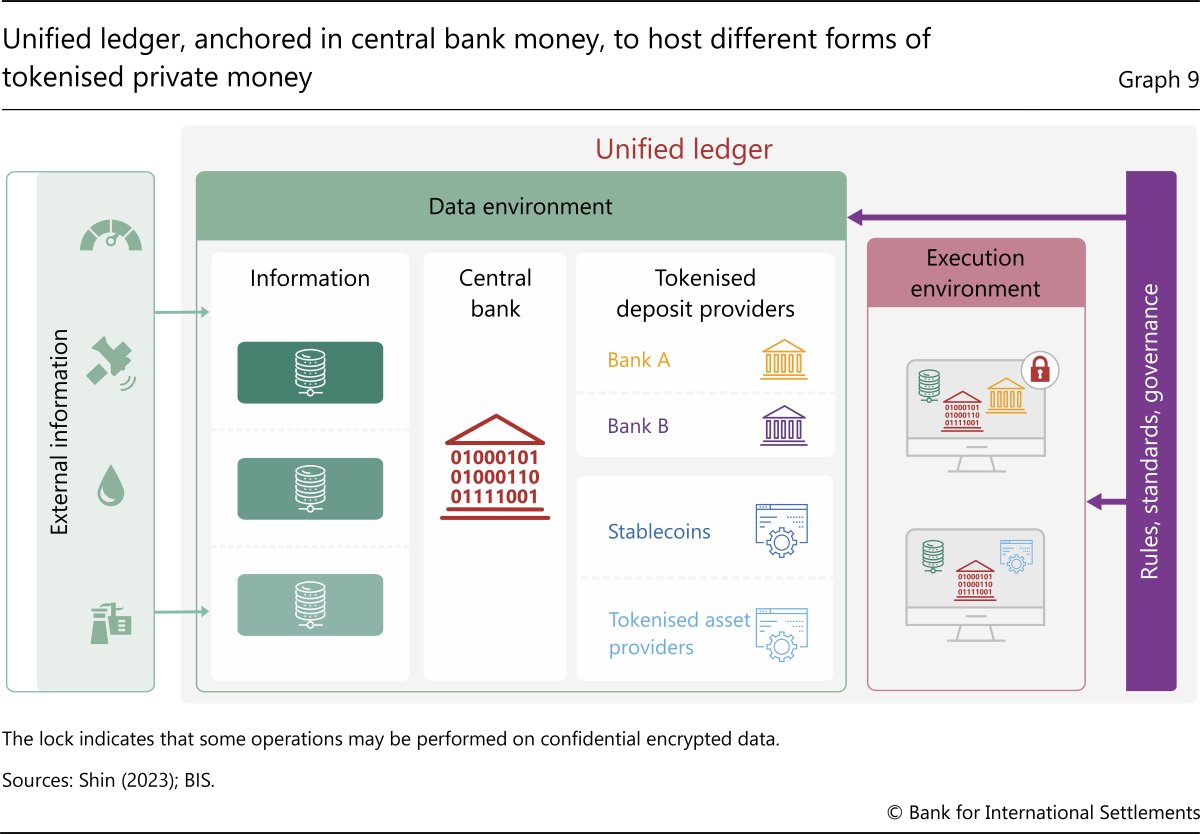
A critical revelation of the McKinsey analysis is the decisive role played by Asian jurisdictions in architecting the future of on-chain money. While regulatory fragmentation and legal ambiguity have frequently hampered adoption in Western markets, several Asian economies have adopted a proactive, collaborative approach between central banks, commercial lenders, and fintech innovators.
Singapore, Hong Kong, and Japan have systematically laid the groundwork for wholesale CBDC integration and tokenized asset ecosystems. Through initiatives like Project Guardian—spearheaded by the Monetary Authority of Singapore (MAS)—financial institutions are actively testing the cross-border execution of tokenized fixed income, foreign exchange, and wealth management products. These initiatives demonstrate that on-chain money is not merely a theoretical construct for retail speculation, but a high-performance engine designed to power institutional trade finance and global capital markets.
By establishing clear compliance frameworks that marry anti-money laundering (AML) protocols with decentralized privacy-preserving cryptography, Asian markets are capturing a dominant share of institutional capital allocation, setting a global benchmark that Western regulators are increasingly forced to study and emulate.
Verified Data & Metrics Breakdown
To quantify the magnitude of this transition, the following comparative matrix outlines the operational, technological, and structural divergence between legacy settlement systems, traditional stablecoins, and the emerging on-chain architecture highlighted by McKinsey & Company.
| Metric / Dimension | Legacy Financial Infrastructure (T+1 / T+2) | First-Gen Stablecoins (Retail / Crypto-Native) | Emerging On-Chain Architecture ($4T Market) |
|---|---|---|---|
| Primary Settlement Speed | Hours to days (Batch processing) | Seconds to minutes (Public chain dependent) | Atomic execution (Sub-second finality) |
| Issuer Liabilities | Central Bank / Commercial Bank Reserves | Private issuers (Reserves in short-term T-Bills) | Tokenized commercial bank deposits & wCBDCs |
| Regulatory Compliance | Deeply integrated, highly manual | Varies widely; often regulatory gray zones | Native, programmable compliance & privacy controls |
| Market Liquidity Access | Restricted by operating hours (9 AM - 5 PM) | 24/7/365 crypto-native liquidity | Global, 24/7 institutional liquidity pools |
| Core Value Proposition | Systemic trust, legal finality | Frictionless crypto trading pairs, remittances | Enterprise ROI, capital efficiency, risk mitigation |
Industry & Market Implications: Who Wins and Who Loses?
As the $4 trillion on-chain architecture matures, the reallocation of value across the global financial ecosystem will be profound. The transition will create clear corporate winners and unmitigated losers.
The Winners: Tech-Forward Banks and Infrastructure Providers
Commercial banks that successfully modernize their core ledger systems to support tokenized deposits will capture significant market share. By offering corporate clients programmable money that can execute conditional smart contracts—such as automated supply chain financing or dynamic escrow releases—these institutions will entrench high-margin client relationships. Furthermore, enterprise software providers, cloud infrastructure giants, and specialized blockchain tooling firms will experience sustained demand as financial institutions rush to upgrade their technology stacks.
The Losers: Legacy Intermediaries and Laggard Institutions
Financial institutions that rely on manual reconciliation, legacy messaging networks, and outdated compliance verification will face severe margin compression. As corporate treasurers migrate liquidity toward platforms offering instant atomic settlement and superior capital allocation metrics, high-friction, fee-heavy intermediaries will find themselves structurally uncompetitive.
Frequently Asked Questions (People Also Ask)
What is the core difference between stablecoins and the emerging on-chain money architecture?
While stablecoins are typically private digital tokens issued by non-bank entities pegged to fiat currency, the emerging on-chain architecture encompasses tokenized commercial bank money and wholesale Central Bank Digital Currencies (wCBDCs). This new framework is directly integrated into the regulated banking ledger, offering institutional-grade deposit safety, native regulatory compliance, and seamless interoperability with legacy core banking systems.
Why does McKinsey & Company estimate a $4 trillion market size for this transition?
The $4 trillion projection reflects the massive volume of institutional settlement, corporate treasury cash management, cross-border trade finance, and tokenized capital market assets that are primed for migration from legacy T+1/T+2 batch-processing systems to real-time, programmable distributed ledger networks.
How are Asian financial hubs leading the adoption of on-chain architecture?
Jurisdictions such as Singapore, Hong Kong, and Japan are driving adoption through proactive, public-private regulatory frameworks. Programs like Singapore's Project Guardian enable rigorous testing of tokenized institutional assets and cross-border wholesale CBDC settlements, establishing a blueprint that combines blockchain efficiency with strict adherence to global compliance standards.
What are the primary risk mitigation benefits of tokenized commercial bank deposits?
Tokenized deposits reduce counterparty risk and settlement latency by enabling atomic (instantaneous) delivery-versus-payment. Furthermore, because these tokens represent direct liabilities of regulated commercial banks, they eliminate the reserve transparency and systemic run risks historically associated with unregulated or opaque private stablecoin issuers.
Future Outlook: Milestones to Watch Through 2030
The evolution from stablecoin speculation to the $4 trillion on-chain money architecture represents one of the most critical structural transformations in modern economic history. Over the next several years, industry stakeholders must monitor key milestones that will dictate the speed and scale of global adoption.
Chief among these milestones is the formal harmonization of cross-border regulatory frameworks between the G7 economies and Asian financial authorities. As interoperability standards for tokenized commercial bank money solidify, the friction separating disparate domestic payment rails will rapidly dissolve. Additionally, corporate treasurers at Fortune 500 multinationals will increasingly demand native on-chain liquidity solutions from their banking partners, forcing laggard institutions to accelerate their digital transformation timelines.
Ultimately, the transition detailed in McKinsey’s landmark report signals the definitive convergence of traditional finance and distributed ledger technology. The institutions that master this new architecture will define the contours of global capital markets for decades to come, while those that hesitate risk obsolescence in an increasingly real-time, programmable global economy.