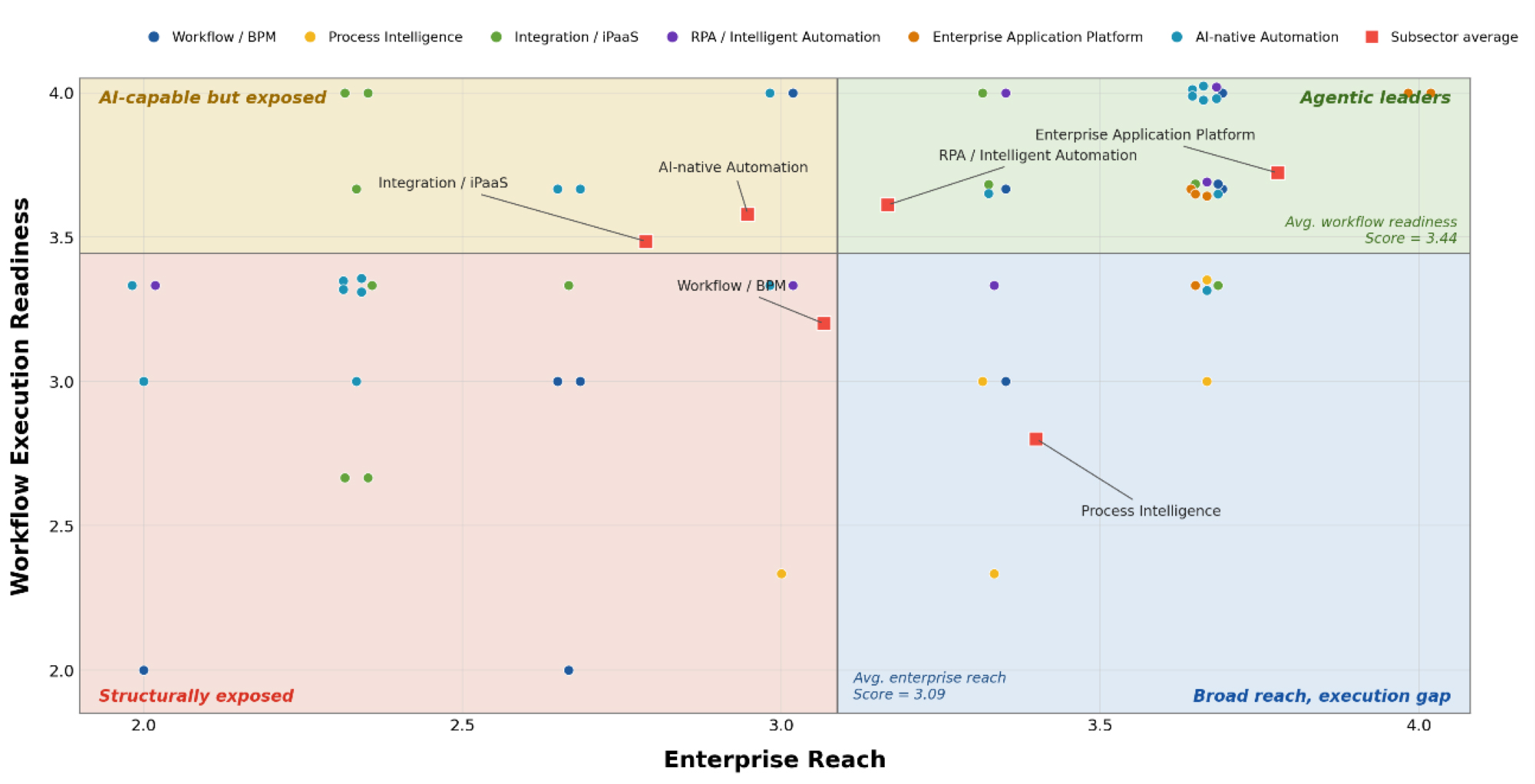
For the past three years, the corporate C-suite has been transfixed by a singular illusion: that large language models (LLMs) plugged into existing enterprise resource planning (ERP) stacks would automatically synthesize unstructured data into autonomous business value. Chief Information Officers rushed to deploy conversational chatbots, automated invoice processors, and basic robotic process automation (RPA) scripts, promising Wall Street immediate operational efficiency and margin expansion. Yet, as quarterly earnings roll in, a sobering reality check is rippling through corporate boardrooms. Traditional workflow automation has hit a structural wall. The next frontier—Agentic AI—demands a fundamental reinvention of enterprise data architecture.
According to comprehensive strategic insights released one week ago by global advisory powerhouse FTI Consulting, organizations that fail to move beyond legacy data silos risk forfeiting millions in misallocated capital. Most critically, landmark projections cited by FTI Consulting indicate that organizations prioritizing semantics in AI-ready data could improve autonomous agent accuracy by up to 80% while simultaneously reducing operational compute costs by up to 40%. As institutional investors scrutinize corporate capital allocation toward artificial intelligence, the differentiator between enterprise valuation expansion and expensive technological obsolescence is no longer model size—it is semantic readiness.
Executive Takeaways
- The Semantic Imperative: FTI Consulting data reveals that integrating semantic foundations into enterprise data strategies can boost agentic AI accuracy by up to 80%.
- Capital Efficiency: Proper semantic structuring cuts redundant cloud compute overhead and fine-tuning expenses, driving cost reductions of up to 40%.
- Beyond RPA: Agentic AI differs fundamentally from traditional workflow automation by executing complex, multi-step reasoning, dynamic tool usage, and autonomous decision-making across disparate enterprise systems.
- Valuation Multiples: Public markets are beginning to penalize companies with undisciplined AI spending, rewarding firms that establish verifiable, secure, and auditable data foundations.
The Anatomy of the Shift: From Static Automation to Autonomous Agents
Test Our Free AI & Tech Utilities Suite
Calculate LLM API token costs, analyze article dwell-time, or simulate tech DCA returns.
To understand the urgency behind FTI Consulting’s recent market analysis, one must examine the evolutionary fault line separating traditional workflow automation from true agentic systems. Traditional automation is deterministic. It operates on rigid, pre-programmed "if-then" logic trees. If a purchase order arrives in format A, route it to database B. While effective for repetitive, low-variance administrative tasks, deterministic software collapses the moment it encounters unstructured, ambiguous enterprise data—such as a complex legal contract modification buried inside an email thread or an irregular supply chain disruption report.
Agentic AI introduces probabilistic reasoning, autonomous planning, and iterative self-correction. Instead of merely executing a script, an agentic system receives a high-level strategic objective—such as "rebalance our European supply chain inventory to mitigate impending port strikes while maintaining strict working capital limits." The agent must independently query disparate repositories, evaluate vendor risk profiles, draft contracts, and execute transactions across enterprise resource systems.
However, this autonomy introduces acute operational vulnerabilities. When an LLM lacks contextual grounding, it suffers from severe hallucination, semantic drift, and catastrophic logic loops. In financial services, supply chain logistics, and healthcare, an inaccurate autonomous decision does not just fail quietly; it triggers immediate regulatory compliance breaches, massive financial liabilities, and severe brand erosion. This is precisely why institutional risk committees are demanding rigorous risk mitigation frameworks before granting autonomous execution permissions to software agents.
The Data Architecture Bottleneck: Why Raw Data is Failing LLMs
The dirty secret of the enterprise AI boom is that most corporate data lakes are digital swamps. Decades of uncoordinated cloud migrations, legacy database silos, and inconsistent metadata tagging have left Fortune 500 enterprises sitting on petabytes of unstructured, uncontextualized information. When enterprises attempt to deploy autonomous agents on top of this architectural disarray, performance degrades precipitously.
Standard vector embeddings and basic Retrieval-Augmented Generation (RAG) pipelines are proving insufficient for complex enterprise workflows. Vector databases excel at semantic similarity matching, but they frequently fail to capture hierarchical business logic, relational dependencies, and regulatory constraints. For instance, a vector search query might retrieve a compliance document from 2021 that has been superseded by a 2024 regulatory amendment, leading an autonomous financial agent to execute a non-compliant transaction.
This is where semantic modeling—incorporating knowledge graphs, explicit ontologies, and rich contextual metadata—becomes the ultimate competitive moat. By structuring enterprise data into interconnected semantic webs, organizations provide autonomous agents with a deterministic map of reality. The agents no longer have to guess relationships between disparate entities; they traverse validated semantic pathways, ensuring maximum accuracy, complete auditability, and radical reductions in token consumption and cloud compute architecture expenses.
Verified Data & Metrics Breakdown
| Strategic Metric / Parameter | Legacy Workflow Automation | Basic RAG / Unstructured AI | Semantic-Driven Agentic AI (FTI Consulting Benchmark) |
|---|---|---|---|
| Autonomous Task Accuracy | 35% – 50% (Rigid logic limits) | 55% – 70% (Prone to retrieval drift) | Up to 90% – 95% (Contextually grounded) |
| Overall Accuracy Improvement | Baseline | +15% to +25% | Up to 80% improvement |
| Operational Compute Cost Overhead | High maintenance / Manual exception handling | High token usage / Inefficient search queries | Up to 40% cost reduction via precision retrieval |
| Regulatory Auditability | High (Deterministic code paths) | Low (Black-box probabilistic outputs) | High (Traceable semantic knowledge graphs) |
Industry & Market Implications: Who Wins and Who Loses?
As chief financial officers and chief information officers re-evaluate their tech stacks in light of these structural realities, a profound reallocation of capital is underway across global markets.
The Winners: Enterprise Knowledge Graph Providers and Semantic Infrastructure
Infrastructure players specializing in enterprise knowledge graphs, ontological modeling, and semantic data fabrics are experiencing unprecedented demand. Venture capital and private equity firms are aggressively bidding up valuations for startups and mid-market firms that bridge the gap between messy enterprise databases and clean semantic inputs. Furthermore, enterprise software giants that embed semantic readiness natively into their cloud compute architecture are capturing dominant market share.
The Losers: Superficial AI Vendors and Unprepared Legacy Enterprises
Software vendors selling superficial "wrapper" applications—thin interfaces layered over generic foundation models without underlying data governance—are facing immediate market skepticism. On the corporate side, traditional enterprises that treated AI as a software purchase rather than an enterprise-wide data transformation initiative are finding their capital expenditures locked in low-ROI pilot purgatory, penalized by public equity markets for inefficient capital allocation.
Frequently Asked Questions (People Also Ask)
What is Agentic AI and how does it differ from traditional workflow automation?
Agentic AI refers to autonomous artificial intelligence systems capable of multi-step planning, dynamic tool utilization, and self-correction to achieve complex business objectives. Unlike traditional workflow automation—which relies on rigid, deterministic "if-then" scripts to execute repetitive tasks—agentic systems possess probabilistic reasoning capabilities, allowing them to adapt dynamically to unstructured data, ambiguous inputs, and unforeseen operational challenges.
Why does semantic data readiness improve AI accuracy by up to 80%?
Semantic data readiness involves structuring enterprise information using explicit ontologies, knowledge graphs, and rich contextual metadata rather than leaving it in unstructured silos. According to FTI Consulting, this gives LLMs and autonomous agents a precise, relational map of business logic and data dependencies. By eliminating ambiguity and contextual drift, agents can retrieve exact information and make correct decisions, drastically reducing hallucinations and boosting overall execution accuracy.
How does semantic architecture reduce enterprise cloud compute costs?
Unstructured data and poorly indexed databases force AI models to process massive amounts of irrelevant text, perform inefficient vector searches, and run expensive, repeated fine-tuning cycles. Semantic data architectures optimize retrieval-augmented generation (RAG) by pinpointing exact knowledge nodes. This precision slashes token consumption, minimizes redundant API calls, and reduces overall cloud compute architecture overhead by up to 40%.
What steps should CIOs take immediately to achieve agentic AI readiness?
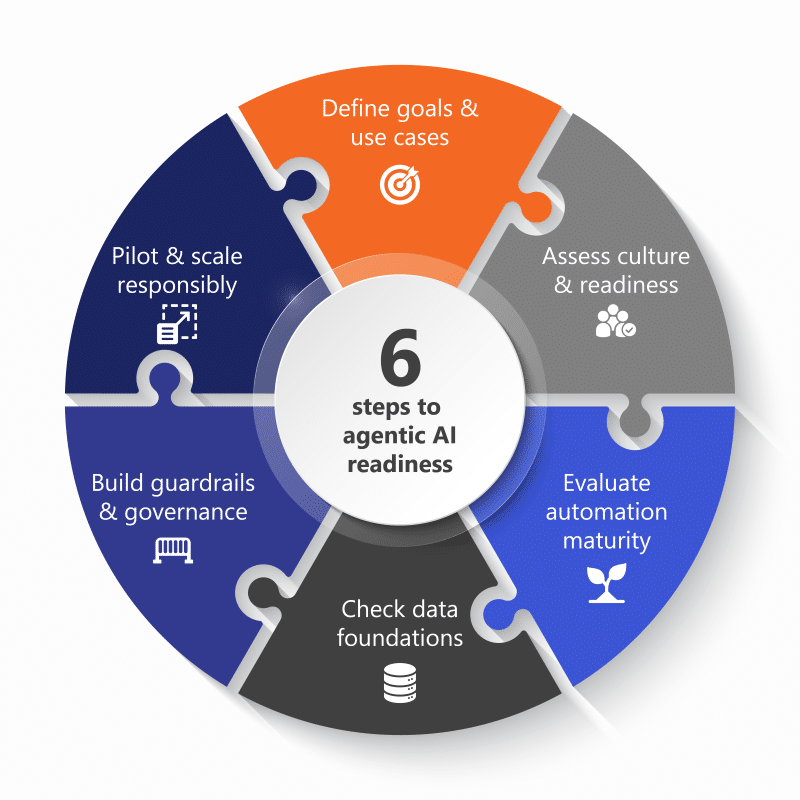
Chief Information Officers must pause undisciplined application deployments and conduct an exhaustive data governance audit. Priorities include mapping critical enterprise data sources into unified knowledge graphs, establishing strict metadata standards, implementing robust security and access controls for autonomous agents, and aligning IT infrastructure investments with measurable business value and regulatory compliance frameworks.
Future Outlook: Milestones to Watch
Over the next twelve to eighteen months, the corporate race toward agentic AI readiness will enter a decisive consolidation phase. Institutional investors will increasingly demand clear metrics regarding data architecture maturity during earnings calls, shifting away from generic generative AI announcements toward audited efficiency gains and capital return timelines.
Key milestones to monitor include the enterprise adoption rates of semantic data layers across regulated sectors such as banking, pharmaceuticals, and aerospace; the maturation of standardized protocols for agent-to-agent communication; and evolving regulatory frameworks concerning autonomous corporate decision-making. Organizations that treat semantic infrastructure not as an IT afterthought, but as a foundational balance-sheet asset, will dominate their respective industries. Those that remain mired in unstructured data silos will watch their margins erode under the weight of expensive, inaccurate, and unsustainable technology deployments.