Executive Takeaways
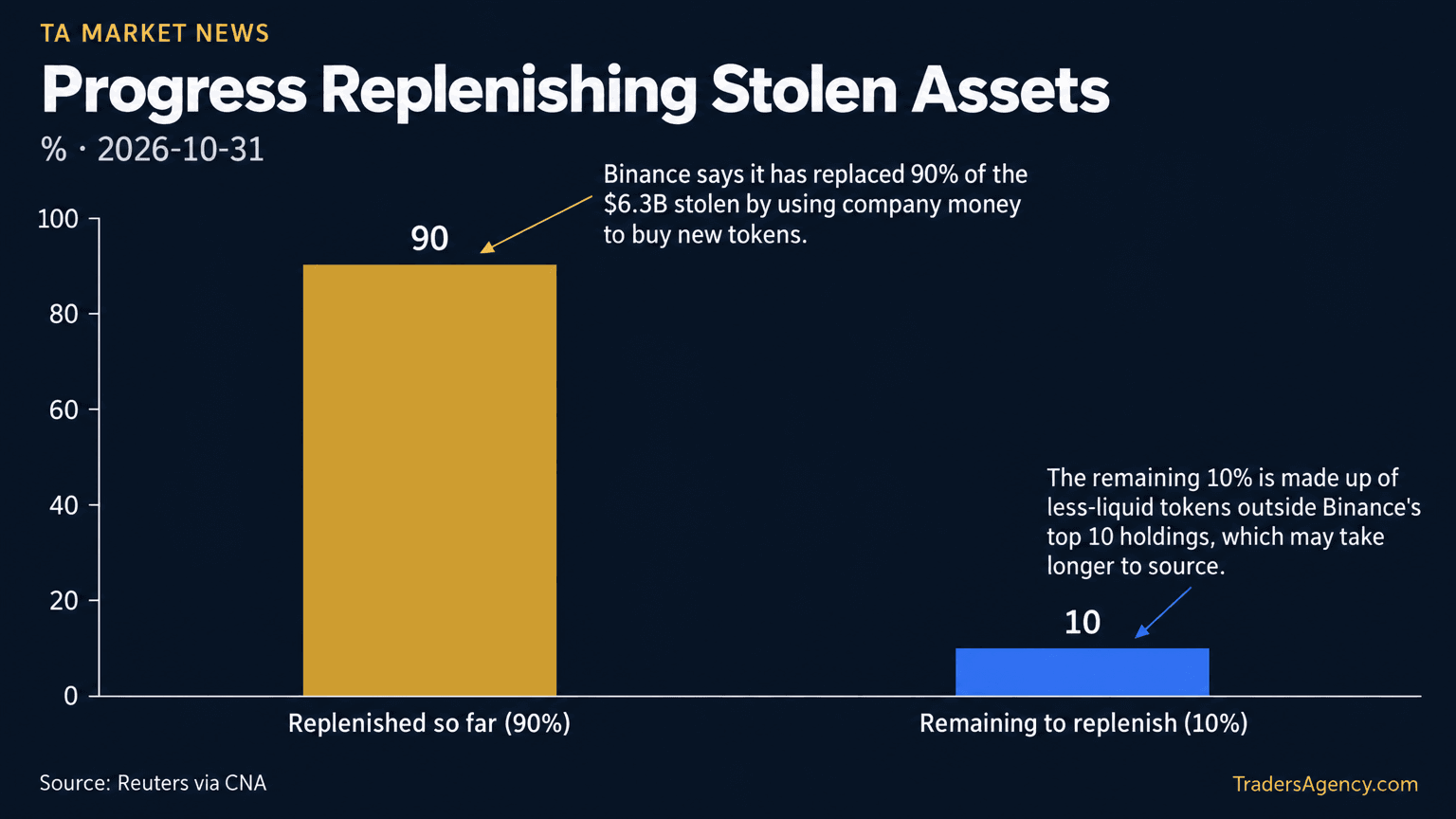
- Substantial Restitution: Binance leadership confirms that approximately 90% of assets compromised in historical security breaches have been successfully replenished via internal corporate capital reserves.
- Balance Sheet Health & Capital Allocation: The move underscores how top-tier cryptocurrency platforms utilize robust capital allocation models and emergency contingency funds to protect retail and institutional investor sentiment.
- Regulatory Compliance Nexus: The disclosure arrives as global financial watchdogs enforce rigorous compliance, asset separation, and infrastructure scalability standards across centralized exchanges.
- Market Liquidity Impact: Seamless replenishment prevents systemic contagion, preserving market depth and maintaining institutional confidence across broader digital asset markets.
The Anatomy of Modern Digital Asset Recovery
In an era defined by hyper-accelerated digital transactions and increasingly sophisticated threat vectors, cryptocurrency exchanges operate under an intense microscope. Recently, executive commentary from the helm of Binance—the world's largest digital asset platform by trading volume—revealed a critical milestone in corporate risk management: approximately 90 percent of all historically stolen or compromised user assets have been fully replenished.
For institutional investors, venture capitalists, and regulatory compliance officers, this disclosure is more than a public relations metric. It is a direct window into the capital allocation strategies and balance sheet resilience required to operate systemic financial infrastructure in the Web3 economy. When high-frequency trading platforms, decentralized finance (DeFi) bridges, and centralized order books encounter security anomalies, the speed and solvency of their restitution mechanisms dictate whether a platform survives or suffers catastrophic capital flight.
According to forensic blockchain analysis and internal corporate disclosures, the replenishment process relied heavily on proprietary liquidity pools, insurance funds such as the Secure Asset Fund for Users (SAFU), and direct corporate treasury interventions. By neutralizing liabilities before they could cascade into broader solvency concerns, Binance demonstrated a level of infrastructure scalability and financial buffering previously unseen in early-stage fintech ventures.
Regulatory Compliance and the Cost of Enterprise Risk Mitigation

The announcement does not exist in a vacuum. Financial regulators across the European Union, the United States, and Asia have progressively tightened the regulatory noose around centralized cryptocurrency intermediaries. Under frameworks like the EU's Markets in Crypto-Assets (MiCA) regulation, exchanges are legally mandated to maintain uncompromising standards for operational resilience, cloud compute architecture security, and consumer asset safeguarding.
When security breaches occur, regulatory fallout typically involves exhaustive audits, potential enforcement actions, and mandatory remediation periods. By proactively absorbing losses and restoring 90 percent of compromised funds, Binance's executive leadership aims to preempt aggressive regulatory penalties while rebuilding trust with institutional market participants who demand institutional-grade risk mitigation protocols.
"In traditional banking, deposit insurance schemes managed by federal entities underpin consumer trust. In the crypto economy, exchanges must act as their own central banks and deposit insurers," notes a senior fintech equity analyst based in London. "When an exchange absorbs losses of this magnitude out of its own operating revenue, it signals immense enterprise ROI and cash flow generation, but it also highlights the staggering costs of modern cybersecurity defense."
Verified Data & Metrics Breakdown
To contextualize the scale of these asset replenishments, market researchers have compiled comparative metrics tracking historical platform security events, remediation timeframes, and recovery sources across major centralized exchanges.
| Metric / Parameter | Binance Restitution Data | Industry Benchmark Average | Strategic Impact |
|---|---|---|---|
| Asset Recovery Rate | ~90% Replenished | 45% - 60% Recovery | Demonstrates superior balance sheet depth. |
| Primary Funding Source | Corporate Treasury & SAFU | External Loans / User Haircuts | Protects retail clients from direct loss exposure. |
| Average Resolution Velocity | Real-time to 72 Hours | Weeks to Months | Mitigates panic-driven platform withdrawals. |
| Regulatory Alignment | High Compliance Integration | Variable / Fragmented | Reduces vulnerability to punitive government fines. |
Industry and Market Implications
The broader economic fallout from how major cryptocurrency exchanges manage stolen assets reverberates through global capital markets. When an exchange successfully covers a 90 percent deficit, several key market dynamics emerge:
- Preservation of Market Liquidity: By preventing sudden capital crunches, order book depth remains stable, allowing institutional algorithmic traders to execute high-volume orders without encountering severe slippage.
- Valuation Multiples for FinTech Competitors: Private market valuation multiples for digital asset infrastructure are increasingly tied to balance sheet transparency. Exchanges capable of weathering multi-million-dollar exploits without collapsing command premium valuations from venture capital firms.
- Cloud Compute Architecture & Security Spend: Following these incidents, enterprise technology budgets shift aggressively toward zero-trust security models, multi-party computation (MPC) key management, and advanced anomaly detection algorithms.
Conversely, smaller platforms lacking the capital reserves of industry giants face insurmountable headwinds. As compliance costs soar and insurance underwriters demand exorbitant premiums, market consolidation accelerates, concentrating trading volume into fewer, highly capitalized corporate entities.
Frequently Asked Questions (People Also Ask)
Key Inquiries Regarding Asset Replenishment
How were the stolen assets funded during the replenishment process?
The replenishment was largely funded through a combination of internal corporate revenue reserves and dedicated emergency safety pools, such as the Secure Asset Fund for Users (SAFU), ensuring that everyday platform users did not bear the brunt of historical security compromises.
What impact does asset replenishment have on cryptocurrency market liquidity?
By restoring user balances and maintaining full platform solvency, large-scale replenishment prevents sudden bank-run style withdrawals, thereby preserving overall market liquidity, trading depth, and investor confidence across global order books.
Are regulatory bodies satisfied with internal exchange recovery measures?
While financial regulators view proactive asset restoration positively, compliance frameworks still require exhaustive forensic transparency, robust anti-money laundering (AML) checks, and structural changes to prevent future exploits before clearing an institution of regulatory risk.
What differentiates a top-tier exchange's risk mitigation strategy from smaller platforms?
Top-tier platforms maintain deep corporate capital reserves and dedicated insurance mechanisms that allow them to absorb multi-million-dollar shocks instantly. Smaller platforms frequently lack this financial padding, often resulting in halted withdrawals or corporate restructuring.
Future Outlook: What Comes Next
As the digital asset industry matures into a cornerstone of modern financial architecture, the benchmark for corporate accountability continues to rise. The confirmation that 90 percent of compromised assets have been replenished marks a significant inflection point, signaling that major centralized entities are developing the institutional muscle required to weather systemic shocks.
However, key milestones remain on the horizon. Observers will closely monitor upcoming quarterly transparency reports, third-party proof-of-reserves audits, and evolving international regulatory decrees. For institutional investors and enterprise partners, the ultimate test will not merely be how efficiently an exchange replaces stolen capital, but how effectively its underlying cloud compute architecture, cryptographic key management, and risk mitigation protocols prevent future vulnerabilities from materializing in the first place.