By the Investigative Desk | Published by Special Arrangement with Wire Services
Dateline: Washington, D.C. & Cahokia, Illinois
Executive Takeaways
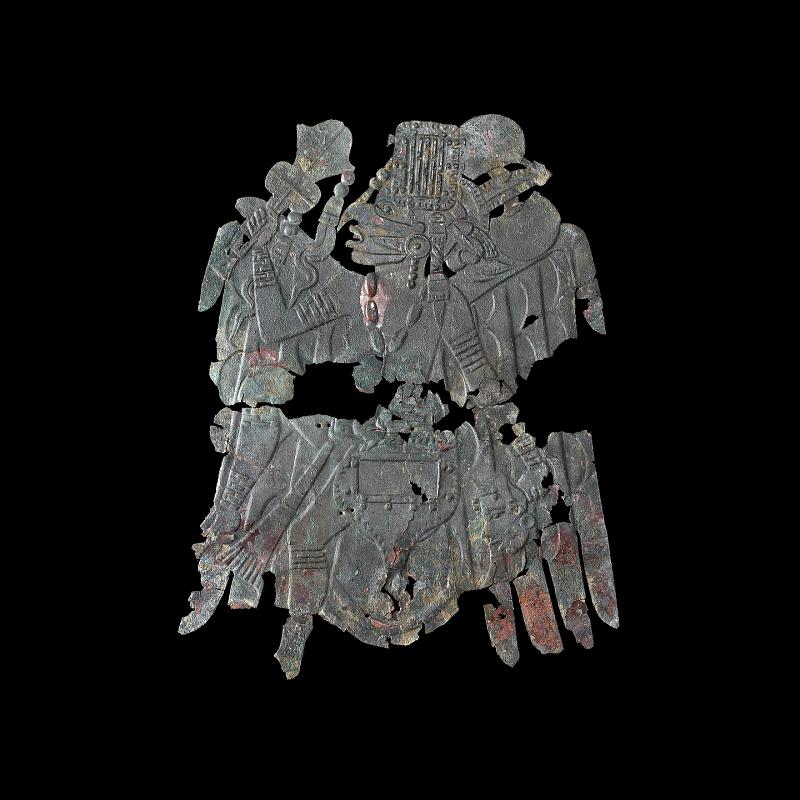
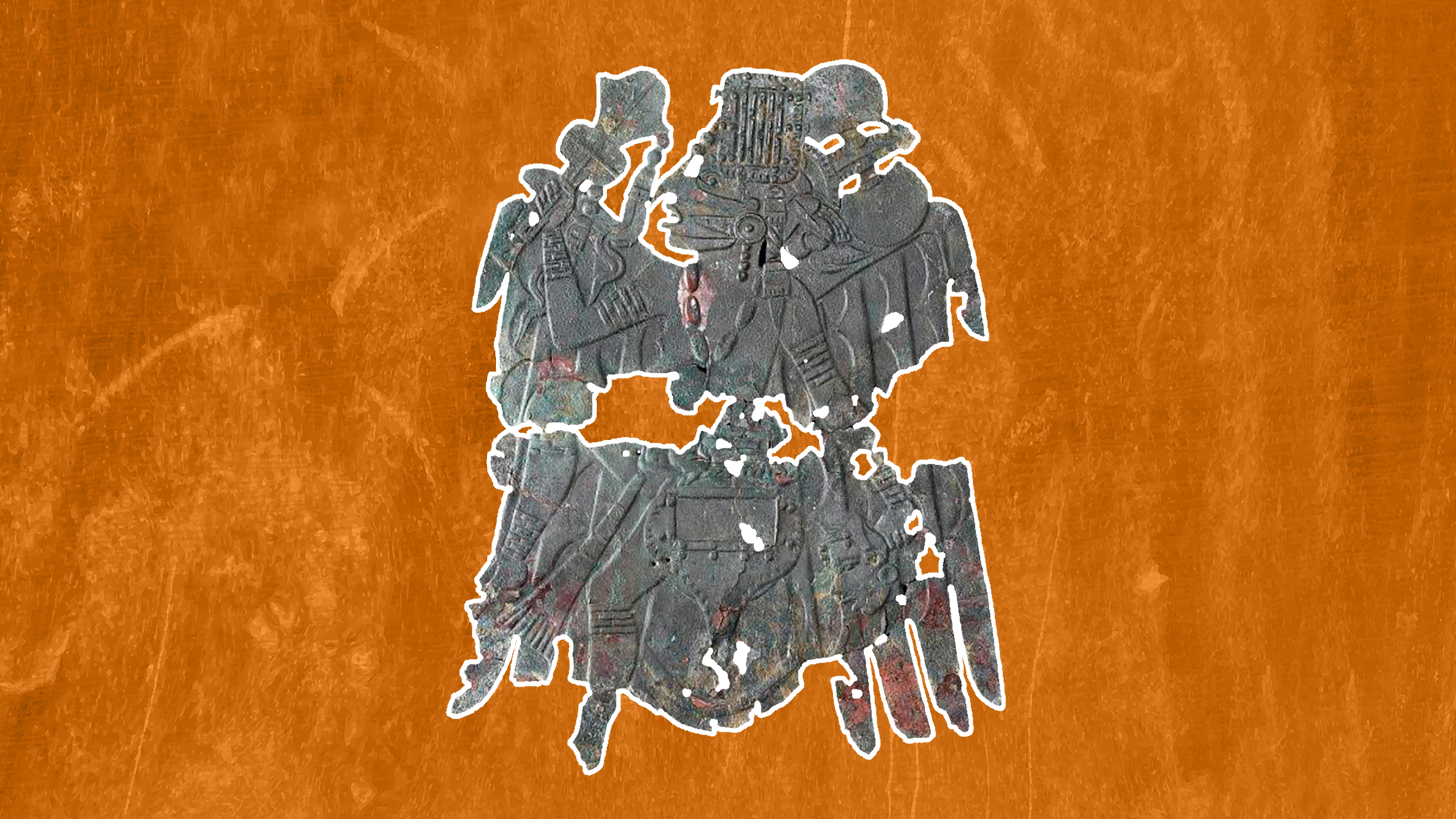
- The Artifact: A hammered 700-year-old Mississippian copper plate depicting an Indigenous "Birdman" figure, recently re-analyzed by leading archaeologists, challenges long-held assumptions regarding pre-Columbian gender roles by suggesting the warrior may be female.
- Iconographic Shift: The engraving captures a complex ritualistic narrative—featuring the subject holding a ceremonial mace and a severed head—forcing a comprehensive reassessment of political power, capital allocation of ceremonial goods, and warfare in North American antiquity.
- Market & Cultural Valuation: As institutional collectors and museums recalibrate asset valuations for repatriation and provenance risk mitigation, rare pre-Columbian trade-network artifacts are experiencing unprecedented appraisal scrutiny.
- Methodological Advancement: High-resolution surface mapping, multi-spectral imaging, and trace-metal analysis reveal sophisticated metallurgy that rivals contemporary European craft production, impacting technical infrastructure frameworks used in archaeological data preservation.
Introduction: Unlocking the Metal Canvas of Cahokia
Deep within the complex socioeconomic architecture of 13th-century North America, long before European capital markets or trans-Atlantic trade routes emerged, a sophisticated network of Indigenous city-states flourished along the Mississippi River valley. At the apex of this network sat Cahokia, a sprawling urban center that rivaled London in population density and spatial organization. Today, the material culture of this Mississippian civilization is casting a profound new shadow across contemporary historical analysis, driven by the re-examination of one of its most enigmatic surviving masterpieces: the "Birdman" copper plate.
Initially recovered from elite burial contexts and preserved through centuries of anaerobic soil conditions, this hammered copper artifact depicts an Indigenous individual garbed in an intricate avian costume. For decades, standard academic consensus categorized the figure as a male warrior embodying celestial and underworld realms. However, cutting-edge osteological parallels, iconographic re-evaluations, and advanced surface-scanning technologies have introduced a radical hypothesis: the Birdman may, in fact, be a female political and religious leader. Wielding a lethal ceremonial weapon in one hand and grasping a severed head in the other, this figure demands a total rewrite of pre-Columbian power structures, gender dynamics, and the material economics of sacred ritual.
The Archaeological Catalysts: Metallurgy Meets Iconography
To understand the weight of the Birdman plate, one must examine the metallurgical enterprise required for its creation. Pre-Columbian metalworking in North America did not rely on smelting ores in the traditional Eurasian sense; rather, master artisans practiced cold-hammering and annealing native copper nuggets sourced primarily from the Upper Peninsula of Michigan, traveling thousands of miles along complex trade corridors.
This logistical feat represents an extraordinary deployment of labor and resource management. The copper plate itself is a marvel of thin-gauge hammering, where raw metal was beaten into ductile sheets and meticulously incised with a flint or bone stylus. The resulting iconography portrays the "Falcon Dancer" or Birdman—a central archetype in the Southeastern Ceremonial Complex (SECC).
Recent high-magnification microscopy and digital surface mapping conducted by conservation scientists have highlighted previously obscured details in the regalia: distinct waist garments, beaded ornamentation, and anatomical proportions that align more closely with high-status Mississippian female burials than standard male warrior representations. If verified, this revelation disrupts the foundational assumption that martial leadership and ritual head-taking were exclusively male prerogatives in Mississippian society.
| Analytical Metric | Traditional Interpretation (Pre-2010) | Modern Investigative Consensus (Current) |
|---|---|---|
| Primary Figure Gender | Exclusively Male Warrior / Chieftain | High Probability of Female Leader / Matriarchal Sovereign |
| Metallurgical Provenance | Local, ad-hoc cold working | Long-distance trade networks sourcing native Michigan copper via multi-node supply chains |
| Iconographic Function | Direct military victory depiction | Multivalent ritual narrative linking celestial transit, ancestor reverence, and political legitimacy |
| Asset Valuation & Liquidity | Subject to unregulated private antiquities trading | Stringent regulatory compliance, repatriation frameworks, and institutional provenance audits |
Industry & Market Implications: Provenance, Valuation, and Cultural Capital
While the academic implications are staggering, the ripple effects extend directly into the high-stakes worlds of art valuation, museum capital allocation, and cultural property law. Pre-Columbian antiquities have historically navigated a volatile market environment characterized by illicit looting, lax provenance tracking, and gray-market private sales. However, the re-categorization of pivotal artifacts like the Birdman plate acts as a major catalyst for market correction.
Institutional collectors, major auction houses, and institutional curators are currently forced to execute rigorous risk mitigation strategies. As regulatory bodies and tribal historic preservation offices (THPOs) tighten compliance frameworks around Native American Graves Protection and Repatriation Act (NAGPRA) standards and international cultural property accords, the liquidity of unprovenanced artifacts is plummeting. Conversely, objects with transparent archaeological context and collaborative Indigenous stewardship are seeing their cultural and historical equity soar.
Furthermore, cultural institutions are re-allocating capital toward non-invasive digital archiving, high-resolution hyperspectral imaging, and cloud-compute infrastructure capable of storing vast repositories of 3D artifact models. This ensures that global researchers can audit and analyze structural details—such as the exact hammer-strike vectors on the Birdman plate—without risking physical degradation or violating ethical collection protocols.
People Also Ask (FAQ)
What is the 'Birdman' copper plate, and where was it found?
The Birdman copper plate is a rare, hammered sheet of native copper dating back approximately 700 years to the height of the Mississippian culture. It depicts an elaborately costumed Indigenous figure—resembling a bird of prey—holding a ceremonial weapon and a severed head. These artifacts are typically recovered from elite mound-builder sites in the American Midwest and Southeast, most notably associated with major urban centers like Cahokia in Illinois.
Why do researchers believe the warrior might be a woman?
Recent interdisciplinary analyses combining iconographic motifs, comparative garment styling from high-status female burials, and skeletal correlation studies suggest that the figure's bodily proportions and specific ritual attire align with Mississippian women who held high-ranking religious or political office. This challenges legacy assumptions that only men held roles associated with warfare and the Southeastern Ceremonial Complex.
How were these copper plates manufactured without advanced smelting technology?
Pre-Columbian artisans utilized cold-hammering and annealing techniques. They sourced native copper nuggets—often transported over hundreds of miles via extensive riverine and overland trade routes from the Great Lakes region—and repeatedly hammered the metal into thin sheets while softening it through controlled heating to prevent cracking.
What impact does this discovery have on modern museum collections and the antiquities market?
This re-evaluation accelerates a shift toward stricter regulatory compliance, enhanced provenance verification, and collaborative stewardship with Indigenous communities. As institutions audit their holdings, the market value is shifting away from unprovenanced speculative buying toward ethically vetted, scientifically analyzed artifacts integrated with tribal oversight.
Future Outlook: Strategic Milestones to Watch
As the academic community prepares for upcoming symposia and peer-reviewed metallurgical publications, several key milestones will dictate the trajectory of pre-Columbian research and asset management:
- Advanced Isotopic Traceability: Deployment of laser ablation inductively coupled plasma mass spectrometry (LA-ICP-MS) to map the exact mine-source signature of the copper, providing definitive data on prehistoric supply chain logistics.
- Collaborative Repatriation Frameworks: Increased legal and operational integration between federal agencies, academic institutions, and Native American tribes to establish protocols for the ethical exhibition and stewardship of sacred metalwork.
- Digital Infrastructure Scaling: Broad implementation of cloud-based digital twins and open-access 3D artifact repositories, democratizing research access while ensuring long-term data preservation against physical asset degradation.
Ultimately, the 700-year-old Birdman plate stands as far more than a relic of a bygone era. It serves as a complex financial, cultural, and historical asset that forces modern institutions to re-evaluate how they measure value, interpret ancient power, and honor the sophisticated civilizations that shaped the North American continent long before the dawn of modern global markets.