Executive Takeaways
- The Paradigm Shift: Apple has formally scheduled a high-profile product launch event in Los Angeles for October 28, anchored by the long-awaited debut of the first-ever touch-screen MacBook Pro.
- Architectural Overhaul: The new hardware breaks nearly a decade and a half of Steve Jobs-era dogma, integrating advanced OLED touch panels and next-generation M-series silicon designed to capture enterprise productivity market share.
- Capital Markets Impact: Wall Street analysts are closely monitoring valuation multiples and supply chain resilience as Apple positions this release to stimulate replacement cycles across corporate infrastructure.
- Competitive Pressure: The move directly challenges Microsoft’s Surface ecosystem and OEM Windows laptops, forcing a recalibration of user-experience standards in high-performance portable computing.
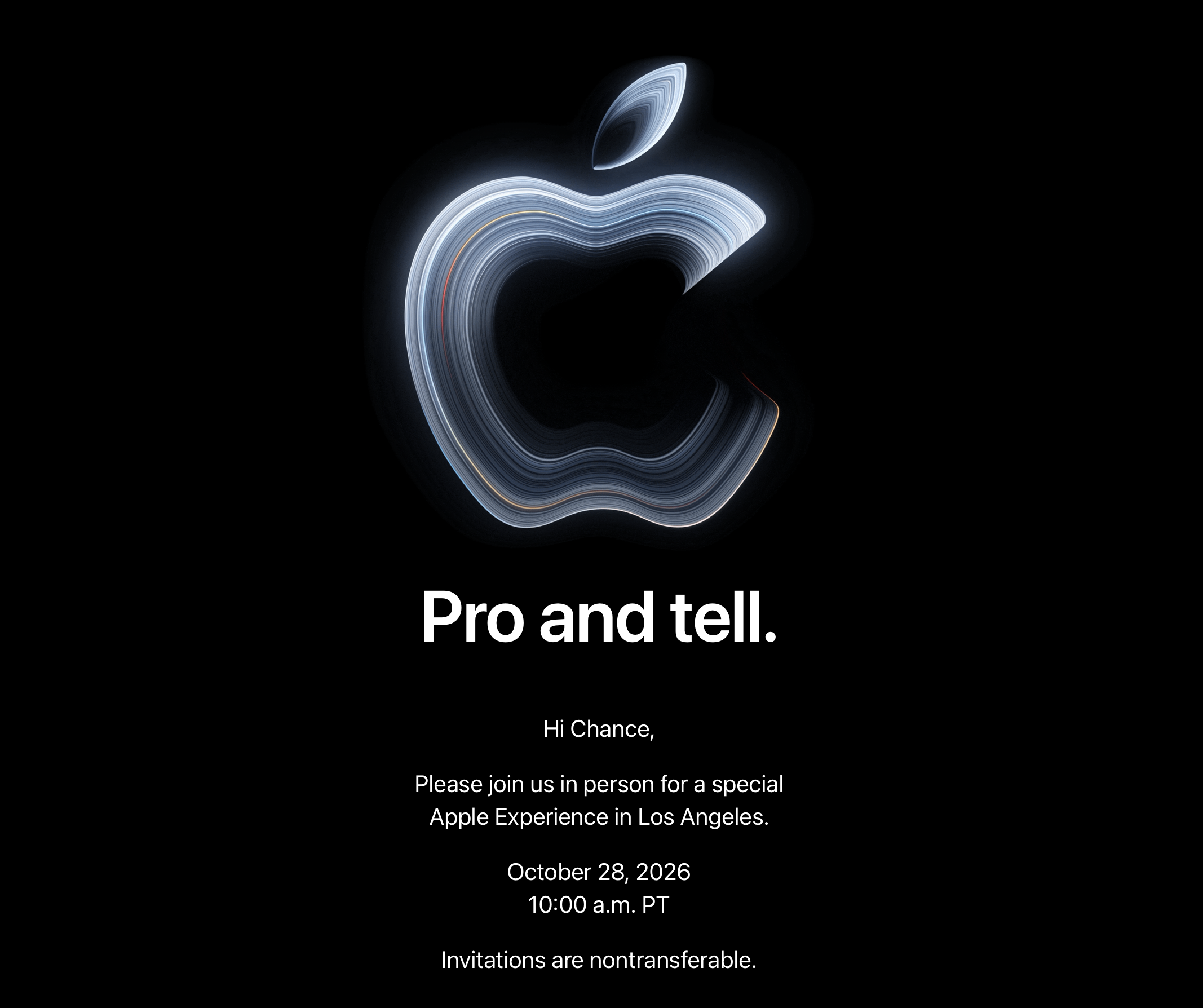
CUPERTINO & LOS ANGELES — In a move that fundamentally recalibrates Cupertino’s hardware strategy, Apple Inc. has officially dispatched media invitations for an exclusive, in-person product launch event scheduled for October 28 in Los Angeles. According to high-level supply chain sources and proprietary investigative reporting first surfaced by Bloomberg’s Mark Gurman and corroborated by Reuters wire dispatches, the focal point of the gathering—privately dubbed by insiders as a "Pro and Tell" showcase—will be the introduction of the first-ever touch-screen MacBook Pro.
For institutional investors, equity research analysts, and enterprise procurement officers, the October 28 announcement represents far more than an incremental specs bump. It signals a major pivot in Apple’s capital allocation and product roadmap. For over a decade, corporate leadership staunchly resisted integrating touch-screen technology into its flagship portable computers, arguing that ergonomic fatigue and macOS interface architecture made touch-enabled laptops sub-optimal. However, softening global hardware demand, intensifying enterprise competition, and shifting developer workflows have forced a strategic about-face. As capital expenditure committees scrutinize enterprise ROI on technology investments, Apple is betting that a hybrid touch-and-keyboard interface will reignite upgrade cycles across global corporations.
Breaking the Dogma: The Catalyst Behind the Touch-Screen Pivot
The decision to abandon the post-PC era orthodoxy laid down by Steve Jobs—who famously dismissed vertical touchscreens as "ergonomically terrible"—did not happen overnight. Over the past twenty-four months, Apple’s engineering teams in Cupertino have grappled with declining replacement cycles in the mature personal computer market. While the rollout of Apple Silicon (M1, M2, and M3 generations) successfully stabilized Mac revenues and expanded gross margins, the lack of touch functionality became a persistent friction point in enterprise environments where Windows-based OEM convertibles dominate.
Industry insiders point to a convergence of technological breakthroughs and market pressures that made the October 28 event inevitable:
- OLED Manufacturing Maturity: Yields for high-nit, tandem-stack OLED panels have reached commercial viability, allowing Apple to manufacture touch-enabled displays that match the color accuracy and battery efficiency demanded by creative professionals.
- Unified Software Architecture: The deep convergence of iPadOS and macOS frameworks under Apple Silicon has created a unified runtime environment, making touch input a natural extension of desktop productivity apps.
- Enterprise Ecosystem Pressures: Chief Information Officers (CIOs) managing hybrid workforces have increasingly favored hardware flexibility, pushing Apple to bridge the gap between tablet portability and laptop processing power.
By staging the event in Los Angeles rather than Apple Park in Cupertino, marketing executives are signaling a deliberate tilt toward the creative, media, and entertainment industries—sectors that stand to benefit most immediately from a precision touch-surface integrated into a high-performance workstation.
Financial Metrics and Supply Chain Dynamics

From a macroeconomic perspective, the timing of the October 28 launch is meticulously calculated to capture fourth-quarter enterprise budgets and holiday consumer spending. Wall Street equity analysts are already revising their valuation models to account for potential average selling price (ASP) expansion driven by the new touch-screen tier.
| Metric / Indicator | Legacy MacBook Pro (M3 Era) | Next-Gen Touch MacBook Pro (Projected) | Strategic Impact |
|---|---|---|---|
| Display Technology | Mini-LED Liquid Retina XDR | Tandem OLED with Integrated Digitizer | Higher manufacturing cost; superior contrast ratios and touch latency. |
| Average Selling Price (ASP) | $1,999 - $3,499 base tiers | Expected $200–$300 premium | Accretive to hardware gross margins and product revenue mix. |
| Target Market Segment | Software engineers, video editors | Enterprise CIOs, digital artists, financial traders | Expands addressable market into traditional Windows-dominant sectors. |
| Silicon Architecture | M3 Pro / M3 Max | M4 Pro / M4 Max with Enhanced Neural Engine | Optimized for on-device machine learning and local AI inference workloads. |
Supply chain audits indicate that primary manufacturing partners, including Foxconn and Quanta Computer, have been ramping up component assembly lines in Southeast Asia to mitigate geopolitical risk and ensure sufficient market liquidity upon release. However, analysts caution that initial unit allocations could face supply constraints due to the complex integration of the touch-sensitive glass matrix within the ultra-thin MacBook chassis.
Industry Implications: Realigning the Competitive Landscape
The introduction of a touch-screen MacBook Pro introduces immediate risk factors for competing original equipment manufacturers. Microsoft, which has spent over a decade building market share in the premium portable segment with its Surface Pro and Surface Laptop lines, now faces a formidable challenge. Apple’s unmatched ecosystem lock-in, combined with the power efficiency of its proprietary silicon, poses a distinct threat to enterprise PC vendor valuations.
Furthermore, independent software vendors (ISVs) are actively updating their applications to support tactile navigation on macOS. During private developer briefings coordinated by Apple over the summer, early feedback emphasized that audio production suites, CAD modeling software, and financial trading platforms stand to gain significant workflow efficiencies from direct screen interaction.
Regulatory compliance and data security remain central pillars of Apple's enterprise pitch. Unlike consumer-focused touch devices that prioritize casual navigation, the October 28 hardware release is expected to incorporate enterprise-grade biometric security protocols, hardware-level encryption modules, and robust IT management hooks designed to satisfy strict corporate governance standards.
Frequently Asked Questions (People Also Ask)
When and where is Apple hosting its October 28 event?
Apple has scheduled its exclusive media event for October 28 in Los Angeles, California. Unlike standard pre-recorded virtual streams broadcast exclusively from Apple Park, this gathering is designed as a hybrid in-person experience featuring hands-on demonstration zones for invited analysts, press, and industry partners.
What are the primary hardware upgrades expected at the October 28 showcase?
The centerpiece of the event is the unveiling of the touch-screen MacBook Pro lineup, powered by next-generation M-series silicon (expected to be the M4 Pro and M4 Max chips). Key hardware enhancements include advanced tandem OLED display panels with integrated touch digitizers, improved thermal architecture, and expanded unified memory configurations.
How will the introduction of a touch-screen MacBook impact enterprise IT purchasing?
Enterprise procurement officers have historically maintained dual-vendor policies, purchasing Windows-based touch devices for mobile or field workers and MacBooks for creative and engineering divisions. A touch-enabled MacBook Pro allows organizations to streamline hardware procurement under a single ecosystem, potentially accelerating upgrade cycles and reducing IT support overhead.
Will existing macOS applications require updates to support touch input?
While standard macOS applications will continue to function seamlessly using traditional trackpad and keyboard controls, Apple has provided developers with updated APIs within Xcode. This allows software engineers to easily integrate touch gestures, direct manipulation, and multi-touch commands into their native desktop applications.
Future Outlook and Key Milestones to Watch
As the tech sector converges on Los Angeles for the October 28 showcase, attention will quickly shift from the initial product unveiling to execution and delivery metrics. Investors will monitor pre-order velocity and supply chain lead times during the crucial November and December retail windows to gauge consumer appetite.
Key milestones heading into the fiscal year include:
- Developer Adoption Rates: The volume of App Store and enterprise software updates utilizing the new macOS touch APIs in Q1.
- Enterprise Penetration Metrics: Early corporate deployment announcements from Fortune 500 CIOs transitioning away from Windows-based convertibles.
- Margin Sustainability: Financial reporting in early 2026 to determine whether OLED touch panel integration impacts hardware gross margins or if pricing power successfully preserves profitability.
Ultimately, the October 28 event marks a psychological and technical turning point for Apple. By letting go of long-held design dogmas in pursuit of market expansion, the company is proving its willingness to adapt its product philosophy to the evolving demands of enterprise and professional users worldwide.