Pentagon Slams Tehran’s War Claims: U.S. Denies Iran Struck Unmanned Vessel in Strait Flare-Up
WASHINGTON & DUBAI — Tensions in the volatile Middle East spiked sharply today as the United States military flatly rejected claims by Iranian state media that Islamic Revolutionary Guard Corps forces successfully targeted and struck an American unmanned surface vessel in a critical regional waterway. The high-stakes war of words underscores the precarious security architecture governing one of the world's most vital energy transit choke points, even as broader regional conflicts continue to exact a devastating toll on civilian and military fronts.
The latest flashpoint erupted following provocative statements from Iranian military officials, who asserted that naval assets had intercepted and hit a U.S. drone ship operating in the Strait of Hormuz. Washington’s swift, categorical denial has cast a glaring spotlight on the psychological and informational warfare running parallel to physical confrontations across the Middle East. With global markets hypersensitive to any disruption in Gulf shipping lanes, the incident has immediately reverberated through international capitals, elevating regional risk premiums.
High-Stakes Confrontation: What Happened in the Strait?
According to reports emerging from state-backed media networks in Tehran, Iranian naval units engaged and struck an American unmanned surface vehicle (USV) operating within traditional shipping channels. The claim was framed by Iranian officials as a decisive response to alleged western incursions, intended to project strength domestically and signal deterrence against U.S. naval dominance in the Persian Gulf region.
However, the Pentagon pushed back aggressively against the narrative. U.S. Central Command (CENTCOM) officials confirmed that while American unmanned systems routinely patrol the Strait of Hormuz—a strategic artery handling roughly a fifth of the world's petroleum supply—no such strike occurred, and all U.S. naval assets remain fully operational and undamaged.
- The Core Claim: Iranian state media asserted a successful strike on an American unmanned ship in the strategic Strait of Hormuz.
- The U.S. Response: Washington categorically denied the report, labeling it fabricated and part of a broader campaign of regional posturing.
- Market & Strategic Impact: Energy traders and defense analysts are closely monitoring the corridor for potential retaliatory maneuvers or real-world escalations.
- Broader Context: The incident occurs against a backdrop of ongoing multi-theater conflicts spanning the Middle East, straining diplomatic and humanitarian frameworks.
Broader Mideast Realities: Casualties and Continuing Conflict
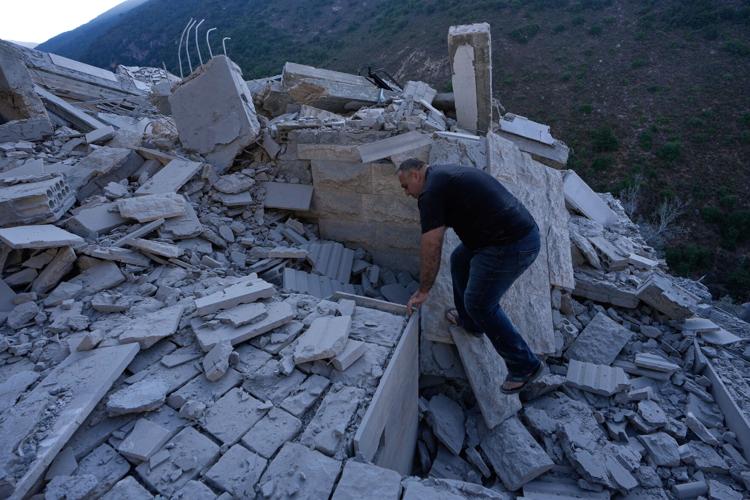
Beyond the maritime posturing in the Gulf, the wider regional landscape remains deeply scarred by persistent hostilities. Intelligence summaries and humanitarian updates highlight the grinding nature of ongoing conflicts across multiple fronts, where urban warfare and cross-border exchanges continue to displace populations and test international crisis management.
International monitors note a critical data deficit regarding the precise breakdown of casualties in recent engagements, with official tallies often failing to distinguish clearly between civilian non-combatants and active militants. This opacity has complicated humanitarian aid delivery and intensified diplomatic friction at the United Nations Security Council, where Western and Middle Eastern diplomats are locked in urgent discussions to prevent a wider conflagration.
| Key Parameter | Iranian Official Position | U.S. / Allied Assessment |
|---|---|---|
| Maritime Incident | Claimed strike on U.S. unmanned vessel | Categorically denied; zero asset damage reported |
| Operational Theater | Strait of Hormuz transit corridor | Routine, lawful international waters patrol |
| Information Warfare | Framed as defensive deterrence | Dismissed as domestic propaganda and posturing |
| Regional Stability | Heightened posturing and deterrence signalling | Enhanced naval readiness and defensive posture |
Why This Matters for Global Markets and Defense Strategy
The diplomatic friction over the alleged drone strike is far more than a war of words; it touches directly upon the fragile stability of global supply chains. The Strait of Hormuz serves as an indispensable maritime choke point for international crude oil shipments. Any credible threat to commercial or military vessels navigating these waters instantly triggers anxiety in energy markets, pushing up futures prices and forcing maritime insurers to reevaluate risk metrics.
For the defense establishment in Washington, the increasing deployment of unmanned surface and subsurface vehicles in the Middle East is designed precisely to project surveillance capabilities while keeping American sailors out of harm's way. Tehran's eagerness to claim a strike on such a vessel highlights a growing doctrinal focus on asymmetric warfare, where psychological victories and domestic optics often outweigh physical battlefield outcomes.
Looking Ahead: Navigating the Regional Precipice
As diplomatic channels remain strained, military planners on both sides are maintaining a high state of vigilance. Allied naval forces in the region have reiterated their commitment to maintaining freedom of navigation in accordance with international law, pledging to escort commercial traffic and protect critical infrastructure against asymmetric threats.
Ultimately, the episode serves as a sobering reminder of how quickly routine operations can be weaponized in the current geopolitical climate. With regional actors testing red lines across land and sea, market participants and foreign policy experts alike will be watching closely to see whether this war of words spills over into kinetic escalation.
Frequently Asked Questions
Did Iran actually strike a U.S. ship in the Strait of Hormuz?
No. The U.S. military has formally and categorically denied Iran's claims of hitting an unmanned vessel. Washington confirmed that all American assets in the region are operating normally and sustained no damage.
Why is the Strait of Hormuz so strategically critical?
The Strait of Hormuz is a narrow and vital waterway linking the Persian Gulf with the Gulf of Oman. A massive portion of the world's petroleum supply passes through this corridor daily, making it a critical pressure point for global energy security and international trade.