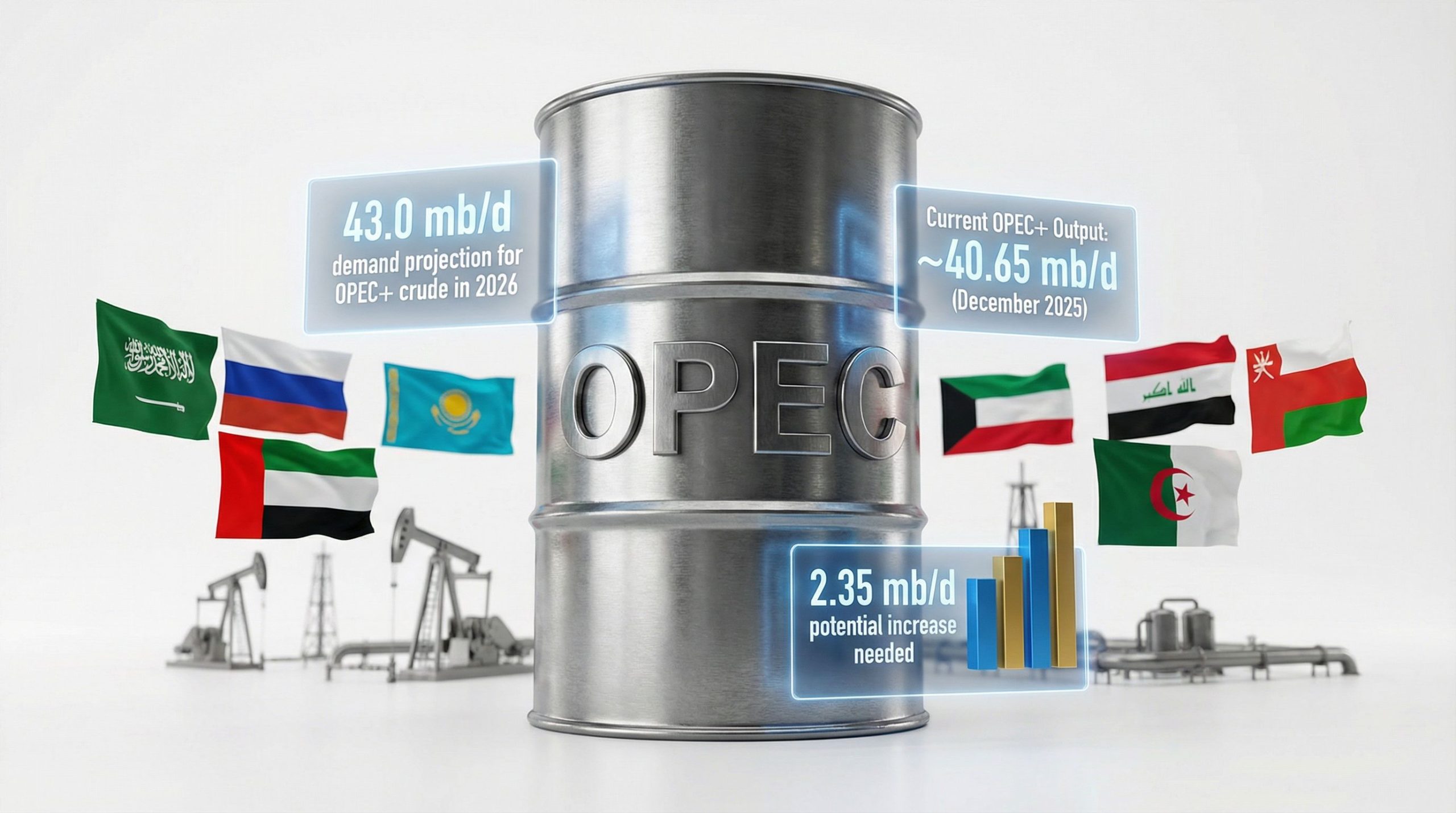
LONDON & NEW YORK — In a high-stakes compromise orchestrated across virtual and in-person sessions, the Organization of the Petroleum Exporting Countries and its allies, collectively known as OPEC+, have voted to maintain existing crude output targets through December. Beneath the veneer of market stability, however, internal deliberations reveal a fractured coalition bracing for a much more formidable strategic reckoning: navigating an impending supply glut and structural demand shifts slated for 2027.
For institutional investors, energy conglomerates, and sovereign wealth funds, the cartel's decision offers near-term price predictability at the expense of kicking fundamental structural dilemmas down the road. As capital allocation strategies face intense scrutiny against shifting macroeconomic baselines and evolving cloud compute architectures optimizing supply chains, energy markets remain tightly coiled. This investigative report breaks down the calculus behind the December rollover, the underlying macroeconomic pressures, and the looming 2027 supply-demand cliff.
Executive Takeaways
- Status Quo Maintained: OPEC+ confirmed it will hold December production levels steady, pausing planned phased-in output restorations to protect Brent crude benchmarks from falling below the crucial $70-$75 threshold.
- The 2027 Horizon: While near-term barrels remain managed, internal modeling indicates that rising non-OPEC production—particularly from the Americas—will collide with decelerating demand growth by 2027, forcing difficult quota cuts.
- Capital Allocation Friction: Major integrated oil companies are recalibrating upstream valuation multiples, balancing aggressive risk mitigation against shareholder demands for reliable dividend yields and share buybacks.
- Market Liquidity Dynamics: Energy trading desks report constrained market liquidity as algorithmic funds weigh geopolitical risk premiums against stubborn global inflation and shifting central bank monetary policies.
The Anatomy of a Compromise: Decoding the December Rollover
Test Our Free AI & Tech Utilities Suite
Calculate LLM API token costs, analyze article dwell-time, or simulate tech DCA returns.
The decision to keep December output targets steady was far from a foregone conclusion. For weeks, delegates from Riyadh to Moscow weighed competing pressures. On one side, several key producers pushed for a resumption of voluntary output cuts, arguing that defending market share is paramount in an environment marked by sluggish industrial recovery in China and persistent macroeconomic headwinds across the Eurozone.
Conversely, select members eager for fiscal revenue argued that holding back supply needlessly cedes market share to non-OPEC producers, particularly shale operators in the Permian Basin and offshore projects in Guyana and Brazil. The resulting consensus—to hold steady through December—is a classic exercise in risk mitigation. By preventing a supply surge during the shoulder months between autumn maintenance and peak winter heating demand, the cartel has bought itself time to model the efficacy of its production framework.
Financial analysts parsing the announcement note that enterprise ROI for upstream exploration and production (E&P) firms hinges heavily on this price defense. A disorderly unraveling of quotas during a seasonally soft demand period could have triggered a cascading sell-off in crude futures, compressing valuation multiples across the entire energy complex.
Beyond the Near-Term: Why 2027 Represents a Structural Precipice

While financial media remains fixated on month-to-month quota adjustments, senior energy strategists and cartel insiders are increasingly focused on a much harsher fiscal and operational reality: the year 2027.
According to proprietary data models and consensus forecasts from major energy agencies, 2027 marks a critical inflection point where structural supply additions from non-OPEC+ jurisdictions are projected to outpace incremental global demand growth. Several compounding factors drive this outlook:
- Non-OPEC Supply Surge: Projections indicate that deepwater projects sanctioned during the post-pandemic price recovery will come online en masse between 2026 and 2027, adding millions of barrels per day of low-cost supply to international markets.
- Electric Vehicle (EV) and Efficiency Penetration: The cumulative adoption curve for fleet electrification, combined with tighter regulatory compliance standards for commercial freight and industrial fuel efficiency, is expected to structurally dent middle distillate demand growth.
- Soveregn Fiscal Breakevens: Key OPEC+ architects, notably Saudi Arabia, require sustained high oil prices to fund ambitious domestic economic transformation programs. A prolonged oversupply environment in 2027 would severely strain national budgets unless deep, painful production discipline is enforced.
To prepare for this paradigm shift, national oil companies are upgrading their digital infrastructure, integrating predictive maintenance algorithms, and leveraging advanced cloud compute architecture to optimize reservoir management and lower lifting costs. However, technology alone cannot insulate producers from fundamental market oversupply.
Verified Data & Metrics Breakdown
The following comparative matrix outlines key operational, macroeconomic, and market parameters governing the current OPEC+ policy stance versus the projected 2027 structural outlook:
| Metric / Parameter | Current Baseline (December Target) | Projected Outlook (2027 Horizon) | Strategic Implication |
|---|---|---|---|
| OPEC+ Production Quotas | Held steady; voluntary cuts active (~2.2 mbpd) | Subject to deeper structural reassessment | Defending price floor vs. maintaining market share |
| Non-OPEC Supply Growth | Moderate (~1.2 mbpd YoY growth) | Accelerating via Americas & Offshore (~1.8 mbpd) | Erosion of cartel pricing power |
| Global Demand Trajectory | Sluggish growth (~900 kbpd to 1.0 mbpd) | Plateauing / Peak demand chatter increases | Heightened competition for export destinations |
| Fiscal Breakeven (Key Producers) | $80 – $85 / barrel (Brent equivalent) | Downward pressure on revenue realization | Strict fiscal discipline & debt restructuring required |
Industry & Market Implications: Winners and Losers
The ongoing balancing act executed by OPEC+ creates stark dichotomies across the global financial and industrial landscape. Understanding who benefits and who absorbs the friction is essential for portfolio managers and corporate strategists.
The Beneficiaries
Low-Cost Non-OPEC Producers: Independent operators in the Permian Basin, offshore Guyana, and the Norwegian continental shelf stand to benefit. By keeping the price umbrella high through self-imposed production restraint, OPEC+ inadvertently guarantees robust cash flow generation for these competitors, enabling them to fund aggressive capital expenditures and shareholder returns.
Energy Trading Houses & Hedging Desks: Volatility, even within a managed band, generates rich trading opportunities. Sophisticated financial institutions and global commodity merchants thrive on the arbitrage windows created by shifting quota rhetoric and unexpected inventory prints.
The Vulnerable Segments
High-Cost Sovereign Economies: OPEC+ members with high domestic fiscal breakevens and limited diversified revenue streams face mounting fiscal deficits. If market share continues to erode while production volumes remain constrained, these nations will be forced to draw down foreign reserves or tap international debt capital markets.
Energy-Intensive Industrials: Global manufacturing, chemical processing, and logistics firms continue to grapple with persistent baseline energy costs. While prices are not spiking to 2022 extremes, the artificial floor maintained by OPEC+ prevents industrial consumers from enjoying the deflationary relief that a truly unmanaged supply market might provide.
People Also Ask (FAQ)
Why did OPEC+ decide to keep December oil output targets steady?
OPEC+ opted to maintain December production levels to stabilize crude benchmarks ahead of the winter season and prevent a premature supply surge that could depress prices amid uneven global demand growth, particularly in major Asian economies.
What makes the year 2027 such a critical turning point for the oil market?
By 2027, cumulative non-OPEC production increases—driven by deepwater projects and North American shale—are projected to collide with plateauing global demand growth. This structural dynamic threatens to create a significant supply overhang, forcing OPEC+ to make difficult choices regarding output cuts and market share defense.
How do production quotas impact corporate capital allocation in the energy sector?
Managed quotas help support price floors, enabling major exploration and production companies to generate predictable free cash flow. This liquidity directly funds enterprise ROI, share buybacks, dividend distributions, and investments in emissions-reduction technology.
What role do macroeconomic indicators play in OPEC+ policy decisions?
Cartel ministers closely monitor inflation prints, central bank interest rate trajectories, industrial PMI data, and currency fluctuations. These metrics dictate global energy consumption forecasts, directly influencing whether quotas are tightened, relaxed, or rolled over.
Future Outlook: Strategic Milestones to Watch
As the market digests the December rollover, attention will rapidly pivot toward the quarterly ministerial meetings slated for mid-2025 and beyond. Several leading indicators will dictate whether OPEC+ can successfully orchestrate a soft landing or whether 2027 will trigger a fierce price war for market share:
- Non-OPEC Project FID Data: Monitoring final investment decisions (FIDs) and drilling rig counts in the Americas will provide early signals regarding the exact volume of competing barrels entering the market by 2027.
- Compliance and Quota Discipline: Auditing compliance rates among participating OPEC+ members will remain a primary metric for market credibility. Persistent overproduction by select members undermines collective pricing power.
- Global Macroeconomic Velocity: The pace of monetary easing by major central banks will heavily influence industrial demand recovery, setting the baseline velocity for global oil consumption.
Ultimately, the December decision is a temporary reprieve. The true test of OPEC+ structural cohesion and strategic foresight lies on the horizon, where the convergence of abundant non-OPEC supply and maturing demand trends will demand unprecedented policy agility.