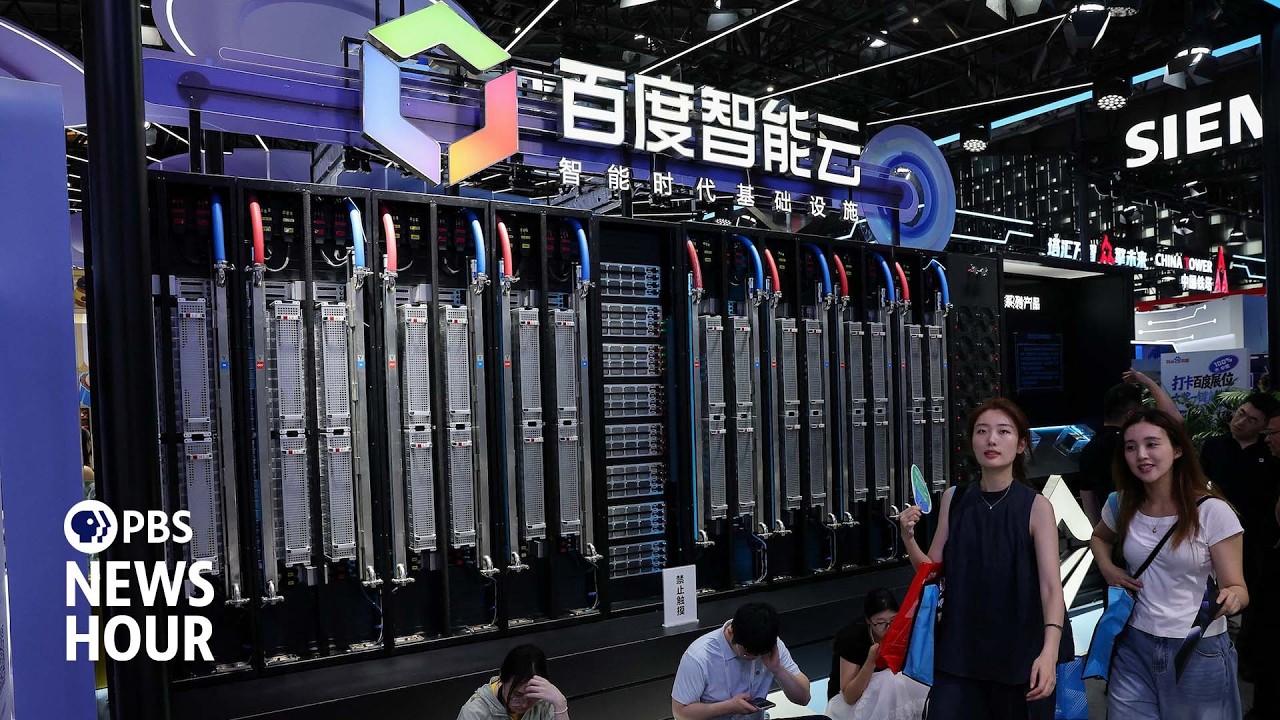
Shattering the Valley: How China’s Ultra-Cheap, High-Performance AI Breakthroughs Threaten U.S. Tech Dominance
WASHINGTON & SILICON VALLEY — A quiet panic has gripped the upper echelons of American technology and national security. For the past two years, Silicon Valley’s investment thesis and Washington’s geopolitical strategy have rested on a single, comfortable assumption: the United States holds an insurmountable lead in artificial intelligence, safeguarded by chokeholds on advanced semiconductor exports and tens of billions of dollars in venture capital.
That assumption has just been shattered. A wave of highly advanced, remarkably cheap AI models emerging from Chinese tech giants and agile startups is sending shockwaves through the global tech landscape. These breakthroughs demonstrate that Chinese engineers are successfully routing around U.S. chip embargoes, developing models that rival—and in some benchmarks, outperform—their American counterparts at a fraction of the cost. The era of undisputed U.S. AI hegemony is officially over.
The Low-Cost Disruption: Software Over Hardware
According to reports first highlighted by PBS NewsHour, the nature of the U.S.-China tech race has shifted from brute-force computing power to hyper-efficient software architecture. While U.S. leaders like OpenAI, Google, and Anthropic have focused on training increasingly massive models using thousands of Nvidia’s restricted H100 graphics processing units (GPUs), Chinese labs have taken a different path out of sheer necessity.
Faced with strict U.S. export controls on high-end silicon, Chinese firms such as DeepSeek, Alibaba (with its Qwen series), and Tencent have optimized their software algorithms to run efficiently on older, less powerful hardware. The results are startling: these models achieve near-parity with OpenAI’s GPT-4 in reasoning, coding, and multilingual tasks, while costing up to 90% less to train and operate.
Key Takeaways from the AI Shift:
- The End of the Hardware Moat: China's software optimizations demonstrate that cutting-edge AI does not strictly require the latest, restricted Western microchips.
- Unprecedented Price Wars: Chinese developers have initiated a fierce price war, slashing API access costs to pennies per million tokens, heavily undercutting American providers.
- Open-Source Supremacy: By aggressively open-sourcing their advanced models, Chinese institutions are winning over global developers, establishing Beijing as a primary hub for open-source AI innovation.
Comparing the Giants: US vs. Chinese AI Frameworks
To understand the scale of the threat to U.S. tech leadership, a comparison of deployment costs and operational efficiencies reveals a narrowing gap in capability—but a widening chasm in cost-effectiveness.
| Metric / Dimension | U.S. Standard (e.g., OpenAI / Google) | Chinese Competitors (e.g., DeepSeek / Qwen) | Strategic Implication |
|---|---|---|---|
| Primary Compute Strategy | Massive GPU clusters (Nvidia H100/B200) | Algorithmic efficiency & legacy hardware utilization | China is bypassing U.S. hardware embargoes. |
| API Pricing (per million tokens) | Higher Premium ($2.00 - $15.00+) | Ultra-Low Cost ($0.10 - $1.00) | Chinese models are vastly more accessible for global startups. |
| Distribution Model | Predominantly closed-source, proprietary APIs | Aggressive open-source & community-driven | Chinese architectures are rapidly becoming the global developer standard. |
| Geopolitical Alignment | Silicon Valley / Washington Regulatory Oversight | Beijing State-Backed / Global South Expansion | A fragmented AI ecosystem split between two ideological spheres. |
Why Washington and Wall Street Are Rattled
The geopolitical implications of China's AI breakthroughs are profound. For years, U.S. policymakers relied on the "chip embargo" as a defensive shield. The belief was simple: block China from buying Nvidia's top-tier chips, and China's AI development would stall.
Instead, these constraints acted as a catalyst. Chinese researchers, lacking the luxury of limitless computing power, focused on algorithmic breakthroughs. By employing techniques like Mixture-of-Experts (MoE) architectures and highly efficient data-labeling pipelines, they created models that require significantly less energy and fewer processors to run.
"The export controls were designed to buy the U.S. time, but they have inadvertently forced Chinese tech companies to become masters of efficiency," notes a senior technology analyst closely advising Capitol Hill. "They are doing more with less, while American companies are throwing billions of dollars of hardware at the problem. That is not a sustainable economic advantage."
Furthermore, the ultra-low cost of Chinese AI models makes them highly attractive to developing markets across Asia, Africa, and Latin America. Startups in these regions, unable to afford the premium pricing of U.S.-based models, are rapidly integrating Chinese open-source architectures into their business pipelines. This risks creating an international digital infrastructure built entirely on Chinese code and aligned with Beijing's regulatory standards.
The Road Ahead: A Fragmented Global AI Landscape
As the tech race intensifies, the threat to U.S. leadership will likely provoke a major policy reassessment in Washington. Observers expect a push for stricter regulations on open-source AI distributions, alongside increased federal funding for basic research to help American firms maintain their computational edge.
However, the software-led breakthrough achieved by Chinese firms proves that the AI war cannot be won by hardware restrictions alone. As Silicon Valley grapples with sky-high data center costs and power grid limitations, China’s lean, hyper-efficient models present a formidable challenge. The global AI market is no longer a one-horse race; it is a fierce, neck-and-neck struggle for technological supremacy where cost-efficiency, not just computing scale, will determine the victor.
Frequently Asked Questions (FAQ)
1. How are Chinese AI models competing if they cannot buy advanced U.S. microchips?
Chinese developers have bypassed hardware restrictions by focusing heavily on software optimization. By utilizing advanced model architectures like Mixture-of-Experts (MoE), compressing data pipelines, and refining training algorithms, they can achieve high levels of performance on older, widely available chips, neutralizing the primary impact of Western export bans.
2. What does this mean for U.S. AI companies and investors?
This development challenges the massive valuations of Silicon Valley AI firms. If Chinese competitors can offer comparable intelligence at a fraction of the operational cost, American firms will face intense pressure to slash their prices, compressing profit margins. It also suggests that capital-intensive strategies focused solely on building larger data centers may face diminishing returns compared to algorithm-focused innovation.