BYD’s 2027 Solid-State Battery Breakthrough: The Trillion-Dollar EV Supply Chain Disruption
Test Our Free AI & Tech Utilities Suite
Calculate LLM API token costs, analyze article dwell-time, or simulate tech DCA returns.
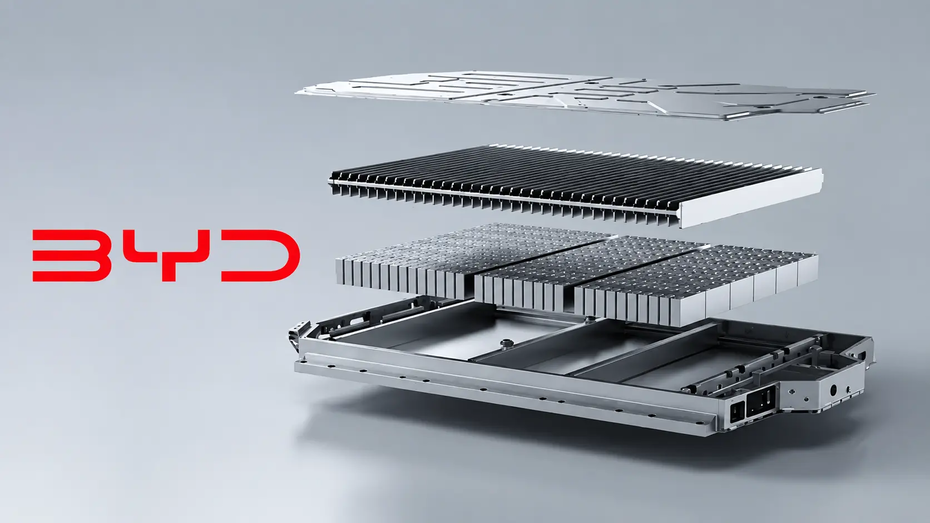
SHENZHEN & NEW YORK — In an industry-shaking disclosure that has sent shockwaves through global capital markets, automotive titan BYD Co. has locked in a commercialization timeline for its next-generation solid-state battery technology, targeting mass production by 2027. Verified by primary automotive intelligence sources including Driven Car Guide, this strategic acceleration places the Chinese manufacturing juggernaut on a direct collision course with legacy internal combustion giants, Japanese heavyweights, and Western EV pioneers. As institutional investors reassess risk mitigation strategies and capital allocation models across the clean-tech sector, BYD’s aggressive roadmap forces a fundamental reevaluation of enterprise valuation multiples across the entire global battery ecosystem.
Executive Takeaways
- Commercial Rollout by 2027: BYD has established a hard commercial deployment window for solid-state batteries, bypassing incremental chemical adjustments to deliver a paradigm shift in energy density and infrastructure scalability.
- mrowSupply Chain Dominance & Margin Expansion: By leveraging vertically integrated manufacturing and proprietary engineering, BYD aims to bypass the cost barriers historically associated with solid-state electrolytes, protecting its long-term operating margins.
- Intensified Geopolitical & Competitive Pressures: The announcement accelerates the global battery arms race, putting immediate pressure on competitors like Toyota, Mercedes-Benz, and CATL to fast-track their own solid-state prototypes.
- Macroeconomic & Capital Allocation Shifts: Institutional portfolio managers are already adjusting asset allocations, moving away from legacy lithium-ion supply chain dependencies toward next-generation solid-state innovators.
The Anatomy of the Breakthrough: Decoding BYD’s Technical Strategy
For over a decade, the holy grail of electrochemical engineering has been the solid-state lithium battery. Traditional liquid-electrolyte lithium-ion cells, while reliable and foundational to the modern electric vehicle boom, face inherent physical ceilings regarding energy density, thermal stability, and long-term degradation. Dendrite formation—microscopic lithium fibers that pierce separators and cause catastrophic short circuits—has historically plagued researchers attempting to commercialize solid electrolytes.
BYD’s 2027 initiative represents a watershed moment because it moves out of the theoretical laboratory environment and into high-volume manufacturing lines. According to leaked internal developments and industry supply chain audits, BYD is prioritizing a sulfide- or oxide-based composite electrolyte matrix that balances ionic conductivity with scalable manufacturing feasibility. Unlike competitors who rely on delicate, low-yield production processes, BYD’s engineering ethos centers on high-throughput assembly methods designed to protect enterprise ROI from day one of commercial deployment.
From a cloud compute architecture and digital twin simulation perspective, BYD has utilized advanced machine learning models to accelerate material discovery. By running millions of molecular dynamics simulations in parallel, BYD’s R&D division has rapidly identified dopants that stabilize the solid-solid interface at room temperature—a historical bottleneck that previously required high-pressure clamping systems to maintain battery performance.
Competitive Landscape: The Global Solid-State Arms Race

BYD’s aggressive timeline does not occur in a vacuum. The global automotive sector is locked in a high-stakes race to commercialize solid-state technology before the decade concludes. Toyota, long considered a pioneer in solid-state intellectual property with thousands of patents, has doubled down on its own production infrastructure, recently breaking ground on specialized electrolyte manufacturing plants. Concurrently, European luxury flagships like Mercedes-Benz are aggressively testing semi-solid and solid-state architectures in advanced testbeds like the EQS platform to defend their high-end pricing power.
However, the differentiator for BYD lies in its unmatched vertical integration. While traditional automakers must navigate complex tier-1 supplier negotiations and margin-squeezing intermediaries, BYD controls its supply chain from raw lithium mining and refining all the way to final pack integration and vehicle assembly. This structural advantage gives BYD unprecedented pricing flexibility, allowing the company to absorb initial manufacturing inefficiencies while scaling production volume to achieve rapid market liquidity and dominance.
| Manufacturer / Entity | Target Commercial Launch | Electrolyte Focus | Primary Strategic Advantage |
|---|---|---|---|
| BYD Co. | 2027 | Composite / Sulfide-Oxide Matrix | Vertical integration, extreme cost control, massive production scale. |
| Toyota Motor Corporation | 2027 – 2030 | Sulfide-based Solid Electrolyte | Vast patent portfolio and rigorous automotive durability testing. |
| Mercedes-Benz Group | Late 2020s | Semi-Solid / Solid-State Integration | Luxury brand positioning and advanced vehicle platform architecture (EQS). |
| CATL | Phased (2027+) | Condensed / Solid-State Hybrid | Pure-play battery dominance and massive global market share. |
Industry & Market Implications: Winners, Losers, and Capital Reallocation
The introduction of commercially viable solid-state batteries by 2027 will trigger profound structural shifts across global markets. Financial analysts are already modeling the ramifications across multiple asset classes:
- The Winners: Vertically integrated EV manufacturers with strong balance sheets, advanced material science firms specializing in solid electrolytes, and automated manufacturing equipment providers capable of high-precision dry-room assembly.
- The Losers: Legacy suppliers heavily entrenched in liquid-electrolyte chemical processing, Tier-2 component makers reliant on traditional thermal management systems (as solid-state batteries generate significantly less thermal stress), and automakers slow to pivot their capital expenditure away from legacy ICE platforms.
- Regulatory Compliance & ESG Alignment: Solid-state batteries inherently reduce fire risks, eliminate toxic organic solvents used in liquid electrolytes, and require fewer raw materials per kilowatt-hour due to vastly superior volumetric energy density. This aligns seamlessly with tightening global ESG mandates and regulatory compliance standards across the European Union and North America.
From a valuation multiple perspective, firms tied exclusively to conventional lithium-ion technologies face severe multiple contraction risks if they fail to articulate a credible transition strategy toward solid-state architectures. Conversely, companies demonstrating robust intellectual property and clear infrastructure scalability will command premium valuations.
Frequently Asked Questions (People Also Ask)
What makes BYD’s 2027 solid-state battery timeline significant?
BYD’s announcement transitions solid-state battery technology from theoretical research into an imminent commercial reality. Because BYD controls its entire manufacturing ecosystem, its ability to scale production by 2027 threatens to commoditize current liquid-electrolyte batteries much faster than previously anticipated by Wall Street analysts.
How do solid-state batteries differ fundamentally from standard lithium-ion cells?
Solid-state batteries replace the flammable liquid or gel electrolyte found in conventional lithium-ion cells with a solid ceramic, glass, or sulfide-based material. This eliminates fire risks, allows for significantly faster charging times, drastically increases energy density, and extends overall operational lifespan.
Will BYD’s solid-state batteries be deployed exclusively in passenger vehicles?
While passenger electric vehicles represent the initial high-volume application, BYD’s modular architecture is engineered for scalability. Future deployment vectors include commercial transport fleets, high-performance energy storage systems (ESS), and potentially aerospace applications where weight reduction and safety margins are paramount.
How will this announcement impact global supply chains and raw material demand?
The shift toward solid-state chemistry alters the demand profile for specific raw materials. While lithium remains foundational, optimized cell designs can reduce the reliance on cobalt and nickel, while accelerating demand for specialized solid electrolyte precursors like high-purity lanthanum, zirconium, and sulfur compounds.
Future Outlook: Milestones to Watch on the Road to 2027
As the industry marches toward the 2027 commercialization window, institutional investors, supply chain auditors, and market regulators must monitor specific operational milestones. Key indicators of success will include pilot-line yield rates reported during quarterly earnings disclosures, patent filings regarding interface stabilization, and strategic joint ventures formed between BYD and global raw material suppliers.
Ultimately, BYD’s aggressive 2027 roadmap serves as a stark reminder that the EV transition is entering its second, more ruthless phase. Capital allocation strategies that worked during the initial market expansion phase will no longer suffice. As technology cycles compress and manufacturing efficiencies dictate market survival, BYD's bold gamble underscores a singular reality: the future belongs to those who can master material science at scale.