The Death of the Driver’s License? Inside the Multi-Trillion Dollar Robotaxi War Unleashed at CES 2026
LAS VEGAS — January 9, 2026 (CBT News) — For nearly a decade, the promise of fully autonomous transport felt like a mirage—perpetually five years away. But at the Consumer Electronics Show (CES) 2026, the mirage officially solidified into concrete, steel, and silicon. This year’s show floor has transformed from a showcase of consumer gadgets into a high-stakes battleground for software-defined, driverless mobility, marking what Wall Street analysts are calling the "commercial inflection point" for autonomous vehicles (AVs).
As major automakers, big tech conglomerates, and agile startups converge in Las Vegas, the narrative has shifted away from experimental prototypes. Instead, the focus is on production-ready robotaxis, scaled manufacturing partnerships, and advanced artificial intelligence stacks designed to slash ride-hailing costs to fractions of a dollar per mile.
Why the 2026 Robotaxi Pivot Matters to Wall Street and Main Street
The economic stakes underlying the innovations at CES 2026 are immense. According to data compiled by McKinsey & Company and shared on the convention floor, the global robotaxi market is projected to reach $1.3 trillion by 2035. The aggressive push witnessed this week is driven by three key tailwinds:
- The Plummeting Cost of Hardware: Next-generation solid-state LiDARs and high-definition cameras have dropped in price by over 40% compared to two years ago, making fleet deployment financially viable.
- Regulatory Tailwind: Emerging bipartisan federal frameworks in the United States and streamlined approvals in the European Union are creating standardized pathways for driverless deployment.
- End-to-End AI Paradigms: The transition from hand-coded safety rules to pure "neural network" driving systems has drastically reduced the latency and increased the human-like adaptability of these vehicles.
As tech giants and legacy Detroit giants lock horns, the battle lines are drawn not just on who has the best car, but who has the most scalable ecosystem.
The Heavyweight Showdowns: Key Players and Their 2026 Platforms
Several major manufacturers stole the spotlight at the Las Vegas Convention Center, demonstrating that the future of urban transit will be electric, driverless, and heavily monetized through in-cabin software services.
Tesla’s Scaling Gambit vs. Waymo’s Dominance
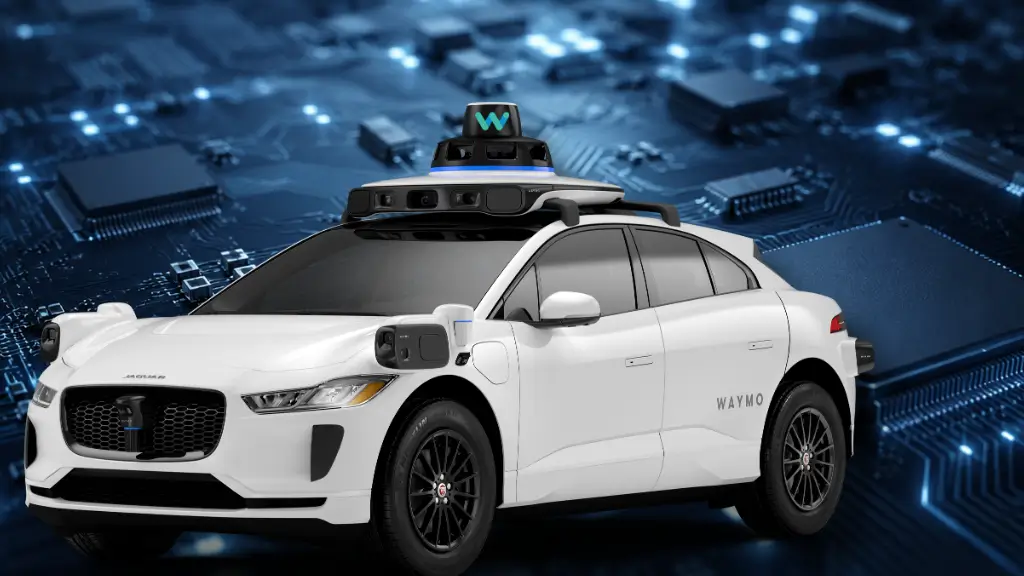
While Alphabet’s Waymo showcased its sixth-generation hardware suite integrated into a fleet of highly efficient, low-cost Geely Zeekr platforms, Tesla made waves with its localized demonstrations of its unsupervised Full Self-Driving (FSD) network. Tesla's emphasis on a vision-only, ultra-low-cost vehicle architecture directly challenges Waymo’s sensor-heavy, high-reliability approach. Analysts note that Waymo is optimized for immediate safety and urban density, while Tesla is betting on rapid, unconstrained manufacturing scale.
General Motors’ Cruise Resurgence
After a period of quiet realignment, GM’s Cruise emerged at CES 2026 with its fully customized, purpose-built vehicle stack. Emphasizing safety redundancy and integrated urban mapping, Cruise demonstrated a revamped fleet-management software capable of dynamically rerouting vehicles to optimize energy efficiency and passenger throughput in dense metropolitan areas.
Zoox and the Lifestyle Cabin Experience
Amazon’s Zoox turned heads by showcasing its bidirectional, steering-wheel-free carriage, now operating in expanded geofenced testing zones in select cities. Zoox’s presentation focused heavily on the "passenger economy"—turning the travel time into a monetizable experience featuring interactive entertainment, workspace productivity suites, and personalized climate zones.
The 2026 Autonomous Vehicle Landscape: A Comparative Look
The table below highlights the technical specifications, sensor architectures, and commercial targets of the leading autonomous vehicle platforms dominating the discourse at CES 2026:
| Platform Provider | Primary Sensor Suite | Computing Backbone | Target Cost Per Mile (Est.) | Current Scaling Strategy |
|---|---|---|---|---|
| Waymo (Gen 6) | LiDAR, Radar, Cameras | Custom Google TPU Stack | $1.10 - $1.30 | Ride-hailing partnerships, airport hubs |
| Tesla Cybercab | Vision-Only (Cameras) | AI 5 / Dojo Supercomputer | $0.40 - $0.60 | Global consumer-owned fleet sharing |
| GM Cruise | LiDAR, Cameras, Radar | NVIDIA DRIVE Orin/Thor | $1.20 - $1.40 | Municipal delivery & urban ride-hailing |
| Zoox (Amazon) | Symmetric 360° LiDAR/Radar | Proprietary Dual-Redundant | $0.90 - $1.15 | Dense urban hubs, tourism, and campus transit |
Under the Hood: The AI Breakthroughs Powering the Revolution
Beyond the sleek, steering-wheel-free cabins, the real revolution showcased at CES 2026 lies in the silicon. The integration of NVIDIA’s DRIVE Thor platform and high-performance chips from Qualcomm has allowed automakers to run massive multi-modal AI models directly on the edge.
In previous iterations of autonomous driving, vehicles relied heavily on pre-mapped HD geography and strict "if-then" programming rules. When confronted with an unexpected obstacle—such as a construction worker holding an unusual hand signal—systems would often freeze. The 2026 crop of vehicles utilizes generative AI models that can "reason" through novel environments in real-time. This reduces the need for expensive, localized continuous mapping and allows operators to scale their fleets to new cities in weeks rather than years.
"We are no longer building cars with computers in them; we are building supercomputers wrapped in steel," remarked an executive engineer from a leading European automotive supplier during a panel discussion. "The winner of this race won't be the one who makes the best suspension, but the one who builds the most resilient neural net."
The Road Ahead: Challenges and Institutional Skepticism
Despite the optimism radiating from the convention center, significant hurdles remain. Fleet insurance costs, municipal pushback regarding road congestion, and cybersecurity vulnerabilities continue to loom over the industry. Labor unions also expressed renewed concern during the event, warning of massive disruptions to the gig economy and professional driving sectors.
However, the sheer momentum of capital expenditure indicates that the autonomous transition is no longer a question of "if," but "where next." As CES 2026 draws to a close, one thing is abundantly clear: the steering wheel is rapidly transitioning from a necessity to a relic.
Frequently Asked Questions (FAQ)
1. When can the average consumer expect to ride in these new robotaxis?
For residents of major metropolitan areas like Phoenix, San Francisco, Los Angeles, and Las Vegas, ride-hailing services are already operational or scaling rapidly. Broader, suburban, and Tier-2 city rollouts of these newly showcased 2026 platforms are anticipated to begin in late 2026 and carry into 2027 as municipal regulatory approvals clear.
2. Are vision-only systems safer than sensor-fusion (LiDAR + Radar) systems?
This remains the primary philosophical debate of the AV industry. Vision-only systems (advocated by Tesla) mimic human sight, allowing for cheaper production and faster scaling, but they face challenges in extreme weather conditions. Sensor-fusion systems (used by Waymo and Cruise) provide highly reliable, redundant safety layers in bad weather but require more expensive hardware and complex data processing.