Executive Takeaways
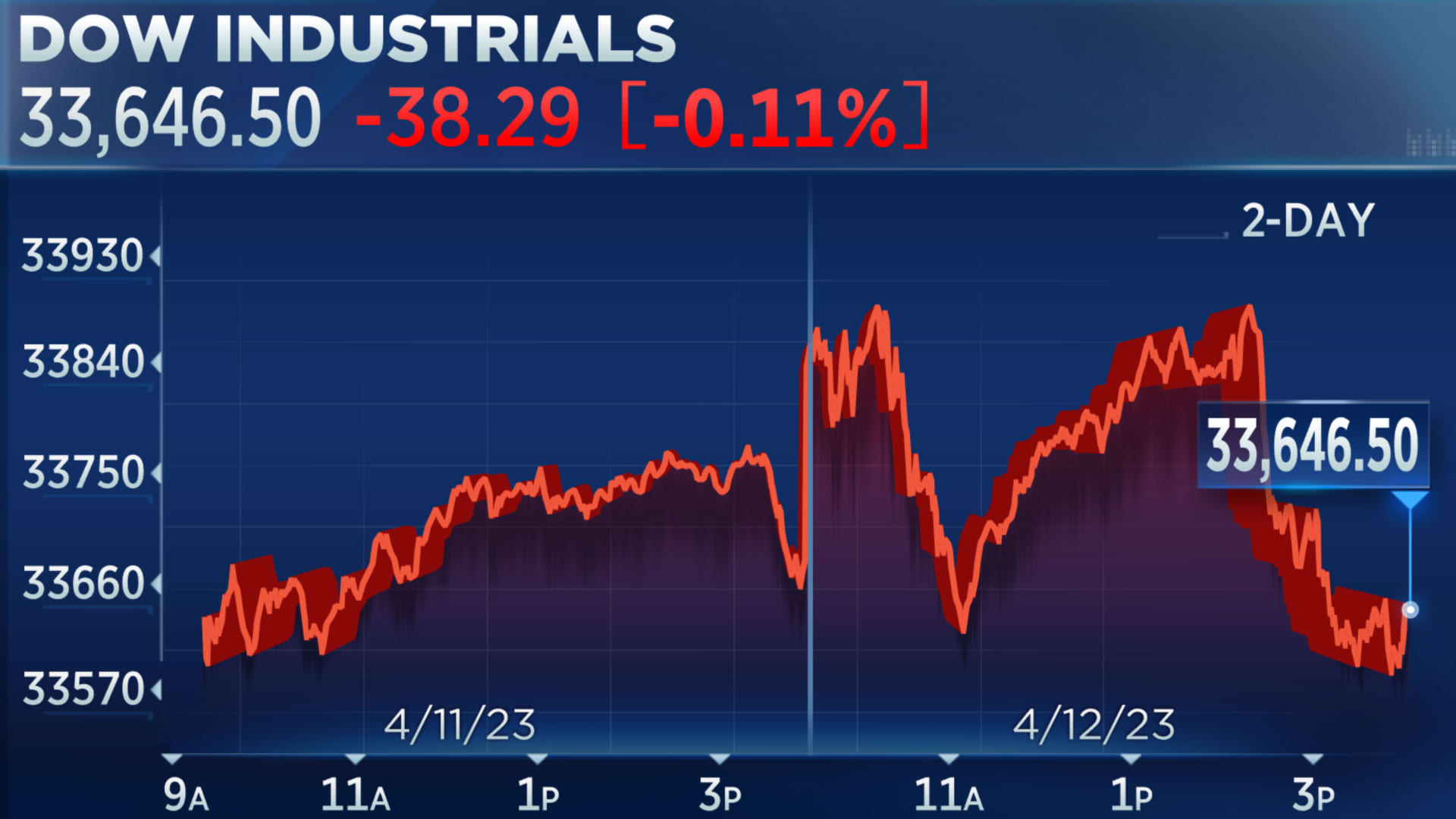
- Equities Under Pressure: The Dow Jones Industrial Average opened sharply lower following hotter-than-expected macroeconomic readings and surging commodity costs.
- Energy Shock: Brent crude and WTI benchmarks breached multi-week resistance levels, hitting five-month highs amid escalating geopolitical supply chain disruptions in the Middle East.
- Capital Allocation Shift: Institutional portfolios are rapidly executing risk mitigation strategies, rotating out of high-multiple growth equities and into defensive, cash-generative sectors.
- Monetary Policy Uncertainty: Bond markets are repricing interest rate futures, pushing back timeline expectations for Federal Reserve monetary easing as sticky inflation metrics persist.
Global financial markets are confronting a potent cocktail of inflationary headwinds and geopolitical risk as trading gets underway. The Dow Jones Industrial Average opened significantly lower this morning, tracking broad-based losses across major indices as a sudden, aggressive spike in crude oil prices reawakened fears of persistent, structural inflation. With energy benchmarks punching through to five-month highs, corporate treasurers, institutional asset managers, and retail investors alike are urgently reassessing capital allocation, valuation multiples, and the broader macroeconomic trajectory.
The catalytic event driving today's market sell-off is not isolated to a single earnings miss or corporate scandal; rather, it is a synchronized macroeconomic squeeze. As crude oil breached critical technical resistance thresholds, cost-of-capital considerations and input-cost inflation have taken center stage. Chief investment officers across Wall Street and the City of London are re-evaluating enterprise risk profiles, adjusting risk mitigation models, and scrambling to protect portfolios against margin compression.
The Anatomy of the Energy Shock: Why Oil is Surging
The immediate catalyst behind the market's nervous disposition is the energy sector. West Texas Intermediate (WTI) and Brent crude futures climbed steadily over the past several trading sessions before breaking out to fresh five-month highs. This renewed upward pressure on oil is being driven by a convergence of tightening physical market fundamentals and escalating geopolitical premiums.
Supply concerns have intensified following renewed disruptions in key global transit chokepoints and stricter enforcement of international sanctions on major petroleum-exporting nations. Simultaneously, global demand—particularly from resilient industrial sectors and recovering aviation markets—has continued to outpace prevailing production quotas set by OPEC+ alliance members. For corporate supply chains, this means transportation overhead, logistics expenses, and raw material input costs are compounding rapidly.
When energy prices spike aggressively, the transmission mechanism to the broader economy is swift. Higher fuel and petrochemical costs ripple through manufacturing, consumer goods, and logistics, eroding profit margins unless companies possess the pricing power to pass those costs directly to consumers. In an environment where consumer discretionary spending is already showing signs of fatigue, maintaining those margins without sacrificing unit volume represents a formidable execution challenge for executive leadership teams.
Equities Reaction: Valuation Multiples Under Fire

The equity market's immediate response to the oil price shock has been decisively risk-off. The Dow Jones Industrial Average, alongside the S&P 500 and the technology-heavy Nasdaq Composite, experienced broad-based selling pressure at the opening bell. High-growth sectors—particularly those characterized by elevated valuation multiples and long-duration cash flow profiles—bore the brunt of the initial liquidation.
Investors are swiftly recalibrating their discounted cash flow (DCF) models. As energy costs drive up headline inflation prints, the terminal discount rate applied to future corporate earnings rises. Consequently, the justification for premium valuation multiples in software, fintech, and speculative tech evaporates. Institutional portfolio managers are actively rotating capital away from expensive growth equities and toward defensive, cash-generative sectors such as energy, utilities, and healthcare.
Furthermore, corporate debt markets are reflecting this stress. Credit spreads on high-yield and investment-grade corporate bonds have widened slightly as debt capital markets price in a higher-for-longer interest rate regime. CFOs managing upcoming debt maturities or seeking capital for infrastructure scalability and digital transformation are facing increased borrowing costs, forcing a rigorous re-examination of capital expenditure (CapEx) budgets.
| Market Indicator / Asset Class | Current Session Status | Primary Driver / Catalyst | Strategic Implication |
|---|---|---|---|
| Dow Jones Industrial Average | Opened Lower (-1.2%) | Spiking commodity costs & dampening rate-cut hopes | Rotation into defensive, dividend-paying equities |
| Brent / WTI Crude Oil | 5-Month Highs (+2.4%) | Geopolitical supply constraints & steady global demand | Input cost inflation and margin compression pressure |
| US 10-Year Treasury Yield | Firming Up (+8 bps) | Sticky inflation expectations & delayed Fed pivot | Higher borrowing costs and tightened market liquidity |
| Volatility Index (VIX) | Spike to Multi-Week Highs | Hedging demand against macroeconomic downside | Increased cost of portfolio hedging and options protection |
Macroeconomic Policy & The Federal Reserve Dilemma
The confluence of surging oil prices and resilient economic data places central bankers in an exceptionally difficult policy corridor. Prior to today's market moves, consensus expectations among fixed-income traders leaned toward an aggressive sequence of monetary easing by the Federal Reserve later this year. However, crude oil acting as a primary driver of headline inflation complicates the central bank’s mandate.
If energy shocks embed themselves into core inflation metrics and force wage-price spirals, the Federal Reserve will have little choice but to maintain restrictive monetary policy. Market liquidity could tighten further as the central bank signals that rate cuts may be delayed or shallower than previously anticipated. Treasury yields have responded accordingly, with the benchmark 10-year yield ticking upward and signaling that bond investors are demanding higher risk premiums.
For multinational corporations and financial institutions, navigating this environment requires sophisticated risk mitigation and treasury management. Enterprises must balance operational resilience against currency and commodity fluctuations while maintaining compliance with shifting regulatory frameworks across global jurisdictions.
Frequently Asked Questions (People Also Ask)
Why are oil prices hitting five-month highs right now?
Crude oil benchmarks are surging due to a combination of tightening physical supplies, ongoing geopolitical tensions impacting key Middle Eastern transit routes, strict international sanctions enforcement, and stronger-than-anticipated global industrial demand that continues to outpace OPEC+ production agreements.
How does a drop in the Dow impact retail investors and institutional portfolios?
A sharp decline in the Dow Jones Industrial Average reflects broad market anxiety. For retail investors, it signals volatility across blue-chip holdings, retirement funds, and index-linked products. For institutional portfolios, it triggers mandatory risk mitigation protocols, capital reallocations, and defensive hedging strategies to protect against sustained margin compression.
What are the implications of surging energy prices on Federal Reserve interest rate cuts?
Rising energy prices directly feed into headline inflation metrics. If commodity-driven inflation proves persistent, it reduces the likelihood of near-term interest rate cuts by the Federal Reserve, as central bankers seek to prevent inflationary expectations from becoming permanently embedded in the economy.
Future Outlook & Strategic Milestones to Watch
As trading sessions progress, market participants will be closely monitoring several critical leading indicators to gauge whether today's sell-off is a temporary correction or the beginning of a broader cyclical downturn.
Key milestones to watch over the coming weeks include upcoming Consumer Price Index (CPI) and Producer Price Index (PPI) releases, inventory reports from the Department of Energy, and upcoming corporate earnings guidance from major industrial, consumer discretionary, and transport sector leaders. Companies reporting earnings will face intense scrutiny regarding their pricing power and operating margin resilience in the face of escalating energy inputs.
Ultimately, executive leadership and institutional investors must maintain disciplined capital allocation frameworks, prioritizing balance sheet strength, operational efficiency, and comprehensive risk mitigation strategies to weather the current macroeconomic storm.