

For the second time in three years, a wave of sophisticated cyberattacks has rippled across Europe’s retail sector, turning commercial refrigeration units into vectors for digital extortion and infrastructure disruption. From Munich to Milan, grocery executives are once again scrambling to assess supply chain exposure, harden peripheral networks, and answer hard questions from institutional investors about enterprise risk mitigation. While no food-borne safety crises have been officially linked to the latest wave of temperature-tampering incidents, the economic and operational fallout is already testing the resilience of Europe’s food logistics backbone.
As central banks monitor sticky inflation and retail margins remain razor-thin, this latest security breach is more than an IT headache—it is a glaring exposure of how interconnected Internet of Things (IoT) deployments can destabilize physical supply chains. To understand how thousands of commercial chillers became a playground for threat actors, we must examine the intersection of legacy infrastructure, third-party vendor ecosystems, and the urgent push for operational efficiency that ultimately left supermarket back-ends wide open.
Executive Takeaways
- Systemic Exposure: The recurring hacks target centralized Building Management Systems (BMS) and remote-monitoring software rather than individual cooling units, bypassing standard perimeter defenses.
- Capital Expenditure Shifts: Grocery chains are rapidly reallocating capital expenditure budgets toward zero-trust architecture, micro-segmentation, and end-to-end operational technology (OT) security audits.
- Regulatory Pressures Loom: European Union cybersecurity directives, notably the NIS2 Directive, mean boardrooms now face severe regulatory penalties and personal liability for supply chain vulnerabilities.
- Valuation Multiples at Risk: Publicly traded retail conglomerates are finding that cybersecurity resilience directly influences institutional investor sentiment and valuation multiples.
The Anatomy of the Breach: How Commercial Cooling Became a Cyber Target
Test Our Free AI & Tech Utilities Suite
Calculate LLM API token costs, analyze article dwell-time, or simulate tech DCA returns.
Modern European supermarkets are technological marvels, operating massive networks of multiplex compressors, smart display cases, and HVAC systems designed to optimize energy consumption. To achieve these efficiencies, retailers rely heavily on specialized vendors who install remote telemetry units (RTUs) and cloud-connected Building Management Systems (BMS). These systems allow remote technicians to adjust defrost cycles, monitor refrigerant pressures, and diagnose mechanical failures without dispatching an on-site engineer.
However, convenience has come at the steep price of expanded attack surfaces. According to preliminary incident reports compiled by cybersecurity researchers across Germany, France, and the Netherlands, the threat actors exploited known vulnerabilities in third-party vendor gateways—classic supply chain vectors where trusted enterprise credentials act as master keys.
Once inside the corporate networks of maintenance subcontractors, the attackers moved laterally through flat network architectures. Because many legacy retail IT departments historically maintained isolated network segments for IT (corporate email, point-of-sale) and OT (refrigeration, lighting), the convergence of these environments over the past decade created invisible bridges. Threat actors leveraged these misconfigured gateways to access supervisory control and data acquisition (SCADA) software controlling the refrigeration units.
Rather than deploying traditional ransomware to encrypt local hard drives—which are sparse within edge-computing refrigeration controllers—the attackers altered temperature set points or disabled remote monitoring dashboards entirely. In several documented instances, stores woke up to find their entire stock of perishable dairy, meats, and frozen goods threatened by artificially elevated temperatures, forcing management to initiate emergency write-offs and triggering panic among local store managers.
Historical Context: Déjà Vu in the Aisles
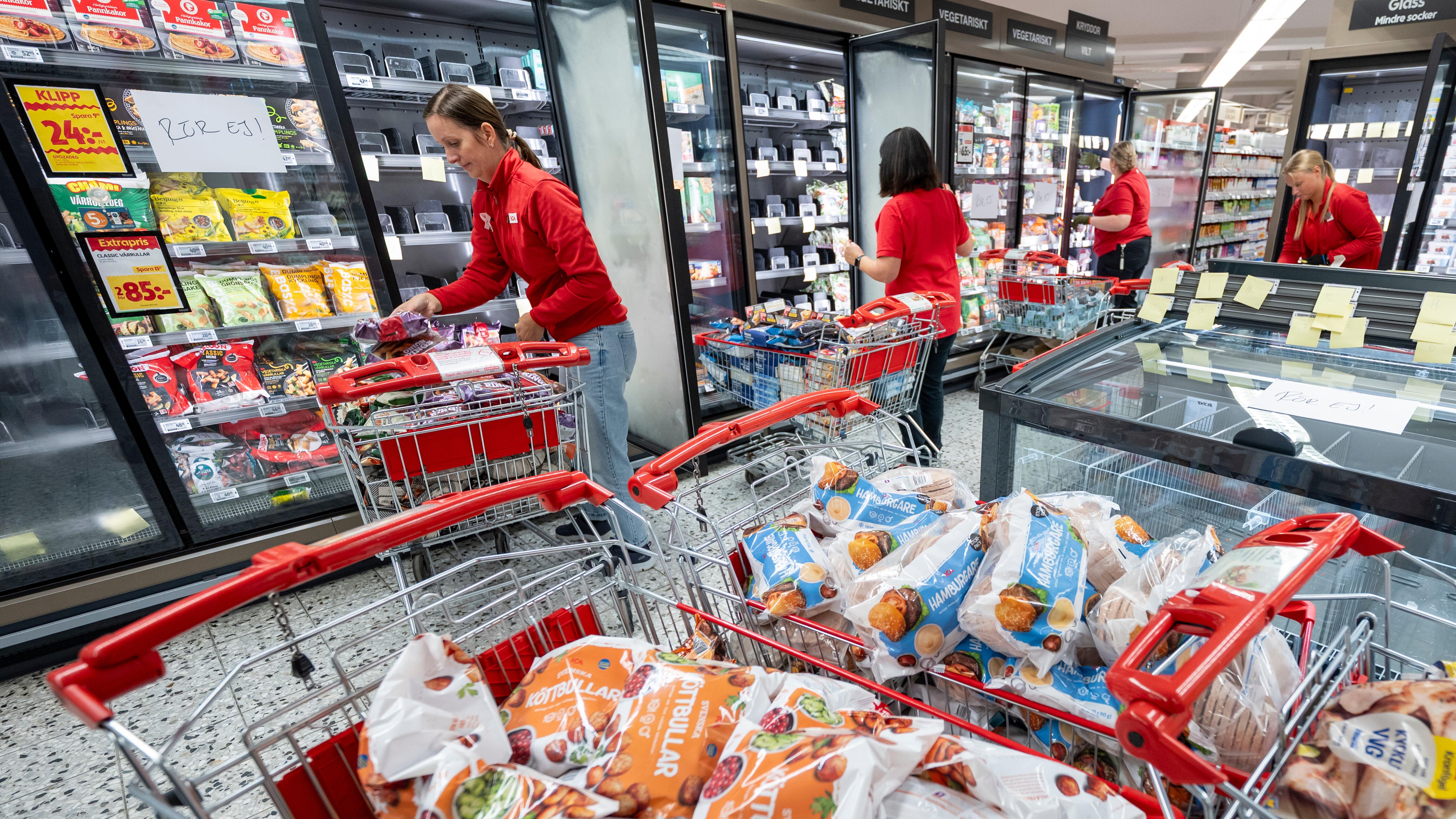
This is not an isolated phenomenon. In 2021 and 2022, a similar coordinated campaign hit major European supermarket chains, paralyzing logistics hubs and forcing grocers to revert to manual, clipboard-based temperature logging. At the time, industry analysts dismissed the incidents as a wake-up call that would prompt immediate, sweeping overhauls of retail IT/OT infrastructure.
Yet, the reality of enterprise ROI and infrastructure scalability complicated remediation efforts. Upgrading thousands of legacy stores requires immense capital allocation. Many independent franchise operators and even multinational grocery giants deferred comprehensive overhauls, opting instead for patch-management band-aids. The assumption that "nobody would hack a freezer" proved to be a costly miscalculation in risk assessment.
The reoccurrence of these attacks signals that threat groups—ranging from financially motivated extortion rings to sophisticated state-sponsored proxy actors testing critical infrastructure resilience—view the retail sector as a soft underbelly. Supermarkets operate on thin margins, where perishable inventory loss translates instantly to crippled daily cash flow. For extortionists, threatening millions of Euros worth of melting inventory provides immense leverage.
Verified Data & Metrics Breakdown Table
To contextualize the scale and operational impact of these recurring cyber incidents, the following metrics illustrate the financial, technological, and regulatory dimensions facing European food retailers:
| Metric Category | 2021–2022 Attack Wave | Current Attack Wave (Trending) | Projected Industry Response (2025–2026) |
|---|---|---|---|
| Average Perishables Write-Off per Affected Store | €45,000 – €120,000 | €60,000 – €180,000 | Mitigated via automated insurance & localized alarms (<€10,000) |
| Primary Attack Vector | Unpatched VPN gateways & weak vendor credentials | Compromised third-party HVAC/BMS service providers | Zero-trust network access (ZTNA) & mandatory multi-factor authentication |
| Regulatory Compliance Framework | GDPR & fragmented national guidelines | Enforcement of EU NIS2 Directive & DORA | Strict vendor liability and mandatory board-level reporting |
| Average Enterprise IT/OT Security Budget Increase | +8% to +12% YoY | +18% to +25% YoY | Projected stabilization at 20% of total IT capex |
Industry & Market Implications: Who Wins, Who Loses
The fallout from these recurring refrigeration hacks extends far beyond individual store disruptions, triggering strategic realignments across the financial, insurance, and technology sectors.
The Losers: Legacy Retailers and Unvetted Vendors
Publicly traded supermarket conglomerates with fragmented IT infrastructures face immediate punishment from institutional investors. When supply chain vulnerabilities threaten top-line revenue and brand reputation, equity analysts downgrade valuation multiples. Furthermore, smaller regional franchises that relied on low-cost, third-party maintenance contractors with lax cybersecurity standards are facing existential threats. Liability claims from spoiled inventory, coupled with potential regulatory fines under the EU’s stringent NIS2 Directive, threaten to wipe out annual net margins for unprepared operators.
The Winners: Cybersecurity Specialists and OT Monitoring Firms
Conversely, a massive influx of capital is surging into specialized cybersecurity firms focused on operational technology (OT) and industrial control systems (ICS). Enterprise software providers offering continuous network monitoring, micro-segmentation, and automated threat-detection tools tailored for retail environments are seeing unprecedented market liquidity and enterprise demand. Insurance underwriters specializing in cyber risk are also tightening underwriting standards, forcing retailers to prove robust cyber hygiene before issuing policies—thereby rewarding proactive enterprises with lower premiums.
Frequently Asked Questions (People Also Ask)
1. Are the foods in European supermarkets safe to buy after these cyberattacks?
Yes. Regulatory health agencies and supermarket chains maintain strict food-safety protocols. In almost all cases, automated failsafes, emergency backup generators, or manual temperature logs alerted staff before food safety thresholds were dangerously breached. Spoiled inventory is routinely written off and discarded long before it reaches consumer shelves.
2. How are hackers actually gaining access to supermarket refrigerators?
Attackers rarely hack individual refrigerators directly. Instead, they exploit vulnerabilities in remote management software, vendor Virtual Private Networks (VPNs), and centralized Building Management Systems (BMS). By compromising third-party maintenance contractors who have remote access to store cooling systems, hackers slip past perimeter defenses.
3. Why are supermarkets being targeted instead of traditional corporate targets?
Supermarkets operate on razor-thin net margins with zero tolerance for downtime or inventory spoilage. Because refrigeration failure results in immediate, tangible financial losses (millions of Euros in rotting food), threat actors calculate that grocery executives are more likely to quickly capitulate to extortion demands or pay for rapid remediation.
4. What is the EU NIS2 Directive, and how does it affect these supermarket hacks?
The NIS2 Directive is a sweeping European Union cybersecurity law that imposes strict risk-management requirements and mandatory incident-reporting obligations on critical infrastructure operators, including food supply chains. Under NIS2, corporate boards face severe financial penalties—and potential personal liability—if they fail to secure their digital supply chains against third-party breaches.
Future Outlook: What Comes Next
As European regulators prepare to ramp up enforcement of the NIS2 Directive, the boardrooms of major grocery chains are undergoing a structural evolution. Chief Information Security Officers (CISOs) are no longer relegated to back-office IT roles; they now report directly to executive committees, commanding dedicated capital allocation for supply chain security.
Key milestones to watch over the next 12 to 18 months include:
- Mandatory Vendor Audits: Major European retail consortia are instituting rigorous cybersecurity certification requirements for all HVAC, refrigeration, and logistics contractors. Uncertified vendors will face immediate contract termination.
- Edge-Computing Resilience: Expect a shift toward decentralized, autonomous refrigeration controllers that can operate safely offline even if central network connectivity is severed or compromised.
- Consolidation of OT Security Vendors: Institutional investors should anticipate increased merger and acquisition (M&A) activity in the industrial cybersecurity space as retail giants acquire specialized tech startups to safeguard physical assets.
Ultimately, the recurring hacking of European supermarket fridges serves as a harsh reminder for the global economy: as physical infrastructure converges with the cloud, security can no longer be an afterthought. For the retail sector, the era of treating refrigeration as a purely mechanical asset is officially over.


