Executive Takeaways
- Mission Termination: Starfish Space has officially lost telemetry and command contact with its Otter Pup spacecraft, abruptly concluding a high-profile satellite inspection and rendezvous demonstration.
- Capital Allocation & Valuation Impact: The loss deals a severe blow to investor sentiment in the burgeoning in-space servicing, assembly, and manufacturing (ISAM) sector, triggering immediate risk mitigation reviews across venture capital portfolios.
- Infrastructure Scalability Threat: As low-Earth orbit (LEO) becomes increasingly congested, the failure of a dedicated proximity-operations vehicle highlights systemic vulnerabilities in autonomous navigation and risk management architectures.
- Regulatory Scrutiny: Federal Communications Commission (FCC) and Federal Aviation Administration (FAA) compliance frameworks face renewed pressure to tighten debris mitigation standards for commercial orbital servicing providers.
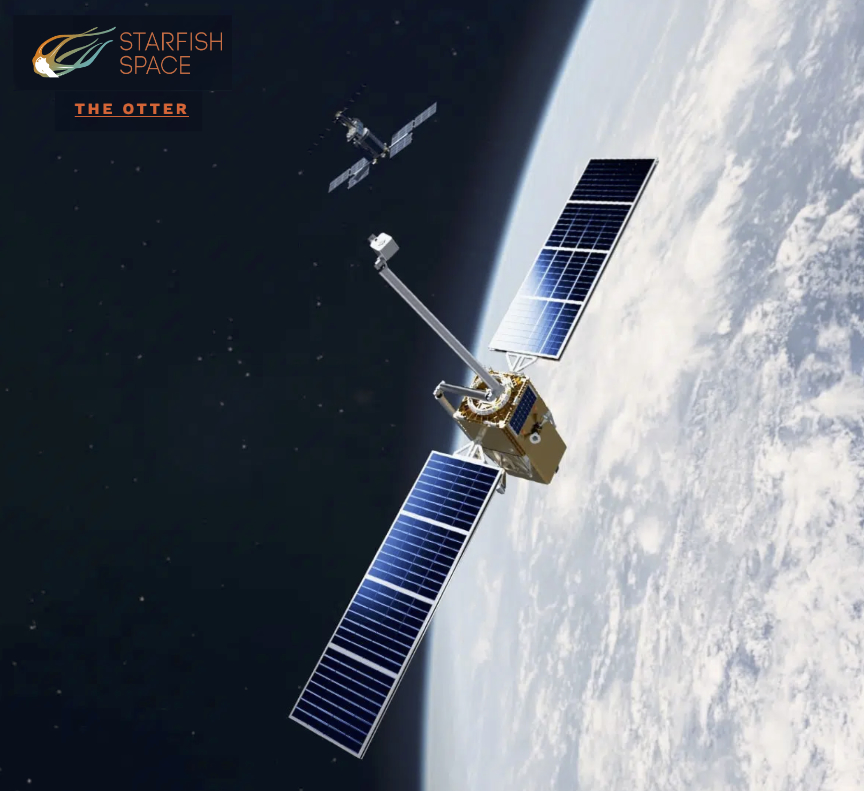
WASHINGTON — In the high-stakes theater of commercial space infrastructure, resilience is measured in milliseconds and telemetry packets. Starfish Space, an ambitious Seattle-based orbital servicing startup founded by former Blue Origin and SpaceX engineers, has confirmed the definitive loss of contact with its Otter Pup spacecraft. The anomaly effectively terminates a pioneering satellite inspection mission that was designed to validate autonomous rendezvous, proximity operations, and docking (RPOD) capabilities—technologies widely considered the holy grail of modern space asset management.
For an industry navigating compressed venture capital liquidity and tightening capital allocation strategies, the incident serves as a sobering reminder of the unforgiving physics of low-Earth orbit. As institutional investors reassess risk-adjusted valuation multiples for early-stage aerospace hardware ventures, the Otter Pup failure forces a fundamental recalculation of how autonomous software stacks and cloud compute architectures interface with deep-space hardware.
The Anatomy of an Orbital Failure: Background and Catalytic Events
Test Our Free AI & Tech Utilities Suite
Calculate LLM API token costs, analyze article dwell-time, or simulate tech DCA returns.
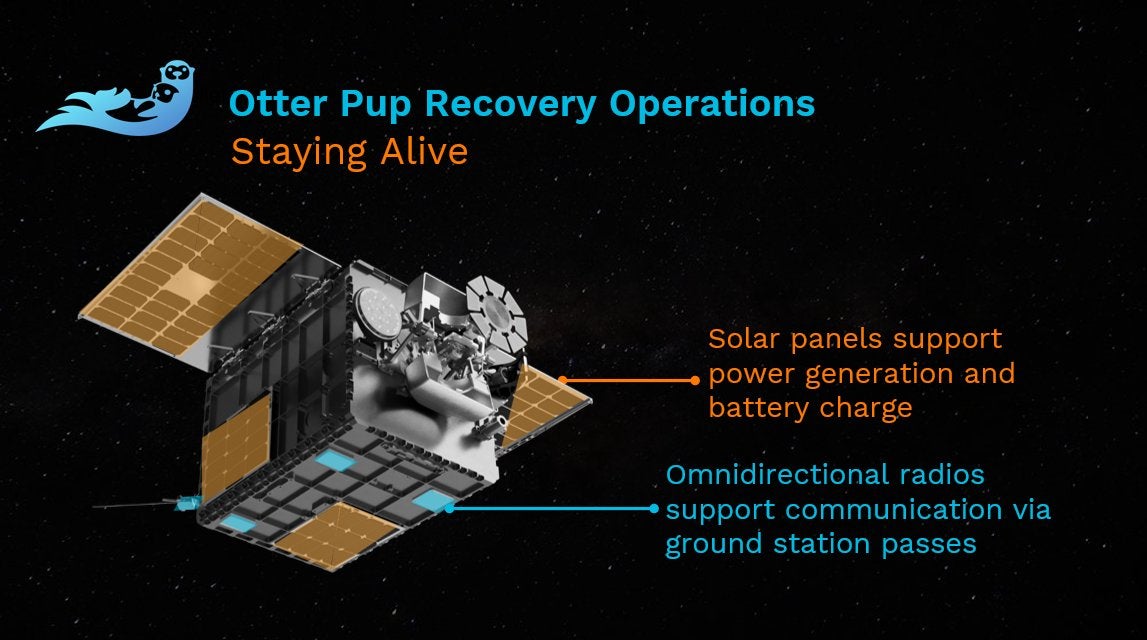
The journey of the Otter Pup began as a bold enterprise in commercial risk mitigation. Designed as a sub-scale prototype of the company’s flagship Otter space tug, the vehicle was deployed to demonstrate the technical feasibility of servicing, extending the operational lifespans of, and de-orbiting legacy satellites. Traditional satellite constellations face a definitive end-of-life wall once chemical propellant reserves are exhausted, rendering multi-million-dollar assets stranded in high-value orbital slots.
Starfish Space positioned its technology as a transformative solution for enterprise ROI, promising to rescue stranded commercial assets and clear out defunct hardware before catastrophic orbital collisions occurred. However, proximity operations—the art and science of maneuvering one spacecraft within meters of another without physical contact until docking—represent the bleeding edge of aerospace engineering. The software architectures governing these maneuvers require fault-tolerant sensor fusion, real-time optical navigation, and autonomous decision-making algorithms capable of operating independently of ground-station intervention.
According to preliminary telemetry analysis released by mission controllers, the spacecraft encountered a critical anomaly during a complex orbital maneuver designed to test relative navigation sensors. While telemetry streams initially indicated normal health and subsystem functionality, an unexpected interruption severed the command link. Despite exhaustive contingency protocols, automated re-acquisition routines, and coordinated tracking efforts with the United States Space Force’s 18th Space Defense Squadron, engineers were unable to re-establish communication before the vehicle drifted out of operable parameters.
| Metric / Parameter | Otter Pup Specifications | Operational Context |
|---|---|---|
| Primary Mission Objective | Satellite inspection & RPOD validation | Proving autonomous proximity algorithms |
| Orbit Regime | Low-Earth Orbit (LEO) | High-congestion zone requiring strict compliance |
| Key Technology Stack | Starfish Autonomous Rendezvous Software | Depends on optical sensor fusion & edge compute |
| Impact on Capital Structure | Triggered immediate portfolio risk reviews | Venture capital tightening for hardware startups |
Industry & Market Implications: Winners, Losers, and Economic Fallout
The premature termination of the Otter Pup mission sends shockwaves across the global aerospace and satellite manufacturing supply chain. The economic ramifications extend far beyond a single startup's balance sheet, influencing how institutional lenders and corporate venture arms evaluate the commercial viability of in-space services.
The Losers: Commercial Servicing Startups and Private Equity
Early-stage aerospace ventures relying on hardware-intensive roadmaps will face immediate friction in securing follow-on financing. Venture capital firms, already grappling with higher interest rate environments and compressed valuation multiples, are shifting toward conservative asset classes. The failure underscores the immense technical debt associated with autonomous space robotics. Competitors in the orbital life-extension space—such as Northrop Grumman’s Mission Extension Vehicles (MEVs) and Astroscale—may experience temporary headwinds as regulatory bodies scrutinize the systemic safety margins of all active proximity operations.
The Winners: Established Defense Primes and Ground-Based Tracking
Conversely, established defense primes with diversified revenue streams and legacy government contracts stand to capture market confidence. These entities typically absorb development failures through cost-plus contract structures or deep balance sheets. Additionally, commercial space-situational awareness (SSA) firms and radar tracking providers stand to benefit. As regulatory agencies and insurers demand higher fidelity tracking data to manage collision risks, demand for real-time orbital monitoring services will surge.
Furthermore, insurers underwriting space assets are expected to recalibrate premium structures. The underwriting community has historically struggled with pricing risk for unproven orbital maneuvers; the Otter Pup incident provides empirical justification for steepening insurance rates across commercial LEO deployments.
Frequently Asked Questions (People Also Ask)
What exactly was the Starfish Space Otter Pup mission?
The Otter Pup was a technology demonstration spacecraft designed by Starfish Space to test autonomous rendezvous, proximity operations, and docking (RPOD) capabilities in low-Earth orbit. It served as a sub-scale precursor to the company's planned Otter space tugs, which aim to service, refuel, and de-orbit commercial satellites.
Will the lost Otter Pup spacecraft pose a collision hazard in orbit?
Starfish Space, in coordination with the 18th Space Defense Squadron, is actively tracking the derelict vehicle. Because the spacecraft operates in low-Earth orbit, atmospheric drag will naturally decay its orbit over time, ultimately causing it to safely burn up upon re-entering Earth's atmosphere, mitigating long-term debris accumulation.
How does this failure affect future venture capital investments in space tech?
Investors are expected to exercise heightened due diligence, demanding more rigorous ground-testing, redundant software architectures, and conservative risk mitigation strategies before deploying capital into early-stage in-space servicing and manufacturing startups.
Can software anomalies in space be patched remotely after losing contact?
No. Once telemetry and command links are completely severed, engineers lose the ability to upload patches, reset onboard computers, or alter autonomous routines. Recovery depends entirely on pre-programmed fail-safe algorithms executing successfully without human intervention.
Future Outlook: Strategic Milestones and Regulatory Horizons
As Starfish Space pivots from operational recovery to post-mortem analysis, the broader commercial space sector faces a critical inflection point. The path forward requires a dual commitment: advancing the reliability of autonomous software architectures and satisfying tightening regulatory compliance standards.
Regulatory bodies including the Federal Communications Commission (FCC) and the Federal Aviation Administration (FAA) are expected to introduce more stringent oversight regarding proximity operations. Commercial operators seeking licenses for rendezvous maneuvers will likely be required to furnish exhaustive simulations proving that loss-of-contact scenarios will not result in uncontrollable debris or unintended satellite collisions.
For Starfish Space and its industry peers, the setback is a stark reminder that commercializing the orbital frontier demands uncompromising engineering rigor. The successful deployment of next-generation infrastructure scalability relies not merely on market enthusiasm, but on flawless execution in an environment where margins for error are structurally nonexistent.