Executive Takeaways
- Accelerated Cadence: Following the successful orbital deployment of the Vikram-1 rocket, Hyderabad-based Skyroot Aerospace is scaling manufacturing to achieve a run-rate of one launch per month by next year.
- Geopolitical Catalysts: The commercial urgency for agile, independent small-lift vehicles is exacerbated by widespread shipping blockades in the Strait of Hormuz, severely tightening global logistics, tech supply chains, and satellite deployment corridors.
- Capital Allocation & Valuation: Skyroot’s operational milestones position the firm for aggressive valuation multiple expansion, attracting sovereign wealth and tier-one venture capital seeking high-margin infrastructure scalability.
- Market Disruption: The company’s pivot to routine commercial flights challenges traditional aerospace monopolies, offering enterprise clients superior cost-efficiency and regulatory compliance flexibility.
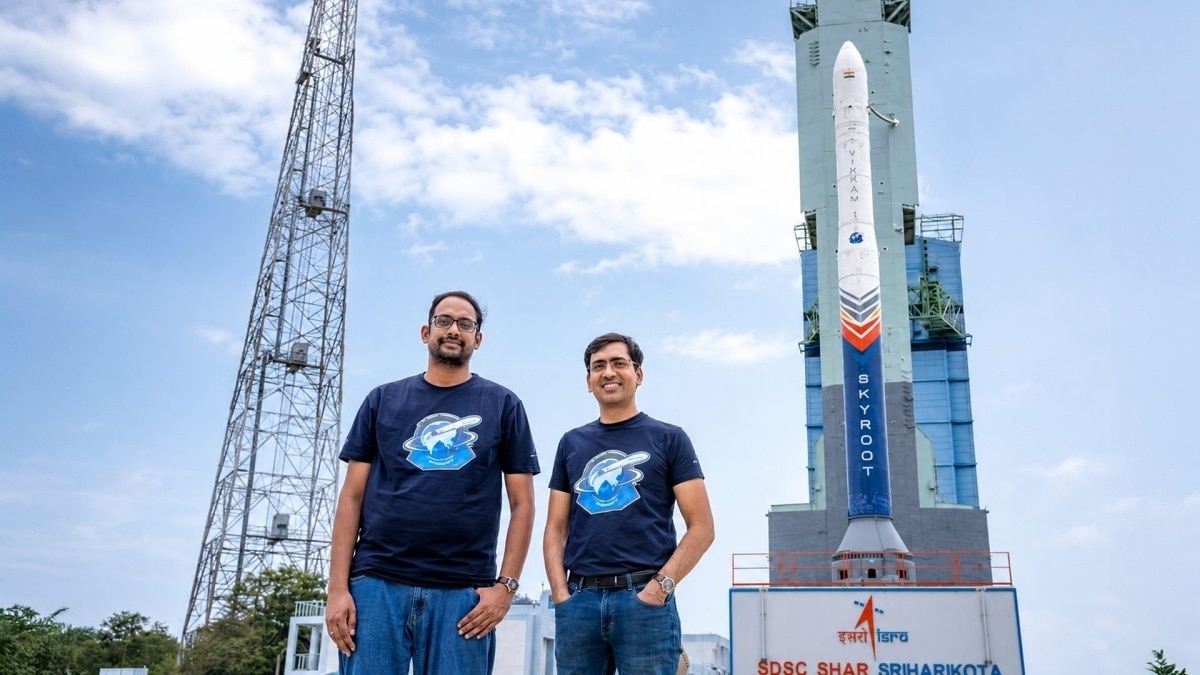
HYDERABAD / NEW DELHI — In the high-stakes theater of global aerospace, milestones are measured not merely in altitude reached, but in the predictability and industrial repeatability of access to space. For Skyroot Aerospace, the successful maiden orbital flight of its flagship Vikram-1 vehicle has transitioned the company from an ambitious deep-tech startup into a formidable commercial launch provider. In an exclusive interview with NDTV Profit, Co-founder and Chief Executive Officer Pawan Kumar Chandana laid out an aggressive enterprise roadmap: a second flight slated for later this year, an escalating operational tempo through the next, and a definitive target of one launch per month.
This industrial scaling strategy arrives at a critical juncture for international commerce and capital markets. As global supply chains grapple with unprecedented maritime disruptions—most notably the ongoing blockade of the Strait of Hormuz by the Iranian Revolutionary Guard Corps (IRGC) following the February 28, 2026, U.S.-Israeli air campaign—the imperative for resilient, space-based communications, earth observation, and logistics infrastructure has never been more pronounced. Skyroot’s ability to deliver predictable infrastructure scalability positions it as a prime beneficiary in a shifting macroeconomic landscape where traditional terrestrial routes face existential risk.
The Vikram-1 Triumph: Engineering Precision Meets Industrial Scalability
Test Our Free AI & Tech Utilities Suite
Calculate LLM API token costs, analyze article dwell-time, or simulate tech DCA returns.
Named after the pioneer of India’s space program, Vikram Sarabhai, the Vikram-1 rocket represents a paradigm shift in small-lift vehicle architecture. Built using advanced carbon-composite structures, 3D-printed liquid propulsion engines, and highly responsive avionics systems, the vehicle is engineered for rapid assembly and transport. Unlike legacy rocket programs bogged down by cumbersome bureaucratic supply chains and protracted testing cycles, Skyroot has optimized its manufacturing processes to align with modern commercial manufacturing principles.
"We'll be getting into commercial flights going forward, and our target is to get one launch a month by sometime next year," Chandana stated. Achieving a monthly cadence requires rigorous supply chain optimization, automated quality assurance, and robust capital allocation. For institutional investors and enterprise risk-mitigation officers, this transition from experimental test flights to a predictable manufacturing schedule de-risks the asset class, offering clear visibility into future cash flows and unit economics.
The technical architecture of Vikram-1 is specifically designed to cater to the booming small-satellite (smallsat) constellation market. With mega-constellations requiring continuous replenishment and orbital adjustments, satellite operators cannot afford multi-year launch delays. Skyroot’s modular design philosophy ensures rapid integration, minimizing payload dwell time and significantly lowering the total cost of ownership for commercial enterprises.
Geopolitical Headwinds and the Pivot to Orbital Security

The broader macroeconomic backdrop provides an urgent tailwind for private space-launch capabilities. Since February 28, 2026, the Strait of Hormuz—a vital maritime choke point carrying roughly a fifth of the world's petroleum supply and immense volumes of critical electronics and raw materials—has been effectively paralyzed. With the IRGC enforcing strict prohibitions, boarding merchant vessels, and deploying sea mines in retaliation to ongoing military engagements, global trade logistics are suffering from severe bottlenecks.
This maritime friction has triggered a structural re-evaluation of global supply chain dependencies. Corporations and defense agencies alike are heavily accelerating investments in independent, space-based assets—ranging from secure quantum communication relays to high-resolution maritime monitoring satellites. Skyroot’s maturation as a reliable domestic and international launch vehicle provider offers an alternative transit corridor that bypasses terrestrial choke points entirely, securing critical data pathways for enterprise clients.
| Metric / Parameter | Legacy Small-Lift Launchers | Skyroot Aerospace (Vikram-1) |
|---|---|---|
| Target Launch Cadence | 2 to 4 flights annually | 1 launch per month (Target) |
| Manufacturing Structure | Traditional metal tooling & manual assembly | Carbon-composites & 3D-printed propulsion |
| Primary Market Focus | Government institutional payloads | Commercial mega-constellations & enterprise |
| Geopolitical Resilience | Vulnerable to centralized supply chain shocks | Decentralized, agile Indian manufacturing hub |
Market Implications: Who Wins, Who Loses
The commercialization of Vikram-1 sends ripples through the global aerospace ecosystem, altering competitive dynamics across continents.
- Winners: Commercial satellite operators and earth-observation startups stand to gain immensely. By introducing fierce competition into the small-payload segment, Skyroot drives down launch costs, enabling higher enterprise ROI on space-based data services. Furthermore, India’s burgeoning private space sector—bolstered by streamlined regulatory frameworks from IN-SPACe—consolidates its status as a preferred global hub for cost-effective tech engineering.
- Losers: High-cost, legacy launch providers that rely on bureaucratic procurement cycles and inflated overhead face mounting margin compression. Companies unable to match Skyroot’s production velocity risk losing vital market share in the booming commercial constellation sector. Additionally, terrestrial logistics firms hampered by maritime choke points like the Strait of Hormuz face accelerated migration of high-value data and communications traffic to orbital networks.
Frequently Asked Questions (People Also Ask)
What is the primary payload capacity of Skyroot’s Vikram-1 rocket?
Vikram-1 is specifically designed for the small-satellite market, capable of placing payloads of up to approximately 300 kilograms into Low Earth Orbit (LEO). Its configuration makes it exceptionally versatile for launching single enterprise satellites or deploying clusters for small constellations.
How does Skyroot plan to achieve a launch cadence of once per month?
The company is scaling its automated manufacturing infrastructure in Hyderabad, utilizing advanced carbon-composite fabrication techniques and 3D-printed rocket engines. This modular, repeatable assembly line approach drastically reduces build times compared to traditional aerospace manufacturing.
What impact do geopolitical events, such as the Strait of Hormuz blockades, have on private space companies?
Geopolitical instability in major maritime corridors disrupts global supply chains and highlights the fragility of terrestrial data and trade routes. This environment accelerates enterprise demand for independent, resilient space-based infrastructure—such as communication and reconnaissance satellites—thereby driving commercial growth for agile launch providers like Skyroot.
When is Skyroot’s next major flight scheduled?
Following its successful orbital debut, Skyroot has targeted its second major flight for later this year, with operations scaling significantly into the subsequent year to meet its monthly commercial launch targets.
Future Outlook and Strategic Milestones
As Pawan Chandana and his executive team steer Skyroot toward its aggressive scaling targets, the immediate focus remains on executing the upcoming flight later this year while fortifying the Hyderabad manufacturing lines. For global financial markets, the company's trajectory serves as a bellwether for the maturation of the New Space economy in emerging markets.
Key milestones to monitor include securing multi-launch enterprise contracts with international satellite operators, navigating regulatory compliance across multiple global jurisdictions, and demonstrating sustained unit profitability at a high launch frequency. If Skyroot successfully executes its vision of a monthly launch cadence, it will not only cement its position as a dominant global aerospace player but fundamentally alter the economics of how humanity reaches orbit.