The Sub-$100 Orbit: How SpaceX’s Flight 10 Just Rewrote Global Space Economics Forever
BOCA CHICA, Texas — The multi-decade quest for the holy grail of rocket propulsion is officially over. With the successful execution of Starship Flight 10, SpaceX has achieved controlled recovery and verified structural integrity for both its massive Super Heavy booster and the Starship upper stage. In doing so, the commercial spaceflight pioneer has decisively unlocked full, rapid orbital reusability—shattering the legacy cost barriers that have defined the aerospace sector since the dawn of the Cold War.
Industry analysts, defense planners, and global logistics titans are treating the milestone not as an iterative engineering update, but as a tectonic shift in macroeconomic capability. For seven decades, accessing space meant throwing away multi-million-dollar vehicles after a single mission. Flight 10 proved that an orbital system larger than any rocket ever built can launch, deliver payload, return through atmospheric plasma, and be prepped for re-flight—all at marginal operating costs that rival commercial aviation.
The Flight 10 Milestone: Perfecting Full-Stack Reusability
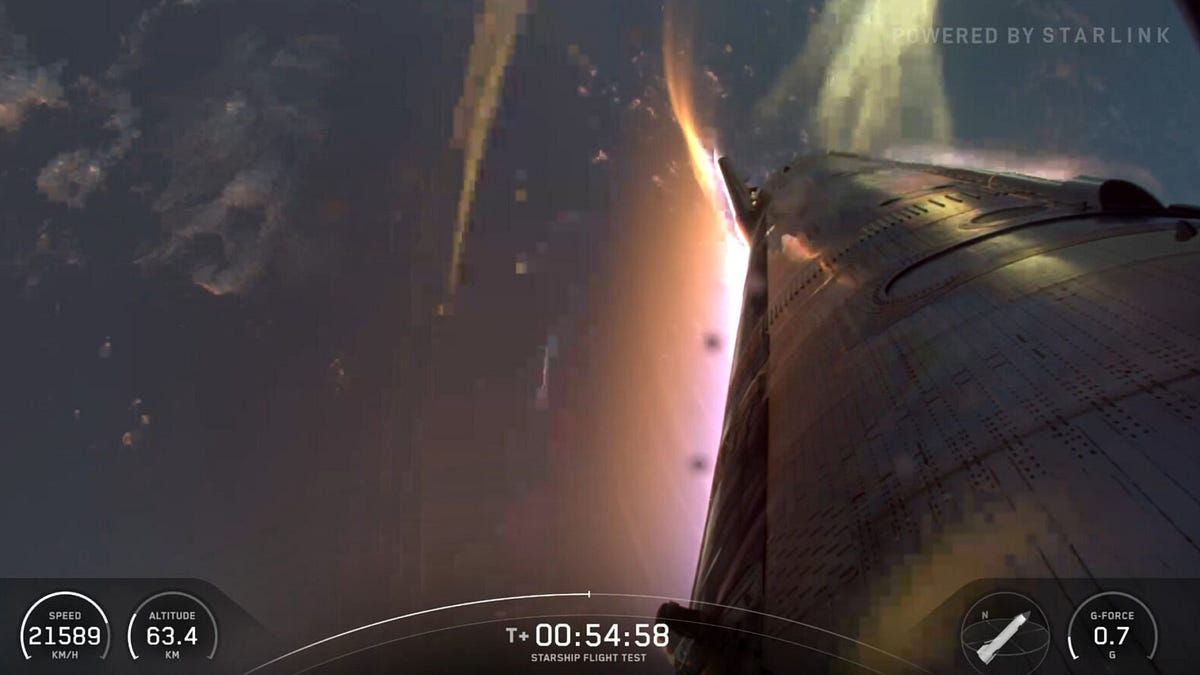
While early integrated test flights demonstrated engine performance and stage separation, Flight 10 resolved the ultimate operational bottleneck: intact thermal shield survival and dynamic booster catch precision. Lifting off from Starbase in Starship’s most mature iteration yet, the 33 Raptor-powered Super Heavy booster executed its burn, staged cleanly, and reversed trajectory to execute a flawless capture back at the launch tower’s mechanical arms (“Mechazilla”).
Minutes later, the 50-meter-tall Starship upper stage completed orbital insertion, fired its vacuum Raptors for a precise deorbit burn, and survived high-altitude atmospheric entry without structural burn-through or significant tile degradation. The vehicle touched down smoothly within its target maritime recovery zone, confirming that both halves of the launch architecture are now fully reusable assets rather than disposable capital expenditures.
"Flight 10 is the dividing line in human industrial history," noted an editorial dispatch from The Objective Standard. "Before today, space travel was an expendable luxury funded by nation-states. From this point forward, it is a high-frequency commercial transit corridor."
The Economic Shockwave: Decimating the Cost-to-Orbit Equation
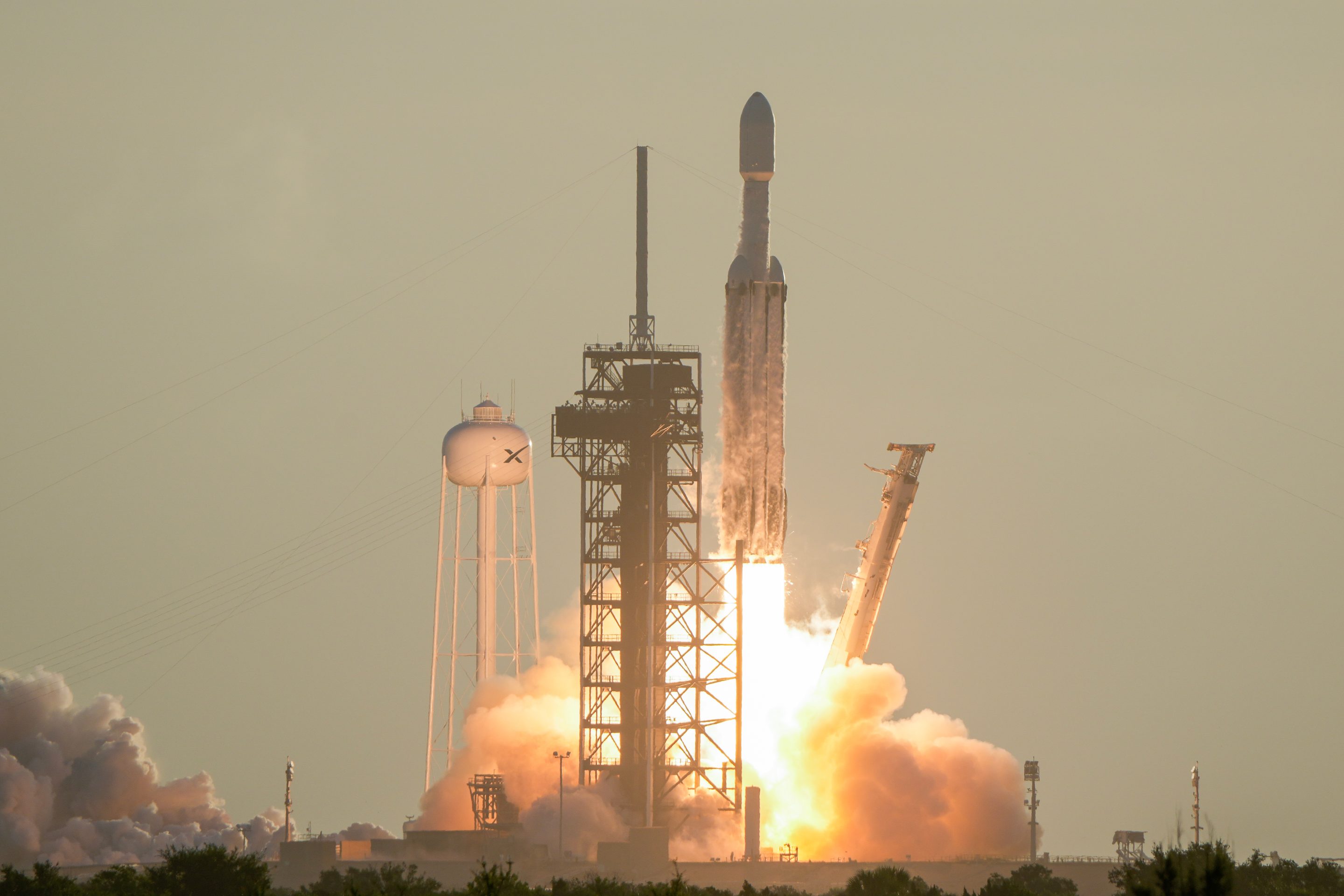
From an institutional investment perspective, the ramifications of Flight 10 are radical. Under the expendable architectures of the late 20th century—including NASA's Saturn V and the Space Shuttle—launching payload to Low Earth Orbit (LEO) cost between $10,000 and $54,000 per kilogram. SpaceX disrupted this paradigm with the semi-reusable Falcon 9, pulling rates down to roughly $1,500 to $2,000 per kilogram.
Starship's fully reusable architecture is modeled to depress that figure below $100 per kilogram at commercial scale, with eventual internal marginal costs approaching $10 to $20 per kilogram once flight cadences normalize. This collapse in freight charges fundamentally inverts corporate business models for satellite communications, terrestrial broadband, and industrial manufacturing.
Executive Briefing: Key Takeaways
- Dual-Stage Recovery Confirmed: Flight 10 successfully demonstrated both the Super Heavy tower catch and the aerodynamic stability and survival of the Starship upper stage through reentry.
- Market Cap Impact: Legacy launch providers reliant on expendable upper stages face immediate pricing pressure, triggering portfolio realignments across aerospace primes.
- Accelerated Lunar Timeline: Full reusability directly de-risks NASA’s Artemis III and IV schedules, securing the orbital propellant transfer required to put humans back on the Moon.
- Scale of Mass to Orbit: Starship unlocks a 100-to-150 metric ton payload envelope per launch, enabling megawatt-scale orbital solar arrays, uncompressed Starlink v3 constellations, and private space stations.
Comparative Launch Economics: The New Competitive Landscape
To grasp the scale of market disruption unleashed by Flight 10, capital allocators must look at the comparative metrics across current and legacy architectures:
| Launch Platform | Payload to LEO (Metric Tons) | Reusability Level | Estimated Cost / kg to LEO |
|---|---|---|---|
| Space Shuttle (Legacy NASA) | ~27.5 t | Partial (Orbiter/Boosters refurbished) | ~$54,000 / kg |
| Falcon 9 (SpaceX) | ~22.8 t | Partial (First stage + fairings) | ~$1,500 - $2,000 / kg |
| SLS Block 1 (NASA / Primes) | ~95 t | None (100% Expendable) | ~$25,000+ / kg |
| Starship Full Stack (Post-Flight 10) | 100 - 150 t | Complete & Rapid (Both Stages) | < $100 / kg (Targeted marginal) |
The Geopolitical and Industrial Horizon
The geopolitical ramifications are equally profound. Complete reusability guarantees that the United States commercial industrial base holds an unassailable lead in orbital mass capacity over geopolitical competitors. China's state-backed space apparatus and commercial startups (such as LandSpace and Space Pioneer) are developing their own methane-fueled reusable rockets, but Flight 10 widens SpaceX’s operational moat by an estimated five to seven years.
Moreover, the launch cadence supported by full reusability transforms space from an exotic frontier into a continuous logistics network. Orbital data centers processing artificial intelligence workloads, heavy pharmaceutical manufacturing in zero gravity, and point-to-point sub-orbital Earth logistics now cross the threshold from science fiction to venture-backable infrastructure.
Frequently Asked Questions
Why is full reusability considered the "Holy Grail" of aerospace?
Until Flight 10, the upper stages of orbital rockets were discarded into the ocean or burned up in the atmosphere during every launch. Reusing only the first stage (as done with Falcon 9) leaves millions of dollars of sophisticated engines and avionics wasted on every flight. Reusing the upper stage cuts vehicle manufacturing down to a fixed capital amortized over dozens or hundreds of flights, leaving liquid methane and oxygen propellants as the primary marginal expense.
What are SpaceX's immediate priorities following the Flight 10 success?
SpaceX will pivot from proof-of-concept recoveries to operational cadence. Critical next steps include long-duration cryogenic propellant transfer tests in orbit—a baseline requirement for NASA's Artemis Moon lander—alongside payload bay deployment trials for full-size Starlink satellites and rapid turnaround refurbishments from Starbase and Cape Canaveral.